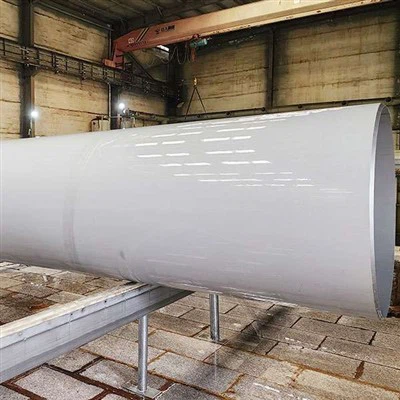
As a trusted supplier of UNS S31603, I understand the importance of ensuring the quality of this stainless - steel alloy. UNS S31603, also known as Stainless Steel 316L Mod, is a low - carbon version of the standard 316 stainless steel, which offers enhanced corrosion resistance, especially in welded structures. In this blog, I will share some effective methods to detect the quality of UNS S31603.
Chemical Composition Analysis
One of the fundamental ways to assess the quality of UNS S31603 is through chemical composition analysis. The standard chemical composition of UNS S31603 typically includes elements such as chromium (Cr), nickel (Ni), molybdenum (Mo), and a low carbon content.
- Spectroscopic Analysis: This method uses a spectrometer to determine the elemental composition of the alloy. By emitting a high - energy beam onto the sample, the spectrometer can analyze the wavelengths of the emitted light, which are characteristic of different elements. For example, chromium provides corrosion resistance, and its content in UNS S31603 should be in the range of about 16 - 18%. A proper chromium content ensures the formation of a passive oxide layer on the surface of the stainless steel, protecting it from oxidation and corrosion. Nickel, usually present in the range of 10 - 14%, enhances the alloy's ductility and toughness. Molybdenum, with a content of around 2 - 3%, further improves the pitting and crevice corrosion resistance.
- Wet Chemical Analysis: Although it is a more traditional method, wet chemical analysis can still provide highly accurate results. It involves dissolving the sample in appropriate reagents and then using various chemical reactions to quantify the amount of each element. For instance, to determine the carbon content, the sample can be burned in an oxygen - rich environment, and the resulting carbon dioxide can be measured to calculate the carbon percentage. A low carbon content (usually ≤ 0.03%) in UNS S31603 is crucial to prevent sensitization during welding, which can lead to intergranular corrosion.
Physical Property Testing
Physical properties of UNS S31603 can also reveal a lot about its quality.
- Density Measurement: The density of UNS S31603 is relatively stable. Deviations from the standard density value may indicate impurities or an incorrect chemical composition. A simple way to measure density is by using the Archimedes' principle. The sample is weighed in air and then in a liquid of known density, and the density of the sample can be calculated based on the buoyant force.
- Hardness Testing: Hardness is an important physical property that reflects the material's resistance to deformation. There are several methods for hardness testing, such as the Brinell hardness test, Rockwell hardness test, and Vickers hardness test. For UNS S31603, the hardness should be within a certain range. If the hardness is too high, it may indicate improper heat treatment or the presence of hard particles due to impurities. On the other hand, if the hardness is too low, the material may not have sufficient strength and wear resistance.
Microstructure Examination
The microstructure of UNS S31603 can significantly affect its mechanical and corrosion - resistant properties.


- Optical Microscopy: By preparing a polished and etched sample, an optical microscope can be used to observe the microstructure of the alloy. In a high - quality UNS S31603, the microstructure should be austenitic, which is characterized by a uniform grain structure. The presence of ferrite, martensite, or other phases may indicate improper heat treatment or alloying. For example, the formation of ferrite in the austenitic matrix can reduce the corrosion resistance of the material, especially in environments containing chloride ions.
- Scanning Electron Microscopy (SEM): SEM provides a higher - resolution view of the microstructure compared to optical microscopy. It can also be used in conjunction with energy - dispersive X - ray spectroscopy (EDS) to analyze the elemental distribution within the microstructure. This is particularly useful for detecting the presence of inclusions or segregation of elements, which can have a negative impact on the material's performance.
Corrosion Resistance Testing
Since corrosion resistance is one of the main advantages of UNS S31603, it is essential to test its performance in different corrosive environments.
- Salt Spray Test: In this test, the sample is exposed to a salt - fog environment (usually a 5% sodium chloride solution) for a certain period. The appearance of rust or corrosion products on the surface of the sample is then evaluated. A high - quality UNS S31603 should show minimal corrosion after a long - term salt spray test. This test simulates the corrosion conditions in coastal areas or other environments with high chloride concentrations.
- Immersion Test: The sample can be immersed in a specific corrosive solution, such as a sulfuric acid solution or a chloride - containing solution, for an extended period. The weight loss of the sample can be measured to calculate the corrosion rate. This test can provide more detailed information about the material's corrosion resistance in different chemical environments.
Weldability Assessment
As UNS S31603 is often used in welded structures, its weldability is a critical factor in determining its quality.
- Visual Inspection of Welds: After welding, the weld area should be visually inspected for defects such as cracks, porosity, and lack of fusion. Cracks in the weld can significantly reduce the strength and corrosion resistance of the structure. Porosity may be caused by improper welding parameters or the presence of moisture or impurities in the welding area.
- Welded Joint Performance Testing: Tensile tests, bend tests, and impact tests can be conducted on the welded joints to evaluate their mechanical properties. The welded joints should have similar or close - to - base - metal mechanical properties, indicating good weldability. For example, in a tensile test, the welded joint should not fail prematurely, and its strength should be comparable to that of the base material.
In conclusion, detecting the quality of UNS S31603 requires a comprehensive approach that includes chemical composition analysis, physical property testing, microstructure examination, corrosion resistance testing, and weldability assessment. As a supplier, we are committed to providing high - quality UNS S31603 products that meet or exceed industry standards. If you are interested in purchasing UNS S31603 or need more information about its quality detection, please feel free to contact us for further discussion.
When you are considering other related stainless - steel alloys, you may also be interested in Stainless Steel AL6XN / UNS N08367 / 1.4529 and Stainless Steel 316 / UNS S31600 / 1.4401. For more details about UNS S31603 itself, you can visit Stainless Steel 316L Mod / UNS S31603 / 1.4435.
References
- ASM Handbook Volume 3: Alloy Phase Diagrams. ASM International.
- Stainless Steel Handbook, 5th Edition. The Nickel Institute.
- ASTM Standards related to stainless - steel testing and quality control.