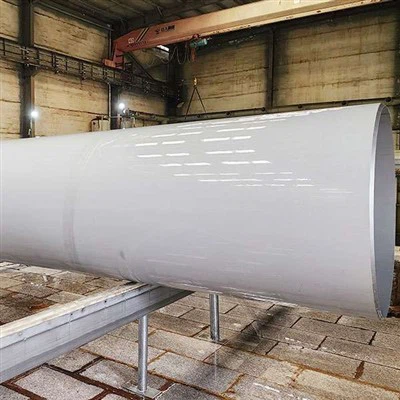
As a supplier of UNS S32100, I am often asked about how this particular stainless steel alloy performs in high - temperature environments. In this blog, I will delve into the properties of UNS S32100 and explore its behavior under high - temperature conditions.
Introduction to UNS S32100
UNS S32100, also known as Stainless Steel 321, is a titanium - stabilized austenitic stainless steel. It contains chromium and nickel as its main alloying elements, which provide excellent corrosion resistance. The addition of titanium helps to prevent the formation of chromium carbides during welding and high - temperature exposure, thus maintaining the corrosion resistance of the material.
Physical and Chemical Properties
The chemical composition of UNS S32100 typically includes approximately 17 - 19% chromium, 9 - 12% nickel, and a small amount of titanium (at least 5 times the carbon content). This composition gives it a density of about 7.93 g/cm³. Its melting point ranges from 1398 - 1427°C, which indicates its ability to withstand relatively high temperatures before melting.
High - Temperature Strength
One of the key aspects of how UNS S32100 performs in high - temperature environments is its strength. At elevated temperatures, the mechanical properties of metals can change significantly. For UNS S32100, its yield strength and tensile strength start to decrease as the temperature rises. However, compared to some other stainless steels, it retains a relatively high level of strength at high temperatures.
For example, at around 500°C, UNS S32100 still has a yield strength that is sufficient for many industrial applications. This is due to the austenitic structure of the steel, which provides good ductility and strength at elevated temperatures. The presence of titanium also helps to stabilize the structure and prevent the growth of grains, which can lead to a loss of strength.
Oxidation Resistance
In high - temperature environments, oxidation is a major concern. Oxidation can cause the formation of a layer of oxide on the surface of the metal, which can lead to corrosion and a decrease in the mechanical properties of the material. UNS S32100 has good oxidation resistance due to the presence of chromium. Chromium forms a thin, protective oxide layer on the surface of the steel, which acts as a barrier against further oxidation.
When exposed to high - temperature air, the oxide layer on UNS S32100 can withstand temperatures up to about 870°C without significant spalling or degradation. This makes it suitable for applications in high - temperature furnaces, heat exchangers, and other equipment where oxidation is a potential problem.
Comparison with Other Stainless Steels
To better understand the performance of UNS S32100 in high - temperature environments, it is useful to compare it with other stainless steels. For instance, Stainless Steel 316Ti / UNS S31635 / 1.4571 is also a titanium - stabilized stainless steel. While it has good corrosion resistance, its high - temperature strength and oxidation resistance are slightly lower than those of UNS S32100.
Stainless Steel 316H / UNS 31609 / 1.4919 is designed for high - temperature applications, but it may not have the same level of resistance to intergranular corrosion as UNS S32100, especially in the presence of titanium.
Stainless Steel AL6XN / UNS N08367 / 1.4529 is a high - alloy stainless steel with excellent corrosion resistance in harsh environments. However, in terms of high - temperature strength and cost - effectiveness, UNS S32100 may be a more suitable choice for some applications.
Applications in High - Temperature Environments
UNS S32100 is widely used in various industries where high - temperature performance is required. In the aerospace industry, it is used in the manufacture of engine components, such as exhaust systems and turbine parts. The high - temperature strength and oxidation resistance of UNS S32100 make it suitable for withstanding the extreme conditions inside an aircraft engine.
In the chemical processing industry, it is used in heat exchangers, reactors, and piping systems. These applications often involve high - temperature and corrosive chemicals, and UNS S32100's ability to resist both corrosion and oxidation makes it an ideal material.
In the power generation industry, UNS S32100 is used in boilers, superheaters, and other high - temperature equipment. The stability of its mechanical properties at high temperatures ensures the reliable operation of power plants.
Weldability in High - Temperature Applications
Weldability is an important factor when considering the use of UNS S32100 in high - temperature applications. The titanium in UNS S32100 helps to prevent the formation of chromium carbides during welding, which can cause intergranular corrosion. This means that welded joints of UNS S32100 can maintain their corrosion resistance and mechanical properties even at high temperatures.
However, proper welding procedures need to be followed to ensure the quality of the welds. For example, pre - heating and post - weld heat treatment may be required depending on the thickness of the material and the specific application.
Long - Term Performance
The long - term performance of UNS S32100 in high - temperature environments is also a crucial consideration. Over time, the material may experience creep, which is the slow deformation of a metal under a constant load at high temperatures. The austenitic structure of UNS S32100 provides some resistance to creep, but the specific creep rate depends on factors such as temperature, stress level, and time.
In general, if the operating conditions are within the recommended limits, UNS S32100 can provide reliable long - term performance in high - temperature applications. Regular inspection and maintenance can help to detect any potential issues early and ensure the continued safe operation of the equipment.


Conclusion
In conclusion, UNS S32100 performs well in high - temperature environments due to its high - temperature strength, oxidation resistance, and good weldability. Its unique chemical composition, especially the addition of titanium, gives it an edge over some other stainless steels in terms of maintaining its mechanical and corrosion - resistant properties at elevated temperatures.
Whether you are in the aerospace, chemical processing, or power generation industry, UNS S32100 can be a suitable choice for your high - temperature applications. If you are interested in learning more about UNS S32100 or are considering purchasing this material for your projects, I encourage you to contact me for further discussions and procurement negotiations.
References
- ASM Handbook Volume 1: Properties and Selection: Irons, Steels, and High - Performance Alloys
- Stainless Steel Handbook by L. W. Roberts
- Corrosion Resistance of Stainless Steels by R. Baboian