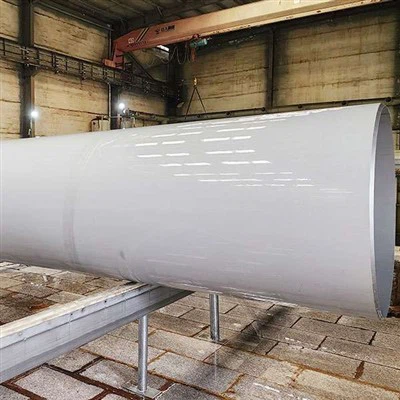
As a supplier of UNS S30403, I've witnessed firsthand the importance of understanding how various factors, especially radiation, can impact the properties of this widely used stainless - steel grade. UNS S30403, also known as AISI 304L, is a low - carbon version of AISI 304 stainless steel. It is highly sought after for its excellent corrosion resistance, good formability, and weldability, making it suitable for a range of applications from food processing equipment to architectural structures. However, in environments where radiation is present, such as nuclear power plants, particle accelerators, and space applications, the effects of radiation on UNS S30403 need to be carefully considered.
Radiation and Its Types
Radiation can be classified into several types, including ionizing and non - ionizing radiation. Ionizing radiation, such as alpha particles, beta particles, gamma rays, and neutrons, has enough energy to remove tightly bound electrons from atoms, creating ions. Non - ionizing radiation, like radio waves, microwaves, and visible light, does not have sufficient energy to ionize atoms. In the context of UNS S30403, ionizing radiation is of particular concern because it can cause significant changes to the material's properties.
Effects of Radiation on the Microstructure of UNS S30403
One of the primary ways radiation affects UNS S30403 is by altering its microstructure. When exposed to ionizing radiation, the high - energy particles can displace atoms from their regular lattice positions, creating vacancies and interstitial atoms. These point defects can cluster together to form larger defect structures, such as dislocation loops and voids.
For example, neutron radiation can cause atomic displacements through elastic scattering events. The displaced atoms can then interact with each other and with existing crystal defects, leading to the formation of new microstructural features. Over time, the accumulation of these defects can lead to swelling and densification of the material. Swelling occurs when the formation of voids causes an increase in the volume of the material, while densification can result from the collapse of voids or the rearrangement of atoms.
The formation of these radiation - induced microstructural changes can also affect the phase stability of UNS S30403. Austenitic stainless steels like UNS S30403 are typically stable at room temperature. However, under high - dose radiation, the austenite phase can transform into other phases, such as martensite. This phase transformation can have a significant impact on the mechanical and corrosion properties of the material.
Impact on Mechanical Properties
The microstructural changes induced by radiation have a direct impact on the mechanical properties of UNS S30403. One of the most notable effects is hardening and embrittlement. As radiation creates defects in the material, these defects act as barriers to the movement of dislocations, which are responsible for plastic deformation. As a result, the material becomes harder and more difficult to deform.
Hardening can be beneficial in some cases, as it can increase the wear resistance of the material. However, excessive hardening can lead to embrittlement, where the material loses its ductility and becomes more prone to cracking. In applications where the material needs to withstand impact or cyclic loading, embrittlement can be a serious problem. For example, in nuclear reactor components, embrittlement can increase the risk of component failure, which could have severe safety implications.


The yield strength and ultimate tensile strength of UNS S30403 typically increase with increasing radiation dose. However, the elongation at break, which is a measure of ductility, decreases. This reduction in ductility can be critical in applications where the material needs to undergo large plastic deformations without failure.
Influence on Corrosion Resistance
Corrosion resistance is one of the key properties of UNS S30403. However, radiation can also affect this property. The microstructural changes caused by radiation can disrupt the passive film that forms on the surface of the stainless steel, which is responsible for its corrosion resistance.
The formation of voids and defects near the surface can provide sites for the initiation of corrosion. Additionally, the phase transformation from austenite to martensite can also affect the corrosion behavior. Martensite is generally less corrosion - resistant than austenite, so the presence of martensite in radiation - exposed UNS S30403 can increase the susceptibility to corrosion.
In a corrosive environment, radiation - induced corrosion can be accelerated. For example, in a nuclear power plant, where the coolant water can be corrosive, radiation - induced corrosion of UNS S30403 components can lead to the degradation of the material over time. This can compromise the integrity of the components and require more frequent maintenance or replacement.
Comparison with Other Stainless Steel Grades
It's interesting to compare the radiation response of UNS S30403 with other stainless steel grades. For instance, Stainless Steel 316L Mod / UNS S31603 / 1.4435 and Stainless Steel 316 / UNS S31600 / 1.4401 contain molybdenum, which can improve their corrosion resistance compared to UNS S30403. In a radiation - exposed environment, the molybdenum can also play a role in reducing the rate of radiation - induced corrosion.
Stainless Steel 321 / UNS S32100 / 1.4541 contains titanium, which can stabilize the carbon in the steel and reduce the risk of sensitization, a phenomenon where the material becomes more susceptible to intergranular corrosion. In a radiation - exposed environment, the presence of titanium may also have an impact on the radiation - induced microstructural changes and the resulting mechanical and corrosion properties.
Mitigation Strategies
To mitigate the effects of radiation on UNS S30403, several strategies can be employed. One approach is to use radiation - resistant alloys. While UNS S30403 has certain advantages, in high - radiation environments, it may be necessary to consider other alloys that are more resistant to radiation - induced changes.
Another strategy is to control the radiation environment. For example, in a nuclear reactor, the use of shielding materials can reduce the radiation dose received by the UNS S30403 components. Additionally, proper design and maintenance of the components can also help to minimize the impact of radiation. For example, reducing the stress levels in the components can reduce the risk of radiation - induced cracking.
Applications and Considerations
Despite the challenges posed by radiation, UNS S30403 is still used in many radiation - exposed applications. In nuclear power plants, it is used in various components such as piping, valves, and structural supports. In space applications, it can be used in the construction of satellites and other spacecraft components.
When using UNS S30403 in radiation - exposed applications, it is essential to carefully consider the radiation environment, including the type and dose of radiation, as well as the operating conditions. Regular monitoring of the material's properties is also crucial to detect any changes early and take appropriate action.
Conclusion
In conclusion, radiation can have a significant impact on the properties of UNS S30403. It can alter the microstructure, mechanical properties, and corrosion resistance of the material. As a supplier of UNS S30403, it is our responsibility to provide our customers with the information they need to make informed decisions about the use of this material in radiation - exposed applications.
If you are considering using UNS S30403 in your project, especially in a radiation - prone environment, we encourage you to contact us for more detailed information and to discuss your specific requirements. Our team of experts can provide you with guidance on the selection of the appropriate material and help you develop strategies to mitigate the effects of radiation.
References
- ASTM International. "ASTM A240/A240M - 21, Standard Specification for Chromium and Chromium - Nickel Stainless Steel Plate, Sheet, and Strip for Pressure Vessels and for General Applications."
- Radiation Effects in Solids: Fundamentals and Applications, by K. E. Sickafus, E. A. Kotomin, and V. I. Churikov.
- Stainless Steels for Nuclear Applications, edited by G. E. Lucas and J. R. Weir.