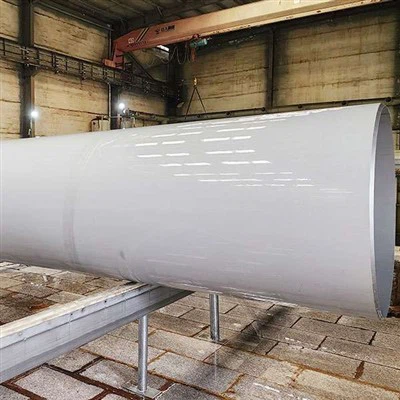
In the realm of high - performance alloys, Inconel stands out as a remarkable material known for its exceptional resistance to corrosion, oxidation, and high - temperature applications. As an Inconel supplier, I've witnessed firsthand the growing demand for this alloy in various multi - material systems. In this blog, we'll explore how Inconel interacts with other materials in such systems, delving into the chemical, mechanical, and thermal aspects of these interactions.
Chemical Interactions
One of the most crucial factors in multi - material systems is the chemical compatibility between different materials. Inconel is a nickel - chromium - based superalloy, and its chemical composition gives it unique properties that affect its interaction with other materials.


When Inconel comes into contact with more reactive metals, such as aluminum or magnesium, there is a risk of galvanic corrosion. Galvanic corrosion occurs when two different metals are in electrical contact in the presence of an electrolyte. Inconel, being more noble (less reactive) than these metals, can act as a cathode, while the more reactive metal acts as an anode. This results in the accelerated corrosion of the less noble metal. For example, in a salt - water environment, if an Inconel component is in contact with an aluminum part, the aluminum will corrode at a faster rate. To mitigate this issue, proper insulation or the use of protective coatings can be employed.
On the other hand, when Inconel is paired with other noble metals like platinum or gold, the risk of galvanic corrosion is significantly reduced. In fact, these combinations can sometimes enhance the overall performance of the multi - material system, especially in applications where high - temperature stability and corrosion resistance are required.
Inconel also shows good chemical compatibility with many ceramics. Ceramics are often used in high - temperature applications due to their excellent thermal insulation properties. Inconel can be bonded to ceramics through processes like brazing or diffusion bonding. During these processes, a strong chemical bond forms between the Inconel and the ceramic, which can withstand high - temperature gradients and mechanical stresses. For instance, in aerospace applications, Inconel - ceramic composites are used in turbine engines to improve efficiency and reduce weight.
Mechanical Interactions
The mechanical properties of Inconel, such as its high strength, hardness, and ductility, play a vital role in its interaction with other materials in a multi - material system.
When Inconel is joined with materials of different hardness, such as steel or titanium, the difference in mechanical properties can lead to stress concentration at the interface. For example, if an Inconel component is welded to a steel part, the heat - affected zone during the welding process can cause changes in the microstructure of both materials. The harder Inconel may resist deformation more than the steel, leading to the development of residual stresses. These residual stresses can reduce the fatigue life of the joint and increase the risk of cracking. To address this issue, proper welding techniques and post - weld heat treatments are necessary to relieve the residual stresses and ensure a strong, durable joint.
Inconel's high ductility also allows it to be used in combination with more brittle materials. For example, in some composite materials, Inconel fibers can be embedded in a brittle matrix material. The ductility of Inconel helps to absorb the energy from cracks that may form in the matrix, preventing the cracks from propagating and causing catastrophic failure. This is particularly useful in applications where impact resistance is important, such as in armor plating.
Thermal Interactions
Inconel is well - known for its excellent high - temperature performance. Its low coefficient of thermal expansion (CTE) makes it suitable for use in multi - material systems where temperature variations are significant.
When Inconel is combined with materials that have a higher CTE, such as some polymers, there can be issues related to thermal expansion mismatch. As the temperature changes, the polymer will expand or contract at a faster rate than the Inconel. This can lead to internal stresses within the multi - material system, which may cause delamination or cracking. To overcome this problem, designers can use materials with similar CTEs or incorporate flexible interfaces between the Inconel and the polymer.
In high - temperature applications, Inconel can also transfer heat effectively to other materials. For example, in heat exchangers, Inconel tubes are often used to transfer heat from a hot fluid to a cold fluid. The high thermal conductivity of Inconel allows for efficient heat transfer, making it an ideal choice for these types of applications.
Specific Inconel Grades and Their Interactions
There are several grades of Inconel, each with its own unique properties and applications. Let's take a look at some of the most common grades and how they interact with other materials.
Inconel 625 / UNS N06625 / 2.4856 is a versatile grade that offers excellent corrosion resistance and high - temperature strength. It is often used in marine and chemical processing applications. In marine environments, it can be paired with stainless steel components. The combination provides good corrosion resistance, but care must be taken to prevent crevice corrosion at the interface. In chemical processing, Inconel 625 can be used in contact with various plastics and elastomers. However, compatibility testing is necessary to ensure that the chemicals being processed do not cause degradation of the polymer materials.
Inconel 601 / UNS N06601 / 2.4851 is known for its excellent oxidation resistance at high temperatures. It is commonly used in furnace components and heat - treating equipment. When used in combination with refractory materials, such as firebricks, Inconel 601 can provide structural support while the refractory material provides thermal insulation. The good thermal expansion match between Inconel 601 and many refractory materials helps to prevent cracking and spalling of the refractory lining.
Inconel 718 / UNS N07718 / 2.4668 is a precipitation - hardenable alloy with high strength and good fatigue resistance. It is widely used in aerospace and gas turbine applications. In aerospace, Inconel 718 is often joined with titanium alloys to reduce weight while maintaining high strength. However, the joining process requires careful control to avoid the formation of brittle intermetallic compounds at the interface.
Conclusion
In conclusion, the interaction of Inconel with other materials in a multi - material system is a complex phenomenon that involves chemical, mechanical, and thermal factors. Understanding these interactions is crucial for the successful design and implementation of multi - material systems in various industries.
As an Inconel supplier, we are committed to providing high - quality Inconel products and technical support to our customers. Whether you are designing a new multi - material system or looking to improve an existing one, we can help you select the right Inconel grade and provide guidance on how to ensure the best performance of your system. If you are interested in purchasing Inconel products or discussing your specific requirements, please feel free to contact us for a detailed consultation.
References
- ASM Handbook, Volume 13A: Corrosion: Fundamentals, Testing, and Protection. ASM International.
- Schütze, M. (2000). High - Temperature Corrosion of Metallic Materials. Wiley - VCH.
- Welding Handbook, Volume 2: Welding Processes. American Welding Society.