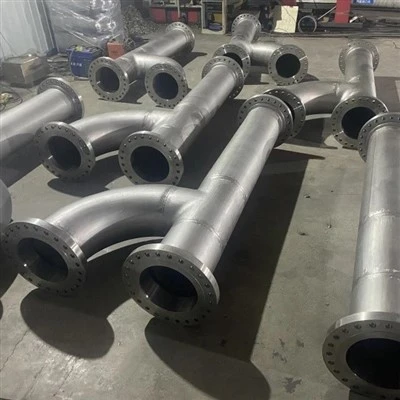
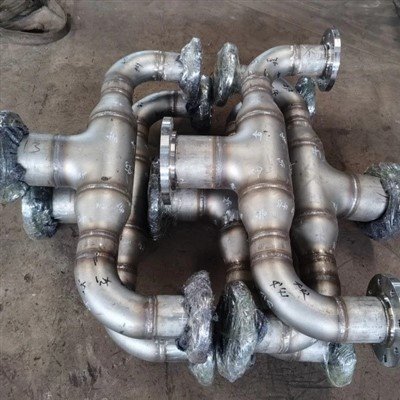
In the world of construction, manufacturing, shipbuilding, and countless industrial applications, steel plates are fundamental building blocks. Their apparent simplicity belies the critical role played by a single, measurable characteristic: Steel Plate Thickness. Often overlooked by the untrained eye, this dimension is far from arbitrary; it is a meticulously calculated parameter directly responsible for structural integrity, safety, performance, and longevity. Understanding why Steel Plate Thickness is so vital requires delving into the core principles of material science and structural engineering.

Load-Bearing Capacity and Stress Resistance
At its heart, the importance of Steel Plate Thickness stems from basic physics – specifically, how materials resist forces. When a steel plate is subjected to loads – whether it's the weight of a building bearing down on a column base plate, the pressure inside a massive storage tank, the impact forces on heavy machinery, or the dynamic stresses on a ship's hull.
Bending Stress Resistance: For plates spanning distances or subjected to bending moments (like flooring, platforms, or support brackets), thicker plates offer exponentially greater resistance to deflection (sagging) and failure. The bending stiffness of a plate increases with the cube of its thickness. Doubling the Steel Plate Thickness makes the plate eight times stiffer in bending. Insufficient thickness leads to excessive deflection, potential buckling, and catastrophic failure under load.
Compressive Strength and Buckling Resistance: Under compressive loads, thin plates are highly susceptible to buckling, a sudden, unstable sideways deflection that occurs long before the material's compressive strength is reached. Adequate Steel Plate Thickness significantly increases the critical buckling load, ensuring the plate remains stable and carries the load as intended, crucial for columns, struts, and pressure vessel walls.
Tensile and Shear Strength: While steel's inherent tensile strength is high, the cross-sectional area resisting the tensile or shear force is directly proportional to the plate's thickness. A thicker plate provides more material to distribute the load, reducing the actual stress experienced by the steel and preventing tearing or shearing failures, especially at connection points or under high tension.
Safety
Steel Plate Thickness is intrinsically linked to safety. Under-specifying thickness is a primary cause of structural failures:
Catastrophic Failure Prevention: In critical applications like pressure vessels, boilers, bridges, and high-rise buildings, a plate that is too thin can rupture, buckle, or tear under operational loads. The consequences range from costly downtime and environmental damage to severe injury or loss of life. The correct Steel Plate Thickness is a calculated barrier against such disasters.
Fatigue Resistance: Structures subjected to repeated loading and unloading (like cranes, offshore platforms, or vehicle chassis) are vulnerable to fatigue failure – cracks initiating and growing over time. Thicker plates generally have a longer fatigue life. They better distribute cyclic stresses, slowing crack initiation and propagation, thereby enhancing the structure's long-term safety margin.
Impact and Abrasion Resistance: In applications involving moving parts, heavy impacts, or abrasive environments, sufficient Steel Plate Thickness provides a sacrificial layer. It absorbs impact energy and withstands wear and tear far longer than a thin plate, protecting the core structure and reducing the risk of sudden perforation or failure.
Durability and Long-Term Performance
Beyond immediate safety, Steel Plate Thickness is a cornerstone of durability:
Corrosion Allowance: Steel exposed to corrosive environments (marine, chemical, industrial) will corrode over time. Engineers specify a thicker plate than structurally required to include a "corrosion allowance." This extra thickness ensures the plate retains sufficient strength to perform its function safely throughout its designed lifespan, even as material is lost to corrosion. Skimping on thickness drastically shortens service life.
Wear Life: Similar to impact resistance, thicker plates in high-wear applications last significantly longer before requiring replacement or repair, reducing maintenance costs and downtime.
Dimensional Stability: Thicker plates are less prone to warping or distortion during fabrication (like welding or machining) and under thermal stresses in service, ensuring the final structure maintains its intended geometry and functionality.
Performance and Functionality
The required Steel Plate Thickness directly dictates the performance envelope of a component or structure:
Pressure Containment: The wall thickness of tanks, pipes, and pressure vessels is rigorously calculated using formulas based on internal pressure, material strength, and safety factors. Insufficient thickness risks rupture.
Vibration Damping: Thicker plates have higher mass and stiffness, which can be crucial for reducing unwanted vibrations in machinery bases, platforms, and structural elements, improving operational smoothness and reducing noise.
Stiffness Requirements: Applications demanding minimal deflection under load necessitate thicker plates to achieve the required rigidity.
Cost Considerations
While thicker plates generally offer more strength and durability, they also come with significant cost implications:
Material Cost: Steel is purchased by weight. Increasing thickness dramatically increases material cost.
Fabrication Cost: Thicker plates are heavier and harder to cut, form, weld, and transport, increasing labor and equipment costs.
Weight Penalty: Added weight can impact fuel efficiency in vehicles/vessels, require stronger supporting structures, and increase foundation costs.
Therefore, selecting the optimal Steel Plate Thickness is an exercise in engineering optimization. It involves precisely calculating the minimum thickness required to safely and reliably meet all structural, safety, durability, and performance requirements for the intended lifespan and service conditions without unnecessary over-engineering that inflates costs. This requires rigorous analysis, adherence to standards, and often sophisticated modeling.
Standards and Specifications
To ensure consistency and safety, numerous international and national standards (ASTM, ASME, EN, JIS, etc.) govern the properties and minimum thickness requirements for steel plates used in specific applications (building construction, bridges, pressure vessels, ships). These standards incorporate safety factors based on decades of engineering experience and material testing. Specifying Steel Plate Thickness outside these standards without thorough, validated engineering justification is not just risky.
Conclusion
Steel Plate Thickness is far more than just a number on a drawing or a catalog entry. It is a fundamental engineering parameter that dictates the very essence of how a steel component or structure will behave under load, how long it will last, and how safe it will be. It balances the immutable laws of physics with practical requirements, safety imperatives, and economic realities. From the towering skyscraper to the massive ship, from the critical pressure vessel to the robust industrial machine, the appropriate Steel Plate Thickness is the unseen backbone, silently ensuring strength, stability, and security. Ignoring its importance is not an option; specifying it correctly is the cornerstone of responsible engineering and construction.