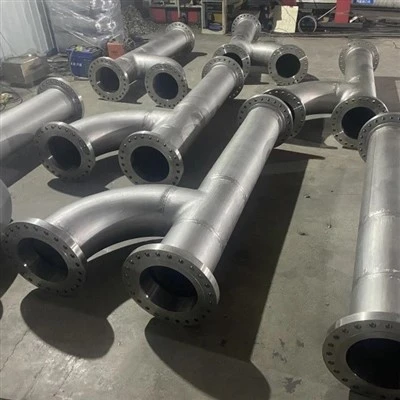
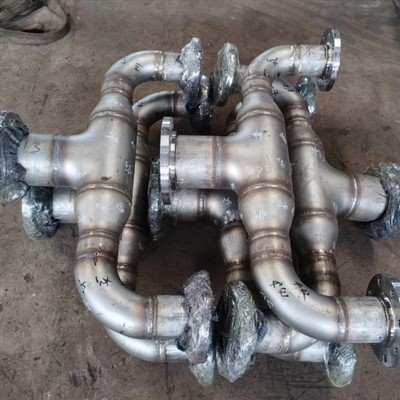
Stainless steel pipes can show rust before installation when carbon steel particles contaminate the surface, chloride-bearing moisture attacks the steel, or wet packaging traps corrosive deposits. Brown staining alone does not prove that the pipe is the wrong grade or structurally damaged. The first task is to distinguish rust on the pipe from corrosion of the pipe.

This guide compares the main mechanisms, then follows a practical investigation from delivery through storage. The inspection sequence and decision tables are proposed quality-control tools-not universal acceptance criteria. Purchase specifications, the applicable product standard, and the intended service determine final acceptance.
Why can stainless steel rust before it enters service?
Stainless steel resists corrosion through a thin, protective passive film, but contamination and unfavorable local conditions can defeat that protection.
Stainless steel is not a rust-proof coating over ordinary steel. Its alloy composition allows a protective surface film to form. However, embedded carbon steel particles can rust in damp air, producing orange streaks even when much of the underlying stainless surface remains intact. Those particles can also create local conditions that initiate pitting or crevice attack.
Chlorides, stagnant moisture, rough surfaces, and contact with carbon steel are recognized contributors to stainless steel staining and localized corrosion. A warehouse or shipping container can therefore become the first exposure environment; installation is not the starting point for corrosion risk.
Example: a clean pipe exposed to dry indoor air and an identical pipe resting under a wet, salt-contaminated strap do not face equivalent conditions. The alloy designation is the same, but surface contamination, moisture retention, and access to oxygen differ.
Is the orange material rusting contamination or damaged stainless steel?
It can be either; the appearance is a diagnostic clue, not a final diagnosis.

A clean-looking surface after stain removal is encouraging, but visual improvement alone does not demonstrate that the wall is undamaged or that all contaminant iron has been removed. ASTM A380/A380M addresses cleaning, descaling, passivation, and several cleanliness assessment methods; ASTM A967/A967M provides alternative qualitative tests for verifying passivation effectiveness.
The comparison below is an investigation aid. Patterns overlap, and multiple mechanisms may occur on the same pipe.
|
Observation |
Working explanation |
Recommended next check |
|
Orange specks near grinding or handling contact |
Transferred carbon steel particles |
Review handling history; assess contamination with an appropriate agreed method. |
|
A rust-colored line beneath a strap or support |
Contaminated contact, retained moisture, or crevice attack |
Remove the contact material; inspect and clean the entire hidden area. |
|
Brown staining beneath wet wrapping |
Moisture plus deposits; possible localized corrosion |
Record packaging condition; inspect cleaned surfaces for cavities. |
|
Discrete cavities remaining after cleaning |
Possible pitting of the stainless substrate |
Measure and characterize damage; obtain engineering disposition. |
|
A blue, brown, or dark band near a weld |
Possible heat tint rather than ordinary deposited rust |
Review fabrication and descaling history; do not classify by color alone. |
|
Recurring stains after treatment |
Residual contamination or repeated environmental exposure |
Review both treatment verification and storage conditions. |
Basis: industry guidance describes carbon steel contamination, chloride attack, and wet crevice conditions; ASTM separates cleaning and descaling from passivation and verification.
How do carbon steel contamination and chloride attack differ?
Carbon steel contamination introduces rust-prone foreign metal; chloride attack can damage the stainless steel itself.
Contamination may come from shared racks, dirty handling equipment, grinding debris, brushes, or fabrication tools. Industry guidance recommends separating stainless fabrication from carbon steel work and removing other material residues from equipment before stainless processing.
Chlorides can contribute to localized corrosion, especially where deposits and crevices retain moisture. In a wet crevice, oxygen is not replenished as readily as on an open surface, making the local environment less favorable for passive-film recovery.
The distinction changes the response: remove foreign contamination and verify cleanliness when it is superficial; investigate metal loss and service suitability when the stainless substrate is attacked. Simply polishing both surfaces until they look bright can hide the difference.
What should inspectors record before unloading and cleaning?
Preserve the as-received evidence before removing stains, opening all packaging, or mixing bundles.
The following receiving sequence is a recommended investigation workflow. It helps separate what was present on arrival from damage or contamination introduced during unloading and storage. It is not an ASTM-mandated sampling plan.
Identify the shipment: record purchase order, supplier, bundle ID, grade markings, heat numbers, dimensions, and certificate references.
Photograph the unopened load: capture container condition, wet wrapping, damaged covers, straps, supports, and visible staining. Include a scale and a clear bundle identifier.
Map the stain distribution: record whether it occurs on outer pipes only, inside bundles, at contact points, near welds, or at the pipe ends.
Inspect the bore: where access is safe, use lighting or a borescope to check for moisture, deposits, debris, and visible staining. Do not assume a clean outside means a clean inside.
Isolate the affected material: keep identity and traceability intact; prevent installation or uncontrolled rework pending disposition.
Choose a representative assessment area: agree cleaning and testing with quality personnel before treating the entire shipment. Include visibly unaffected locations when planning the comparison.
Do not assign responsibility from stain appearance alone. Compare dispatch photographs, packing records, transport events, arrival observations, and subsequent warehouse handling. Responsibility is a contractual and evidence-based question, not something a rust color can establish.
How can the receiving-to-storage timeline locate the likely source?
Compare when each exposure could have occurred with where the damage appears; neither timing nor pattern is sufficient on its own.

Clean storage, protected handling, and segregation from other materials are established preventive measures. The timeline below converts those principles into an evidence-gathering plan.
|
Stage |
Potential exposure to investigate |
Useful evidence |
|
Fabrication and packing |
Shared tools, residual dirt, incomplete descaling, wet packaging |
Surface-treatment records, packing photographs, inspection release. |
|
Transport |
Water entry, damaged wrap, condensation, contamination from adjacent cargo |
Container photographs, weather or incident records, packaging condition. |
|
Unloading |
Dirty forks, unprotected chains, ground contact |
Handling photographs, equipment condition, contact locations. |
|
Warehouse storage |
Carbon steel racks, grinding dust, leaks, wet dunnage |
Rack inspection, adjacent operations, roof condition, inspection logs. |
|
Outdoor laydown |
Salt deposition, pooling, trapped moisture, prolonged exposure |
Site conditions, drainage, cover condition, storage duration. |
A stain aligned with a support identifies a contact zone worth investigating; it does not prove whether the relevant contact occurred at the mill, in transit, or at the site. Preserve that distinction in supplier claims and nonconformance reports.
Does rust on 304 mean the pipe should have been 316L?
No. Grade selection and contamination control are separate decisions, and changing the grade does not replace clean handling.
Industry guidance describes 316 as a molybdenum-containing grade with improved resistance in chloride-containing environments relative to 304. Nevertheless, chloride attack and crevice conditions still require attention; stainless steel is not immune to all environments.
If staining follows grinding debris, contaminated supports, or wet packaging, correct those conditions first. A grade upgrade without addressing the exposure may leave the underlying storage problem unresolved.
Grade verification is appropriate when identity is uncertain, but it does not establish surface cleanliness, pit depth, or fitness for the intended pressure service. Keep material identity, surface condition, and damage assessment as separate inspection questions. No single chloride limit or outdoor-storage time can be assigned from the grade name alone.
Which inspection methods answer which questions?
Use complementary methods: cleanliness tests address contamination, while dimensional examination addresses material loss.
ASTM A380/A380M lists visual inspection and several cleanliness tests. ASTM A967/A967M describes alternative qualitative verification tests, particularly for removal of contaminant iron and other foreign matter. These tests should not be treated as interchangeable proof of pressure integrity.
|
Method |
Question it helps answer |
Important limit |
|
Visual examination after approved cleaning |
Are stains, cavities, scale, or deposits still visible? |
Very small or hidden defects may be missed. |
|
Agreed free-iron detection method |
Is accessible contaminant iron indicated? |
Does not quantify pit depth or prove all-service corrosion resistance. |
|
Water-break assessment |
Is the surface wetting consistently as a cleanliness indicator? |
Not a stand-alone free-iron or pit-depth test. |
|
Suitable pit-depth or surface profiling method |
How deep is a localized cavity? |
Access, geometry, and instrument resolution affect results. |
|
Appropriately selected thickness examination |
Is there measurable wall loss? |
A general thickness survey may miss small, isolated pits. |
|
Grade identification and certificate review |
Does material identity match the order? |
Does not determine whether the surface is uncontaminated. |
Agree methods, locations, coverage, and acceptance criteria before testing. Applicable grade restrictions and the selected standard edition must be checked by qualified personnel. Do not require every test named in a standard automatically; ASTM A967/A967M explicitly describes alternative tests.
Should rusted pipes be cleaned, pickled, passivated, or rejected?
Select treatment by the surface condition, and decide acceptance separately from appearance restoration.

Cleaning removes unwanted residues; descaling or pickling addresses oxide scale and related surface layers; passivation is a controlled treatment of a suitably clean stainless surface. ASTM A380/A380M covers these activities, while ASTM A967/A967M specifies chemical passivation treatments and verification. They are not a universal repair recipe for every rusted pipe.
|
Confirmed or suspected condition |
Treatment or disposition route |
Required follow-up |
|
Loose dirt or removable deposits; no observed attack |
Approved cleaning and rinsing |
Reinspect and confirm specified cleanliness. |
|
Foreign iron contamination |
Qualified decontamination/passivation route as appropriate |
Verify the agreed surface acceptance requirement. |
|
Scale or significant heat tint |
Qualified descaling/pickling route appropriate to the product |
Check finish, dimensions, and cleanliness after treatment. |
|
Pits, cavities, or uncertain remaining wall |
Hold for technical evaluation |
Assess damage against purchase, design, and service requirements. |
|
Unresolved identity or inaccessible internal damage |
Continue quarantine |
Obtain adequate evidence or reject through the agreed process. |
Acid treatment must be controlled by trained specialists with appropriate protection, ventilation, chemical handling, and waste arrangements. Do not improvise a hydrochloric-acid cleaning recipe: industry guidance warns that hydrochloric acid attacks stainless steels and that ferric chloride is particularly harmful. Chloride-containing cleaners and bleach should also be avoided for routine stainless cleaning.
Passivation does not replace lost metal. A successful surface verification result does not cancel a pit-depth concern, and aggressive grinding must not be used to conceal damage or reduce the wall below allowable requirements.
How should stainless steel pipes be stored after receiving?
Conclusion: Keep pipes clean, segregated, supported off the ground, and protected without trapping moisture.
Industry guidance recommends clean indoor racks or platforms and protective covers where needed. Original protective wrapping should be retained where it remains effective; pipe end covers and wrapping can help during outdoor storage. Protection must be checked rather than assumed effective when it is wet or damaged.
- Use clean, suitable non-contaminating contact surfaces; inspect rack liners, slings, and dunnage before use.
- Separate stainless stock from carbon steel cutting, grinding, and dirty handling areas.
- Inspect packaging for trapped water. Replace compromised protection under a controlled plan rather than sealing moisture inside.
- Protect pipe ends against dirt and water ingress. If internal moisture is suspected, inspect and dry through an approved procedure before resealing.
- Provide drainage and weather protection for outdoor laydown; avoid low points that retain water.
- Reinspect after water entry, packaging damage, relocation, or nearby contaminating work; set routine frequency according to site exposure.
- Maintain heat-number visibility and clean handling through issue to fabrication or installation.
These are recommended storage controls derived from contamination-prevention principles, not a claim that a specific cover, inspection interval, or humidity value is mandatory for every pipe order.
What should buyers put in the purchase order to prevent disputes?
Define the required delivered surface condition and the release process, not just the alloy and dimensions.
- Use the following as drafting topics for a project-specific purchase specification. ASTM A380/A380M and A967/A967M can support agreed cleaning and passivation requirements, but their inclusion does not replace the applicable pipe product standard or design requirements.
- Define the required internal and external finish, cleanliness, and any prohibited visible contamination or scale.
- State whether cleaning, descaling, or passivation is required; identify the applicable edition, treatment requirements, and agreed verification method.
- Specify protection of pipe ends, non-contaminating packing contacts, and the required condition of packaging at dispatch.
- Require traceable packing lists and, where justified, dispatch photographs showing product and packaging condition.
- Define notification, quarantine, inspection, rework approval, and release responsibilities for stained or damaged material.
- Establish how localized metal loss will be assessed; do not use a vague statement such as "light rust acceptable" as a substitute for engineering criteria.
When can a previously stained pipe be released for installation?
Release is justified only when identity, surface condition, damage assessment, and documentation meet the agreed requirements.
A practical release package should identify the affected items, preserve the initial photographs, explain the supported cause or remaining uncertainty, record the treatment, and include relevant verification and damage measurements. Where metal loss exists, obtain the required engineering disposition before release.
Neither "the stain wiped off" nor "the passivation test passed" is a complete acceptance argument by itself. ASTM A967/A967M verification is qualitative and primarily concerns treatment effectiveness and removal of foreign matter; it is not a structural fitness assessment.
The practical lesson is to investigate before polishing: locate the contamination or exposure, determine whether stainless steel was lost, verify any corrective treatment, and prevent recurrence during storage. That sequence preserves both technical confidence and a defensible receiving record.
What are the short answers to common receiving questions?
Conclusion: Visible rust warrants investigation, but it does not automatically establish the alloy, cause, or disposition.
Can genuine stainless steel show orange rust?
Yes. Carbon steel particles on genuine stainless steel can rust, and the stainless substrate can also suffer localized attack in unfavorable conditions.
Does dry storage fix an already stained pipe?
Dry storage reduces moisture exposure, but it does not remove embedded contamination or reverse existing pits. Assess and correct the surface condition before release.
Does a protective wrap guarantee clean pipe?
No. Wrapping is a protective measure, not evidence that the enclosed surface is dry or free of contaminants. Inspect its condition and investigate water entry.
Must every stainless steel pipe be chemically passivated again at the receiving yard?
No universal receiving-yard retreatment requirement follows from these sources. Use the purchase specification and inspection findings to decide whether treatment and verification are required.