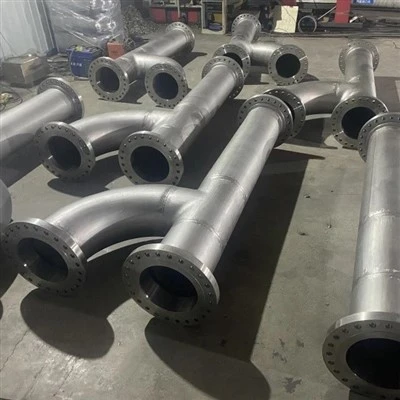
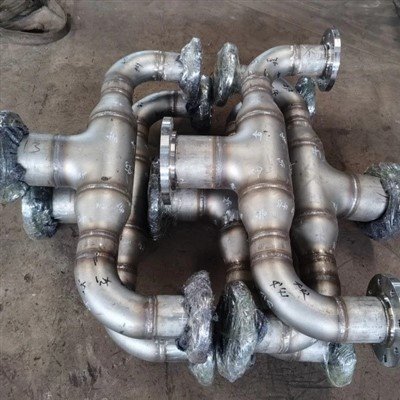
317L stainless steel is a molybdenum-bearing austenitic grade with low carbon content. However, to elevate its performance further, nitrogen is alloyed into 317L, creating variants such as 317LN with nitrogen levels typically ranging from 0.10% to 0.22%.

In this article, we outline the primary reasons for adding nitrogen to 317L stainless steel. By incorporating nitrogen-enhanced 317L into your projects, you gain access to superior materials that deliver enhanced durability, efficiency, and value, backed by our factory's rigorous quality standards.
Enhanced Corrosion Resistance
Nitrogen addition to 317L stainless steel significantly improves its resistance to pitting and crevice corrosion, making it more suitable for aggressive chemical environments.
The primary benefit of nitrogen in 317L lies in its ability to boost the steel's localized corrosion resistance, particularly in chloride-rich settings where pitting can lead to premature failure. By increasing the Pitting Resistance Equivalent Number (PREN = %Cr + 3.3×%Mo + 16×%N), nitrogen synergizes with chromium (18-20%) and molybdenum (3-4%) to form a more robust passive oxide layer that repels corrosive attacks.
For instance, standard 317L has a PREN around 28-30, but with 0.15% nitrogen, this can rise to 32-35, rivaling more expensive super-austenitic alloys. This enhancement is critical in applications such as seawater desalination plants or flue gas desulfurization systems, where exposure to halides and acids is constant.
Customers choosing our nitrogen-alloyed 317L report extended service life and reduced downtime, translating to cost savings and operational reliability.
Increased Mechanical Strength

Adding nitrogen to 317L stainless steel enhances its yield and tensile strength while maintaining excellent ductility, enabling thinner-walled components without sacrificing performance.
As an effective solid-solution strengthener, nitrogen atoms embed within the austenitic lattice, impeding dislocation movement and thereby elevating mechanical properties. Standard 317L exhibits a yield strength of about 205 MPa (30 ksi) and tensile strength of 515 MPa (75 ksi), but nitrogen additions can increase these to 275 MPa (40 ksi) and 620 MPa (90 ksi), respectively, depending on the exact alloying level.
This strengthening occurs without the brittleness associated with higher carbon content, preserving the steel's formability and impact toughness. In high-stress applications like pressure vessels or structural supports in petrochemical facilities, this allows for lighter designs, reducing material costs and easing installation.
At our factory, we verify these improvements through ASTM-standard tensile testing, ensuring consistency across batches. By opting for our enhanced 317L, engineers can achieve optimized designs that comply with stringent codes like ASME, fostering innovation and efficiency in your project.
Stabilized Austenitic Structure
Nitrogen stabilizes the austenitic phase in 317L stainless steel, promoting microstructural integrity and preventing undesirable phase transformations during processing and service.
Functioning as a potent austenite stabilizer-equivalent to about 30 times the effect of carbon-nitrogen counterbalances the ferrite-forming tendencies of chromium and molybdenum, ensuring a fully austenitic microstructure even after welding or hot forming. This stability minimizes risks like sigma phase precipitation or delta ferrite formation, which can cause embrittlement or reduced corrosion resistance at temperatures between 500-900°C.
In 317L, nitrogen helps maintain phase balance, enhancing hot workability and reducing cracking susceptibility. This is particularly advantageous in fabricating complex components for nuclear or aerospace industries, where thermal stability is paramount.
Our advanced melting techniques, including argon-oxygen decarburization (AOD), allow precise nitrogen infusion, confirmed by metallographic analysis. Clients benefit from materials that are easier to weld and more resistant to thermal fatigue, ensuring long-term performance and simplifying maintenance protocols.
Improved Resistance to Intergranular Corrosion
The addition of nitrogen to 317L stainless steel further reduces its vulnerability to intergranular corrosion by inhibiting sensitization at grain boundaries.
Although 317L's low carbon (≤0.03%) already curtails chromium carbide formation, nitrogen enhances this by preferentially forming stable nitrides or carbonitrides, which bind carbon and preserve chromium availability for the protective passive film. This mechanism is effective in the sensitizing temperature range of 425-815°C, common during welding or heat treatment, preventing grain boundary depletion of chromium that leads to intergranular attack.

Testing per ASTM A262 demonstrates that nitrogen-alloyed 317L exhibits no cracking in boiling copper sulfate-sulfuric acid solutions, outperforming non-nitrogen variants. Ideal for hygienic applications in food processing or pharmaceuticals, where sterilization involves heat and corrosives, this property ensures material integrity.
Our factory's solution annealing processes optimize this resistance, providing certified materials that meet FDA and USP standards, giving you peace of mind in regulatory compliance and product safety.
Boosted High-Temperature Performance
Nitrogen improves the high-temperature creep resistance and oxidation behavior of 317L stainless steel, extending its operational limits in elevated-temperature environments.

By strengthening grain boundaries and retarding diffusion processes, nitrogen enhances creep strength, allowing the steel to withstand prolonged stress at temperatures up to 870°C without excessive deformation. Compared to standard 317L, nitrogen additions can improve creep rupture life by 20-50%, as evidenced in Larson-Miller parameter evaluations.
Additionally, nitrogen promotes a denser, more adherent oxide scale, reducing oxidation rates in air or combustion gases. This makes nitrogen-enhanced 317L suitable for exhaust manifolds, furnace parts, or superheater tubes in power plants.
We conduct high-temperature testing in our labs to validate these properties, ensuring our products deliver under extreme conditions.
Cost-Effective Performance
Incorporating nitrogen into 317L stainless steel provides a economical way to achieve properties comparable to higher-alloyed steels, optimizing value for performance-driven applications.
Nitrogen, being abundant and inexpensive, allows us to upgrade 317L's attributes-such as combining superior corrosion resistance with increased strength-without the premium costs of additional nickel or molybdenum. This results in a material that bridges the gap between standard austenitics and duplex grades, offering a compelling cost-benefit ratio.
For example, in offshore oil and gas platforms exposed to sour environments, nitrogen-alloyed 317L can replace more expensive alternatives, saving up to 30% on material expenses while maintaining NACE MR0175 compliance.
Our efficient production methods, including ladle refining for nitrogen addition, keep prices competitive without quality compromises.
Conclusion
In summary, nitrogen is added to 317L stainless steel to enhance corrosion resistance, increase mechanical strength, stabilize the austenitic structure, improve intergranular corrosion resistance, boost high-temperature performance, and provide cost-effective enhancements.
Our factory's commitment to precision alloying and thorough testing ensures that our nitrogen-enhanced 317L products exceed expectations. Contact us today to explore how we can support your success with stainless steel solutions.