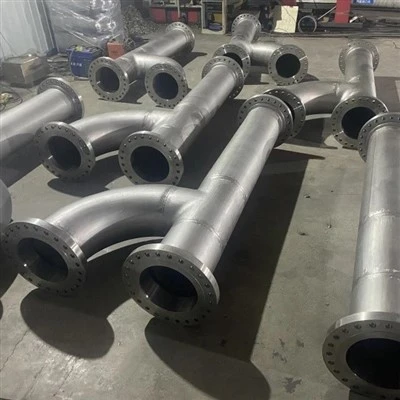
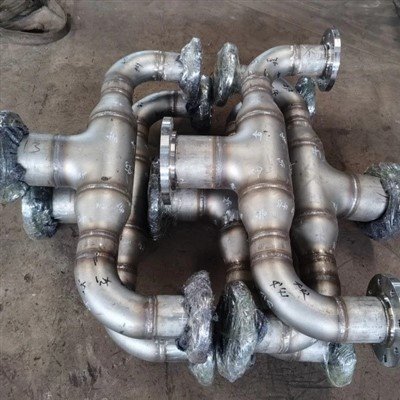
Buttweld pipe fittings are the fundamental, high-integrity connectors that form the backbone of critical piping systems across countless industries. Unlike threaded or socket weld alternatives, these fittings are welded directly to the pipe ends, creating a permanent, robust, and leak-resistant joint essential for demanding applications. Understanding buttweld fittings is crucial for engineers, designers, procurement specialists, and maintenance personnel involved in piping infrastructure.

What Is A Butt Weld Pipe Fittings?
A buttweld pipe fitting is a precision-manufactured component designed to connect seamlessly to pipes or other fittings via a butt weld. The term "butt" refers to the way the squared-off ends of the fitting and the pipe are aligned ("butted" together) before welding around the entire circumference. This creates a joint whose strength and integrity often match or exceed that of the pipe itself.
Their primary functions include:
- Changing Direction: (Elbows: 90°, 45°, custom angles)
- Branching Flow: (Tees: Equal, Reducing; Crosses)
- Changing Pipe Size: (Reducers: Concentric, Eccentric)
- Connecting Pipe Ends: (Couplings - though less common than flanges for direct connections)
- Stopping Flow: (Caps)
- Providing Access Points: (Laterals, Olets® - though Olets are often welded onto the pipe run itself)
- Extending Runs: (Stub Ends - used with lap joint flanges)
Why Choose Buttweld Fittings?
Buttweld fittings dominate high-pressure, high-temperature, and critical service piping for compelling reasons:
- Superior Leak Integrity: The full-penetration, circumferential weld creates a homogeneous connection vastly less prone to leakage compared to threaded or socket weld joints, especially under thermal cycling and vibration.
- High Strength & Durability: The welded joint provides excellent structural strength, capable of withstanding high internal pressures, external loads, and stresses. The flow path is smooth, minimizing turbulence and erosion.
- Smooth Bore & Reduced Pressure Drop: The internal diameter of the fitting closely matches the pipe's ID, creating a smooth, continuous flow path. This minimizes turbulence, pressure drop, and erosion/corrosion potential compared to fittings with abrupt changes or recesses.
- Long-Term Reliability & Safety: The robust, monolithic nature of the welded joint offers unparalleled long-term reliability in harsh environments (extreme temps, corrosive media, high pressure), enhancing overall system safety.
- Corrosion Resistance: The absence of threads or crevices (like in socket welds) eliminates potential sites for corrosion initiation and buildup (crevice corrosion).
- Durability Under Cyclic Loading: They perform exceptionally well under conditions involving thermal expansion/contraction cycles or vibration.
- Cost-Effectiveness (for critical systems): While the initial fabrication/welding cost is higher, their longevity, reduced maintenance, and lower risk of failure make them highly cost-effective over the lifespan of critical piping.
Common Types of Buttweld Fittings
- Elbows: Change direction. Common angles: 90°, 45°, 180° (Returns). Available in Long Radius (LR - 1.5x pipe diameter) for smoother flow and Short Radius (SR - 1.0x pipe diameter) for tighter spaces.
- Tees: Create branch connections. Equal Tees have the same size branch as the run. Reducing Tees have a branch size smaller than the run.
- Reducers: Change pipe diameter.
1.Concentric Reducers: Centerlines aligned. Used in vertical lines primarily.
2.Eccentric Reducers: One edge straight. Used in horizontal lines to maintain the Bottom of Pipe (BOP) or Top of Pipe (TOP) level, preventing air pockets (BOP flat) or sediment accumulation (TOP flat).
- Caps: Seal the end of a pipe.
- Stub Ends: Used with Lap Joint Flanges to create a boltable, demountable connection point while still using a butt weld to the pipe. The flange rotates freely around the stub end.
- Crosses: Less common, provide connections in four directions.
Butt Weld Pipe Fitting Materials
Buttweld fittings are manufactured from a vast range of materials to suit specific service conditions:
- Carbon Steel (CS): ASTM A234 WPB (most common), WPC, WPR. General service, moderate temps/pressure.
- Stainless Steel (SS): ASTM A403 WP304/304L, 316/316L, 321, 347, 904L, Duplex (31803/32205), Super Duplex (32750/32760). For corrosion resistance, high/low temps, hygiene.
- Alloy Steel: ASTM A234 WP1, WP5, WP9, WP11, WP22, WP91. For high-temperature service (power plants, refineries).
- Nickel Alloys: Inconel (625, 600), Monel (400, K500), Hastelloy (C276, C22), Nickel 200/201. For extreme corrosion resistance and high temps (chemical processing, offshore).
- Other Materials: Copper Nickel, Aluminum, Titanium (for specific corrosion/weight requirements).
Butt Weld Pipe Fitting Standards and Specifications
Adherence to strict dimensional and quality standards is paramount for interchangeability and safety:
- ASME B16.9: Factory-Made Wrought Buttwelding Fittings (Covers dimensions, tolerances, materials for Carbon & Alloy Steel, Stainless Steel - sizes NPS 1/2" to 48").
- ASME B16.28: Wrought Steel Buttwelding Short Radius Elbows and Returns (Covers SR elbows/returns).
- MSS SP-43: Standard Practice for Lightweight Stainless Steel Buttweld Fittings (Often for lower pressure/temp applications than B16.9).
- MSS SP-75: High Test Wrought Buttwelding Fittings (Covers high-strength CS & alloy fittings).
- MSS SP-79 / SP-73: Cover socket welding and threaded adapters outlet from buttweld fittings (e.g., buttweld x socket weld elbow).
- ASTM Material Specifications: Define chemical and mechanical properties (e.g., A234, A403, A420 for low-temp).
- ASME B16.25: Covers the preparation of the weld end bevels for fittings and pipe.
- International Equivalents: EN 10253 (Europe), JIS B2311/2312/2313 (Japan), GOST (Russia/CIS).
Butt Weld Pipe Fitting Applications
Buttweld fittings are essential in industries where system failure is catastrophic or prohibitively expensive:
- Oil & Gas: Upstream (wellheads, flowlines), Midstream (pipelines, pumping/compressor stations), Downstream (refineries, petrochemical plants). Handling crude, gas, LNG, refined products, chemicals under high P/T.
- Power Generation: Fossil fuel plants (coal, gas), Nuclear plants, Geothermal. Steam lines, feedwater, cooling water, fuel lines.
- Chemical & Petrochemical Processing: Handling corrosive acids, bases, solvents, and process intermediates at various temperatures and pressures.
- Pharmaceutical & Biotechnology: High-purity systems (WFI, CIP, SIP) requiring smooth surfaces and cleanability (often using electropolished SS).
- Pulp & Paper: Handling corrosive pulping liquors, steam, and process chemicals.
- Water & Wastewater Treatment: High-pressure lines, sludge handling, chemical feed systems.
- Shipbuilding & Offshore Platforms: Marine environments, ballast systems, fuel lines, process piping.
- HVAC (Large Scale): High-pressure steam and chilled water distribution.
Conclusion
Buttweld pipe fittings are far more than simple connectors; they are engineered components vital for constructing safe, reliable, and efficient high-performance piping systems. Their superior strength, leak integrity, smooth flow characteristics, and adaptability to extreme conditions make them the undisputed choice for critical applications across energy, process industries, and infrastructure. Understanding their types, materials, standards, advantages, and proper installation requirements is fundamental for anyone involved in designing, building, or maintaining the piping networks that power the modern world. When permanent, high-integrity connections are demanded, buttweld fittings deliver.