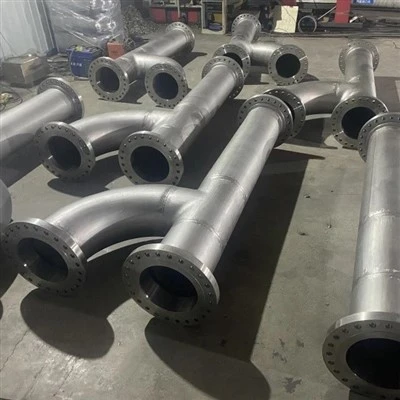
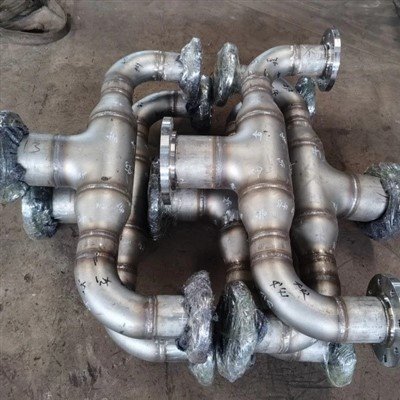
Stainless steel selection is critical in demanding industrial applications. While 904L Steel garners significant attention in luxury watches and specialized corrosive environments, Stainless Steel 347 (UNS S34700, EN 1.4550) serves a distinct and vital role, particularly where high temperatures and sensitization resistance are paramount. This article rigorously explores the primary applications and advantages of 347 Stainless Steel, clearly differentiating it from alloys like 904L Steel.

Understanding 347 Stainless Steel
347 Stainless Steel is an austenitic chromium-nickel stainless steel stabilized with columbium (niobium, Nb). Its key compositional features include:
- Chromium (Cr): ~17-19% (Provides oxidation & corrosion resistance)
- Nickel (Ni): ~9-13% (Stabilizes austenitic structure, improves toughness)
- Columbium (Cb/Nb): ~10x Carbon min (Typically 0.6-1.0%) - The critical stabilizer.
- Carbon (C): ≤ 0.08% (Low carbon minimizes chromium carbide formation)
- Manganese (Mn): ≤ 2.0%, Silicon (Si): ≤ 0.75%, Phosphorus (P): ≤ 0.045%, Sulfur (S): ≤ 0.030%
347 Stainless Steel Resistance Advantages
The defining characteristic of 347 SS is its resistance to sensitization. Sensitization occurs when standard austenitic steels like 304 or 316 are exposed to temperatures in the range of approximately 425-815°C (800-1500°F). At these temperatures, carbon diffuses to grain boundaries and reacts with chromium to form chromium carbides (Cr23C6). This depletes chromium in the areas adjacent to the grain boundaries, making them susceptible to intergranular corrosion (IGC) or intergranular attack (IGA), especially in corrosive environments like acids or chlorides.
How Stabilization Works: Columbium (Nb) has a much stronger affinity for carbon than chromium. During high-temperature exposure or welding, Nb preferentially combines with carbon to form stable niobium carbides (NbC). This effectively "locks up" the carbon, preventing significant chromium depletion at the grain boundaries and maintaining corrosion resistance in the HAZ and after high-temperature service.
Applications of 347 Stainless Steel
This resistance to sensitization, combined with good high-temperature strength and oxidation resistance, dictates its major industrial uses:
● High-Temperature Process Equipment and Petrochemical Industry:
Refinery and Petrochemical Plant Piping & Vessels: Critical for components operating continuously or intermittently within the sensitization temperature range (e.g., furnace parts, heat exchanger shells, transfer lines, reactor vessels). Used in catalytic cracking units, reformers, and hydrotreaters handling hydrocarbons and process streams.
Heat Exchangers and Boilers: Tubes, shells, and headers exposed to high temperatures where sensitization would compromise the integrity of standard 304/316. Superior for steam generation and process heating/cooling loops.
Thermal Oxidizers and Pollution Control Equipment: Components exposed to high exhaust gas temperatures and potential corrosive byproducts.
● Power Generation:
Fossil Fuel Power Plants: Superheater and reheater tubing, steam piping, headers, and other boiler components operating under high pressure and temperature (often exceeding 550°C / 1000°F). Resists steam oxidation and flue gas corrosion.
Nuclear Power (Secondary Circuits): Piping, heat exchangers, and vessels in non-reactor coolant system applications where high temperatures and potential sensitization are concerns.
● Aerospace and Jet Engines:
Exhaust Systems: Manifolds, ducts, and afterburner components requiring strength and oxidation resistance at elevated temperatures (up to ~900°C / 1650°F intermittently).
Combustor Liners and Afterburners: Some applications utilize 347 for its thermal stability.
● Welded Fabrications Operating at High Temperatures:
Any welded structure (pressure vessels, piping systems, structural components) intended for service where the weld heat-affected zone (HAZ) will be exposed to the sensitization temperature range during operation. 347 minimizes the risk of IGC failure in these welds.
Why Choose 347 Stainless Steel?
- Excellent Resistance to Intergranular Corrosion (IGC): Primary reason for selection, enabled by Nb stabilization.
- Good High-Temperature Strength: Maintains useful mechanical properties (creep and stress rupture strength) at elevated temperatures better than standard 304/316, though less than dedicated high-temperature alloys.
- Good Oxidation Resistance: Up to approximately 870°C (1600°F) in continuous service, and higher for intermittent exposure. Forms a stable chromium oxide layer.
- Good Fabricability & Weldability: Can be readily formed and welded using standard austenitic stainless steel techniques (TIG, MIG, SAW, MMA). Post-weld heat treatment is generally not required to prevent sensitization in the HAZ. Stabilization ensures weld integrity for high-temp service.
- Good General Corrosion Resistance: Comparable to 321 and 304 in many mild environments (atmospheric, water, food acids), but not as resistant as 316 in chloride environments or 904L Steel in aggressive acids/seawater.
347 Stainless Steel vs. 904L Steel
It's crucial to understand that 347 SS and 904L Steel serve vastly different purposes and should not be confused:
|
Feature |
347 Stainless Steel (S34700) |
904L Steel (N08904) |
|
Primary Purpose |
Resist Sensitization & IGC at High Temp |
Resist Pitting/Crevice Corrosion in Aggressive Media |
|
Key Alloying |
~18% Cr, 10% Ni, Nb Stabilization |
~20% Cr, 25% Ni, 4.5% Mo, 1.5% Cu |
|
PREN |
~18-20 |
35-39 |
|
Max Temp Focus |
High Temp (500-900°C) |
Ambient to Moderate Temp (<~50°C) |
|
Corrosion Focus |
Prevent Intergranular Attack (IGA) |
Prevent Pitting/Crevice Corrosion (Acids, Seawater) |
|
Typical Cost |
Moderate Premium over 304/316 |
Significantly Higher |
|
Dominant Applications |
Refineries, Power Plants, High-Temp Welds, Aerospace Exhaust |
Chemical Processing, Seawater Equipment, Pharma, Luxury Watches (Rolex Oystersteel) |
- Corrosion Resistance: 904L Steel, with its high Mo, Cr, Ni, and Cu content, offers vastly superior resistance to pitting, crevice corrosion, and uniform corrosion in aggressive environments like sulfuric acid, phosphoric acid, chlorides (seawater), and reducing acids. 347 offers good general corrosion resistance but lacks the Mo/Cu for severe conditions.
- Temperature Focus: 347 excels in applications above 500°C where sensitization is a risk. 904L Steel is not designed for sustained high-temperature service; prolonged exposure above 400°C can lead to detrimental phase precipitation (sigma, chi) and loss of corrosion resistance.
- Cost and Fabrication: 904L Steel is significantly more expensive and much harder/more abrasive to machine than 347 due to its high alloy content and work-hardening rate.
Conclusion
347 Stainless Steel is the material of choice when the primary threat is intergranular corrosion due to sensitization during high-temperature service or welding. Its niobium stabilization makes it indispensable in refineries, power plants, high-temperature processing equipment, aerospace exhausts, and welded fabrications operating within the critical temperature range. While it provides adequate general corrosion resistance, it is fundamentally different from, and not interchangeable with, highly alloyed corrosion-resistant super-austenitic steels like 904L Steel. 904L Steel dominates where extreme resistance to pitting and crevice corrosion in aggressive chemical or marine environments is the absolute priority, regardless of cost. Selecting between 347 and 904L Steel hinges entirely on the specific service environment – temperature, corrosive media, and stress conditions – demanding rigorous technical evaluation.