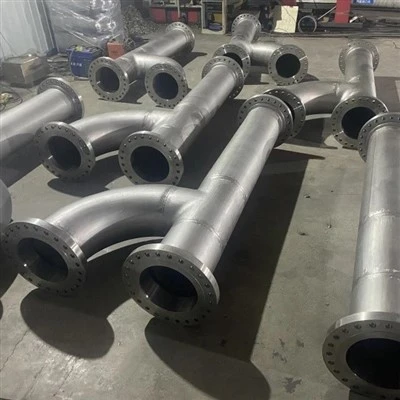
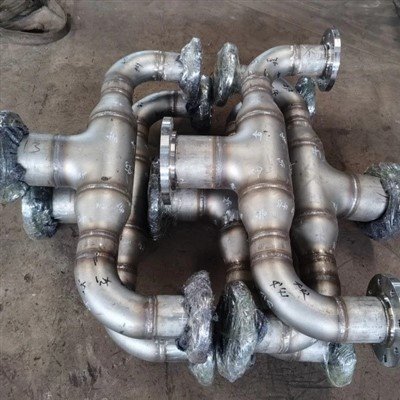
UNS N02200 (Nickel 200) is a commercially available pure nickel forging alloy with a nickel content of at least 99.0%, renowned for its exceptional corrosion resistance, high thermal and electrical conductivity, and excellent mechanical stability over a wide temperature range.

Its chemical composition is strictly controlled to ensure superior performance in demanding applications such as chemical processing, electronics, aerospace, and food processing.
The following details its composition, the role of each composition, and how they affect the material's properties.
UNS N02200 Chemical Composition
The composition of Nickel 200 is defined by strict limits for both major and trace elements, as standardized in specifications ASTM B160.
The following table summarizes the weight percentages:
|
Element |
Required Range (% by weight) |
Primary Function |
|
Nickel (Ni) |
≥99.0 (including cobalt) |
Base metal providing corrosion resistance, ductility, and conductivity |
|
Iron (Fe) |
≤0.40 |
Enhances strength at high temperatures; kept low to maintain purity |
|
Carbon (C) |
≤0.15 |
Controls high-temperature stability; excess can cause graphite precipitation |
|
Copper (Cu) |
≤0.25 |
Improves corrosion resistance in reducing acids; minimized to avoid compromising nickel's purity |
|
Manganese (Mn) |
≤0.35 |
Aids in sulfur control and hot workability |
|
Silicon (Si) |
≤0.35 |
Enhances oxidation resistance; improves fluidity during welding |
|
Sulfur (S) |
≤0.010 |
Strictly limited to prevent hot cracking and embrittlement |
The high purity of nickel 200 is fundamental to its performance. Unlike alloy steel, it does not contain large amounts of chromium or molybdenum, but relies on nickel's inherent resistance to caustic alkalis, neutral salts, and non-oxidizing acids.
Even minute deviations in composition can significantly affect its weldability, high-temperature performance, and corrosion resistance.
Role of UNS N02200 Main Composition
The high nickel content gives the alloy a face-centered cubic crystal structure, which ensures exceptional ductility and toughness even at cryogenic temperatures. This structure also supports the alloy's ferromagnetism and high Curie temperature.

The purity minimizes the formation of intermetallic phases, making Nickel 200 a single-phase solid solution with predictable behavior in corrosive environments.
Carbon is carefully restricted to ≤0.15% because it can precipitate as graphite when the alloy is exposed to temperatures between 425°C and 650°C for prolonged periods.
This precipitation reduces ductility and promotes intergranular corrosion. For this reason, Nickel 200 is not recommended for sustained service above 315°C; instead, the low-carbon variant Nickel 201 is preferred for high-temperature applications.
Sulfur is limited to ≤0.01% to avoid hot shortness. At high temperatures, sulfur can form low-melting-point nickel sulfide at grain boundaries, leading to cracking. Manganese is added to mitigate this by forming stable manganese sulfides, which have higher melting points.
Other Composition and Impact
Iron (≤0.40%): While iron can slightly improve strength, excessive iron reduces resistance to certain corrosives. It is kept low to maintain the purity of nickel's corrosion response.
Copper (≤0.25%): Copper enhances resistance to reducing acids like sulfuric and hydrochloric acid. However, in Nickel 200, it is minimized to avoid interfering with nickel's natural passivation in alkaline environments.
Silicon (≤0.35%): Silicon improves oxidation resistance and deoxidizes the melt during production. In welding, it helps prevent porosity but must be controlled to avoid brittleness.
Nickel 200 vs. Nickel 201
Nickel 201 is a variant with an even lower carbon content. While both grades share similar corrosion resistance, Nickel 201 is explicitly designed for services above 315°C where graphite precipitation risks are high.
For most applications below this temperature, Nickel 200's slightly higher carbon content has no adverse effects and may improve room-temperature strength slightly.
How Composition Influences Performance
Corrosion Resistance: The high nickel content provides immunity to chloride stress corrosion cracking and exceptional resistance to caustic soda and other alkalies.

Fabrication: The balanced manganese and silicon levels enable
excellent hot and cold work ability. The low sulfur and carbon content ensure good weld ability by methods like GTAW/TIG and GMAW/MIG.
Physical Properties: The purity directly correlates with high magnetic permeability and magnetostrictive properties, useful in sensors and transducers.
Excellent Corrosion Resistance: The high nickel content provides outstanding resistance to caustic alkalis, even in molten states, and good performance in various acids, salts, and neutral solutions, particularly under reducing conditions.
Good Mechanical Properties: It offers a favorable combination of tensile strength, yield strength, and ductility in the annealed condition, which can be further enhanced through cold working.
High Thermal and Electrical Conductivity: As a commercially pure metal, it exhibits higher conductivity compared to more heavily alloyed metals.
Useful Magnetic Properties: Nickel 200 is ferromagnetic and possesses useful magnetostrictive properties.