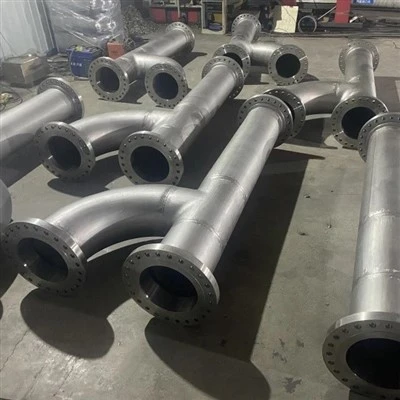
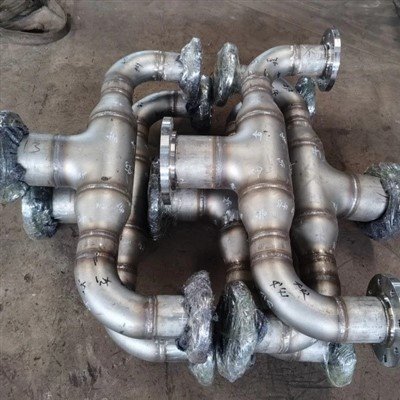
Steel 317L is a low-carbon, molybdenum-bearing austenitic stainless steel. Compared to the more common 304 or even 316L grades, 317L offers significantly higher resistance to chemical attack, particularly in environments containing chlorides, sulfuric acid, and other organic acids.

The "L" in 317L denotes low carbon, which minimizes carbide precipitation during welding. However, the primary cost driver is the Molybdenum content. While 316L contains 2.0–3.0% Mo, 317L contains 3.0–4.0%.Molybdenum is a volatile commodity. Its price fluctuations directly dictate the surcharge on every kilogram of flange we produce.
When you see a price increase in 317L, you are often seeing a direct correlation to the global molybdenum market.
Steel 317L Slip On Flange Price List
Based on current market analysis, the following price ranges represent typical costs for ASTM A182 F317L slip-on flanges.
Small Diameter Flanges (½" - 2")
|
Size |
Class 150 |
Class 300 |
|
½" |
$15 - $25 |
$20 - $35 |
|
1" |
$20 - $35 |
$28 - $45 |
|
2" |
$30 - $50 |
$40 - $65 |
|
Size |
Class 150 |
Class 300 |
|
3" |
$55 - $85 |
$75 - $115 |
|
4" |
$80 - $120 |
$105 - $160 |
|
6" |
$130 - $190 |
$175 - $250 |
|
Size |
Class 150 |
Class 300 |
|
8" |
$220 - $320 |
$300 - $430 |
|
10" |
$320 - $470 |
$450 - $630 |
|
12" |
$450 - $650 |
$600 - $850 |
Technical Specifications Influencing Pricing
A standard price list for 317L Slip On Flanges is categorized by specific technical parameters. The following factors are the primary determinants of the final unit cost:

Nominal Pipe Size (NPS) and Diameter: Naturally, larger flanges require more raw material. However, the price increase is not purely linear. As the diameter increases, the forging process becomes more complex, requiring larger machinery and higher energy consumption.
A 24-inch flange costs significantly more per kilogram than a 2-inch flange due to these manufacturing constraints.
Pressure Class: Slip On flanges are available in various pressure ratings, typically ASME B16.5 Class 150, 300, 600, and higher. A Class 300 flange has a thicker hub and welding neck than a Class 150 flange of the same diameter.
This increase in wall thickness directly increases the weight and the machining time, resulting in a higher price. Clients must specify the exact pressure rating required for their system; over-specifying leads to unnecessary expenditure, while under-specifying compromises safety.
Standards and Dimensions: Our factory produces flanges according to ASME B16.5, EN1092-1, and JIS B2220 standards. While dimensions are similar, tolerances differ.
EN1092-1 flanges often require stricter dimensional controls for European projects, which can slightly impact machining time and cost compared to standard ASME versions.
Understanding the Price List Structure
Our factory provides a structured price list to facilitate easy budgeting. Typically, the list is organized by NPS size and pressure class. Prices are usually quoted in two ways: per piece or per kilogram.

Per Piece: Convenient for smaller orders or standard sizes. It allows for quick total cost calculation.
Per Kilogram: More accurate for large diameters or non-standard dimensions. Since material weight is the primary cost driver, this method protects both the buyer and seller from raw material weight variances.
Indicative Pricing Logic:
While specific numbers fluctuate, a logical hierarchy exists. For example, a 2-inch Class 150 317L SO Flange will serve as the baseline. A 2-inch Class 300 will cost approximately 30-40% more due to increased weight. A 4-inch Class 150 will cost roughly double the 2-inch version. Additionally, volume tiers apply. Orders exceeding one ton typically qualify for a 5-10% discount, as bulk production optimizes furnace usage and reduces setup times.
It is crucial to note that the Steel 317L Slip On Flange Price is generally 20-30% higher than 316L equivalents due to the higher molybdenum content. Procurement teams should budget accordingly when upgrading systems from 316L to 317L for enhanced corrosion resistance.
Steel 317L Slip On Flange Factory Direct Advantage
In the metal industry, supply chains are often layered with traders and stockists. Each intermediary adds a margin, inflating the final price without adding value.
As a manufacturer, we offer factory-direct pricing. This eliminates middleman markups, allowing us to offer competitive rates while maintaining high margins for quality control.
Furthermore, direct manufacturing ensures traceability. When you purchase from us, you know exactly which heat number the steel came from, when it was forged, and who inspected it.
Our price list reflects this supply chain efficiency. We invest in modern CNC machining centers and automated forging lines, which reduce labor costs and improve precision.
Logistics and Lead Time Considerations
Finally, a comprehensive cost analysis must include logistics. 317L flanges are heavy. Shipping costs, whether by sea or air, impact the landed cost. Our factory is strategically located near major shipping ports, minimizing inland transportation fees.
Additionally, lead time affects project costs. Delays in flange delivery can halt entire pipeline installations. Our standard lead time for 317L Slip On Flanges is 4-6 weeks, depending on size and quantity. Rush orders are available but incur an expedited manufacturing fee, which is clearly outlined in our comprehensive quotation documents.
Conclusion
Our factory is committed to providing transparent, rigorous, and competitive pricing for 317L Slip On Flanges. We believe that trust is built on clarity. By understanding the factors detailed above, you can make informed procurement decisions that ensure the safety and longevity of your piping systems.
For the most accurate and up-to-date pricing tailored to your specific project requirements, we invite you to contact our sales team.