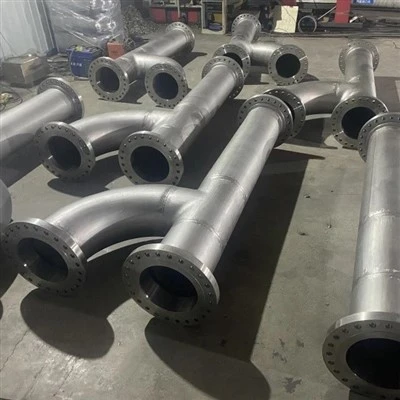
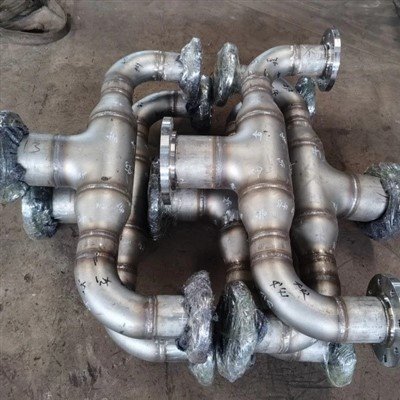
Introduction to Stainless Steel Pipe Fittings
Pipe fittings are the "joints" of any piping system, enabling changes in direction, branching, and diameter transitions. In stainless steel and nickel alloy applications-from chemical processing to offshore oil & gas-the integrity of these components is critical. A single poorly specified fitting can lead to corrosion, leakage, or catastrophic failure.

This guide focuses on three core fitting types: elbows (direction changes), tees (branching), and reducers (diameter transitions). We'll cover:
- Applicable standards (ASME B16.9, B16.28, MSS SP-43, etc.)
- Dimensional specifications and tolerances
- Material grade selection (304L, 316L, duplex, Inconel, etc.)
- Sizing methodology and schedule (SCH 10S to XXS)
- Application-specific recommendations
Fitting Types and Definitions
Elbows redirect pipe flow. The two primary angles are 90° and 45°, though custom angles (60°, 180° returns) are available.
90° Elbows
Most common. Available in two radii:
Long Radius (LR): Center-to-end dimension = 1.5 × pipe OD. Preferred for low-pressure drop.
Short Radius (SR): Center-to-end = 1.0 × pipe OD. Used in tight spaces.
45° Elbows
Used for gradual direction changes. Only available in long radius. Reduces turbulence compared to two 90° elbows.
Tees (Branching Connections)
Tees create branch connections. Two variants:
Equal Tee: All three outlets same diameter. Used for dividing flow equally.
Reducing Tee: Branch outlet smaller than run. Used when branch line requires smaller pipe.
Reducers (Diameter Transitions)
Reducers connect pipes of different diameters. Two types:
Concentric Reducer: Symmetrical, centerline remains straight. Used for vertical piping or when flow symmetry matters.
Eccentric Reducer: Offset centerline. Used for horizontal piping to prevent air/gas pocket accumulation (flat side up) or sedimentation (flat side down).
Standards and Specifications
Stainless steel pipe fittings are governed by several key standards. Understanding these ensures proper specification and procurement.
|
Standard |
Scope |
Fitting Types |
Pressure Rating |
|
ASME B16.9 |
Factory-made wrought butt-welding fittings |
Elbows, tees, reducers, caps |
Up to SCH 160 |
|
ASME B16.28 |
Wrought steel butt-welding short radius elbows and returns |
SR 90° elbows, returns |
Up to SCH 160 |
|
MSS SP-43 |
Corrosion-resistant butt-welding fittings (lightweight) |
Elbows, tees, reducers |
SCH 5S to 40S |
|
ASME B16.11 |
Forged fittings, socket-welding and threaded |
Elbows, tees, couplings (small sizes) |
2000# to 9000# |
ASME B16.9 - The Primary Standard
- ASME B16.9 covers factory-made wrought butt-welding fittings in sizes NPS 1/2 through NPS 48 (DN 15 to DN 1200). It specifies:
- Dimensions (center-to-end for elbows, outlet dimensions for tees, etc.)
- Tolerances (±0.06 inch for most dimensions)
- Wall thickness requirements (minimum tangential thickness)
- End preparation (bevel angle 37.5° ± 2.5° per ASME B16.25)
MSS SP-43 vs. ASME B16.9 - Lightweight Fittings
MSS SP-43 is specifically for corrosion-resistant applications (stainless steel, nickel alloys). Key differences:
|
Feature |
MSS SP-43 |
ASME B16.9 |
|
Wall Thickness |
Thinner (matches pipe SCH 5S to 40S) |
Heavier (up to SCH 160) |
|
Application |
Corrosion-resistant services |
High-pressure, general service |
|
Cost |
Lower (less material) |
Higher |
Material Grades for Stainless Steel Fittings

Selecting the correct material grade is as critical as choosing the right dimensions. Below are the most common grades for pipe fittings.
|
Grade |
UNS Number |
Key Properties |
Typical Applications |
|
304/304L |
S30400/S30403 |
18% Cr, 8% Ni; general corrosion resistance |
Food processing, dairy, architectural |
|
316/316L |
S31600/S31603 |
16% Cr, 10% Ni, 2% Mo; improved pitting resistance |
Marine, chemical processing, pharmaceuticals |
|
321 |
S32100 |
Ti-stabilized; resists intergranular corrosion after heating |
High-temperature applications, aerospace |
|
347 |
S34700 |
Nb-stabilized; similar to 321 but higher strength |
High-temperature, nuclear, chemical |
|
2205 Duplex |
S32205 |
22% Cr, 5% Ni, 3% Mo; high strength, chloride resistance |
Offshore, desalination, pulp & paper |
Dimensional Specifications and Tolerances
Center-to-end dimension (A) is the key measurement for elbows. For long radius 90° elbows: A = 1.5 × pipe OD. For short radius: A = 1.0 × pipe OD.
|
Pipe Size (NPS) |
LR 90° A (inch) |
SR 90° A (inch) |
LR 45° A (inch) |
|
1 |
1.5 |
1.0 |
0.75 |
|
2 |
3.0 |
2.0 |
1.5 |
|
4 |
6.0 |
4.0 |
3.0 |
|
6 |
9.0 |
6.0 |
4.5 |
Tee Dimensions
For equal tees, the outlet dimensions match the run pipe size. For reducing tees, the branch outlet is smaller. JN Alloys can supply both equal and reducing tees in all standard grades.
Reducer Dimensions
Reducers are specified by large end diameter × small end diameter × length. Length is typically 3× the diameter difference (per ASME B16.9).
Sizing and Schedule (SCH)
Pipe schedule (SCH) indicates wall thickness. Common schedules for stainless steel fittings:
- SCH 5S/10S: Thin-wall, low pressure (MSS SP-43)
- SCH 40S: Standard wall, most common for corrosion service
- SCH 80S: Extra strong, higher pressure
- SCH 160: Extra heavy, high-pressure applications
|
Application |
Recommended SCH |
Reason |
|
Food & beverage |
SCH 10S |
Low pressure, corrosion resistance priority |
|
Chemical processing |
SCH 40S |
Balance of pressure and cost |
|
Offshore / subsea |
SCH 80S / 160 |
High pressure, mechanical strength |
Frequently Asked Questions
Q1: What's the difference between LR and SR elbows?
A: Long Radius (LR) elbows have a center-to-end dimension of 1.5× pipe OD, providing lower pressure drop. Short Radius (SR) elbows have a dimension of 1.0× pipe OD, used in space-constrained installations. LR is preferred for most applications.
Q2: When should I use concentric vs. eccentric reducers?
A: Use concentric reducers for vertical piping or when flow symmetry is required. Use eccentric reducers for horizontal piping-flat side up prevents air/gas pockets (venting), flat side down prevents sedimentation (draining).
Q3: What material grade should I choose for seawater applications?
A: For seawater, 316L may be insufficient due to pitting corrosion. Recommended grades are 2205 duplex (S32205) or super duplex (S32760). For extreme conditions, consider Inconel 625 (UNS N06625) or Hastelloy C-276.
Q4: Are MSS SP-43 fittings interchangeable with ASME B16.9?
A: Not always. MSS SP-43 fittings are lighter (thinner walls) and designed for corrosion-resistant services at lower pressures. Using SP-43 fittings in high-pressure applications can be dangerous. Always verify pressure requirements before substitution.
Conclusion
Selecting the right stainless steel pipe fittings requires balancing standards compliance, material grade, dimensions, and application requirements. Key takeaways:
- Always specify the standard (ASME B16.9, MSS SP-43, etc.) in procurement documents.
- Match material grade to the most corrosive component in the system.
- For seawater or chloride environments, upgrade to duplex or super austenitic grades.
- Verify end preparation (bevel angle) matches welding procedure specifications.
- Request mill test reports (MTRs) and material traceability documentation.
For technical consultation or to request a quote for stainless steel pipe fittings, contact JN Alloys at www.jnalloys.com
Our technical team can assist with material selection, standards compliance, and custom dimension requirements.