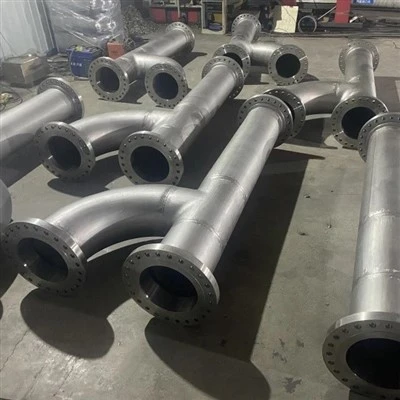
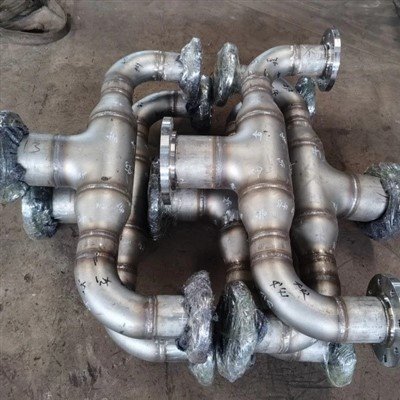
Key Insight: 316L stainless steel is the industry default for pharmaceutical cleanrooms because it combines low carbon content (prevents weld sensitization), molybdenum-enhanced pitting resistance, and full compliance with FDA, EU GMP, and ASME BPE requirements.

Introduction
Pharmaceutical cleanrooms are among the most demanding environments for construction materials. Equipment, piping, and structural components must withstand repeated chemical disinfection, maintain zero-shedding surfaces, resist microbial colonization, and comply with a complex web of global GMP regulations. Choosing the wrong grade of stainless steel can trigger contamination events, batch failures, and costly regulatory citations.
This guide answers the three questions that every pharmaceutical engineer, procurement manager, and quality professional needs answered before specifying stainless steel in a cleanroom project:
• What do regulators actually require?
• Which grades are technically suitable - and why?
• How should grade selection vary by application zone and risk level?
Every claim in this article is supported by a cited standard or peer-reviewed reference. All comparative tables include explicit data sources.
What Is a Pharmaceutical Cleanroom?
A pharmaceutical cleanroom is a controlled environment where airborne particulate counts, microbial contamination, temperature, humidity, and pressure differentials are tightly regulated to protect product quality and patient safety. Under EU GMP Annex 1 (2022) and ISO 14644-1:2015, cleanrooms are classified by the maximum allowable particle concentrations per cubic metre.
Cleanroom Classification Overview
| EU GMP Grade | ISO Class | Max Particles ≥0.5 µm/m³ (at rest) | Max Particles ≥5.0 µm/m³ (at rest) | Max Viable CFU/m³ | Typical Application |
| Grade A | ISO 5 | 3,520 | 20 | <1 | Filling zones, open product containers |
| Grade B | ISO 5 | 3,520 | 29 | 10 | Background for Grade A aseptic operations |
| Grade C | ISO 7 | 352,000 | 2,900 | 100 | Less critical sterile manufacturing steps |
| Grade D | ISO 8 | 3,520,000 | 29,000 | 200 | Non-sterile operations, component prep |
Source: EU GMP Annex 1 - Manufacture of Sterile Medicinal Products (2022), Table 1 (European Commission, 2022); ISO 14644-1:2015 Cleanrooms and Associated Controlled Environments.The grade classification directly determines the minimum material requirements. Grade A/B environments demand the highest material standards because any particle generation or corrosion product can directly contaminate sterile product.
GMP Regulatory Requirements for Cleanroom Materials
Every major GMP framework requires that materials used in pharmaceutical manufacturing be non-reactive, non-additive, and non-absorptive. This principle is expressed in language that consistently points to 316L stainless steel as the preferred solution.

Regulators do not mandate a specific AISI grade by name in most cases. However, the functional requirements - corrosion resistance, chemical inertness, cleanability, no particle generation - effectively eliminate all options except austenitic stainless steel grades, with 316L overwhelmingly preferred.
Major Regulatory Frameworks Compared
| Regulation / Standard | Issuing Authority | Key Material Requirement (Verbatim or Close Summary) | Effective / Updated |
| EU GMP Annex 1 | European Commission / EMA | "Equipment must be constructed of materials that do not react with, add to, or absorb the product... Surfaces in contact with product shall be smooth, free from cracks and open joins." (Section 4.31) | Revised 2022; effective August 2023 |
| FDA 21 CFR §211.65 | U.S. Food & Drug Administration | "Equipment shall be constructed so that surfaces that contact components... shall not be reactive, additive, or absorptive so as to alter the safety, identity, strength, quality, or purity of the drug product." | Current Good Manufacturing Practice (cGMP), regularly updated |
| FDA 21 CFR §211.67 | U.S. Food & Drug Administration | "Equipment and utensils shall be cleaned, maintained, and sanitized at appropriate intervals to prevent malfunctions or contamination that would alter the safety, strength, identity, quality, or purity of the drug product." | Integral to cGMP framework |
| ASME BPE-2022 | American Society of Mechanical Engineers | Specifies 316L (UNS S31603) as the primary material for bioprocessing equipment; mandates internal surface finish Ra ≤ 0.5 µm (electropolished) for product-contact applications. | ASME BPE-2022 (latest edition) |
| ASTM A270 / A270M | ASTM International | Covers seamless and welded austenitic stainless steel tubing for sanitary/hygienic applications; specifies grades 304 and 316L; surface finish requirements for interior bore. | ASTM A270/A270M-24 (2024 revision) |
| ISO 14644-1:2015 | ISO Technical Committee 209 | Classification of air cleanliness by particle concentration. Does not specify materials directly, but contamination-control requirements implicitly mandate non-shedding, non-corroding surfaces. | ISO 14644-1:2015 (confirmed 2021) |
| ISPE Baseline Guide Vol. 4 (Water & Steam) | International Society for Pharmaceutical Engineering | Recommends 316L for WFI distribution systems; specifies electropolished interior finish and periodic passivation per ASTM A967. | 3rd Edition, 2023 |
Sources: European Commission (2022). EU GMP Annex 1. FDA (2023). 21 CFR Parts 210 & 211. ASME (2022). BPE-2022 Standard. ASTM International (2024). A270/A270M-24. ISPE (2023). Baseline Guide Volume 4, 3rd Edition.
What Do These Requirements Mean in Practice?
Taken together, these regulations establish five non-negotiable material requirements for pharmaceutical cleanroom components:• Chemical inertness: no leaching of elements into product streams• Corrosion resistance: withstands sterilization agents (steam, VH₂O₂, IPA, sodium hypochlorite)• Cleanability: smooth, non-porous surface that can be validated clean by TOC and conductivity testing• Weldability: heat-affected zones must not corrode or generate particles (critical for piping systems)• Traceability: material certificates (3.1 per EN 10204) must document composition and mechanical properties
Stainless Steel Grade Comparison for Pharmaceutical Cleanrooms
Chemical Composition
The performance differences between cleanroom-relevant grades stem directly from their chemical composition. Understanding elemental roles enables sound material selection.
| Element / Property | AISI 304 | AISI 316 | AISI 316L | AISI 317L | AISI 904L | Functional Role in Cleanroom |
| Chromium (Cr) | 18–20% | 16–18% | 16–18% | 18–20% | 19–23% | Forms passive oxide layer; primary corrosion barrier |
| Nickel (Ni) | 8–10.5% | 10–14% | 10–14% | 13–17% | 23–28% | Stabilizes austenite phase; enhances toughness |
| Molybdenum (Mo) | None | 2–3% | 2–3% | 3–4% | 4–5% | Critical for chloride pitting resistance; enables use with disinfectants |
| Carbon (C) Max | 0.08% | 0.08% | 0.030% | 0.030% | 0.020% | Low carbon prevents chromium carbide precipitation in weld HAZ (sensitization) |
| PREN* | ~18–22 | ~24–27 | ~24–27 | ~30–33 | ~36–40 | Pitting Resistance Equivalent Number: higher = better |
| Cleanroom Suitability | Limited (non-contact) | Good | Excellent ✓ | Superior | Premium | 316L is the industry-standard baseline |
* PREN = %Cr + 3.3×%Mo + 16×%N. Sources: ASTM A240/A240M-24 (Plate/Sheet/Strip). ASTM A312/A312M-22 (Pipe). Atlas Steels Technical Handbook, 6th Edition (2020). IGUÑA PHARMA (2025). "Selection Guide for Stainless Steels 304, 316, and 316L in Critical Environments."
Mechanical & Physical Properties
| Property | AISI 304 | AISI 316 | AISI 316L | Test Standard |
| Tensile Strength (min) | 515 MPa (75 ksi) | 515 MPa (75 ksi) | 485 MPa (70 ksi) | ASTM A312/ASTM E8 |
| Yield Strength (min, 0.2% offset) | 205 MPa (30 ksi) | 205 MPa (30 ksi) | 170 MPa (25 ksi) | ASTM A312 / EN 10088-2 |
| Elongation (min, 2-inch gauge) | 35% | 35% | 35% | ASTM E8M |
| Hardness (Brinell, typical) | ≤217 HB | ≤217 HB | ≤217 HB | ASTM E10 |
| Density (g/cm³) | 7.93 | 7.98 | 7.98 | ASTM A276 / Vendor Data |
| Magnetic Response | Non-magnetic (annealed) | Non-magnetic (annealed) | Non-magnetic (annealed) | ASTM A342 / EN 10088 |
| Max Continuous Service Temp. | 870 °C (1600 °F) | 870 °C (1600 °F) | 870 °C (1600 °F) | ASTM A276 / Industry Data |
Sources: ASTM A312/A312M-22 (Seamless & Welded Austenitic Pipe). ASTM A240/A240M-24 (Plate, Sheet, Strip). EN 10088-2:2014 (European Standard for Stainless Steels). Atlas Steels Technical Handbook, 6th Edition (2020).
Surface Finish Requirements

Surface roughness is one of the most consequential variables in pharmaceutical cleanroom material selection. Rough surfaces trap microorganisms, resist cleaning validation, and generate particles. GMP regulators and standards bodies have established quantitative requirements that every procurement specification must address.
The Ra Parameter Explained
Ra (arithmetic mean roughness) measures the average deviation of surface peaks and valleys from the mean line across a sampling length. For pharmaceutical applications, lower Ra values indicate smoother surfaces that clean more easily and resist biofilm formation. Ra is measured per ISO 4287:1997 and ASME B46.1.
Surface Finish Standards by Application
| Application Zone | Required Ra (µm) Max | Finish Method | Standard | ASME BPE Designation | Typical Examples |
| WFI / PW piping (product contact) | ≤ 0.5 µm | Electropolished (EP) | ASME BPE-2022 | SF4 (EP) | WFI loops, CIP circuits, sterile piping |
| Sterile product vessels (internal) | ≤ 0.8 µm | Mechanical polish or EP | ASME BPE / 3-A 18-03 | SF1 (MP) / SF4 (EP) | Mixing vessels, bioreactors, filling equipment |
| Grade A/B cleanroom surfaces (walls, floor pans) | ≤ 0.8 µm | Mechanically polished (2B/2D + polish) | EU GMP Annex 1 (2022) §4.31 | SF1 / SF2 | Isolator enclosures, RABS panels, sink units |
| Grade C/D cleanroom equipment (non-contact) | ≤ 1.6 µm | Mill finish (2B) or brushed | ISPE Guide; FDA guidance (general) | SF2 / SF3 | Storage racks, trolleys, frames |
| Exterior/non-product-contact structural | ≤ 3.2 µm | #4 brushed / 2B mill | General engineering | SF3 | Structural frames, utility brackets |
Sources: ASME BPE-2022, Part SF (Surface Finish). EU GMP Annex 1 (2022), Section 4. 3-A Sanitary Standards 18-03 (2020). ISPE Baseline Guide Volume 5: Commissioning and Qualification, 2nd Edition (2019). Getinge (2025). "Surface Finishing Standards in Steam Sterilizers for cGMP Pharmaceutical Facilities."
Electropolishing vs. Mechanical Polishing
Electropolishing (EP) is the superior surface treatment for pharmaceutical cleanrooms. It is not simply a shinier version of mechanical polishing - it fundamentally changes the surface chemistry and topology.
| Parameter | Mechanical Polishing (MP) | Electropolishing (EP) |
| Surface Mechanism | Abrasive removal; creates directional micro-scratches | Electrochemical dissolution; removes peaks preferentially |
| Achievable Ra | 0.4–1.6 µm (typical) | 0.1–0.5 µm (typical); to ≤ 0.25 µm achievable |
| Chromium Enrichment | Minimal; may embed abrasive particles | Cr/Fe ratio increases by 50–80%; stronger passive layer |
| Pitting Corrosion Resistance | Standard | 30× better than passivation alone (per Able Electropolishing) |
| Biofilm Resistance | Moderate; directional scratches can trap bacteria | Excellent; isotropic surface resists biofilm attachment |
| Rouge Formation Risk | Higher (iron-rich surface) | Lower (chromium-enriched surface) |
| Governing Standard | ASME B46.1; 3-A 18-03 | ASTM B912; ASME BPE-2022 Part SF |
| Mandatory For | Grade C/D equipment; structural elements | WFI systems; Grade A/B sterile-contact surfaces; injectable manufacturing |
Sources: Able Electropolishing (2024). "Passivation vs. Electropolishing: Corrosion Protection Comparison." ASTM B912-02(2018) Standard Specification for Passivation of Stainless Steels Using Electropolishing. ASME BPE-2022, Part SF. Manners Medical (2025). "Electropolishing vs Passivation for Medical Devices."
Grade Selection by Application Zone
Not all cleanroom areas carry equal contamination risk, and not all components contact the product. A risk-stratified approach to grade selection optimizes protection where it matters most while avoiding over-specification in low-risk zones.
Decision Principle: Apply the highest-grade material to product-contact surfaces in the highest-classification zones. For non-contact structural elements in Grade D spaces, 304 is often adequate and more cost-effective.
| Component / Zone | Cleanroom Grade | Product Contact? | Recommended Grade | Min. Surface Finish | Surface Treatment | Governing Reference |
| WFI / PW piping systems | A/B/C | Direct | 316L | Ra ≤ 0.5 µm | EP + Passivation | ASME BPE-2022; ISPE Vol.4 |
| Sterile fill lines / filling needles | A (ISO 5) | Direct | 316L | Ra ≤ 0.5 µm | EP mandatory | EU GMP Annex 1 §4.31; ASME BPE |
| Bioreactor vessels / mixing tanks | A/B/C | Direct | 316L | Ra ≤ 0.8 µm | MP or EP | 3-A 18-03; ASME BPE |
| Isolator / RABS enclosures | A/B | Indirect | 316L | Ra ≤ 0.8 µm | EP or MP | EU GMP Annex 1; FDA Aseptic Guide |
| Grade A/B cleanroom sinks / drains | A/B | Indirect | 316L | Ra ≤ 0.8 µm | MP + Passivation | EU GMP Annex 1 §4.31 |
| Grade C cleanroom furniture / shelving | C (ISO 7) | None | 316 or 316L | Ra ≤ 1.6 µm | 2B + Passivation | ISPE Baseline; FDA 21 CFR §211.58 |
| Grade D storage racks / trolleys | D (ISO 8) | None | 304 acceptable | Ra ≤ 3.2 µm | #4 Brushed | IGUÑA Pharma (2025); General GMP |
| HVAC ductwork (Grade A/B areas) | Serving A/B | Air contact | 316L | Ra ≤ 1.6 µm | 2B or polished | EU GMP Annex 1 §4; IGUÑA Pharma (2025) |
| Cleanroom door frames (Grade C/D) | C/D | None | 304 or 316 | Ra ≤ 1.6 µm | #4 Brushed / 2B | BiocrTech (2026); ISPE Baseline |
Sources: EU GMP Annex 1 (2022). ASME BPE-2022. ISPE Baseline Guide Vol. 4, 3rd Ed. (2023). 3-A Sanitary Standards 18-03 (2020). IGUÑA PHARMA (2025). BiocrTech (2026). "Pharmaceutical Cleanroom Door Requirements: GMP Annex 1." Terra Universal (2024). "ASTM/AISC Cleanroom Stainless Steel Standards."
Passivation and Rouge Management
What Is Passivation?
Passivation is a chemical process that removes free iron and other contaminants from the stainless steel surface, promoting the formation of a dense, self-healing chromium oxide (Cr₂O₃) passive film. Without passivation, stainless steel is prone to corrosion and particle generation even in clean environments.The governing standard for passivation in pharmaceutical applications is ASTM A967/A967M-17 (Standard Specification for Chemical Passivation Treatments for Stainless Steel Parts). Methods include citric acid (preferred, low toxicity) and nitric acid (traditional, higher strength).
Understanding Rouge
Rouge is a term used specifically in the pharmaceutical and biopharmaceutical industry to describe iron oxide discoloration on stainless steel surfaces - particularly WFI systems and steam sterilizers. It is composed primarily of iron oxides (Fe₂O₃, Fe₃O₄) and can indicate surface degradation or contamination risk.
Rouge Classification and Response
| Rouge Class | Appearance | Composition | Risk Level | Remediation Required |
| Class I | Blue-orange iridescence | Iron oxide films from surface oxidation; migrated rouge from elsewhere | Low - cosmetic | Passivation; cleaning with approved agents |
| Class II | Orange-red powder | Magnetite / hematite (Fe₃O₄ / Fe₂O₃); from corrosive water chemistry | Moderate - corrosion risk | Derouging + re-passivation; investigate water chemistry |
| Class III | Brown-black deposits | Complex oxides including chromium depletion; active pitting | High - product contamination risk | Immediate shutdown; surface replacement; full system audit |
Sources: STERIS Life Sciences (2024). "Derouging and Passivation Technical Brief." 3-A Sanitary Standards, Inc. (2025). "Stainless Steel Passivation - Protecting Hygienic Integrity." Henkel EPOL (2026). "Derouging and Passivation of Stainless Steel."
Passivation Verification Methods
• Water break test: passivated surface forms a continuous water film (no beading)• High humidity test (ASTM A967 / A380): no rust formation after 24-hour exposure at 95-100% RH• Copper sulfate test: no copper deposit within 6 minutes at 18°C• Salt spray test: per ASTM B117 / ISO 9227• XPS (X-ray Photoelectron Spectroscopy): confirms Cr/Fe ratio ≥ 1.5 at surface - gold standard for qualification
Specialty Grades for Extreme Conditions

Standard 316L covers the majority of pharmaceutical cleanroom applications. However, certain process environments exceed its corrosion capabilities. When chloride concentrations are high, temperatures are elevated, or highly aggressive disinfectants are used continuously, upgrading to a higher-alloy grade is justified.
| Grade | UNS No. | Key Alloying | PREN (Typical) | Best For | Limitation vs. 316L | Relative Cost |
| 316L | S31603 | 16-18%Cr, 2-3%Mo | 24–27 | Standard pharma cleanroom baseline | Baseline - no limitation | Baseline (1×) |
| 317L | S31703 | 18-20%Cr, 3-4%Mo | 30–33 | Higher chloride environments; aggressive disinfectant schedules | Higher cost; less weld filler availability | ~1.3× |
| 904L | N08904 | 19-23%Cr, 4-5%Mo, 23-28%Ni | 36–40 | Highly acidic/chloride-rich WFI; aggressive CIP chemicals | Significantly higher cost; limited supplier base | ~2.5–3× |
| 2205 Duplex | S32205 | 22%Cr, 3%Mo, 5%Ni | 34–36 | High-pressure piping; areas requiring higher mechanical strength | Lower toughness at low temp; harder to weld; less cleanable finish | ~1.8× |
| 6Mo / 254 SMO | S31254 | 20%Cr, 6%Mo, 18%Ni, 0.2%N | 42–45 | Seawater-cooled systems; high-chloride coastal pharma sites | Premium cost; specialized fabrication required | ~3.5–4× |
Sources: ASTM A240/A240M-24 (Composition). Atlas Steels Technical Handbook, 6th Edition (2020). Outokumpu Stainless Steel Handbook, 10th Edition (2021). PREN calculated per formula: %Cr + 3.3×%Mo + 16×%N.
Definitive Conclusion: For >90% of pharmaceutical cleanroom applications, AISI 316L is the correct and sufficient choice. Specialty grades (317L, 904L, 254 SMO) are justified only when documented risk assessment shows that 316L's PREN of 24–27 is inadequate for the specific chemical environment.
Procurement Requirements and Material Documentation
GMP compliance is not just about which grade you specify - it is about how you verify and document what you actually receive. Material traceability is a regulatory requirement, not an option.
Required Documentation for GMP-Compliant Stainless Steel
| Document | Standard | Content Required | When Mandatory |
| Mill Test Report (MTR) / Material Certificate 3.1 | EN 10204:2004 Type 3.1 | Chemical composition (heat analysis), mechanical properties, heat number, cast number, authorized signature from manufacturer | All product-contact and structural cleanroom components |
| Passivation Certificate | ASTM A967 / A380 | Method used (nitric/citric), test verification results, date, batch number | All WFI, PW, and sterile product-contact components |
| Surface Finish Report / Ra Certificate | ISO 4287; ASME B46.1; ASME BPE SF designation | Ra measurements at specified test points; instrument calibration data; EP batch certification | Grade A/B equipment and all WFI/PW piping |
| Weld Procedure Qualification (WPS/PQR) | AWS D18.1 / ASME IX | Welding procedure, filler metal (e.g., ER316L), preheat, post-weld treatment, operator qualification | All welded piping and vessels in GMP environments |
| Delta Ferrite Content Report | ASTM E562 / AWS A4.2 | Ferrite number (FN) for weld metal; typically FN 2–10 required for 316L welds | Pressure vessels and critical piping welds |
| Drug Master File / DRUG DMF (if applicable) | FDA Guidance / ICH Q7 | Material compatibility data, extractables/leachables assessment, supplier audit records | API manufacturing equipment; drug-product contact surfaces |
Sources: EN 10204:2004 (Metallic Products - Types of Inspection Documents). ASTM A967/A967M-17 (Chemical Passivation). ASTM A380/A380M-17 (Standard Practice for Cleaning and Descaling Stainless Steel). ASME BPE-2022, Part SD (System Documentation). ICH Q7 (2000) Good Manufacturing Practice Guidance for Active Pharmaceutical Ingredients.
Frequently Asked Questions
Q1: Is 316L stainless steel required by FDA for pharmaceutical cleanrooms?
Answer: FDA 21 CFR §211.65 does not name 316L explicitly, but requires all product-contact equipment to be non-reactive, non-additive, and non-absorptive. 316L is the only austenitic stainless steel that reliably satisfies all these requirements in GMP environments while also passing weldability requirements. FDA cGMP guidance consistently references ASME BPE (which mandates 316L) as the applicable engineering standard for pharmaceutical bioprocessing.
Q2: Can 304 stainless steel be used in a pharmaceutical cleanroom?
Answer: Yes, but only in limited applications. Grade 304 lacks molybdenum, giving it a PREN of only 18–22 compared to 316L's 24–27. This makes it unsuitable for chloride-containing environments, WFI systems, or surfaces cleaned with halogenated disinfectants (e.g., sodium hypochlorite). It is acceptable for Grade D structural elements, storage racks, and dry-area cleanroom furniture where chemical exposure is minimal. EU GMP Annex 1 (2022) and ASME BPE do not recommend 304 for direct product-contact or sterile-area applications.
Q3: What surface finish is required for pharmaceutical cleanroom stainless steel?
Answer: The required surface finish depends on the application. For product-contact surfaces (vessels, piping) in Grade A/B areas: Ra ≤ 0.8 µm mechanically polished, or Ra ≤ 0.5 µm electropolished. For WFI and purified water systems: Ra ≤ 0.5 µm electropolished per ASME BPE-2022 Part SF (designation SF4). For Grade C/D non-contact equipment: Ra ≤ 1.6 µm is generally acceptable. Surface finish must be documented with a certificate and measurement data.
Q4: What is the difference between 316 and 316L in pharmaceutical use?
Answer: The key difference is carbon content. Grade 316 has a maximum carbon content of 0.08%, while 316L is limited to 0.030%. When stainless steel is welded, carbon can react with chromium at heat-affected zone temperatures (500–850°C), forming chromium carbides that deplete the passive layer - a phenomenon called sensitization. Grade 316L's lower carbon content prevents this, making welded 316L components as corrosion-resistant as unwelded metal. In pharmaceutical systems with extensive welded piping, 316L is mandatory.
Q5: How often should stainless steel in a pharmaceutical cleanroom be passivated?
Answer: Per ISPE guidelines and cGMP best practice, passivation should occur: (1) after installation/fabrication, (2) after any welding or mechanical repair, (3) after an aggressive chemical cleaning event, and (4) periodically as part of the preventive maintenance schedule - typically annually for WFI/PW systems and every 2–3 years for cleanroom structural components. Rouge classification (Class I/II/III) should trigger passivation or derouging as appropriate. Frequency must be justified in the site's maintenance SOP and validated through water quality monitoring.
Q6: What ASTM standard applies to pharmaceutical cleanroom tubing?
Answer: ASTM A270/A270M-24 is the primary standard for hygienic and sanitary stainless steel tubing used in pharmaceutical applications. It covers seamless and welded austenitic stainless steel tubing in grades 304 and 316L. Companion standards include ASTM A312/A312M-22 (seamless and welded pipe), ASTM A269/A269M (general-service tubing), and ASME BPE-2022 (bioprocessing equipment, including dimensional and finish requirements specific to pharmaceutical use).
Q7: Which stainless steel grade is best for WFI (Water for Injection) systems?
Answer: 316L stainless steel with electropolished internal surfaces (Ra ≤ 0.5 µm) is the definitive choice for WFI systems. The ISPE Baseline Guide Volume 4 (3rd Edition, 2023) and ASME BPE-2022 both specify this requirement. The combination of molybdenum content (for chloride/hot water corrosion resistance), low carbon (for weld integrity), and electropolishing (for biofilm resistance and rouge prevention) makes 316L EP the only option fully supported by regulatory guidance and industry standards.