Every piping job comes down to one early decision: build the pipe in a shop and ship it in pieces (spools), or cut, fit, and weld it in place on site. The choice shapes the budget, the schedule, the weld quality, and even how safe the site is.
This guide compares the two approaches on cost, quality, and schedule using published industry research, explains where each one wins, and gives a practical way to decide. It pays special attention to stainless steel and nickel alloy piping, where how and where a weld is made matters even more.

For most industrial piping, prefabricated spools shorten the on-site schedule and give more consistent weld quality, and they often lower total installed cost, but not automatically. Savings depend on labor rates, productivity, and support costs, and they require early design freeze and good logistics. Field fabrication still wins for small-bore runs, tie-ins, late changes, and sites that cannot take large spools. Most successful projects use a hybrid: maximum sensible scope in the shop, closure and tie-in welds in the field.
What Is the Difference Between a Prefabricated Pipe Spool and Field Fabrication?
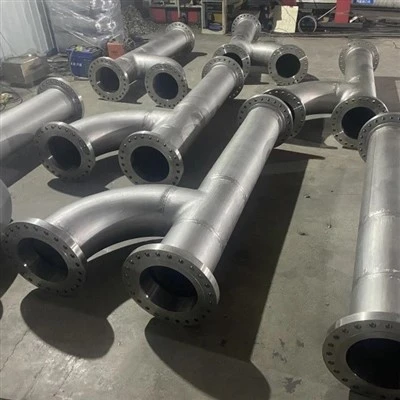
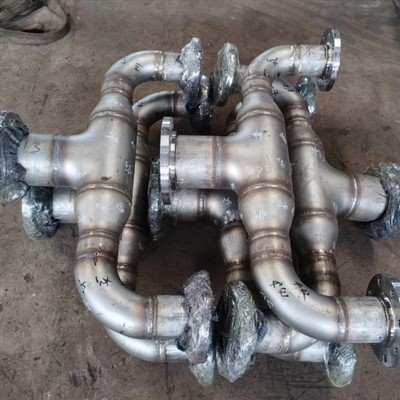
A pipe spool is a section of piping (pipe, fittings, and flanges) cut, fitted, welded, and inspected in a shop from isometric drawings, then shipped to site ready to install. Field fabrication builds the same piping in place, joint by joint, at the construction site.
A spool is sized to survive trucking and lifting. At site, crews connect spools to each other and to equipment, so their time goes to fit-up and tie-in welds instead of production welding. In field fabrication, every cut, fit-up, and weld happens at the job location, often at height, in tight spaces, and in whatever weather the site has. In practice, almost no project is purely one or the other. Spools arrive with a few field welds left to close the system, and some pipe is always run in the field.
Is Prefabrication Cheaper Than Field Fabrication?
Often, but not always. The Construction Industry Institute (CII) finds that savings from prefabrication come mainly from three sources: differences in shop and field labor rates, differences in productivity, and lower site support costs. Where those three differences are small, so is the saving.
The evidence is encouraging but should be read carefully. A 2011 McGraw-Hill Construction SmartMarket Report, produced with NIST as a partner and based on a survey of 809 contractors, architects, and engineers, found that 65% of prefabrication users reported a lower project budget, and about 41% reported savings of 6% or more.
It also found that 47% saw lower combined purchase and installation cost for prefabricated components, 35% saw no change, and 18% saw higher cost. Fabricators themselves were less likely to report cost decreases (37%) than other contractor types (45–53%). A McKinsey analysis of modular construction describes an opportunity of up to about 20% cost savings, but also a risk of cost overruns of up to 10% if the approach is not executed well.
|
Cost Driver |
Why Prefabrication Can Lower It |
What Can Erase the Saving |
|
Labor rate |
Shop labor is often cheaper and easier to staff than scarce on-site skilled welders |
Small gap between shop and field rates |
|
Productivity |
Welds are made in controlled, repeatable positions with proper equipment |
Low-repeat, one-off spools; poor shop loading |
|
Site support |
Less scaffolding, fewer temporary facilities, lower peak workforce |
Heavy spool handling or crane costs |
|
Rework |
Dimensional and weld checks before shipping |
Out-of-tolerance spools that do not fit in the field |
|
Transport and logistics |
Planned delivery sequence supports just-in-time installation |
Oversized spools, long shipping distances, damage in transit |
|
Change orders |
A fixed, defined scope gives cost certainty |
Late design changes after spools are released |
Table 1. Main cost drivers in spool prefabrication versus field fabrication. Cost drivers follow CII's analysis of prefabrication, preassembly, modularization, and offsite fabrication (PPMOF). Survey statistics are from the 2011 McGraw-Hill SmartMarket Report and cover building construction broadly, not only piping.
One practitioner warning is worth repeating: there is no universal ratio of shop work to field work that is right for every job, and anyone quoting one should be treated with caution. The right split depends on the project.
How Much Faster Is Prefabrication Than Field Fabrication?
Prefabrication usually shortens the on-site schedule because shop work runs in parallel with site preparation, civil work, and structural installation. In the SmartMarket survey, 66% of users reported a shorter project schedule, and 35% reported savings of four weeks or more.

The time saving comes from parallel work, less on-site staging such as scaffolding, and independence from weather. McKinsey's modular construction research reports schedule compression of 20–50% for modular approaches, and a US Department of Energy summary of contractor surveys notes that 88% of general contractors and construction managers saw schedule compression. These figures describe prefabrication and modular construction broadly, so they should be treated as the upper range for pipe spools rather than a guaranteed result.
The schedule benefit is also fragile. Research on spool fabrication scheduling, citing earlier studies, found that about 20% of spools in fabrication shops experienced material shortages, and that poor material management could cause 50–130% schedule slippage in the case studies reviewed. In other words, a spool shop that is waiting for pipe or fittings gives away the time advantage. Early material procurement and a frozen design matter as much as welding speed.
|
Schedule Factor |
Prefabricated Spools |
Field Fabrication |
|
Work sequence |
Shop and site work run in parallel |
Mostly sequential; piping waits for access and supports |
|
Weather exposure |
Low (indoor shop) |
High (delays from rain, wind, cold) |
|
Scaffolding and access |
Reduced; welds made at the bench |
Higher; welds made in place, often at height |
|
Outage and shutdown windows |
Most work done before the window opens |
More work competes for the same limited window |
|
Sensitivity to late changes |
High; changes after release mean rework |
Lower; the field can adapt |
Table 2. Schedule comparison. Qualitative summary drawn from CII, McGraw-Hill SmartMarket, and McKinsey research.
Is Shop-Fabricated Pipe Higher Quality Than Field-Welded Pipe?
Shop fabrication is generally more controlled and repeatable, because welds are made in better positions, in a stable environment, with staged inspection. It is not automatically defect-free: a CII study reported that 13.3% of fabricated industrial pipe spools required rework.
The 13.3% figure is a useful reality check. It shows that prefabrication moves quality control earlier; it does not remove the need for it. The advantage is that a defect found in the shop is cheap to fix, while the same defect found after installation can force cutouts, re-welds, and delays. Shop environments make it easier to roll a joint into a comfortable position, check fit-up, record welder and material traceability, and inspect before the spool leaves the building.
|
Quality Factor |
Shop Prefabrication |
Field Fabrication |
|
Welding position |
Pipe can be positioned or rotated for easier, more consistent welds |
Fixed lines often require awkward or overhead positions |
|
Environment |
Stable, protected from wind and rain |
Variable; weather can affect shielding gas and welds |
|
Inspection |
Staged, planned, completed before shipping |
Often concurrent with other trades; harder to schedule |
|
Material traceability |
Easier to maintain heat numbers and weld records |
Harder to maintain in busy field conditions |
|
Dimensional accuracy |
Fabricated to isometrics; risk if site conditions differ from drawings |
Fits actual site conditions as built |
|
Site safety |
Less hot work and work at height on site |
More hot work, scaffolding, and confined-space exposure |
Table 3. Quality and safety comparison. In the SmartMarket survey, 34% of users reported improved site safety, 56% no change, and 10% reduced safety, often because large prefabricated pieces require careful lifting plans.
Why Do Stainless Steel and Nickel Alloy Pipe Systems Benefit Most from Prefabrication?
Because their corrosion resistance depends on clean surfaces and controlled welding, and a shop can manage contamination, heat input, and post-weld cleaning more reliably than an open construction site.
Welding heats the metal and burns off the thin chromium-rich surface film that makes stainless steel corrosion resistant. It can also leave heat tint and, if carbon steel tools or grinding wheels are used, embedded iron particles that later rust and start crevice corrosion. Standard practice is to restore the surface through cleaning, pickling, and passivation, following ASTM A380 for cleaning and descaling and ASTM A967 for passivation verification. A shop can use dedicated stainless tools, separate carbon steel work, control purge gas on the inside of the weld, and process whole spools in a pickling and passivation operation. In the field, the same steps are possible but are harder to control, and pickling paste is typically used for local repairs.
Nickel alloys such as Alloy 625, Alloy 825, and Monel call for the same discipline, and often for tighter control of heat input and filler selection. For these materials, positive material identification, certified material test reports, and traceable weld records are especially valuable, and they are easier to keep in a shop setting.
When Does Field Fabrication Still Make Sense?
Field fabrication is the better choice for small-bore piping, tie-in and closure welds, work that must adapt to as-built conditions, late design changes, very small jobs, and sites where large spools cannot be transported or lifted.
Field fabrication is often the harder discipline, and it is where a contractor's experience shows. An example industry shop-fabrication specification illustrates a common split: piping 2 inches and larger is shop fabricated, while smaller piping is typically field run, and shop spools include stubs or fittings for field-fabricated branches. Spools should also include extra length or field-fit joints so that real-world dimensions can be matched. A practitioner observation sums up the risk: pushing as much scope as sensible into the shop holds the schedule well, but over-spooling backfires when assemblies arrive without enough field tolerance.
How Do Prefabricated Spools and Field Fabrication Compare Side by Side?
Prefabrication generally leads on schedule, weld consistency, traceability, and site safety; field fabrication leads on flexibility and adaptability. Cost depends on labor rates, productivity, and logistics.

|
Dimension |
Prefabricated Spools |
Field Fabrication |
|
Total installed cost |
Often lower for large, repetitive, or alloy piping; not guaranteed |
Can be lower for small, simple, or highly uncertain scopes |
|
Schedule |
Shorter on-site duration through parallel work |
Longer; more sequential and weather-exposed |
|
Weld quality consistency |
Higher potential; requires strong QA (13.3% rework reported in one CII study) |
More variable; depends on position, weather, and welder access |
|
Material traceability |
Stronger documentation chain |
Harder to maintain in busy conditions |
|
Stainless and nickel alloy handling |
Easier contamination control and post-weld cleaning |
Possible, but harder to control |
|
Flexibility to changes |
Lower once spools are released |
Higher |
|
Site safety and congestion |
Less hot work and fewer workers on site |
More hot work and higher peak workforce |
|
Logistics |
Requires shipping, rigging, and delivery sequencing |
Requires material staging and site fabrication space |
|
Best suited for |
Large pipe, complex or alloy systems, tight outage windows |
Small-bore, tie-ins, repairs, uncertain scope |
Table 4. Side-by-side comparison of prefabricated pipe spools and field fabrication.
What Risks Come with Prefabricated Spools, and How Can They Be Controlled?
The main risks are dimensional errors that stack up, late design changes, material shortages, and handling damage. They are controlled by early design freeze, field-fit allowances, early material procurement, and strong shop inspection before release.
A lean-construction leader interviewed in the SmartMarket report points out that in stick-built work, everyone can adjust things in the field, but with prefabrication, parts that are out of tolerance can stack up and create larger misfits. He also warns against building a large inventory of components that later prove to be flawed, which is waste.
|
Risk |
Why It Happens |
Control |
|
Out-of-tolerance spools |
Drawings differ from real site conditions; tolerances accumulate |
Field-fit or closure spools, 3D models or scans, dimensional checks before shipping |
|
Late design changes |
Spools are released before design is stable |
Design freeze before release; staged release of stable areas first |
|
Material shortages |
Pipe or fittings arrive late, stalling the shop |
Early procurement and material tracking |
|
Handling and transport damage |
Large or heavy spools, rough handling |
Protective packaging, end caps, lifting plans |
|
Quality escapes |
Defects pass through the shop (13.3% rework reported by CII) |
Staged inspection, NDE per project code, shop leak testing where specified |
|
Surface contamination (stainless and nickel alloys) |
Carbon steel tools, oil, or poor cleaning |
Dedicated tooling, cleaning and passivation per ASTM A380/A967, documented checks |
Table 5. Prefabrication risks and practical controls.
How Should You Decide Between Prefabricated Spools and Field Fabrication?
Decide early, and decide by scope. Put the largest, most repetitive, most quality-sensitive, and most schedule-critical piping in the shop; keep small-bore, tie-ins, and uncertain areas in the field. CII advises making the decision early, because the benefits depend on design, procurement, and logistics planned around it.
|
Project Condition |
Favors Prefabrication |
Favors Field Fabrication |
|
Large-diameter or heavy-wall pipe |
Yes |
|
|
Stainless steel or nickel alloy piping |
Yes |
|
|
Tight outage or shutdown window |
Yes |
|
|
Repetitive, well-defined isometrics |
Yes |
|
|
Limited skilled welders on site |
Yes |
|
|
Small-bore piping |
Yes |
|
|
Design still changing |
Yes |
|
|
Poor site access for spool delivery or lifting |
Yes |
|
|
Existing plant with uncertain as-built conditions |
Yes (or scan first, then prefabricate) |
Table 6. Quick decision guide for choosing between prefabricated spools and field fabrication.
When evaluating a spool supplier, ask for welding procedure and welder qualifications under ASME Section IX, the inspection and NDE plan, material certification and traceability, cleaning and passivation procedures for stainless and nickel alloys, dimensional inspection records, and how the supplier will handle field-fit allowances. For pressure piping, remember that the governing piping code (often ASME B31.3 for process piping) sets examination and leak-testing requirements, so confirm which tests are done in the shop and which remain for the completed system.
Frequently Asked Questions
Often, but not always. Savings come from shop-versus-field labor rate differences, productivity differences, and lower site support costs. In a 2011 industry survey, 65% of prefabrication users reported a lower project budget, while 8% reported an increase.
How much time does pipe spool prefabrication save?
Typically a meaningful amount on site, because shop work runs in parallel with site preparation. In the same survey, 66% of users reported a shorter schedule and 35% reported savings of four weeks or more. Results vary by project.
Is shop welding better quality than field welding?
It is generally more controlled and repeatable, but not automatically defect-free. CII reported that 13.3% of fabricated industrial pipe spools required rework, so staged inspection is still essential.
Why is prefabrication good for stainless steel and nickel alloy pipe?
A shop can control contamination, heat input, and post-weld cleaning better than a construction site. Following ASTM A380 and A967 for cleaning and passivation helps restore corrosion resistance after welding.
What pipe sizes are usually prefabricated?
Practice varies by project, but an example industry specification shop-fabricates piping 2 inches and larger and field-runs smaller piping.
What is a field-fit weld?
A weld deliberately left for the field so that spools can be adjusted to actual site dimensions. It reduces the risk that rigid, pre-welded assemblies will not fit.