A comparative technical guide for EPC contractors, fabricators, and piping engineers evaluating shop prefabrication versus field-welded stainless steel and nickel alloy piping systems.

|
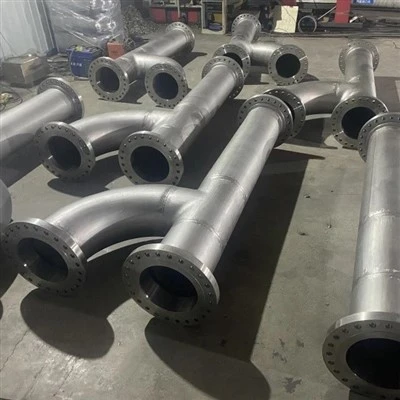
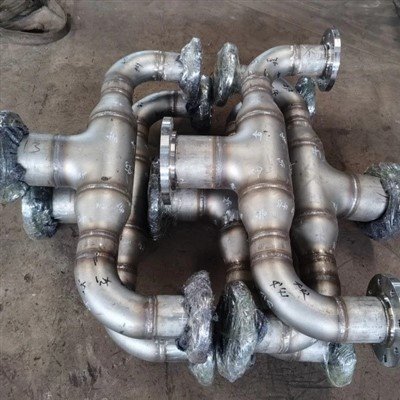
Pipe spool fabrication is the shop-based pre-assembly of piping sections - pipe, fittings, flanges, and valves - into ready-to-install "spools" before they reach the construction site. By moving cutting, fitting, and welding into a controlled shop environment, prefabrication typically reduces total field welding by 60–80% and can compress overall piping installation schedules by 20–40% compared to stick-built, field-welded construction, while also improving weld quality, traceability, and worker safety on stainless steel and nickel alloy projects. |
Introduction
Industrial piping systems for refineries, chemical plants, LNG terminals, and power facilities can contain thousands of welds. When stainless steel and nickel alloy piping is cut, fitted, and welded entirely on site, every weld competes for the same limited resources: certified welders, weather-protected workspace, and inspection time. Pipe spool fabrication addresses this bottleneck by shifting the majority of cutting, fit-up, and welding work into a controlled shop, leaving the construction site to handle only the final connections.
This article compares shop prefabrication with traditional field fabrication across schedule, quality, cost, and safety, and explains where each approach fits best for stainless steel (304/304L, 316/316L, duplex) and nickel alloy (Inconel, Hastelloy, Monel) piping systems.
What Is Pipe Spool Fabrication?
A pipe spool is a pre-assembled section of a piping system - typically pipe joined to fittings, flanges, branch connections, or valves - fabricated as a single unit in a shop, then shipped to the job site for final installation. Spools are produced from isometric drawings that define exact dimensions, weld locations, and material specifications, allowing the shop to fabricate dozens or hundreds of unique configurations in parallel.

- Isometric drawing review and material take-off (MTO) to confirm pipe schedule, grade, and fitting requirements.
- Cutting and beveling pipe to length using saws, plasma, or orbital cutting equipment.
- Fit-up of pipe, fittings, and flanges on jigs or rotating positioners to hold tolerances.
- Welding using qualified procedures (commonly GTAW root with GTAW or SAW fill, per ASME Section IX).
- Non-destructive examination (radiographic or ultrasonic testing) and visual inspection of welds.
- Post-weld treatment where required - passivation per ASTM A967, heat treatment, or surface finishing.
- Tagging, packaging, and shipment to site in protective crating, sequenced to the installation schedule.
Shop Prefabrication vs. Field Fabrication
The table below summarizes how shop-fabricated pipe spools compare with traditional stick-built, field-welded piping across the factors that most affect project outcomes.
|
Factor |
Shop Prefabrication |
Field Fabrication |
|
Welding environment |
Climate-controlled, fixed positioners, optimal access |
Variable weather, confined or elevated access, wind and humidity exposure |
|
Weld position |
Mostly rotated to flat/horizontal (1G) |
Often fixed-position, including overhead (4G/5G) |
|
Typical weld quality (NDE accept rate) |
Generally higher first-pass accept rates |
Lower first-pass accept rates due to position and conditions |
|
Labor productivity |
Higher; repetitive setups, jigs, and trained shop crews |
Lower; setup and access time consumes a larger share of labor hours |
|
Schedule exposure |
Runs parallel with site civil and structural work |
Sequential; cannot start until site access and supports are ready |
|
Field weld count |
Reduced to tie-in and closure welds only |
Every joint welded on site |
|
Cost per weld inch |
Lower due to efficiency and lower rework |
Higher due to access, weather delays, and rework |
|
Site congestion and safety exposure |
Minimal; fewer hot-work permits and confined-space entries |
Higher; more welders, more simultaneous hot work on site |
Benefits of Prefabricated Pipe Spools
Because spools are fabricated off-site, this work proceeds in parallel with site grading, foundation work, and structural steel erection. Instead of waiting for the site to be ready before piping work can start, fabrication can begin as soon as engineering issues isometrics - often weeks or months ahead of site mobilization. This parallel-path approach is consistently cited as the single largest schedule advantage of prefabrication on industrial projects.
Fewer, More Reliable Field Welds
Each field weld eliminated from a project removes a corresponding amount of site labor, inspection time, and schedule risk. A piping system built almost entirely from prefabricated spools may require field welding only at tie-in points and equipment connections, reducing total field weld count by a substantial majority compared to a fully stick-built scope.
Higher and More Consistent Weld Quality
Shop welding allows joints to be rotated into flat or horizontal positions on positioners, which produces more consistent penetration and fewer defects than fixed-position field welding. Controlled lighting, ventilation, and the absence of wind or rain further reduce common defect drivers such as porosity, lack of fusion, and undercut - all critical concerns for corrosion-resistant alloys where weld integrity directly affects service life.
Lower Total Installed Cost
While shop fabrication carries its own setup and transportation costs, the combined effect of higher productivity, lower rework rates, and reduced site labor hours typically results in a lower total installed cost per linear foot of piping, especially for projects with high pipe spool counts or remote/high-labor-cost site locations.
Improved Site Safety
Moving welding activity into the shop reduces the number of hot-work permits, confined-space entries, and elevated welding positions required on an active construction site - directly lowering exposure to the leading causes of piping-related site incidents.
Better Material Traceability and Documentation
Shop fabrication environments are structured around material traceability: heat numbers, mill certificates, weld procedure specifications (WPS), and welder qualifications are tracked and bound to each spool before it ever leaves the facility. This documentation package travels with the spool and supports the material certification requirements of codes such as ASME B31.3 for process piping.
|
Key Standards Referenced in Shop Spool Fabrication ASME B31.3 - Process Piping (design, fabrication, and inspection requirements) ASME Section IX - Welding and Brazing Qualifications (WPS/PQR, welder certification) ASTM A312 / A358 - Seamless and welded austenitic stainless steel pipe ASTM A403 - Wrought austenitic stainless steel pipe fittings ASTM A182 - Forged or rolled alloy steel pipe flanges and fittings ASTM A967 - Chemical passivation of stainless steel parts |
Quality Control Advantages of a Shop Environment
Quality control is where prefabrication delivers some of its most measurable advantages, particularly for stainless steel and nickel alloy systems where weld defects can compromise corrosion resistance.
Controlled Welding Procedures
Shop welders work to qualified Welding Procedure Specifications (WPS) supported by Procedure Qualification Records (PQR) under ASME Section IX. Because shop conditions are stable, the same procedure performs consistently across hundreds of welds, simplifying qualification and reducing the variable-condition deviations that often require field WPS adjustments.
Systematic Non-Destructive Examination
Radiographic testing (RT) and ultrasonic testing (UT) are easier to schedule and execute in a shop, where welds can be positioned for optimal film or transducer access. This typically results in higher first-pass acceptance rates and faster turnaround on repairs, since defects are caught and corrected before the spool ever leaves the facility.
Dimensional Accuracy
Fit-up jigs and positioners hold spools to tighter dimensional tolerances than is practical for field assembly, which reduces the risk of misalignment, forced fit-up stresses, and the resulting risk of in-service cracking - a particular concern for duplex and super duplex grades susceptible to distortion-induced stress.
Material Considerations for Stainless and Nickel Alloy Spools
Prefabrication benefits apply across carbon steel piping, but the advantages are amplified for higher-alloy materials, where weld defects are costlier to repair and more consequential to long-term corrosion performance.

|
Material Family |
Common Grades |
Why Shop Fabrication Matters |
|
Austenitic stainless steel |
304/304L, 316/316L |
Controlled heat input limits sensitization and carbide precipitation at welds |
|
Duplex / super duplex |
2205, 2507 |
Tight interpass temperature control preserves ferrite-austenite phase balance |
|
High-performance austenitic |
904L, 254 SMO |
Shop GTAW with controlled shielding reduces risk of pitting initiation sites |
|
Nickel alloys |
Inconel 625/600/601, Hastelloy C-276/C-22, Monel 400/K500 |
Precise filler metal matching and cleanliness control are easier to enforce in a shop |
Quantifying the Schedule and Field-Weld Impact
The table below illustrates the typical relationship between the share of piping prefabricated in the shop and the resulting reduction in field welding and field labor hours, based on representative industrial piping scopes.
|
Shop-Fabricated Spool Share |
Field Weld Reduction |
Typical Field Labor Hour Reduction |
|
30–40% |
20–30% |
15–20% |
|
50–60% |
40–50% |
25–35% |
|
70–80% |
60–70% |
35–45% |
|
85%+ (maximum practical prefabrication) |
75–85% |
45–55% |
Figures are representative industry ranges intended for planning guidance; actual results depend on system complexity, site access, and module/spool size limits for transport.
Logistics and Transportation Considerations
- Prefabrication shifts risk from the welding discipline to logistics, so successful programs plan transportation and handling alongside fabrication.
- Spool sizing must respect road, rail, or vessel transport envelope limits, including height, width, and weight restrictions.
- Flange faces and open ends require protective covers to prevent contamination and mechanical damage during shipping.
- Spool numbering and sequencing should match the planned installation sequence to avoid site re-handling or storage congestion.
- Lifting points and support cradles should be engineered for each spool's weight and center of gravity, particularly for heavier nickel alloy assemblies.
Frequently Asked Questions
Q: What is the difference between a pipe spool and a pipe fitting?
A: A pipe fitting is a single component, such as an elbow, tee, or flange. A pipe spool is an assembled section that combines pipe with one or more fittings, flanges, or valves into a single unit ready for field installation.
Q: How much time can pipe spool prefabrication save on a project?
A: Depending on the share of piping prefabricated, projects commonly see field labor hour reductions in the range of 15–55%, with the largest gains realized when 70% or more of the piping is shop-fabricated.
Q: Does prefabrication work for nickel alloy piping like Inconel or Hastelloy?
A: Yes. Nickel alloys benefit significantly from shop fabrication because precise heat input control, filler metal matching, and cleanliness practices are easier to enforce and verify in a controlled shop environment than on an active job site.
Q: What codes govern pipe spool fabrication for process piping?
A: ASME B31.3 governs the design, fabrication, and inspection of process piping, while ASME Section IX governs welding procedure and welder qualification. Material specifications such as ASTM A312, A358, A403, and A182 define the pipe, fittings, and flanges used in spool assemblies.
Q: Can prefabricated spools be transported long distances without quality loss?
A: Yes, provided spools are properly braced, flange faces are protected, and transport envelope limits are respected during engineering. Properly packaged stainless steel and nickel alloy spools routinely ship internationally without quality degradation.
Conclusion
Pipe spool fabrication shifts the bulk of cutting, fitting, and welding work from an uncontrolled construction site into a controlled shop, where it can run in parallel with site preparation rather than waiting for it.
The result is consistently faster schedules, fewer and higher-quality field welds, lower total installed cost, and a safer construction site - advantages that are especially pronounced for stainless steel and nickel alloy systems, where weld integrity is directly tied to long-term corrosion performance. Field welding remains necessary for tie-ins and final closures, but for most industrial piping scopes, maximizing shop prefabrication is the more reliable path to on-time, on-budget, and on-spec project delivery.