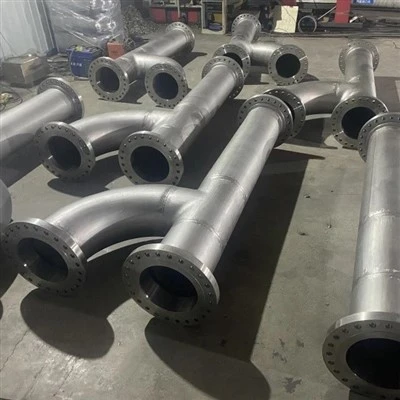
NORSOK M-650 is a manufacturer qualification standard - not a material specification. It verifies that a mill or foundry has the competence, facilities, and quality controls to produce duplex, super duplex, 6Mo austenitic, nickel alloy, and titanium materials that meet the demanding requirements of offshore petroleum service. For super duplex (UNS S32750/S32760), M-650 qualification is often the single most important credential a manufacturer can hold.

M-650 qualifies the manufacturer, not the material - the material must also meet NORSOK M-630 MDS requirements
The QTR (Qualification Test Record) is the core document - signed by both the manufacturer and an independent qualifying body
Super duplex falls under MDS D56/D59/D60 in NORSOK M-630, covering both strain-strengthened and solution-annealed conditions
ISO 17782:2018 is the international equivalent, based directly on M-650 Edition 4
QTR validity is 5 years; changes to essential variables trigger requalification
|
Metric |
Value |
|
Standard |
NORSOK M-650, Edition 4 (September 2011) |
|
Standard Type |
Manufacturer qualification - not a material spec |
|
Primary Scope |
Duplex, super duplex, 6Mo austenitic, nickel alloy, titanium castings |
|
Super Duplex UNS |
S32750 (SAF 2507) / S32760 (Zeron 100) |
|
Corresponding MDS |
D56 (25Cr super duplex), D59/D59L (strain-strengthened), D60/D60L (solution-annealed) |
|
Core Document |
QTR (Qualification Test Record) |
|
QTR Validity |
5 years from signing date |
|
Certification Format |
EN 10204 Type 3.2 (third-party witnessed) |
|
International Equivalent |
ISO 17782:2018 |
|
Key Adopters |
Equinor, ConocoPhillips, ExxonMobil, BP, Shell, Aker Solutions |
What Is NORSOK M-650 and Why Was It Created?
NORSOK M-650 is a Norwegian petroleum industry standard that qualifies manufacturers - not materials - for producing special-grade corrosion-resistant alloys used in offshore oil and gas service.

The standard was born from practical experience. In the 1980s, Norway's offshore sector increasingly adopted duplex stainless steels, 6Mo austenitic grades, and nickel alloys for subsea and topside applications. These materials deliver outstanding corrosion resistance - but they are metallurgically complex. A small deviation in heat treatment, chemical composition, or process control can turn a high-performance alloy into a component that fails prematurely under seawater, chloride, or sour-service exposure.
Early project experience showed that not every manufacturer could reliably produce these grades. Some delivered material that met the specification on paper but suffered from intermetallic precipitates, excessive ferrite content, or uneven mechanical properties in real-world service. The result: costly delays, rework, and in some cases, in-service failures on the Norwegian Continental Shelf.
Rather than relying solely on end-product inspection, the Norwegian petroleum industry recognized that prevention starts at the source. NORSOK M-650 was first issued in the early 1990s to shift the burden of proof: before a manufacturer can supply special-grade material for NORSOK-compliant projects, it must demonstrate - through a structured, audited, and documented process - that it possesses the competence, facilities, and quality systems to produce the material consistently and correctly.
M-650 qualifies the manufacturer. The material itself must still comply with the relevant material specification and NORSOK M-630 Material Data Sheets (MDS). Qualification and specification work together - one ensures the maker is capable, the other ensures the product meets defined technical requirements.
Which Materials Fall Under NORSOK M-650's Scope?
M-650 covers all grades, product forms, and sizes of duplex and high-alloy austenitic stainless steels, plus nickel alloy and titanium castings - and, in special cases, other critical non-standard materials.
The standard's scope is deliberately broad within the corrosion-resistant alloy (CRA) family. It addresses the material categories where production complexity and the consequences of failure are both high:
|
Material Category |
Scope Under M-650 |
Typical UNS / Designations |
|
Duplex Stainless Steel |
All grades, all product forms, all sizes |
S31803 (2205), S32205, S31200, etc. |
|
Super Duplex Stainless Steel |
All grades, all product forms, all sizes |
S32750 (2507), S32760 (Zeron 100), S32520, S32906 |
|
High-Alloy Austenitic (6Mo) |
All grades, all product forms, all sizes |
S31254 (254 SMO), N08367 (AL-6XN), N08926 |
|
Nickel Alloy Castings |
Castings only |
Alloy 625, Alloy 825, etc. |
|
Titanium / Ti Alloy Castings |
Castings only |
Ti Gr. 2, Ti Gr. 5 (UNS R56400) |
|
Other Critical Materials |
Special case, for critical non-standard components |
Per project-specific agreement |
Product forms covered: seamless tube, welded tube, pipe fittings, forgings/flanges, plate, castings, bar stock, and fasteners. The breadth of product forms means that a single M-650 qualification can cover a manufacturer's entire production range for a given grade.
What Makes Super Duplex "Special"?
Super duplex stainless steels combine high strength and extreme corrosion resistance through a delicate dual-phase microstructure - a balance so sensitive that even minor manufacturing deviations can compromise performance, making manufacturer qualification essential.

Super duplex grades (UNS S32750 and S32760) sit at the top of the duplex stainless steel family. Their name reflects their enhanced properties relative to standard 22Cr duplex:
|
Property |
Standard Duplex (2205 / S32205) |
Super Duplex (2507 / S32750) |
Why It Matters Offshore |
|
Chromium |
22% |
25% |
Higher Cr = better resistance to oxidizing acids and pitting |
|
Molybdenum |
3% |
4% |
Mo is the primary defense against chloride pitting and crevice corrosion |
|
Nickel |
5% |
7% |
Ni stabilizes the austenite phase and improves toughness |
|
Nitrogen |
0.18% |
0.27% |
N increases strength and delays intermetallic formation |
|
PREN (Pitting Resistance) |
~35 |
>40 |
PREN > 40 is the offshore threshold for severe seawater service |
|
Yield Strength (min) |
450 MPa |
550 MPa |
Higher strength = thinner walls, lighter topside structures |
|
Ferrite/Austenite Ratio |
~50/50 |
~50/50 |
Imbalance degrades both corrosion resistance and toughness |
The 50/50 ferrite-austenite balance is the defining characteristic - and the manufacturing challenge. Super duplex's extreme alloy content (25Cr-7Ni-4Mo-0.27N) means that the material sits closer to the boundary where harmful intermetallic phases (sigma, chi) can form during cooling. These precipitates consume chromium and molybdenum from the surrounding matrix, creating local zones with dramatically reduced corrosion resistance.
The practical consequence: a heat treatment that is 10°C too low, or a cooling rate that is a few seconds too slow, can produce a super duplex component that passes a tensile test but fails catastrophically in seawater. This is exactly the kind of risk that M-650 is designed to prevent - by verifying the manufacturer's process controls, not just the final test results.
How Does NORSOK M-650 Qualify a Manufacturer - Step by Step?
M-650 qualification follows a structured four-phase process - document submission, facility audit, production testing with third-party witness, and QTR issuance - each phase building on the previous one to ensure comprehensive verification.
The qualification process is neither a one-time inspection nor a paperwork exercise. It is a systematic, evidence-based evaluation that covers the manufacturer's entire production chain for the target grade and product form. Here is how each phase works:
Phase 1: Document Submission
The manufacturer must submit a detailed, step-by-step description of its production process - from raw material procurement through melting, forming, heat treatment, machining, and final inspection. This Manufacturing Summary is not a general brochure; it must specify actual temperatures, hold times, cooling rates, and inspection points for the exact grade being qualified.
Phase 2: Facility and Quality System Audit
An independent qualifying body (such as DNV, SGS, or Lloyd's Register) evaluates the manufacturer's physical facilities and quality management system. The audit covers:
- Equipment capability - are furnaces, rolling mills, and forging presses adequate for the grade and size range?
- Process controls - are heat treatment parameters monitored and recorded with calibrated instruments?
- Environmental conditions - is traceability maintained throughout production?
- Testing laboratory - does the lab hold ISO 17025 accreditation, or is it assessed by the qualifying body?
- Quality management system - ISO 9001 certification with full traceability requirements
Phase 3: Qualification Testing with Third-Party Witness
The manufacturer produces qualification test material under normal production conditions - not special lab batches. An independent qualifying body witness observes the entire production and testing cycle. All tests must be performed according to the relevant MDS in NORSOK M-630 and the applicable product specification (ASTM/ASME/EN). Results are recorded in the QTR.
Phase 4: QTR Issuance and Qualification Approval
If all phases are satisfactory, the QTR is signed by both the manufacturer and the independent qualifying body. The QTR becomes the official evidence that the manufacturer is qualified. It is valid for 5 years and must be renewed through requalification if essential variables change or the validity period expires.
|
Phase |
Activity |
Key Output |
Responsible Party |
|
1 |
Document Submission |
Manufacturing Summary + procedures |
Manufacturer |
|
2 |
Facility & QA Audit |
Audit report, lab assessment |
Independent qualifying body |
|
3 |
Qualification Testing |
Test results (witnessed) |
Manufacturer + qualifying body witness |
|
4 |
QTR Issuance |
Signed QTR (EN 10204 3.2) |
Manufacturer + qualifying body |
What Is a QTR and Why Is It the Backbone of Qualification?
The Qualification Test Record (QTR) is the single, authoritative document that proves a manufacturer's M-650 qualification - it records every production step, every test result, and carries dual signatures from the manufacturer and an independent qualifying body.

The QTR is not a certificate in the conventional sense. It is a detailed, evidence-packed record that captures the entire qualification campaign. Its structure and content are prescribed by M-650, and its significance extends beyond the qualification itself:
|
QTR Component |
What It Contains |
Why It Matters |
|
Front Sheet |
Manufacturer name, address, qualified grades, product forms, size ranges, QTR number and revision |
Identifies the exact scope of qualification - not a blanket approval |
|
Manufacturing Summary |
Step-by-step process from raw material to finished product, including all essential variables |
Proves the manufacturer has a defined, documented process |
|
Test Results |
Chemical analysis, tensile, impact, hardness, microstructure, ferrite count, pitting corrosion |
Demonstrates the material meets MDS + product spec requirements |
|
Essential Variables |
Defined parameters whose change triggers requalification |
Protects against silent process drift |
|
Signatures |
Manufacturer + independent qualifying body |
Establishes third-party accountability |
EN 10204 Type 3.2 certification: The QTR is issued as an EN 10204 Type 3.2 document, which means the test results were witnessed by an independent third party. This is a higher level of assurance than Type 3.1 (manufacturer-issued only) and far more rigorous than a simple mill test certificate.
Validity: The QTR is valid for 5 years from the initial signing date. Some qualifying bodies require annual validity confirmations. After 5 years, the manufacturer must undergo requalification - a full or partial re-testing process depending on production history and any changes since the original qualification.
What Are Essential Variables - and When Do They Trigger Requalification?
Essential variables are the critical manufacturing parameters defined in the QTR - any change to these parameters requires requalification, because even a small shift can alter the metallurgical properties of special-grade materials.
This is one of the most important - and most frequently misunderstood - aspects of M-650. Essential variables are not arbitrary; they are the parameters that directly affect the microstructure, mechanical properties, and corrosion resistance of the qualified material. They include:
|
Essential Variable Category |
Examples for Super Duplex |
Impact of Unauthorized Change |
|
Melting Practice |
EAF + AOD vs. VIM + VAR; casting method change |
Altered cleanliness, nitrogen control, segregation risk |
|
Hot Working Range |
Forging start/end temperatures, rolling reduction ratios |
Grain refinement, intermetallic formation window |
|
Heat Treatment |
Solution annealing temperature, hold time, cooling method (water quench vs. air cool) |
THE most sensitive variable - sigma phase risk, ferrite balance, corrosion resistance |
|
Product Form / Size Range |
Seamless tube vs. forged bar; diameter or thickness range expansion |
Different geometries = different thermal profiles during heat treatment |
|
Chemical Composition Range |
Changes to the specified composition tolerances (Cr, Mo, N ranges) |
Altered PREN, phase balance, weldability |
|
Manufacturing Location |
Moving production to a different facility |
Different equipment, environmental controls, local procedures |
The rule is simple: if any essential variable changes, the existing QTR no longer covers the new condition. The manufacturer must requalify - either partially (if the change is minor and a risk assessment supports it) or fully (if the change is significant). The qualifying body determines the extent of requalification required.
Why this matters for buyers: when you specify NORSOK M-650 qualified material, you must verify that the QTR's essential variables cover your actual order. A manufacturer qualified for S32750 seamless tube in sizes 12–75mm is NOT automatically qualified for S32750 plate in thicknesses above 75mm. The qualification scope is precise, and exceeding it invalidates the assurance.
NORSOK M-650 vs ISO 17782: How Do the Two Standards Compare?
ISO 17782:2018 is the international adaptation of NORSOK M-650 Edition 4 - the technical requirements are nearly identical, but ISO 17782 broadens applicability beyond the Norwegian Continental Shelf and introduces explicit second-party qualification provisions.

ISO 17782 was published in 2018 with the explicit statement that it is "based on NORSOK M-650, 4th edition." The two standards share the same core philosophy: qualify the manufacturer through documented processes, witnessed testing, and ongoing essential-variable control. However, there are meaningful differences in scope and governance:
|
Dimension |
NORSOK M-650 (Ed. 4, 2011) |
ISO 17782:2018 |
|
Origin |
Norwegian petroleum industry (Standards Norway) |
ISO TC 67 / SC 2 (international petroleum industry committee) |
|
Geographic Focus |
Originally for Norwegian Continental Shelf; now globally adopted |
International - designed for any petroleum, petrochemical, or natural gas project |
|
Material Scope |
Duplex, 6Mo, nickel alloy castings, titanium castings |
Same core scope, but wording is more generic for broader applicability |
|
Qualifying Body |
Independent qualifying company (per M-650 definition) |
Second-party or independent qualifying body (explicitly allows second-party) |
|
Relationship to M-630 |
Directly references NORSOK M-630 MDS for additional material requirements |
Does not reference M-630; uses project-specific or applicable material specifications |
|
Essential Variables |
Defined in QTR per M-650 requirements |
Same concept; ISO 17782 adds more explicit guidance on requalification scope |
|
Industry Adoption |
Equinor, ConocoPhillips, Shell (NCS-focused) |
Growing adoption in Middle East, Asia-Pacific, and Gulf of Mexico projects |
Practical implication: for projects on or linked to the Norwegian Continental Shelf, NORSOK M-650 remains the primary requirement. For international projects that want the same manufacturer-qualification rigor without the NORSOK framework, ISO 17782 is the appropriate choice. Many manufacturers now hold dual QTRs - one under M-650 and one under ISO 17782 - to serve both markets.
What Testing Must Super Duplex Pass Under M-650?
Super duplex qualification testing under M-650 covers seven critical areas - chemical composition, tensile properties, impact toughness, microstructure, ferrite balance, pitting corrosion, and hardness - each targeting a specific failure mode that experience has shown to be relevant offshore.
The test program is not arbitrary. Each test addresses a documented risk in super duplex service:
|
Test |
What It Measures |
Offshore Risk It Addresses |
Super Duplex Significance |
|
Chemical Analysis |
Cr, Mo, Ni, N, W, Cu content within specified ranges |
PREN below 40 = insufficient pitting resistance |
Minor deviations in Mo or N directly reduce PREN |
|
Tensile Test |
Yield strength, ultimate tensile strength, elongation |
Under-strength material cannot handle design loads |
550 MPa min yield - higher than standard duplex |
|
Impact Test (Charpy V) |
Toughness at specified low temperature (often –40°C or -50°C) |
Brittle fracture in cold seawater or subsea conditions |
Super duplex must maintain toughness despite high ferrite content |
|
Microstructure Examination |
Phase balance, presence of intermetallics (sigma, chi), secondary austenite |
Intermetallics cause localized corrosion and toughness loss |
25Cr-4Mo alloy sits near sigma-phase boundary - critical check |
|
Ferrite Number / Content |
Ferrite-austenite ratio (target ~40–60% ferrite) |
Excess ferrite = reduced toughness; excess austenite = reduced strength |
The most distinctive and sensitive duplex parameter |
|
Pitting Corrosion Test |
CPT (Critical Pitting Temperature) per ASTM G48 Method A or equivalent |
Pitting in chloride-containing seawater |
CPT must typically exceed 40°C for super duplex offshore service |
|
Hardness Test (Brinell) |
HB value within specified range |
Excessive hardness = sigma-phase indicator; too soft = under-processed |
Cross-checks heat treatment effectiveness |
Key point for procurement: these tests must be witnessed by the qualifying body and recorded in the QTR. Routine mill test certificates (EN 10204 Type 3.1) do not carry the same assurance. Only Type 3.2 witnessed certification confirms that the qualification testing was actually observed by an independent party.
Which Super Duplex Product Forms Can Be M-650 Qualified?
M-650 qualification can cover seamless tube, welded tube, pipe fittings, forgings/flanges, plate, bar, castings, and fasteners in super duplex - but each product form requires its own qualification scope within the QTR.

|
Product Form |
Common Super Duplex Specifications |
Typical MDS Reference |
Primary Offshore Application |
|
Seamless Tube / Pipe |
ASTM A789 / A790, UNS S32750/S32760 |
D56, D59, D60 |
Subsea pipelines, umbilicals, seawater injection |
|
Welded Tube / Pipe |
ASTM A789 / A790 (with weld procedure qualification) |
D56 |
Topside process piping, less critical service |
|
Forgings / Flanges |
ASTM A182 F53 (S32750) / F55 (S32760) |
D56 |
Subsea connectors, wellhead equipment, riser flanges |
|
Plate |
ASTM A240, UNS S32750/S32760 |
D56 |
Pressure vessels, separators, hull structures |
|
Bar / Rod |
ASTM A276 / A479, UNS S32750/S32760 |
D56 |
Fastener stock, machined components, valve stems |
|
Castings |
UNS J93404 (CD3MN) equivalent super duplex casting |
D56 (cast) |
Pump casings, valve bodies, complex geometry components |
|
Fasteners (Stud Bolts) |
ASTM A193 B8S / custom spec, S32750/S32760 |
Per project VN code |
Subsea and topside bolting (per Equinor VN specs) |
Important note on strain-strengthened vs. solution-annealed: NORSOK M-630 defines separate MDS for two distinct conditions of super duplex bar/fastener material:
D59 / D59L (strain-strengthened): Higher yield strength (typically ≥ 700 MPa) achieved through cold working. Used for subsea connectors and wellhead hardware where maximum strength per unit volume is required.
D60 / D60L (solution-annealed): Maximum corrosion resistance in the fully annealed condition. Used for topside piping and process equipment where balanced properties and weldability are prioritized.
A manufacturer qualified for D59 is not automatically qualified for D60 - the heat treatment and mechanical processing are different essential variables. Buyers must specify the exact MDS and condition.
What Challenges Do Manufacturers Face in M-650 Qualification?
Achieving M-650 qualification is demanding - the primary challenges are tight microstructure control during heat treatment, maintaining ferrite balance across product size ranges, managing nitrogen content, and sustaining consistent production over the 5-year QTR validity period.
The qualification process is designed to be rigorous, and the most common failure points reflect the metallurgical realities of super duplex production:
|
Challenge |
Root Cause |
How M-650 Addresses It |
Common Failure Mode |
|
Sigma-Phase Formation |
Slow cooling through 700–900°C range after solution annealing |
Requires documented, witnessed heat treatment with verified cooling rates |
Pitting corrosion test failure; intermetallic visible in microstructure exam |
|
Ferrite Imbalance |
Incorrect nitrogen control, uneven cooling in thick sections |
Ferrite number measurement on qualification material; composition range locked as essential variable |
Impact toughness below specification at –40°C |
|
Nitrogen Loss |
AOD/VOD process control; insufficient nitrogen addition or excessive decarburization |
Chemical analysis of each qualification heat; N range is an essential variable |
PREN drops below 40; pitting test failure |
|
Size-Range Limitations |
Thick sections cool slower than thin sections; different thermal profiles |
QTR specifies qualified size range; exceeding it requires requalification |
Manufacturer produces outside qualified range; material fails in-service |
|
Process Drift Over 5 Years |
Gradual changes in furnace performance, instrument calibration, or operator practice |
Annual validity checks; essential variable tracking; 5-year requalification cycle |
QTR conditions no longer reflect actual production |
|
Testing Lab Competence |
Incorrect ferrite measurement method; improper impact test temperature |
ISO 17025 lab accreditation or qualifying body lab assessment |
Inconsistent or unreliable test results during qualification campaign |
For manufacturers seeking qualification, the investment is significant: the qualification campaign requires dedicated production time, third-party witness costs, laboratory fees, and documentation effort. However, once qualified, M-650 opens access to the most demanding offshore projects worldwide - projects that explicitly require M-650 or ISO 17782 qualified sources in their procurement specifications.
How Should Buyers Specify M-650 Qualification in Procurement?
Buyers must specify NORSOK M-650 qualification explicitly in purchase orders - referencing the exact grade, MDS, product form, size range, and condition - and verify the supplier's QTR covers the actual scope of the order.
The most common procurement mistake is assuming that a manufacturer who holds an M-650 QTR for any super duplex product is automatically qualified for all super duplex products. This is not the case. A proper specification should include:
Grade designation: UNS S32750 or S32760 (not just "super duplex" - the two grades have different composition ranges)
MDS reference: D56, D59, D59L, D60, or D60L - specifying the exact MDS ties the material to the NORSOK M-630 supplemental requirements
Product form and size range: e.g., "seamless tube, OD 12–75mm" or "forgings, max 200mm thickness"
Condition: solution-annealed or strain-strengthened (if applicable)
Certification type: EN 10204 Type 3.2 (third-party witnessed)
QTR validity: confirm the QTR is current and covers the specified essential variables
|
Specification Element |
Example (Super Duplex Fastener) |
Why It Matters |
|
Grade |
UNS S32750 (SAF 2507) |
Two super duplex grades exist; each has different composition tolerances |
|
MDS |
D59 (strain-strengthened, S32750) |
D59 vs. D60 define different conditions with different testing requirements |
|
Product Form |
Bar / stud bolt, 0.5" – 2.0" |
QTR scope is limited to qualified size ranges |
|
Condition |
Strain-strengthened |
Solution-annealed and strain-strengthened are different essential variables |
|
Certification |
EN 10204 3.2 |
Only 3.2 includes third-party witness; 3.1 is manufacturer-only |
|
QTR Scope Check |
Verify QTR covers S32750 bar in specified size range under D59 |
Out-of-scope orders invalidate the M-650 assurance |
What Happens When Qualification Conditions Change?
Any change to an essential variable defined in the QTR triggers a requalification review - the qualifying body determines whether a partial or full requalification is needed, and the original QTR is either revised or superseded.
Process changes are a normal part of long-term manufacturing. M-650 does not forbid changes - it requires that they be transparently assessed and properly qualified before production resumes under the new conditions. The requalification framework works as follows:
|
Change Type |
Requalification Requirement |
Typical Outcome |
|
Minor essential variable change (e.g., furnace temperature ±5°C within tolerance) |
Qualifying body risk assessment; may require partial re-test |
QTR revision with updated essential variables |
|
Major essential variable change (e.g., new heat treatment method, different furnace type) |
Full requalification: new production test campaign with witness |
New QTR or significant revision |
|
Size range extension (e.g., adding larger diameter to qualified range) |
Additional qualification testing at the new size |
QTR revision with expanded size range |
|
Manufacturing location change (e.g., production moved to a different plant) |
Full requalification at the new facility |
New QTR referencing the new location |
|
5-year validity expiry |
Requalification per standard requirements |
New QTR or renewal with updated documentation |
Best practice for manufacturers: proactively notify the qualifying body before implementing any process change, even if you believe it falls within tolerances. The qualifying body's assessment protects both the manufacturer and its customers from unintended scope violations.
Frequently Asked Questions
No. M-650 qualifies the manufacturer's capability to produce special-grade materials. The material itself must meet the applicable product specification (ASTM, ASME, EN) and the supplemental requirements in NORSOK M-630 MDS.
FAQ 2: Does a manufacturer qualified for UNS S32205 (2205 duplex) automatically qualify for UNS S32750 (2507 super duplex)?
No. Each grade requires its own qualification scope within the QTR. 2205 and 2507 have different composition ranges, heat treatment windows, and essential variables. Qualification for one does not extend to the other.
FAQ 3: What is the difference between EN 10204 Type 3.1 and Type 3.2 certification?
Type 3.1 is issued by the manufacturer without third-party witness. Type 3.2 requires an independent qualifying body to witness the testing and co-sign the document. NORSOK M-650 qualification requires Type 3.2.
FAQ 4: How long is a M-650 QTR valid?
The standard QTR validity is 5 years from the initial signing date. Some qualifying bodies require annual validity confirmations. After 5 years, requalification is required.
FAQ 5: Can a manufacturer's M-650 qualification be used for ISO 17782 compliance?
In principle, yes - since ISO 17782 is based on M-650. However, ISO 17782 does not reference NORSOK M-630 MDS, and the qualifying body provisions differ. Many manufacturers hold separate QTRs under each standard to serve both Norwegian and international projects.
FAQ 6: Why is super duplex more difficult to qualify than standard duplex under M-650?
Super duplex's higher alloy content (25Cr-4Mo-0.27N) places it closer to the sigma-phase formation boundary. The heat treatment window is narrower, the ferrite balance is more sensitive, and the consequences of process deviation are more severe. These factors make the qualification testing and essential-variable control more demanding.
FAQ 7: What happens if a manufacturer produces material outside the qualified size range?
The material is not covered by the existing QTR. Size range is an essential variable. Production outside the qualified range requires requalification testing at the new sizes before the material can be supplied as M-650 qualified.