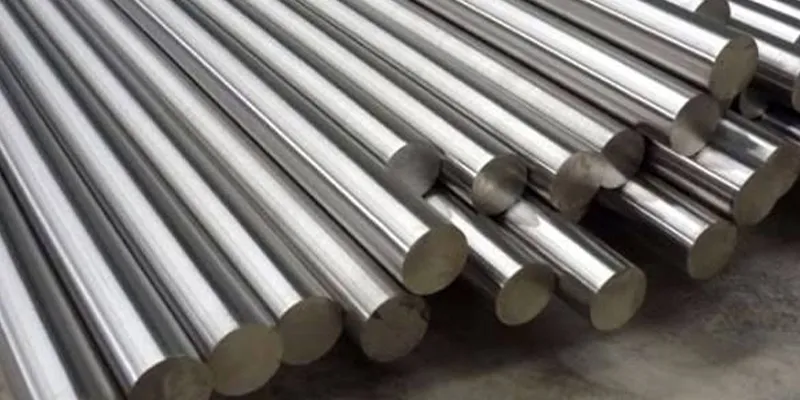
Centerless ground bar offers the tightest tolerance (typically h9, or about ±0.02 to 0.05 mm) and the smoothest surface (Ra 0.4 to 1.6 µm), making it the right choice for precision machining stock and finished shafts. Peeled bar offers a mid-tier tolerance (typically h11, or about ±0.1 to 0.3 mm) with a clean, scale-free surface at a lower cost, making it the most common choice for general machining stock.
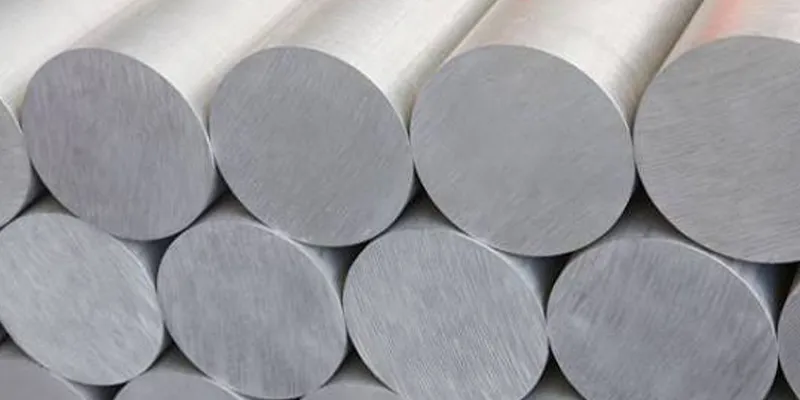
Rough turned bar has the loosest tolerance (roughly ±0.5 mm) but is the most economical way to remove mill scale and surface defects from large-diameter bar, making it the standard choice for forging billet and remelt stock. The right finish depends on what happens to the bar next: precision machining favors centerless ground, general fabrication favors peeled, and further hot working favors rough turned.
What Is the Difference Between Centerless Ground, Peeled, and Rough Turned Round Bar?
All three finishes remove the as-cast or as-forged mill surface from a nickel alloy round bar, but they differ in the material removal method, achievable tolerance, and resulting surface roughness, which is why each is matched to a different downstream use.
Nickel alloy bar leaves the mill with a rough, often decarburized or oxide-covered surface that is unsuitable for direct machining or close-tolerance assembly. Three finishing methods are used to prepare the bar surface, and they sit on a clear spectrum of precision and cost:
Rough turned: The bar is mounted between centers or in a lathe chuck and turned on a single-point or multi-tool lathe to remove the mill surface. It is the fastest and least expensive method, but leaves visible tool marks and a comparatively loose diameter tolerance.
Peeled (cold or warm peeled): The bar passes through a rotating peeling head fitted with carbide blades that shave the surface in a continuous, controlled cut. This produces a straighter, rounder bar with a cleaner surface than rough turning, at a moderate cost premium.
Centerless ground: The bar is passed between a grinding wheel and a regulating wheel with no fixed centers, removing material by abrasion rather than cutting. This produces the tightest diameter tolerance and the smoothest, most consistent surface finish of the three methods.
Which Surface Finish Should You Choose for Precision Machining Stock?
Centerless ground bar is the right choice for precision machining stock because its tight, consistent diameter reduces stock removal, chatter, and cycle time on CNC lathes and Swiss-type machines.
When a nickel alloy bar feeds directly into a CNC lathe, especially a bar-fed or Swiss-type machine, diameter consistency matters as much as surface cleanliness. A centerless ground bar's tight tolerance means the collet or guide bushing grips the bar consistently along its length, which reduces vibration and chatter, a common cause of poor surface finish and tool wear when machining tough, work-hardening nickel alloys.
Peeled bar is an acceptable and more economical alternative for machining stock when the final part geometry removes most of the bar's outer diameter anyway, since the peeled surface is clean enough to avoid embedding scale or oxide into the tool. Rough turned bar is rarely specified as direct machining stock because its looser tolerance requires the machinist to program extra facing and roughing passes to true up the diameter before precision cuts can begin.
Which Finish Offers the Best Dimensional Tolerance?
Centerless ground bar delivers the tightest tolerance, typically h9 (about ±0.02 to 0.05 mm depending on diameter), followed by peeled bar at roughly h11 (about ±0.1 to 0.3 mm), with rough turned bar the loosest at roughly ±0.3 to 0.5 mm.
Tolerance class matters because it determines how much extra stock a downstream shop must plan to remove, and how predictably a bar will behave in fixtures, guide bushings, or press-fit assemblies. As a general rule of thumb, based on common mill and service center practice for nickel alloy bar:
Centerless ground: h9 tolerance class is standard, and h6 or tighter is achievable for critical shafting applications, with roundness typically held within 0.01 to 0.02 mm.
Peeled: h11 tolerance class is typical, sufficient for most general machining allowances and cold heading or extrusion feedstock.
Rough turned: Tolerances are commonly specified to a fixed dimensional band (for example ±0.4 mm) rather than an ISO h-class, since rough turned bar is rarely the final dimensional reference for a part.
Because nickel alloys are expensive per kilogram compared to carbon or stainless steel, tighter tolerance also directly reduces material cost: less oversize stock means less scrap turned into chips during roughing operations.
How Does Each Finish Affect Surface Defects and Subsurface Quality?
Centerless grinding and peeling both fully remove the decarburized and oxide-affected surface layer that can harbor seams, laps, and inclusions, while rough turning removes it adequately for hot-working stock but is less reliable for detecting fine surface defects before further processing.

Centerless ground: The grinding process removes material uniformly and produces a bright, low-roughness surface (commonly Ra 0.4 to 1.6 micrometers) that makes visual and dye-penetrant inspection for seams and laps straightforward.
Peeled: The peeling cut removes a controlled depth of material in one pass, reliably eliminating surface decarburization, though the resulting surface (commonly Ra 1.6 to 3.2 micrometers) is coarser than ground bar and may still show light peel lines.
Rough turned: Turning removes the mill surface effectively but the resulting finish (commonly Ra 3.2 to 6.3 micrometers) and visible tool marks make it harder to distinguish a genuine surface defect from ordinary turning marks during visual inspection.
For fatigue-critical or corrosion-critical nickel alloy components, such as fasteners, shafts, or pressure-retaining parts, specifying centerless ground or peeled bar over rough turned bar reduces the risk that a hidden surface defect survives into the finished part.
Which Finish Is Most Cost-Effective?
Rough turning is the lowest-cost finishing method per kilogram, peeling sits in the middle, and centerless grinding carries the highest processing cost, but the most cost-effective choice depends on total processing cost through the finished part, not the bar price alone.
Comparing finishing methods on cost per kilogram of bar alone can be misleading for nickel alloys, where the raw material itself is the dominant cost driver. The more useful comparison is total cost through finished part, which includes bar cost, machining time, tool wear, and scrap rate:
Rough turned bar: Lowest finishing cost, but the loose tolerance often forces a downstream shop to remove more stock than necessary, increasing machining time and chip loss of expensive alloy.
Peeled bar: A moderate finishing premium that often pays for itself in reduced roughing time and more predictable tool life, making it the most cost-effective choice for the majority of general machining applications.
Centerless ground bar: The highest finishing cost per kilogram, but justified for high-volume Swiss-machining or precision shafting, where reduced cycle time, lower tool wear, and minimal stock removal outweigh the higher purchase price.
How Does Bar Finish Affect Corrosion Resistance and Passivation for Nickel Alloys?
A smoother, defect-free surface improves the consistency and speed of passive film formation on nickel alloys, so centerless ground and peeled bar generally passivate more uniformly than rough turned bar, though final part passivation treatment matters more than bar finish alone.
Nickel alloys rely on a thin, self-healing chromium and nickel oxide passive film for their corrosion resistance. Surface roughness and embedded debris influence how quickly and evenly that film forms. A rougher surface has more microscopic crevices where chlorides or other aggressive species can concentrate, which is why polished or ground surfaces are frequently specified for the most demanding corrosion services, such as seawater or chemical processing equipment.
That said, bar finish is only the starting point. Any subsequent machining reintroduces a fresh, unpassivated surface, so final corrosion performance depends primarily on the finished part's surface finish and post-machining treatment, typically pickling and passivation per ASTM A967 or an equivalent specification, rather than on the incoming bar finish alone.
Which Finish Should You Specify for Forging Billet vs Finished Component Stock?
Rough turned or peeled bar is standard for forging billet, since the forging process itself reshapes the surface, while centerless ground bar should be reserved for stock that machines directly into a finished or near-finished component.

Specifying a finish beyond what the next process requires wastes money without improving the final part. Two practical rules apply:
Forging and further hot working: The billet surface is consumed and reshaped during forging, so rough turned or peeled bar, chosen mainly to remove surface defects that could fold into the forging, is the appropriate and most economical specification.
Direct machining to final or near-final dimension: Centerless ground bar is worth the premium because the tight tolerance and clean surface translate directly into machining time and scrap savings on the finished component.
A useful specification habit is to ask what the very next operation on the bar will be, and choose the least expensive finish that still meets that operation's tolerance and surface requirements.
Centerless Ground vs Peeled vs Rough Turned: Side-by-Side Comparison
The table below summarizes the practical differences across tolerance, surface finish, cost, and best-fit application for nickel alloy round bar.
|
Attribute |
Centerless Ground |
Peeled |
Rough Turned |
|
Typical tolerance class |
h9 (h6 available) |
h11 |
±0.3–0.5 mm (fixed band) |
|
Typical surface roughness (Ra) |
0.4–1.6 µm |
1.6–3.2 µm |
3.2–6.3 µm |
|
Removal method |
Abrasive grinding |
Rotary blade peeling |
Single/multi-point turning |
|
Relative finishing cost |
Highest |
Moderate |
Lowest |
|
Best-fit use case |
Precision machining, shafts, Swiss stock |
General machining, cold heading feedstock |
Forging billet, remelt stock |
|
Defect inspection ease |
Excellent (bright, uniform surface) |
Good |
Fair (tool marks can mask defects) |
Exact tolerance and roughness values vary by supplier, diameter, and alloy; always confirm against the mill test report and the applicable bar specification, such as ASTM B446 for Inconel 625 or ASTM B564 for forged nickel alloy fittings and bar.
Frequently Asked Questions
Can peeled bar be used in place of centerless ground bar to save cost?
Often yes, if the final machining operation removes enough stock to true up the diameter and surface. Peeled bar is not recommended when the part uses the as-supplied bar diameter directly, such as a precision-ground shaft installed without further turning.
Does rough turned bar need additional cleaning before machining?
Typically no additional cleaning is required beyond standard shop practice, since turning already removes the mill scale and oxide layer. However, its looser tolerance means the first machining operation should include a facing or roughing pass to establish a true diameter before finish cuts.
Is centerless ground bar always round within its tolerance band?
Centerless grinding produces excellent roundness, typically within 0.01 to 0.02 mm, because the process supports the bar on two sides simultaneously during grinding. This is one of its key advantages over turning-based methods for long, slender bar prone to bowing.
Which finish is best for nickel alloy fasteners?
Centerless ground bar is generally preferred for fastener stock feeding automatic screw machines, since consistent diameter directly improves thread rolling quality and reduces machine downtime for size adjustment.
Does bar finish affect the mechanical properties of the nickel alloy?
No. Centerless grinding, peeling, and rough turning are surface finishing operations that remove material; they do not meaningfully change the bulk mechanical properties, which are set by the alloy's melting, hot working, and heat treatment history.
Conclusion
The best nickel alloy round bar finish is the least expensive one that still meets the tolerance, surface, and inspection requirements of the very next process the bar will undergo.
Centerless ground, peeled, and rough turned bar are not competing grades of quality; they are three tools matched to three different jobs. Precision machining and Swiss-type production favor centerless ground bar's tight tolerance and clean surface. General machining and cold heading favor peeled bar's balance of cost and consistency.
Forging billet and remelt stock favor rough turned bar's economical removal of surface defects ahead of hot working. Buyers who specify finish based on the downstream process, rather than defaulting to the tightest or loosest option available, consistently get better machining economics without sacrificing the quality nickel alloy applications demand. Working with a supplier that stocks all three finishes, backed by mill test reports and dimensional certification, gives engineering and procurement teams the flexibility to match finish to application on every order.