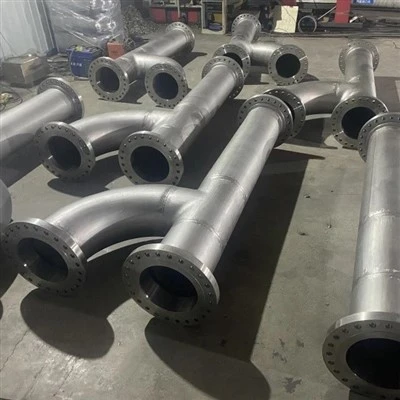
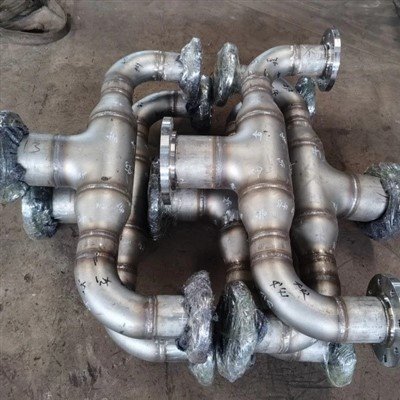
One of the most common frustrations in metals procurement is the Minimum Order Quantity (MOQ) - the smallest amount a mill or supplier will produce or sell in a single transaction. For buyers of custom stainless steel, nickel alloys, and titanium products, MOQs can feel like an immovable obstacle: you need 300 kg of a specific duplex grade in a non-standard dimension, and the mill tells you the minimum is 2,000 kg.

This guide explains exactly why MOQs exist, how they are set, what realistic values look like across different product forms and alloy families, and - critically - what practical strategies you can use to reduce or work around them. Whether you are a procurement engineer on a major capital project, a maintenance buyer sourcing replacement materials, or a small manufacturer specifying a custom alloy product for the first time, this guide gives you the commercial and technical knowledge to negotiate more effectively and plan more accurately.
What Is a Minimum Order Quantity (MOQ) and Why Does It Exist?
A Minimum Order Quantity (MOQ) is the smallest weight, length, or number of pieces that a manufacturer will produce in a single production run for a specific product specification. It is not an arbitrary commercial preference - it is a direct consequence of how specialty metals are manufactured.
Producing custom alloy products involves a sequence of fixed-cost operations: raw material procurement, charge preparation, melting, casting, hot and cold working, heat treatment, inspection, surface finishing, and certification. Many of these steps have costs that do not scale linearly with quantity. A furnace heat costs approximately the same to set up whether it produces 500 kg or 5,000 kg. A rolling mill run requires the same tooling setup time regardless of length. These fixed costs must be recovered across the order - and below a certain quantity, the economics simply do not work for the manufacturer.
The Heat Size Constraint
The most fundamental MOQ driver in specialty metals is the melt or heat size. Every alloy starts life as a controlled melt in an electric arc furnace (EAF), vacuum induction furnace (VIM), or argon oxygen decarburisation (AOD) vessel. Each furnace has a minimum and maximum capacity:

Standard austenitic grades (304L, 316L): Heat sizes typically 20–100 MT. These are common alloys that mills run frequently; your order joins a campaign with other customers, so MOQ is lower in practice.
Duplex and super duplex (2205, 2507): Heat sizes 10–40 MT. Less frequent campaigns; higher effective MOQ per customer.
Nickel alloys (625, C-276, 825): Heat sizes 3–15 MT in vacuum furnaces. More expensive per kg of capacity; MOQ on a per-order basis is lower in weight but higher in value.
Titanium (Grade 2, Grade 7): Produced in vacuum arc remelting (VAR) furnaces in ingots of 2–8 MT. Specialist operations with high setup cost.
The key insight: if your order quantity is below what the mill needs to fill a heat - or to justify opening a production campaign for a specific alloy - the mill has two choices: blend your order with another customer's (only possible for standard grades), or decline the order.
Processing and Conversion Costs
Beyond melting, each conversion step - hot rolling, cold drawing, extrusion, forging, heat treatment, surface finishing - carries its own setup cost. For seamless pipe, extrusion tooling must be set up and verified before production begins; this setup may take several hours regardless of the run length.
For custom profiles and special sections, die fabrication is required. For electropolished or precision-ground product, dedicated line time is needed. All of these fixed costs must be recovered within the order, pushing MOQs higher for any product that deviates from standard catalogue specifications.
MOQ Reference Data by Product Form and Alloy
The table below provides indicative MOQ ranges for the most commonly ordered custom alloy product forms. These values reflect typical mill requirements from major global producers. Actual MOQs depend on the specific mill, the market cycle (mills lower MOQs when order books are thin), the buyer's purchasing history, and the exact specification required.
|
Product Form |
Standard SS (304L/316L) |
Duplex / Super Duplex |
Nickel Alloys (625/C-276) |
Titanium (Gr.2/Gr.7) |
|
Seamless Pipe & Tube |
500–1,000 kg |
1,000–2,000 kg |
200–500 kg |
200–500 kg |
|
Welded Pipe (standard sizes) |
200–500 kg |
500–1,000 kg |
200–500 kg |
300–800 kg |
|
Flat Bar / Strip |
500–1,000 kg |
1,000–2,000 kg |
100–300 kg |
100–300 kg |
|
Round Bar |
300–600 kg |
500–1,500 kg |
100–500 kg |
100–300 kg |
|
Plate & Sheet |
500–2,000 kg |
1,000–3,000 kg |
300–1,000 kg |
200–500 kg |
|
Forged Fittings (elbows/tees) |
Per inquiry (min. 1 heat) |
Per inquiry |
Per inquiry |
Per inquiry |
|
Wire & Wire Rod |
500–2,000 kg |
1,000–3,000 kg |
100–500 kg |
100–300 kg |
|
Custom Profile / Section |
1,000–5,000 kg |
2,000–5,000+ kg |
500–2,000 kg |
500–2,000 kg |
Values are indicative ranges based on 2024–2025 global mill practice. Significant variation exists between producers and regions. EU, US, and Asian mills may differ by 20–50%. 'Per inquiry' means the mill will quote MOQ case-by-case based on specification complexity. Source: Industry procurement experience; IDA procurement benchmarking; MEPS International.
|
Key Insight: Why Nickel Alloys Have Lower MOQs Than Standard SS (by weight)
It seems counterintuitive: exotic nickel alloys like Alloy 625 and C-276 often have lower MOQs by weight than standard 316L pipe. The reason: nickel alloy heat sizes are smaller (3–15 MT vs. 20–100 MT for austenitic SS), and these grades command a price 8–15× higher per kilogram. A 200 kg order of Alloy 625 at £65/kg = £13,000 in material value - commercially viable for a specialist producer. A 200 kg order of 316L pipe at £4.50/kg = £900 - not commercially viable for a large mill. The practical rule: MOQ in commercial value terms (£/$ value of order) is often more consistent across alloy families than MOQ by weight. |
What Drives MOQ: The Seven Key Factors
Understanding the specific factors that influence an MOQ gives you the ability to target reductions in the right places. The table below identifies the seven primary drivers, how each one affects the MOQ, and the practical implication for your procurement strategy.
|
MOQ Driver |
How It Affects MOQ |
Practical Implication for Buyers |
|
Melt / Heat Size |
Each alloy is melted in batches of 3–30 MT depending on furnace type. A single heat must typically be consumed in one or a few orders. |
If your order is below one heat, the mill either blends your order with another customer's or declines. |
|
Alloy Complexity & Rarity |
Exotic alloys (C-276, 2507, Gr.7 Ti) require specialised raw materials and dedicated furnace time. MOQ rises sharply. |
Expect MOQ 2–5× higher for nickel and titanium alloys vs. standard austenitic SS. |
|
Product Form Processing |
Seamless pipe requires extrusion tooling; custom profiles need die fabrication. Setup cost must be amortised over the order. |
Custom profiles and small-diameter seamless tubing carry the highest MOQs in proportion to their unit weight. |
|
Dimensional Specification |
Non-standard OD, wall, or length requires rolling mill resetting, additional quality inspection, and may waste material at start/end of run. |
Tighter tolerances or non-catalogue dimensions increase MOQ by 20–100%. |
|
Surface Finish / Condition |
Specialised finishes (electropolished, No. 4 brushed, BA) require dedicated lines and cleaning cycles. |
Surface finish upgrades typically add 200–500 kg to the base MOQ. |
|
Certifications Required |
NACE MR0175, ASME, PED, or 3rd-party inspection adds cost that must be spread across the order. |
Heavily certified orders require larger quantities to remain commercially viable for the mill. |
|
Geographic Destination |
Export documentation, crating, and compliance testing for certain destinations add fixed costs. |
Smaller export orders to distant markets often carry premium pricing rather than MOQ reduction. |
MOQ drivers apply cumulatively - a custom dimension in a rare alloy requiring third-party certification and a special surface finish will attract an MOQ significantly higher than the sum of individual adjustments. Source: Metals industry procurement practice; ASTM A480 production requirements.
Standard vs. Custom Specifications: MOQ Impact
The single biggest lever in MOQ management is the degree of customisation in your specification. Every deviation from a mill's standard catalogue product adds complexity, cost, and therefore MOQ. The table below maps specific specification variables to their MOQ impact, helping you identify where accepting a standard option will deliver the greatest commercial benefit.

|
Specification Variable |
Standard (Ex-Stock / Catalogue) |
Custom / Non-Standard |
Reason for Difference |
|
OD / Wall Thickness |
Schedule 10S–160, standard OD |
Non-schedule wall, special OD |
Mill resetting; material waste at run ends |
|
Length |
Random (3–8 m) or cut standard |
Fixed exact length (e.g., 3,756 mm) |
Saw/cut setup cost + yield loss |
|
Surface Finish |
Mill finish / 2B |
No.4 / BA / electropolished / Ra specified |
Dedicated polishing line and QC |
|
Heat Treatment |
Standard solution anneal |
Stress relief, ageing, cold-worked condition |
Additional furnace cycle and certification |
|
Chemical Restriction |
Standard ASTM range |
Restricted elements (e.g., max S, P, trace) |
Extended lab analysis; possible heat remelting |
|
Traceability Level |
Standard MTR / EN 10204 Type 3.1 |
Full PMI + 3rd party + NACE + ASME CMTR |
Third-party inspection fees spread over order |
|
Country Certification |
Standard ASTM / EN |
PED (Europe), CRN (Canada), GOST (Russia) |
Localised documentation and testing cost |
MOQ uplift percentages are indicative and based on industry procurement benchmarking. Actual uplift depends on the specific mill, order volume, and alloy. Multiple custom variables are additive in their MOQ impact.
Design-for-procurement principle: The most effective time to reduce MOQ is during the engineering design phase, before dimensions and specifications are locked. A pipe wall thickness of 4.78 mm (a non-standard dimension) may require a custom mill run; 4.78 mm rounded up to 5.0 mm (Schedule 40S in many sizes) immediately qualifies for stock material procurement with no MOQ. Involve your materials procurement team in engineering reviews to identify these optimisation opportunities before the design is frozen.
Eight Strategies to Reduce or Eliminate MOQ
MOQ is not fixed and non-negotiable - it is a commercial and logistical position that can be influenced by buyer behaviour, procurement structure, and specification decisions. The following eight strategies, used individually or in combination, can significantly reduce the effective MOQ for your organisation.
|
Strategy |
How It Works |
MOQ Reduction Potential |
Best Suited For |
|
Consolidate with sister projects |
Combine multiple project requirements into one order across same grade and size range |
30–60% lower effective MOQ per project |
EPC contractors; multi-site operators |
|
Accept standard dimensions |
Shift from custom OD/wall to nearest catalogue size; adjust design if possible |
50–80% MOQ reduction |
Early-stage design; budget procurement |
|
Blanket / frame agreement |
Commit to annual volume; take delivery in scheduled call-off releases |
Mill agrees to smaller release lots (100–300 kg) |
Repeat buyers; maintenance contractors |
|
Distributor stock purchase |
Buy from service centre holding certified stock |
No MOQ - buy exactly what you need |
Urgent / spot requirements; small quantities |
|
Group purchasing / consortium |
Coordinate with non-competing buyers to share a heat |
Individual share as low as 100–200 kg |
Industry associations; SME buyers |
|
Accept longer lead time |
Mill schedules your order into a future campaign run; shares heat with others |
20–40% lower MOQ |
Non-urgent orders with 12–20 week lead time |
|
Reduce certification scope |
Eliminate non-mandatory supplementary tests; use standard EN 10204 Type 3.1 |
Reduces per-unit cost; mill more willing to accept smaller order |
Non-code applications; general industry |
|
Alternate equivalent grade |
Specify a grade with wider market availability (e.g., 2205 instead of 2304) |
Access to stock material; MOQ eliminated |
Where design allows substitution |
MOQ reduction potentials are indicative. Actual results depend on supplier relationships, market conditions, and order specifics. Blanket agreements typically require formal commercial negotiation and a credit assessment.
|
The Distributor Option: When It Makes Sense and When It Doesn't
WHEN TO USE A DISTRIBUTOR: Quantities below 500 kg; standard grades (304L, 316L, 2205) in catalogue sizes; urgent delivery (< 4 weeks); single-project one-off requirements. WHEN TO GO DIRECT TO MILL: Quantities above 2,000 kg; custom dimensions unavailable from stock; long-term or repeat requirements; specialist certifications (NACE, PED, ASME); non-standard alloys. PRICE vs. MOQ TRADE-OFF: Distributors typically charge 15–35% above mill price for stocked standard material. For small quantities, this premium is almost always justified vs. buying mill MOQ excess. QUALITY NOTE: Always verify that distributor stock carries valid EN 10204 Type 3.1 MTRs with traceable heat numbers. Do not accept material without full documentation regardless of source. |
Lead Times: The MOQ-Time Trade-Off
MOQ and lead time are closely linked. Mills that agree to lower MOQs typically require longer lead times to schedule the order into a shared production campaign. Conversely, buyers willing to accept standard dimensions and longer lead times often find that mills are more flexible on quantity. Understanding this trade-off is essential for project scheduling.
|
Order Type |
Typical Lead Time |
MOQ Requirement |
Key Variable |
|
Ex-stock distributor (standard sizes) |
1–5 working days |
None (buy by piece) |
Distributor inventory depth |
|
Service centre cut-to-length (stock material) |
3–10 working days |
50–200 kg typical |
Saw capacity and queue |
|
Mill standard campaign (catalogued sizes) |
8–16 weeks |
As per Table 1 |
Mill scheduling; alloy |
|
Mill custom dimension / finish |
12–24 weeks |
Table 1 + 20–100% premium |
Die / tooling availability |
|
New alloy / developmental grade |
20–36 weeks |
Full heat minimum (3–30 MT) |
Raw material procurement |
|
Certified to national code (PED, ASME, CRN) |
16–28 weeks |
Table 1 values |
3rd party inspection schedule |
|
Emergency mill release (priority scheduling) |
4–8 weeks |
Full heat; significant premium |
Mill capacity; commercial terms |
Lead times are indicative based on 2024–2025 global market conditions. Actual lead times vary by mill location, alloy, market demand, and order complexity. Add 2–4 weeks for international shipping, customs clearance, and port handling. Source: Industry procurement experience; MEPS International lead time surveys.
Critical planning rule: For any capital project specifying custom alloy pipe, fittings, or plate, the material procurement schedule must account for mill lead times of 12–24 weeks for custom products. Attempting to source custom alloy material at short notice will result in either payment of emergency premiums (typically 20–40% above standard pricing), acceptance of a non-compliant substitute, or project delay. Procurement should be initiated at detailed design completion - not at project execution start.
MOQ by Industry Sector
Different industries have fundamentally different volume profiles, procurement models, and MOQ experiences. Understanding where your sector sits in this landscape helps set realistic expectations and identify the most appropriate sourcing model for your specific needs.
|
Industry Sector |
Typical Annual Volume |
Preferred Procurement Model |
MOQ Approach |
|
Oil & Gas (upstream) |
10–500 MT per project |
Project-based mill order + spot |
Full mill MOQ; consolidate across project |
|
Petrochemical / Refining |
5–200 MT per turnaround |
Blanket agreements + spot |
Frame contracts reduce effective MOQ |
|
Desalination / Water |
20–500 MT per plant |
Single project order |
Full mill MOQ; titanium via specialist |
|
Food & Beverage |
0.5–20 MT per year |
Distributor stock + small mill orders |
Distributor removes MOQ constraint |
|
Pharmaceutical / Biotech |
0.1–5 MT per year |
Certified distributor or small-lot specialist |
Specialist stock; MOQ 50–200 kg |
|
Power Generation |
5–100 MT per outage |
OEM specification + approved mill list |
Full MOQ; long-term supplier agreements |
|
Marine & Shipbuilding |
2–50 MT per vessel |
Class-approved distributor or mill |
Mix of stock and mill order by size |
|
Semiconductor / Electronics |
0.05–2 MT per year |
Specialty distributor; high-purity grades |
Very small lots; premium pricing accepted |
Volume ranges are indicative of typical project or annual requirements. Actual volumes vary widely by project scale and company size. Source: IDA Desalination Yearbook; OGP industry statistics; EHEDG food equipment guidelines; industry procurement benchmarking.
How to Negotiate MOQ with a Mill or Supplier
MOQ negotiation is a legitimate and expected part of specialty metals procurement. Mills negotiate MOQ regularly - it is not a fixed policy. The following principles will strengthen your negotiating position:

Demonstrate Total Relationship Value
Mills are more flexible on MOQ for buyers they know, trust, and expect to buy from again. Before discussing MOQ on a specific order, establish the total annual value of your business with the supplier. A buyer purchasing £500,000 per year in 316L standard product who also needs 200 kg of 2507 custom profile has significantly more leverage than a buyer placing their first enquiry. If you are a new customer, be transparent about your future purchasing plans and pipeline.
Offer a Firm Commitment, Not a Request for Quote
Mills distinguish between RFQs (requests for quotation) and purchase orders. When negotiating MOQ reductions, come with a firm order commitment rather than a speculative enquiry. A purchase order for 300 kg is more persuasive than a request for pricing on '200–500 kg depending on price.' The mill's commercial team needs to justify the MOQ exception internally; a firm order makes that easier.
Accept the MOQ as a Stock Purchase
One of the most practical MOQ solutions is to accept the mill's MOQ, take delivery of the full quantity, and hold the excess in your own inventory for future use. For projects with ongoing or recurring material needs (maintenance programmes, multi-phase capital projects, ongoing production), buying slightly more than the immediate requirement and stocking it is often more cost-effective than attempting to source the exact quantity at each purchase point.
Request MOQ Excess Disposal Assistance
Some mills and many distributors offer a consignment stock arrangement or will agree to buy back unused material from the MOQ excess at a pre-agreed price. This effectively reduces your net exposure on the excess purchase. It is worth asking specifically for this option when negotiating, particularly for high-value alloys (nickel alloys, titanium) where the excess stock cost is significant.
Frequently Asked Questions (FAQ)
Q1: What is a typical MOQ for custom stainless steel pipe?
For standard austenitic grades (304L, 316L) in catalogue dimensions, MOQ from a mill is typically 500–1,000 kg for seamless pipe and 200–500 kg for welded pipe. Custom dimensions in standard grades require 1,000–3,000 kg. Duplex and super duplex grades in custom dimensions typically require 2,000–5,000 kg. In all cases, if your requirement is below these thresholds, a certified distributor holding stock is the practical solution, with no MOQ constraint.
Q2: Why is the MOQ for a specialist nickel alloy sometimes lower than for standard 316L?
It is a question of commercial value, not weight. Nickel alloys like Alloy 625 or C-276 are priced at £30–80 per kg compared to £3–6 per kg for 316L pipe. A 200 kg order of Alloy 625 represents £6,000–16,000 of material value, which is commercially viable for a specialist nickel alloy producer. The same 200 kg of 316L is worth only £600–1,200 - not enough to cover mill setup costs. MOQ in monetary value terms (typically £5,000–20,000 minimum order value) is often more consistent across alloy families than MOQ expressed in kilograms.
Q3: Can I split a mill MOQ across multiple projects to reach the minimum?
Yes - and this is one of the most effective MOQ reduction strategies available. Many EPC contractors and owner-operators consolidate requirements from multiple projects or sites into a single mill order, then allocate the material internally by project. This requires good internal coordination and a project materials management system, but it is standard practice on large capital programmes. The key requirement is that all consolidated items share the same alloy grade, product form, and specification - mixing 316L and 2205 pipe into one order does not reduce the MOQ for either.
Q4: What is a blanket order / frame agreement and how does it help with MOQ?
A blanket order (also called a frame agreement or call-off contract) is a commercial arrangement where you commit to purchasing a defined annual volume from a supplier, with the flexibility to take delivery in smaller call-off releases throughout the year. For example, you commit to 5,000 kg of 2205 duplex pipe per year, but take delivery in monthly releases of 300–500 kg. The mill produces the full quantity in one campaign run (meeting their MOQ) and holds the stock for scheduled releases. This arrangement suits buyers with regular but not predictable demand - maintenance programmes, service companies, and repeat manufacturers.
Q5: How much more expensive is it to order below the MOQ?
If a mill agrees to produce below its standard MOQ - which they sometimes will for established customers or with sufficient commercial incentive - the price premium typically ranges from 15% to 40% above standard pricing. This premium covers the additional cost of running a smaller-than-optimal production campaign. For custom dimensions with die or tooling fabrication involved, the premium can reach 50–80% for very small orders. In most cases, if the required quantity is less than 60% of the standard MOQ, a distributor stock purchase is commercially preferable to paying the small-order premium at a mill.
Q6: Do MOQs apply to fittings, flanges, and other fabricated products as well as raw material?
Yes, though the structure is different. For standard fittings (ASME B16.9 elbows, tees, reducers) in common grades (316L, 2205), distributors typically hold stock, and there is no effective MOQ. For custom fittings - non-standard pressure class, exotic alloys, special end preparations - MOQs are quoted per inquiry and are typically expressed in minimum order value (£2,000–10,000+) rather than weight. Forgings and castings in custom grades almost always require a full pattern or tooling order, with MOQs set by the minimum economical production run for the foundry or forge.
Q7: What should I include in a purchase order to avoid MOQ surprises?
To avoid late-stage MOQ surprises, your purchase order should state: (1) the exact specification including grade, product form, dimensions, tolerance class, surface finish, and heat treatment condition; (2) the required quantity in both kilograms and pieces; (3) the delivery schedule - single delivery or call-off; (4) the certification requirements (EN 10204 type, NACE, PMI, etc.); and (5) a statement requesting that the supplier confirm any MOQ requirement before order acceptance. A supplier who receives a fully specified PO will identify MOQ issues immediately; a supplier who receives a vague enquiry may only raise the MOQ constraint when they issue the order acknowledgement - by which time your schedule may already be impacted.
Buyer's Quick Reference Summary
The following summary consolidates the key MOQ principles into a practical quick-reference checklist for procurement and engineering teams.
|
MOQ Planning Checklist - Before You Place Your Order
1. Know your quantity in kg before approaching a mill. 'A few metres' is not a procurement-ready specification. 2. Check whether your specification uses standard catalogue dimensions. If not, expect a 20–100% MOQ uplift. 3. Confirm the alloy family: standard austenitic (high MOQ by weight, low by value); nickel/titanium (low MOQ by weight, high by value). 4. If quantity < 500 kg in standard grades, go to a distributor first. Mill engagement is unlikely to be productive. 5. If quantity is 500–2,000 kg in standard grades, compare distributor premium vs. mill pricing before committing. 6. If quantity > 2,000 kg in any grade, direct mill engagement is appropriate and preferred. 7. For repeat requirements, initiate a blanket order discussion - it almost always reduces effective per-order MOQ. 8. Build 12–24 weeks into your project schedule for custom alloy mill orders. Do not leave material procurement to the last minute. 9. Always specify EN 10204 Type 3.1 MTR as a minimum; never accept material without full documentation regardless of source. 10. For high-value critical orders, request a pre-order commercial discussion with the mill's technical sales team. |
Conclusion
Minimum Order Quantities for custom alloy products are not arbitrary barriers - they are a rational economic consequence of the way specialty metals are manufactured. Understanding the production logic behind them transforms MOQ from a frustrating constraint into a manageable procurement variable.
The data in this guide makes the pattern clear: MOQ is highest when you combine a rare alloy with a custom specification, a tight delivery, and a heavy certification requirement. It is lowest - often effectively zero - when you buy standard dimensions from distributor stock or consolidate requirements across multiple projects. Between these extremes lies a broad range of strategies available to any informed buyer.
The buyers who manage MOQ most effectively are those who plan early, specify intelligently, and build supplier relationships before they need an exception. In specialty metals procurement, the single most valuable MOQ reduction tool is a well-managed supplier relationship and a procurement strategy that starts at the design table, not the requisition desk.
References & Further Reading
MEPS International - Stainless Steel World Price Reports and Lead Time Surveys (2024–2025)
IDA (International Desalination Association) - Procurement Benchmarking Reports
ASTM A312 / A790 / A480 - Standard Specifications for Stainless Steel Pipe and General Requirements
EN 10204:2004 - Metallic Products - Types of Inspection Documents
ASME B31.3 - Process Piping Code - Material Procurement Requirements
Nickel Institute - Nickel-Containing Materials in the Oil and Gas Industry (Technical Series No. 10 073)
Outokumpu - Stainless Steel Handbook, 2023 Edition
Special Metals Corporation - Alloy 625 and C-276 Technical Data Sheets
CIPS (Chartered Institute of Procurement & Supply) - Category Management in Industrial Procurement
OGP (International Association of Oil & Gas Producers) - Materials Management Guidelines
This document is produced by metals industry professionals for informational and reference purposes only.
MOQ values and lead times reflect general industry practice and will vary by supplier, market conditions, and specification. Always confirm requirements directly with your chosen supplier.