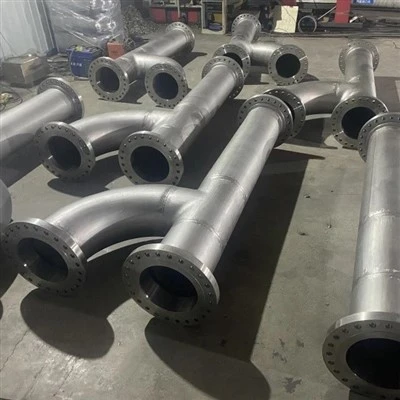
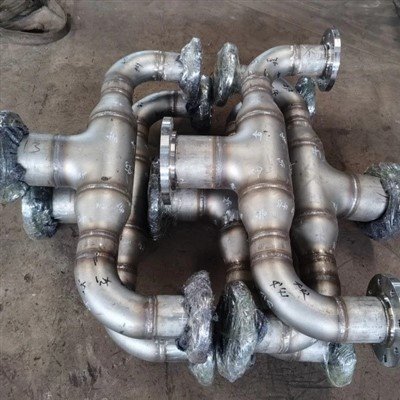
In 2026, Monel 400 (UNS N04400) costs roughly USD 18-38/kg for common forms - about 1.5x to 2.5x more than copper-nickel 90-10 (C70600, about USD 10-18/kg) and about 1.2x to 2.0x more than 70-30 (C71500, about USD 14-24/kg); the gap is driven almost entirely by nickel content, since Monel 400 is about 63-70 percent nickel while cupronickel is only 10-30 percent nickel and mostly cheap copper.

Bottom line for budgeting: cupronickel is the lower-cost corrosion material for seawater piping and heat-exchanger tube where high strength is not required, while Monel 400 justifies its premium only where higher strength, temperature, or sour-service capability is needed.
What are Monel 400 and cupronickel, and how do they differ?
Both are nickel-copper alloys, but Monel 400 is nickel-rich (about 63-70 percent Ni) while cupronickel is copper-rich (90-10 or 70-30 Cu-Ni), so they sit at opposite ends of the cost spectrum and serve different strength and temperature needs.
Monel 400 (UNS N04400) is a high-nickel alloy with roughly 28-34 percent copper; it carries high strength and excellent seawater/corrosion resistance. Cupronickel (Cu-Ni) is mostly copper with 10 percent or 30 percent nickel (UNS C70600 / C71500) plus small iron and manganese; it is softer, very corrosion-resistant in seawater, and far cheaper because copper dominates the composition.
Monel 400: About 63-70 percent Ni, 28-34 percent Cu; high strength, high cost.
Cupronickel: C70600 = 88-90 Cu / 9-11 Ni; C71500 = 65-70 Cu / 29-31 Ni; lower strength, lower cost.
How does the composition drive the price difference?
Because nickel trades near USD 18,000-24,000/ton while copper trades near USD 8,000-10,000/ton, Monel 400's high nickel content sets a high material floor, whereas cupronickel's dominant copper content keeps its floor low - composition is the single biggest cost driver.
|
Alloy (UNS) |
Ni % |
Cu % |
Dominant cost element |
Relative metal value |
|
Monel 400 (N04400) |
63-70 |
28-34 |
Nickel (high) |
High (1.0 baseline) |
|
Cu-Ni 90-10 (C70600) |
9-11 |
88-90 |
Copper (low) |
Low (0.5-0.7x) |
|
Cu-Ni 70-30 (C71500) |
29-31 |
65-70 |
Copper + moderate Ni |
Medium (0.7-0.9x) |
Rule of thumb: each 1 percent of nickel in the alloy adds roughly USD 0.2-0.25/kg of embedded metal value at a USD 20,000/ton nickel price. Monel 400's ~65 percent nickel therefore embeds about USD 13-16/kg of nickel alone before any processing.
What are the 2026 price ranges by product form?
Indicative 2026 prices: Monel 400 pipe/plate USD 18-38/kg; cupronickel 90-10 (C70600) USD 10-18/kg and 70-30 (C71500) USD 14-24/kg - cupronickel is consistently the cheaper family.
|
Product form |
Monel 400 (USD/kg) |
Cu-Ni 90-10 C70600 (USD/kg) |
Cu-Ni 70-30 C71500 (USD/kg) |
|
Plate / sheet |
20 - 34 |
10 - 16 |
14 - 20 |
|
Seamless tube / pipe |
22 - 38 |
12 - 18 |
16 - 24 |
|
Rod / bar |
18 - 32 |
10 - 16 |
13 - 20 |
|
Forgings / fittings |
26 - 50 |
14 - 22 |
17 - 26 |
|
Welded pipe (large dia) |
20 - 34 |
11 - 17 |
15 - 22 |
Prices are indicative 2026 import/export ranges for mill and distributor stock; project-specific MTC, PMI, and testing add 5-15 percent. Cu-Ni tube is heavily used in ship and desalination heat exchangers and is produced at large scale, which also lowers its conversion cost.
How much does the nickel price move each alloy's cost?
A USD 1,000/ton move in nickel changes Monel 400 cost by roughly USD 0.65-0.70/kg (it is ~65 percent Ni), but only USD 0.10-0.30/kg for cupronickel - so Monel 400 is far more exposed to nickel-market swings.
|
Alloy |
Ni content |
Cost change per USD 1,000/ton Ni move |
Volatility vs Ni price |
|
Monel 400 |
~65% |
About USD 0.65-0.70/kg |
High |
|
Cu-Ni 70-30 |
~30% |
About USD 0.30/kg |
Moderate |
|
Cu-Ni 90-10 |
~10% |
About USD 0.10/kg |
Low |
Implication: in a nickel bull market, Monel 400 gets expensive fast; cupronickel 90-10 is the budget hedge because its cost barely tracks nickel. Specifiers should watch LME Ni when budgeting Monel 400 lines.
How does copper price affect cupronickel?
Copper price is the main cost lever for cupronickel (it is 65-90 percent copper), so a copper rally lifts cupronickel more than Monel 400, but copper's lower absolute price and smaller volatility keep cupronickel's swings modest.
Dominant copper: Cu-Ni 90-10 is ~90 percent copper, so it tracks the copper market closely.
Embedded value: At USD 9,000/ton copper, the embedded copper in 90-10 is roughly USD 8-8.5/kg; processing adds the rest.
Stability: Copper is less volatile than nickel, so cupronickel budgeting is more predictable than Monel 400.
How do strength and temperature needs affect the choice?
Cupronickel wins on cost for seawater piping and exchangers where strength is modest, but Monel 400 is the only right choice when higher strength, temperatures above about 300-400 degC, or sour-gas capability is required - there the premium is justified.
|
Property |
Monel 400 (N04400) |
Cu-Ni 70-30 (C71500) |
Cu-Ni 90-10 (C70600) |
|
Yield strength (MPa) |
172 - 415 (annealed) |
105 - 275 |
70 - 230 |
|
Tensile (MPa) |
483 - 620 |
320 - 460 |
270 - 380 |
|
Max useful temp (approx.) |
~450 degC |
~300 degC |
~250 degC |
|
Sour (H2S) service |
Yes (NACE OK) |
Limited |
Limited |
|
Relative cost |
1.0x (baseline) |
0.7 - 0.9x |
0.5 - 0.7x |
How do they compare for seawater corrosion?
Both families resist seawater biofouling and corrosion well, and cupronickel is actually preferred for condenser and heat-exchanger tube because of its superior biofouling resistance; Monel 400 is chosen when strength, temperature, or sour service rules out cupronickel.
Cu-Ni: Cu-Ni 90-10 and 70-30 are the standard ship hull, condenser, and desalination tubes - excellent against seawater.
Monel 400: Monel 400 is excellent in seawater too, but its edge is strength and higher temperature, not better seawater resistance.
Common: Both avoid chloride stress cracking better than austenitic stainless; Monel 400 adds sour-service acceptance.
What has the price trend been from 2020 to 2026?
Both alloys tracked the 2022 nickel spike, but Monel 400 swung far more (Ni-driven), while cupronickel stayed comparatively stable; from 2023 the market normalized and 2025-2026 prices are range-bound with Monel 400 still 1.5x-2.5x cupronickel.
|
Year |
Ni price band (USD/ton) |
Monel 400 plate (USD/kg, approx.) |
Cu-Ni 90-10 tube (USD/kg, approx.) |
|
2020 |
12,000 - 15,000 |
14 - 24 |
8 - 13 |
|
2022 (spike) |
25,000 - 48,000 |
28 - 48 |
11 - 17 |
|
2024 |
16,000 - 19,000 |
18 - 30 |
9 - 15 |
|
2026 |
17,000 - 24,000 |
20 - 34 |
10 - 16 |
Lesson: budget Monel 400 with a 10-20 percent nickel-volatility allowance; cupronickel needs a smaller buffer tied to copper.
Do processing and volume differences matter?
Cupronickel benefits from very large-scale production (especially exchanger tube), giving lower conversion cost per kg, while Monel 400's smaller volume and energy-intensive nickel melting add processing premium on top of the metal cost.
Scale: Cu-Ni tube is made in huge tonnages for marine/desalination, spreading conversion cost.
Volume: Monel 400 melts and processes at lower volume, so its per-kg premium is wider.
QA: Both require MTC, PMI, and NDE, but Monel 400 testing overhead is relatively higher.
Which alloy should you choose to control cost?
Choose cupronickel 90-10 or 70-30 for seawater piping, condensers, and desalination tube where strength and temperature are moderate; reserve Monel 400 for shafts, fasteners, valves, and sour or high-temperature lines where its properties are essential.
|
Application |
Best-value alloy |
Reason |
|
Seawater condenser / exchanger tube |
Cu-Ni 90-10 (C70600) |
Best biofouling + lowest cost |
|
Desalination piping |
Cu-Ni 70-30 (C71500) |
Strength + corrosion at low cost |
|
Ship seawater piping |
Cu-Ni 70-30 or 90-10 |
Field-proven, cheap, weldable |
|
Pump shafts / fasteners |
Monel 400 |
Needs high strength |
|
Sour-gas / high-temp piping |
Monel 400 |
NACE + temperature capability |
|
Valve stems / bolting |
Monel 400 |
Strength + corrosion |
What 2026 market trends affect both alloys?
2026 trends are: a range-bound nickel price (USD 17,000-24,000/ton) keeping Monel 400 volatile but capped; steady copper demand from energy/marine buildout supporting cupronickel; and growing desalination and shipbuilding demand lifting cupronickel volume and lowering its unit cost.
Nickel: Nickel stays range-bound after the 2022 spike; no sustained bull foreseen but spikes possible.
Copper: Electrification and marine demand keep copper firm around USD 8,000-10,000/ton.
Demand: Desalination, LNG, and naval programs expand Cu-Ni consumption and scale economies.
Supply: China-origin supply keeps both alloys competitive on export pricing with full MTC.
Frequently asked questions
In 2026 Monel 400 runs roughly 1.5x to 2.5x the price of cupronickel: about USD 18-38/kg versus USD 10-18/kg for 90-10 and USD 14-24/kg for 70-30, driven mainly by Monel 400's high nickel content.
Why is Monel 400 more expensive?
Because it is about 63-70 percent nickel and nickel trades near USD 18,000-24,000/ton, so its embedded metal value is high; cupronickel is mostly cheap copper, so its floor stays low.
Which is better for seawater?
For corrosion and biofouling resistance in seawater piping and exchanger tube, cupronickel 90-10 or 70-30 is typically preferred and cheaper; Monel 400 is chosen when higher strength, temperature, or sour service is needed.
How does the nickel price affect the price gap?
A USD 1,000/ton nickel move changes Monel 400 cost by about USD 0.65-0.70/kg but only USD 0.10-0.30/kg for cupronickel, so the gap widens in a nickel bull market.
When should I pay more for Monel 400?
Pay the premium only for pump shafts, fasteners, valves, sour-gas (H2S) lines, or service above about 300-400 degC where cupronickel lacks strength or temperature capability.
Is cupronickel acceptable for sour service?
Generally no - cupronickel is not the standard sour-service alloy; Monel 400 (a solid-solution nickel-copper alloy) is accepted under NACE MR0175, so specify 400 for H2S duty.