Introduction
Monel 400 is a nickel-copper alloy renowned for its exceptional corrosion resistance and high strength across a broad temperature spectrum. Developed in 1901 by the International Nickel Company and named after company president Ambrose Monell, this superalloy has become a cornerstone material in industries ranging from marine engineering to chemical processing. Its unique composition, mirroring the natural ore ratios found in Sudbury, Ontario mines, delivers performance characteristics that surpass many engineered materials.

This article provides a comprehensive overview of Monel 400, detailing its chemical composition, mechanical and physical properties, diverse applications, fabricability, and market price considerations.
Monel 400 Chemical Composition
Monel 400 is classified as a solid-solution binary alloy that can only be hardened through cold working. Its chemical composition is precisely controlled to achieve its renowned properties.
The following table outlines its typical composition:
|
Element |
Content (%) |
|
Nickel (Ni) |
63% minimum (including Cobalt) |
|
Copper (Cu) |
28 - 34% |
|
Iron (Fe) |
2.5% maximum |
|
Manganese (Mn) |
2.0% maximum |
|
Silicon (Si) |
0.5% maximum |
|
Carbon (C) |
0.3% maximum |
|
Sulfur (S) |
0.024% maximum |
This specific blend results in a material known by several standard designations, including UNS N04400, Werkstoff Nr. 2.4360/2.4361, and ASTM B164. It is also covered under specifications like AMS 4574 and QQ-N-281.
Properties of Monel 400

Mechanical and Physical Properties
Monel 400 exhibits a combination of strength, toughness, and durability. In its annealed state, it offers a tensile strength of 517-620 MPa (75-90 ksi) and a yield strength of 172-345 MPa (25-50 ksi) . Its modulus of elasticity is approximately 179 GPa (26,000 ksi) . A key advantage is its retention of mechanical properties from sub-zero temperatures up to about 538°C (1000°F) . Unlike ferrous materials, it does not become brittle at cryogenic temperatures; instead, its strength increases with only a slight reduction in ductility.
Physically, Monel 400 has a high density of 8.8 g/cm³ (0.318 lb/in³), which makes components heavier than those made from stainless steel . Its melting point ranges from 1300-1350°C (2370-2460°F) . Other notable physical properties include a thermal conductivity of 21.8 W/m·K and a mean coefficient of thermal expansion of 13.9 μm/m°C (20-100°C).
Corrosion Resistance
The standout feature of Monel 400 is its excellent corrosion resistance in a wide range of aggressive environments. It performs exceptionally well in seawater and rapidly flowing brackish water, showing high resistance to cavitation and erosion. It is particularly resistant to chloride-induced stress corrosion cracking, a common failure mode for many other metals.
Its performance in acidic environments is noteworthy:
Excellent resistance to hydrofluoric and hydrochloric acids, especially under de-aerated conditions.
Good resistance to sulfuric and phosphoric acids.
Not suitable for oxidizing acids like nitric acid, where its corrosion resistance is poor.
The alloy also resists most alkalis, salts, organic substances, and atmospheric exposure.
Applications of Monel 400
Monel 400's unique properties make it indispensable in industries where reliability in harsh conditions is paramount. Its applications are extensive and critical.

Marine Engineering
Monel 400 is a premier material for marine applications. It is used in:
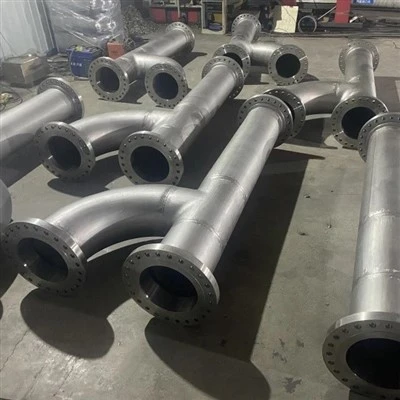
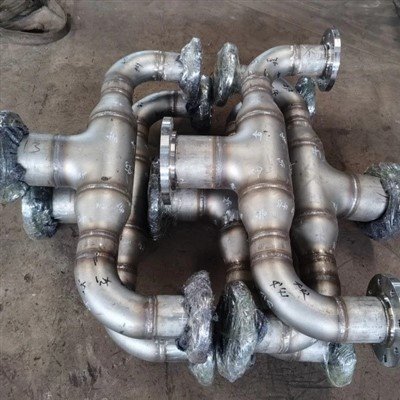
Pumps, valves, and piping systems for seawater handling.
Propeller shafts, marine fixtures, and sheathing for structures in the splash zone.
Desalination plants and offshore platforms due to its resistance to saline corrosion.
Chemical and Hydrocarbon Processing
In chemical plants and refineries, Monel 400 is used in equipment that handles corrosive media. Key applications include:
Chemical processing equipment such as reactors and storage tanks.
Heat exchangers, reboilers, and distillation towers for processing hydrocarbons and chlorinated solvents.
Pumps, shafts, and valves handling sulfuric and hydrofluoric acids.
Other Industrial Applications
Aerospace: Used for safety wires, exhaust assemblies, and other components requiring reliability under stress.
Oil and Gas: Ideal for oil well recovery tools and feedwater heaters.
Specialized Uses: Found in musical instruments, frames for eyeglasses, and electrical components.
Fabrication and Machining
Working with Monel 400 requires specific techniques due to its tendency to work-harden rapidly during machining.
Machinability: It is considered difficult to machine. Recommendations include using slow speeds, low feed rates, and sharp, positive-rake-angle tools to overcome work hardening. The free-machining grade, Monel 405, with added sulfur, is available for improved machinability.
Welding: The alloy exhibits good weldability using common methods like gas-tungsten arc (GTAW/TIG) and gas-metal arc (GMAW/MIG) welding . Post-weld heat treatment is generally unnecessary, but thorough cleaning is critical to prevent contamination.
Hot and Cold Working: Hot working is performed between 648-1176°C (1200-2150°F), while cold working can be done using standard methods. The alloy can be annealed at approximately 926°C (1700°F) to relieve stresses.
Price and Cost Considerations
As a nickel-based superalloy, Monel 400 is a premium-priced material. Its cost is significantly higher than common stainless steels like 304 or 316, often six to eight times more expensive. Current price indications are around $50 per kg. The high cost is attributed to the price of nickel and the complex processing required. However, its long service life, reduced maintenance needs, and reliability in critical applications often make it a cost-effective choice over the long term, justifying the initial investment.
Conclusion
Monel 400 remains a vital material in the engineering landscape over a century after its invention. Its unique nickel-copper composition provides an exceptional balance of high strength, toughness, and outstanding corrosion resistance in demanding environments, particularly in marine and chemical processing industries. While its high initial cost and challenging machinability are factors to consider, its performance, durability, and longevity offer significant value in applications where failure is not an option. As industries continue to operate in increasingly corrosive and high-pressure environments, the relevance of robust materials like Monel 400 is set to endure.