While Inconel 601 and 600 are both nickel-chromium alloys known for their strength and durability, the intentional addition of aluminum to Inconel 601 sets them on different performance paths.

The table below summarizes the differences between inconel 601 and 600.
|
Feature |
Inconel 600 (UNS N06600) |
Inconel 601 (UNS N06601) |
|
Chemical Difference |
No intentional aluminum addition. |
Contains 1.0 - 1.7% aluminum. |
|
Primary Advantage |
Superior resistance to chloride-induced stress corrosion cracking and corrosion by reducing environments. |
Exceptional high-temperature oxidation resistance, even under cyclic conditions. |
|
Nickel Content |
Higher (≥ 72%). |
Lower (58 - 63%). |
|
Chromium Content |
14 - 17%. |
21 - 25%. |
|
Typical Room Temp Tensile (Annealed) |
~655 MPa (95 ksi). |
~550 MPa (80 ksi). |
|
Density |
8.47 g/cm³. |
8.11 g/cm³. |
|
Best For |
Caustic environments, chlorine media, nuclear engineering, marine applications. |
Industrial furnaces, radiant tubes, heat-treating fixtures, combustion systems. |
Oxidation and Corrosion Resistance
Inconel 601 is engineered specifically for extreme oxidizing environments. Its aluminum content forms a tightly adherent, protective oxide scale (primarily aluminum oxide, Al₂O₃) on the surface when heated, providing outstanding resistance to scaling, spalling, and carburization at temperatures up to 1250°C.
In contrast, Inconel 600, with its higher nickel content and no aluminum, excels in a different domain: resistance to chloride-ion stress corrosion cracking (Cl-SCC) and corrosion in reducing or caustic environments. It performs exceptionally well in high-purity water, alkaline solutions, and atmospheres containing dry chlorine or hydrogen chloride gas.
Mechanical and Physical Properties

At room temperature in the annealed condition, Inconel 600 generally exhibits higher baseline strength and hardness compared to Inconel 601. However, the advantage shifts with temperature.
Due to its stable oxide layer, Inconel 601 retains its strength more effectively and demonstrates superior creep and rupture strength at very high temperatures.
Physically, Inconel 601 has a slightly lower density. Both alloys are considered non-magnetic with very low magnetic permeability, though Inconel 600 has a measurable Curie point around -124°C, while Inconel 601 remains non-magnetic down to at least -196°C.
Application Considerations
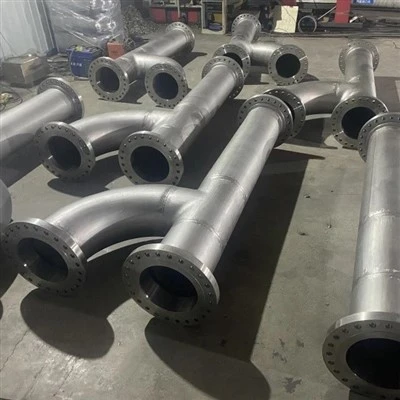
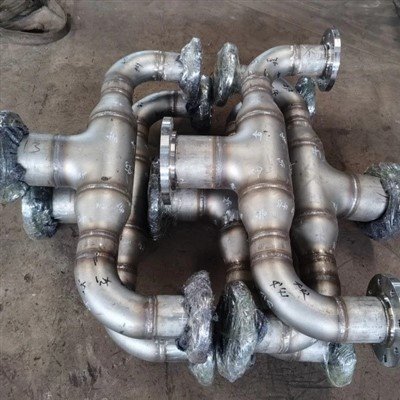
Inconel 600 pipe fittings are commonly specified for applications requiring excellent corrosion resistance in reducing environments and where good fabricability is essential.
In contrast, Inconel 601 fittings are typically selected for high-temperature oxidation environments such as furnace components, heat-treating equipment, and petrochemical processing systems where temperatures exceed 1000°C.
Cost and Availability
Inconel 601 generally commands a higher price premium compared to Inconel 600 due to its specialized composition and enhanced high-temperature properties.
While Inconel 600 may be more economical for applications not requiring extreme high-temperature oxidation resistance, the additional investment in Inconel 601 often proves justified in severe service.
To summarize, let Inconel 601's aluminum-enhanced oxide layer guide your choice for maximum temperatures and oxidizing atmospheres. Let Inconel 600's high nickel content and proven chloride resistance guide your choice for chemical, marine, and nuclear applications.
I hope this comparison helps clarify the distinct roles of these two powerful alloys.