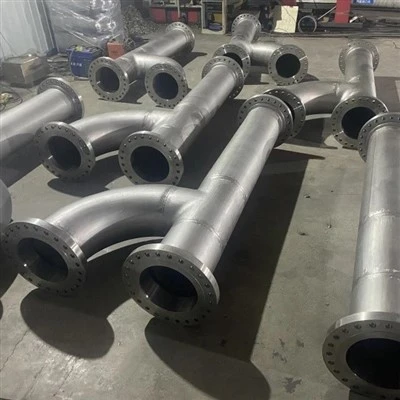
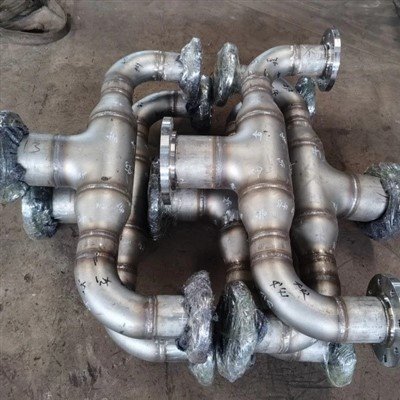
Inconel 600 (UNS N06600) and Inconel 601 (UNS N06601) are the two most widely specified nickel-chromium alloys for high-temperature oxidizing service. They are frequently compared head-to-head when specifying furnace components, heat-treatment fixtures, radiant tubes, and thermal-processing equipment. Both are produced to ASTM B168 (plate/sheet) and B167 (pipe/tube), and both appear in ASME BPVC Section II.

On the surface, these alloys appear similar. Dig deeper, and a clear performance boundary emerges: approximately 900°C continuous (850°C cyclic). Below that threshold, IN600 performs admirably and may offer marginal cost savings. Above it, IN601's aluminum addition creates a fundamentally different - and superior - oxidation mechanism that justifies selection in virtually every high-temperature furnace application.
|
KEY FINDING Inconel 601 is the preferred alloy for any furnace application operating above 900°C, particularly under thermal cycling. Its aluminum-derived Al2O3 (alumina) scale is more stable, more adherent, and self-healing - properties that Inconel 600's chromia (Cr2O3) scale cannot match at extreme temperatures. Inconel 600 remains the correct choice for lower-temperature continuous service, halogen-containing environments, caustic chemical processing, and nuclear steam generator tubing. |
What Are These Alloys?
Inconel 600 (UNS N06600)
Inconel 600 is a nickel-chromium alloy with high nickel content (minimum 72%) and 14–17% chromium. It was among the earliest commercially produced nickel alloys, dating to the 1930s, and is one of the most widely used high-temperature alloys in the world. Its corrosion resistance relies on a chromium oxide (Cr2O3) passive film, which forms spontaneously above ~400°C and provides protection from oxidation, most acids, and alkaline environments.
Inconel 600 is the traditional choice for: heat-treatment fixtures under ~900°C, caustic evaporators, nuclear steam generator tubes (historically), chemical processing tubes in halogen-containing service, and a wide range of furnace hardware at moderate temperatures.
UNS Number: N06600 | Common Names: Inconel 600, Alloy 600, Nicrofer 7216, Chronin 600
Key Standards: ASTM B168 (plate), B167 (pipe), B166 (bar/wire), B163 (tubing); ASME SB-168, SB-167, SB-163
Inconel 601 (UNS N06601)
Inconel 601 is a nickel-chromium-aluminum alloy, differentiated from IN600 by two key modifications: chromium is increased to 21–25% (vs 14–17% in IN600), and aluminum is added at 1.0–1.7%. This seemingly small aluminum addition is transformative. At temperatures above approximately 800–900°C, aluminum selectively diffuses to the alloy surface and forms a dense, adherent aluminum oxide (Al2O3) layer, which is significantly more stable and thermodynamically robust than chromia at extreme temperatures.
Inconel 601 is the preferred choice for: furnace radiant tubes, continuous and batch annealing furnace components above 900°C, brazing fixtures, waste-heat-recovery superheaters, and any thermal processing equipment subject to aggressive thermal cycling.
UNS Number: N06601 | Common Names: Inconel 601, Alloy 601, Nicrofer 6023 H, Chronin 601
Key Standards: ASTM B168 (plate), B167 (pipe), B166 (bar/wire); AMS 5715 (aerospace sheet/strip/plate); ASME SB-168, SB-167
Chemical Composition
The table below presents ASTM-specified composition ranges. Understanding these differences is the foundation for understanding all performance differences between the alloys.
|
Element |
IN600 Min (%) |
IN600 Max (%) |
IN601 Min (%) |
IN601 Max (%) |
Functional Role |
|
Nickel (Ni) |
72.0 min |
- |
58.0 min |
63.0 max |
Corrosion base, stability |
|
Chromium (Cr) |
14.0 |
17.0 |
21.0 |
25.0 |
Oxide scale former |
|
Iron (Fe) |
6.0 |
10.0 |
Balance |
Balance |
Cost reduction, structure |
|
Aluminum (Al) |
- |
- |
1.0 |
1.7 |
Al2O3 scale, IN601 key element |
|
Carbon (C) |
- |
0.15 max |
- |
0.10 max |
Carbide precipitation |
|
Manganese (Mn) |
- |
1.0 max |
- |
1.0 max |
Deoxidizer |
|
Silicon (Si) |
- |
0.50 max |
- |
0.50 max |
Oxidation resistance |
|
Sulfur (S) |
- |
0.015 max |
- |
0.015 max |
Hot-ductility (minimize) |
|
Copper (Cu) |
- |
0.50 max |
- |
- |
Minor impurity |
High-Temperature Oxidation Performance
Oxidation resistance is the primary performance criterion for furnace alloy selection. The table below compares behavior across the full service temperature range relevant to industrial furnaces and thermal processing equipment.

|
Temperature Range |
IN600 Performance |
IN601 Performance |
Test Method |
Key Observation |
|
Up to 600°C |
Excellent |
Excellent |
ASTM B168 cyclic |
Both alloys fully protective; minimal scaling |
|
600°C – 900°C |
Very Good |
Excellent |
ASTM B168 continuous |
IN601 Al2O3 scale forms, IN600 Cr2O3 dominant |
|
900°C – 1100°C |
Good (Cr2O3, spalling risk) |
Excellent (Al2O3 stable) |
ASTM B168 / ISO 21608 |
IN601 decisively superior; IN600 scaling increases |
|
1100°C – 1200°C |
Limited (spalling probable) |
Very Good (Al2O3 persists) |
ASTM B168 1200°C test |
IN601 preferred; IN600 not recommended above 1100°C |
|
Above 1200°C |
Not recommended |
Acceptable (short exposure) |
ASM Handbook Vol. 13A |
Consider alloys with higher Al/RE additions |
|
Cyclic Heating/Cooling |
Moderate (scale spalls) |
Superior (Al2O3 adhesion) |
ASTM G54 thermal cycle |
IN601 Al2O3 scale adheres better under thermal cycling |
Understanding the Oxide Scale Mechanism
Think of the oxide scale as a protective skin on the alloy. Chromia (Cr2O3) is like ordinary skin - reasonably tough but prone to cracking and peeling when subjected to repeated bending (thermal cycling). Alumina (Al2O3) is more like scar tissue - thicker, denser, less flexible in some respects, but far more resistant to peeling away from the surface it protects.
Every time a furnace heats up and cools down, the alloy and its scale expand and contract at slightly different rates. This repeated stress is what causes scale spallation - the scale cracks and flakes off, exposing fresh alloy to oxidation. IN601's alumina scale is better bonded to the alloy substrate (partly due to the aluminum-rich sub-layer acting as a diffusion barrier) and therefore survives far more thermal cycles before failing.
Mechanical Properties Comparison
While oxidation resistance drives the selection decision for most furnace applications, mechanical integrity at operating temperature is equally critical - particularly for structural components such as baskets, trays, fixtures, and radiant tubes.
|
Property |
Inconel 600 |
Inconel 601 |
Specification / Source |
|
Tensile Strength (min) |
550 MPa (80 ksi) |
600 MPa (87 ksi) |
ASTM B168 / B167 |
|
Yield Strength 0.2% (min) |
240 MPa (35 ksi) |
275 MPa (40 ksi) |
ASTM B168 / B167 |
|
Elongation (min) |
30% |
30% |
ASTM B168 / B167 |
|
Hardness (Brinell, typical) |
~120–170 HB |
~130–185 HB |
ASTM E10 |
|
Density |
8.47 g/cm3 |
8.06 g/cm3 |
Manufacturer data sheets |
|
Melting Range |
1354–1413°C |
1301–1363°C |
ASM Alloy Database |
|
Modulus of Elasticity (20°C) |
207 GPa |
207 GPa |
ASTM E111 |
|
Thermal Expansion (20–1000°C) |
15.1 µm/m·°C (avg) |
15.2 µm/m·°C (avg) |
Special Metals data sheet |
|
Max Continuous Service Temp |
~1100°C |
~1200°C |
ASME BPVC Sec. VIII / SB-168 |
|
Max Cyclic Service Temp |
~1000°C |
~1150°C |
Special Metals; ASTM B168 |
Strength at Temperature
At room temperature, IN601 has slightly higher minimum tensile and yield strength than IN600 - an advantage of niobium-free precipitation and chromium solid-solution strengthening. More important is the behavior at operating temperatures.
Both alloys exhibit strength reductions as temperature rises, which is why ASME design rules specify temperature-derated allowable stresses. However, IN601 retains proportionally better creep resistance above 900°C, making it the correct choice for load-bearing furnace components at elevated temperatures.
|
SERVICE TEMPERATURE RULE OF THUMB For continuous furnace service: Use IN600 up to 900°C. Switch to IN601 for 900°C–1200°C. Above 1200°C, consider Haynes 214, Alloy 602CA, or ceramic alternatives. For cyclic service (batch furnaces, salt pot furnaces), lower the continuous-service crossover temperature by approximately 50°C - meaning IN601 becomes preferred above ~850°C cyclic. |
Corrosion Resistance in Chemical Environments
Furnace alloys do not only face dry oxidation. Many industrial furnaces expose alloys to combustion gases, process atmospheres (carburizing, nitriding, sulfidizing), and chemical processing streams. The table below compares corrosion resistance across the environments most relevant to furnace service.

|
Environment / Media |
IN600 Rating |
IN601 Rating |
Test Standard |
Notes |
|
Dry oxidizing atmosphere |
Very Good |
Excellent |
ASTM B168 |
IN601 Al2O3 scale superior above 900°C |
|
Sulfidizing atmosphere |
Moderate |
Moderate |
ASM Handbook 13A |
Both susceptible; IN600 slightly more resistant |
|
Carburizing atmosphere |
Good |
Very Good |
ASTM A297 |
IN601 higher Cr + Al resists carbon ingress better |
|
Nitriding atmosphere |
Good |
Good |
ASTM A297 |
Both suitable; minor Cr advantage for IN601 |
|
Halogen gases (Cl2, F2) |
Good (low temp) |
Moderate |
ASTM G31 |
IN600 better for halogen service; avoid IN601 in HF |
|
Dilute alkalis (NaOH) |
Excellent |
Very Good |
ASTM G31 |
IN600 traditional choice for caustic evaporators |
|
High-temp steam (>500°C) |
Excellent |
Excellent |
ASTM B168 |
Both perform well; IN601 preferred above 900°C |
|
Molten salts |
Good |
Good |
ASM Handbook 13B |
Performance depends strongly on salt chemistry |
|
Oxidizing acids (HNO3) |
Moderate |
Moderate |
ASTM G31 |
Neither alloy is preferred for strong oxidizing acids |
|
Reducing acids (HCl, H2SO4) |
Poor |
Poor |
ASTM G31 |
Neither alloy suitable; use C-276 or similar |
Important Exception: Halogen Environments
One area where IN600 outperforms IN601 is in halogen-containing atmospheres (chlorine, fluorine, hydrobromic acid). The higher aluminum content in IN601 can form volatile aluminum halides at elevated temperatures, which disrupts the protective scale and accelerates attack. For chemical processing equipment exposed to halogen gases - particularly hydrogen fluoride (HF) or chlorine above 500°C - IN600 is the correct specification. IN601 is not recommended in these environments.
Caustic Environments: IN600 Remains the Standard
Inconel 600 was originally developed partly for its resistance to stress corrosion cracking (SCC) in hot caustic (sodium hydroxide, NaOH) solutions - a failure mode that destroyed 18-8 stainless steels in early chemical plants. Its high nickel content (>72%) essentially eliminates the Cl-SCC and OH-SCC susceptibility seen in austenitic stainless steels. This property remains IN600's most important non-thermal application and is the reason it continues to be specified for caustic evaporators, alkaline pickling lines, and related chemical process equipment.
Thermal Cycling and Fatigue Performance
Industrial furnaces are rarely operated at perfectly constant temperature. Batch annealing, heat treatment, controlled-atmosphere brazing, and similar processes all involve repeated heating and cooling cycles. Thermal cycling imposes mechanical stress on alloy components through differential thermal expansion, oxide scale mismatch, and microstructural changes. The table below compares both alloys across thermal cycling and fatigue-related performance attributes.
|
Performance Attribute |
Inconel 600 |
Inconel 601 |
Test / Standard |
Verdict |
|
Oxide scale adhesion (static) |
Good (Cr2O3) |
Excellent (Al2O3) |
ASTM B168 isothermal |
IN601 superior |
|
Oxide scale adhesion (cyclic) |
Moderate (spalling) |
Very Good (low spalling) |
ASTM G54 thermal shock |
IN601 superior |
|
Thermal fatigue resistance |
Good |
Very Good |
ASTM E606 LCF test |
IN601 advantage at >900°C |
|
Creep resistance (900°C) |
Moderate |
Good |
ASTM E139 |
IN601 better at high temp |
|
Thermal shock (rapid quench) |
Good |
Good |
ASTM G54 |
Both similar; IN601 edge with Al2O3 |
|
Scale re-healing after damage |
Moderate |
Excellent |
ASM Handbook Vol. 13A |
IN601 Al2O3 self-heals rapidly |
|
Embrittlement risk (long service) |
Low (below 600°C) |
Low-Moderate (sigma/age) |
ASTM A262 Practice A |
Both manageable with proper heat treat |
Cost Comparison
Cost is always a factor in alloy selection. The table below presents a multi-dimensional cost comparison, including raw material pricing, fabrication factors, and lifecycle economics.
|
Cost Factor |
Inconel 600 |
Inconel 601 |
304/316L SS (ref.) |
Notes |
|
Raw Material (USD/kg, plate) |
$25–35 |
$28–40 |
$6–9 / $7–11 |
2024 distributor pricing; subject to Ni LME |
|
Relative Material Index |
~0.85–0.95x |
1.00x |
~0.22–0.30x |
Normalized to IN601 |
|
Machineability (relative ease) |
Good |
Good |
Excellent |
Both alloys machine similarly |
|
Weldability |
Excellent |
Good |
Excellent |
IN600 easier to weld; IN601 needs controlled preheat |
|
Fabrication Cost vs. 316L SS |
~5–7x |
~5–8x |
1.0x baseline |
Including forming, welding, heat treat |
|
Lifecycle Cost (high-temp service) |
Medium-Low |
Low |
High |
TCO over 10-yr model; fewer replacements with IN601 above 900°C |
|
Standard Lead Time (plate, stock) |
6–12 weeks |
8–14 weeks |
Stock/2–4 wks |
Global distributor survey 2024 |
|
Availability |
Widely stocked |
Widely stocked |
Commodity |
Both alloys available from major distributors globally |
The $3–5/kg price difference between IN601 and IN600 represents roughly 10–15% of raw material cost. On a typical 50 kg furnace basket, this is approximately $150–250 in additional material cost. If IN601 delivers twice the service life, the true cost per operating hour is substantially lower with IN601. The correct economic comparison is always total cost of ownership (TCO), not purchase price per kilogram.
|
COST DECISION FRAMEWORK Step 1: Determine operating temperature. Above 900°C continuous or 850°C cyclic - specify IN601; the lifecycle economics are strongly in its favor. Step 2: Estimate replacement frequency with each alloy. Divide total component cost (material + fabrication + installation) by expected service life in years to get annual cost. Step 3: Add downtime cost. Furnace downtime for component replacement is frequently the largest cost in the equation, and IN601 significantly reduces replacement frequency. Conclusion: In most high-temperature applications, IN601's higher purchase price is recovered within the first avoided replacement cycle. |
Frequently Asked Questions (FAQ)
The following FAQ is structured for AI indexing, direct citation, and rapid reference. Each answer is technically rigorous and based on published standards and manufacturer data.
|
Frequently Asked Question |
Definitive Answer |
|
What is the main difference between Inconel 600 and Inconel 601? |
Inconel 601 contains 1.0–1.7% aluminum (absent in IN600) and higher chromium (21–25% vs 14–17%). The aluminum forms a protective Al2O3 (alumina) scale at temperatures above ~900°C, giving IN601 significantly superior oxidation resistance in high-temperature service. IN600 relies solely on Cr2O3, which can spall under thermal cycling above ~1000°C. |
|
At what temperature should I switch from Inconel 600 to 601? |
The practical crossover point is approximately 900°C for continuous service and ~850°C for cyclic service (repeated heating and cooling). Below these thresholds, IN600 performs adequately and may offer a slight cost advantage. Above these thresholds, IN601's alumina-forming ability provides meaningfully better oxidation resistance and longer service life. |
|
Is Inconel 601 more expensive than Inconel 600? |
Slightly. Inconel 601 typically costs $28–40/kg (plate) vs $25–35/kg for Inconel 600, reflecting higher chromium and aluminum alloying additions. The price differential is approximately 10–15%. However, IN601's longer service life at elevated temperatures frequently delivers lower total lifecycle cost, making the small premium commercially justified. |
|
Can Inconel 600 or 601 be used in reducing atmospheres? |
Neither alloy is recommended for strongly reducing environments containing sulfur compounds, as both can suffer sulfidation attack. For reducing atmospheres without sulfur (e.g., hydrogen annealing), both alloys perform adequately. IN601's higher Cr provides marginally better carburization resistance. Alloy 800HT or Haynes 214 may be preferable for severe reducing/carburizing conditions. |
|
Which alloy is used for furnace radiant tubes? |
Inconel 601 (ASTM B167, UNS N06601) is the most commonly specified alloy for industrial furnace radiant tubes operating at 900–1100°C. Its alumina-forming scale provides sustained oxidation resistance and minimizes scale accumulation inside tubes that could restrict gas flow. Haynes 230 and Alloy 800HT are alternative specifications for the most demanding applications. |
|
What ASTM standards apply to these alloys? |
Inconel 600: ASTM B168 (plate/sheet/strip), ASTM B167 (pipe/tube), ASTM B166 (bar/rod/wire), ASTM B163 (condenser/heat exchanger tube). Inconel 601: ASTM B168 (plate/sheet/strip), ASTM B167 (pipe/tube), ASTM B166 (bar/rod/wire), AMS 5715 (sheet/strip/plate for aerospace). Both are listed in ASME BPVC Section II Part B as SB-168 and SB-167. |