Introduction
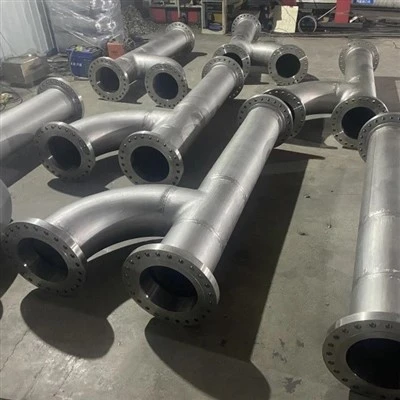
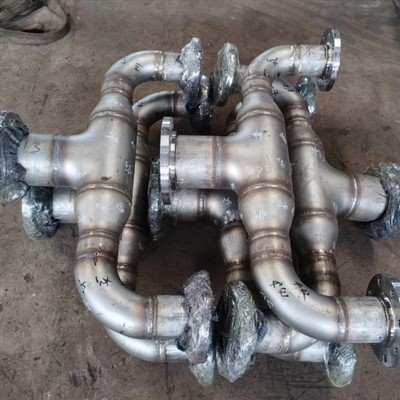
Incoloy Alloy 800 is a nickel-iron-chromium austenitic superalloy for exceptional performance in high-temperature and corrosive environments. This versatile material maintains its structural integrity and corrosion resistance under extreme conditions, making it a preferred choice across various demanding industries.

With its balanced chemical composition and robust physical properties, Incoloy 800 is a material for applications where heat resistance and long-term stability are needed.
Incoloy 800 Chemical Composition
The outstanding high-temperature properties of Incoloy 800 come from its chemical composition:
Nickel (30.0-35.0%): Provides stability to the austenitic structure and ensures remarkable resistance to stress corrosion cracking and scaling at elevated temperatures.
Chromium (19.0-23.0%): Imparts superior oxidation resistance by forming a protective Cr₂O₃ oxide layer on the surface, which prevents further degradation at high temperatures.
Iron (approximately 39.5% minimum): Serves as the base element, offering cost-effectiveness while maintaining structural integrity.
Aluminum (0.15-0.60%) and Titanium (0.15-0.60%): These strengthening elements contribute to the formation of stable γ' phases that enhance high-temperature strength and structural stability.
Controlled carbon content (≤0.10%): Minimizes sensitization and carbide precipitation, ensuring improved performance in high-temperature applications.
This combination creates a solid-solution-strengthened alloy with stability against various high-temperature degradation mechanisms.
Incoloy 800 Temperature Range and Thermal Stability
Incoloy 800 operates effectively across an impressive temperature spectrum:
Operating range: -300°F to 1500°F (-184°C to 816°C) for continuous service.
Short-term exposure capability: Up to 1100°C (2012°F) for limited durations, particularly in oxidizing environments.
Oxidation resistance maintenance: Effective up to 1038°C (1900°F) due to the stable, self-healing oxide layer that forms on the surface.
The alloy maintains excellent microstructural stability even after prolonged exposure to high temperatures, resisting embrittlement and maintaining mechanical properties through countless thermal cycles.
Mechanisms of High-Temperature Resistance
1. Oxidation and Carburization Resistance
The high chromium content in Incoloy 800 enables the formation of a continuous, adherent chromium oxide layer when exposed to high temperatures. This layer acts as a protective barrier against further oxidation, with oxidation rates as low as 0.05 g/(m²·h) at 900°C-significantly better than standard 310S stainless steel.
Additionally, the alloy demonstrates remarkable resistance to carburization and sulfidation, making it suitable for hydrocarbon processing and other carbon-rich environments.
2. Creep and Rupture Strength
Incoloy 800 maintains exceptional creep and stress rupture properties at elevated temperatures. The nickel-rich matrix and solid-solution strengthening provided by titanium and aluminum contribute to its ability to withstand prolonged mechanical loads at high temperatures. Creep rupture strength values of ≥85 MPa at 750°C for 1000 hours demonstrate its long-term reliability in high-stress applications.
3. Structural Stability
The stable austenitic structure of Incoloy 800 prevents phase transformations that could compromise mechanical properties during thermal cycling. This stability is crucial for applications involving repeated heating and cooling cycles, such as heat treatment equipment and industrial furnaces.
Incoloy 800 High-Temperature Mechanical Properties

The mechanical properties of Incoloy 800 remain stable across its operational temperature range:
At room temperature: Tensile strength of 520-620 MPa, yield strength of 210-310 MPa, and elongation ≥30%.
At 500°C: Tensile strength approximately 360 MPa with maintained ductility.
At 700°C: Maintains useful strength with stress rupture capability exceeding 120 MPa.
These properties make Incoloy 800 suitable for load-bearing applications at elevated temperatures, where many other materials would rapidly deteriorate.
Physical Properties and Thermal Performance
Several physical properties contribute to the alloy's heat resistance:
Density: 7.94-8.0 g/cm³.
Melting range: 1350-1400°C (2462-2552°F)
Thermal conductivity: 11.2-12.8 W/m·K at 100°C.
Specific heat capacity: 455-460 J/kg·K at 20°C.
Thermal expansion coefficient: 14.1-14.2 μm/m·°C (24-100°C).
Comparison with Other Alloys
When compared to standard austenitic stainless steels like Type 304 or Type 310S, Incoloy 800 demonstrates superior performance in several key areas:
Higher nickel content provides better resistance to chloride stress corrosion cracking.
Superior oxidation and carburization resistance at temperatures above 800°C.
Better microstructural stability during prolonged high-temperature exposure.
While more expensive than standard stainless steels, Incoloy 800 offers significantly longer service life in demanding thermal environments, providing better life-cycle economics for critical applications.
Incoloy 800 for Heat Resistance Applications
1. Thermal Processing Equipment
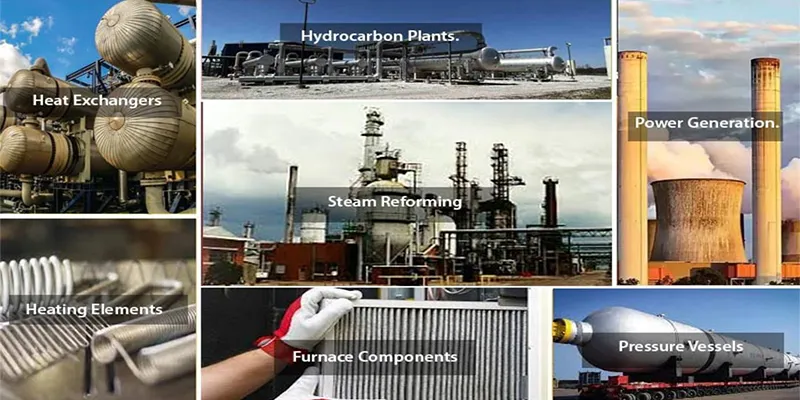
Incoloy 800 is extensively used in heat treatment fixtures, baskets, trays, and muffles due to its ability to withstand repeated thermal cycling while maintaining dimensional stability. The alloy resists distortion and degradation even after prolonged exposure to temperatures up to 1100°C.
2. Petrochemical Processing
In ethylene cracker tubes, reformer outlets, and transfer piping, Incoloy 800 withstands temperatures exceeding 800°C while resisting carburization and oxidation. Service life often exceeds 10 years in these demanding applications.
3. Power Generation
For nuclear steam generator tubing and conventional power plant components, the alloy provides excellent resistance to high-temperature water and steam corrosion while maintaining mechanical properties under pressure.
4. Heating Elements and Industrial Furnaces
The combination of oxidation resistance and strength at high temperatures makes Incoloy 800 ideal for electric heating element sheaths, radiant tubes, and other furnace components where temperatures regularly exceed 800°C.
Incoloy 800 Alloy Variants
For applications demanding even greater performance, two specialized variants are available:
Incoloy 800H: Features higher carbon content (0.05-0.10%) for improved creep rupture strength above 600°C.
Incoloy 800HT: Offers further enhancements with controlled aluminum and titanium additions for superior stress rupture properties.
These variants are particularly suitable for applications involving sustained loading at the upper end of the temperature range.
Conclusion
Incoloy 800 is a versatile and reliable high-temperature alloy with an exceptional heat resistance, mechanical properties, and corrosion resistance. Its ability to maintain structural integrity from cryogenic temperatures up to 816°C (1500°F) in continuous service and up to 1100°C (2012°F) for short-term exposure makes it invaluable across numerous demanding industries.