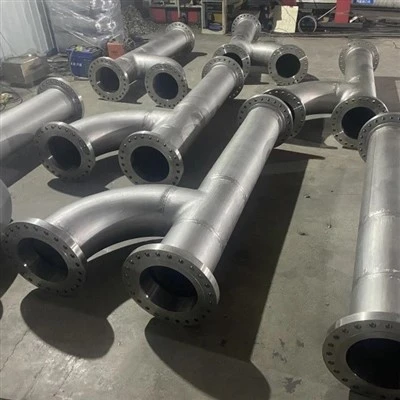
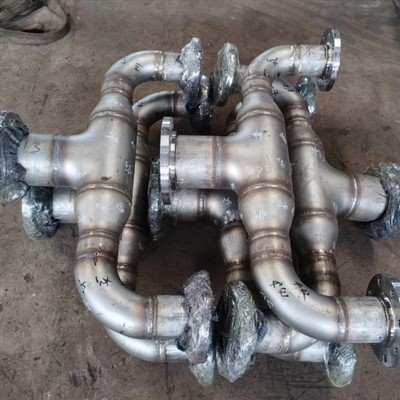
Buying stainless steel pipe from China looks simple on paper: agree a price, pay a deposit, and wait for a container. In practice, three decisions shape cost and risk more than the price per tonne: which Incoterm you use, which documents you require, and how the shipment is classified and cleared through customs. In 2026 those decisions matter more than ever, because tariffs, anti-dumping duties, and origin-tracing rules in the United States and the European Union have changed repeatedly. This guide explains each step in plain language, compares the main options, and shows what to check before you sign. Information reflects sources reviewed as of October 27, 2026.

Short answer: Use FOB or FCA (with Incoterms 2020 named in the contract) so you control freight and insurance; require a mill test certificate to EN 10204 type 3.1 with heat numbers, plus a commercial invoice, packing list, and bill of lading; classify the pipe correctly (HS 7304 for seamless, 7306 for welded); and calculate landed cost including all duty layers.
In the US, the layers can include the base duty, Section 301, Section 232 on steel at 50% of full customs value, and anti-dumping and countervailing duties on welded austenitic stainless pressure pipe from China. In the EU, they include quota-based steel duties of 50%, anti-dumping duties, carbon border adjustment (CBAM), and melt-and-pour traceability. Always confirm current rates with a licensed customs broker.
What Are the Main Steps in Importing Stainless Steel Pipe from China?
There are seven steps: define the specification, choose the supplier and Incoterm, classify the goods, calculate landed cost, arrange payment and inspection, ship and clear customs, and keep records. Most expensive mistakes come from skipping the first four.
|
# |
Step |
What You Decide or Produce |
|
1 |
Specify the pipe |
Grade (for example 304L, 316L, 2205), standard (ASTM A312 or A790), size, wall thickness, seamless or welded, finish, testing, marking |
|
2 |
Choose supplier and Incoterm |
Manufacturer versus trader; who pays freight and insurance; where risk passes |
|
3 |
Classify the goods |
HS code and national tariff line; check for anti-dumping or countervailing duty scope |
|
4 |
Calculate landed cost |
Price, freight, insurance, duty layers, fees, brokerage, inland transport |
|
5 |
Arrange payment and inspection |
Deposit and balance terms, letter of credit, third-party inspection, mill test certificate |
|
6 |
Ship and clear customs |
Export clearance in China, ocean transport, import entry, duty payment, release |
|
7 |
Keep records |
Invoices, certificates, entry records (in the US, generally five years from entry) |
Table 1. The import journey for stainless steel pipe.
Which Incoterm Should You Use When Importing Stainless Pipe from China?

Use FOB (for non-containerized sea cargo) or FCA (for containers) so you control freight and insurance. CIF or CFR are acceptable if you want the supplier to book the ship, but the risk still passes at the Chinese port. Avoid EXW and DDP unless you have a clear reason and the capability to manage them.
Incoterms are standard rules published by the International Chamber of Commerce that say who arranges and pays for transport, who handles export and import clearance, and where risk of loss passes from seller to buyer. Incoterms 2020 is the current edition and remains in force in 2026, with the next revision generally expected around 2030. Always write the edition into the contract, for example "FOB Shanghai, Incoterms 2020." The rules also do not transfer ownership or cover payment, so those must be written into the sales contract.
|
Incoterm |
Mode |
Risk Passes |
Who Pays Main Freight and Insurance |
Fit for Stainless Pipe from China |
|
EXW |
Any |
At seller's premises |
Buyer pays all; buyer handles export clearance |
Poor: export clearance in China is hard for foreign buyers |
|
FCA |
Any |
When handed to buyer's carrier at named place |
Buyer pays freight; insurance optional |
Strong for containers; seller clears export |
|
FOB |
Sea only |
On board the vessel at the Chinese port |
Buyer pays freight; insurance optional |
Strong for non-containerized cargo; widely used |
|
CFR |
Sea only |
On board at the Chinese port |
Seller pays freight; buyer insures |
Workable; buyer bears sea risk without seller insurance |
|
CIF |
Sea only |
On board at the Chinese port |
Seller pays freight and minimum insurance (Clauses C) |
Workable; insurance is minimal, so consider extra cover |
|
CIP |
Any |
At handover to the first carrier |
Seller pays carriage and all-risks insurance (Clauses A) |
Better insurance protection than CIF |
|
DAP |
Any |
At named destination, ready for unloading |
Seller pays to destination; buyer clears import |
Convenient; confirm who pays unloading and duties |
|
DDP |
Any |
At named destination |
Seller pays everything, including import duties |
Rarely advisable: loses control of classification and duty |
Table 2. Comparison of common Incoterms 2020 rules for importing stainless pipe by sea. CIF and CIP require insurance of at least 110% of contract value.
Three practical points follow from the table. First, the ICC recommends FCA instead of FOB for containerized cargo, because under FOB risk passes only when goods are on board, leaving a gap between the terminal and the ship; some banks and letters of credit still ask for FOB because they require an on-board bill of lading. Second, CIF insurance is the minimum level, so valuable stainless or nickel alloy cargo often justifies extra cover.
Third, your Incoterm affects customs value: US customs value generally excludes international freight and insurance, while the EU adds transport and insurance costs up to the EU border, so the same invoice can produce different dutiable values in each market.
What Documents Do You Need to Import Stainless Steel Pipe from China?
At minimum you need a commercial invoice, packing list, bill of lading, and a mill test certificate. Add a certificate of origin, melt-and-pour or origin evidence, inspection reports, and the import filings required in your country.
|
Document |
Issued By |
Purpose and Key Content |
|
Sales contract or purchase order |
Buyer and seller |
Specification, Incoterm, price, payment, inspection, tariff clause, delivery date |
|
Commercial invoice |
Seller |
Description, HS code, quantity, unit price, Incoterm, country of origin; basis for duty |
|
Packing list |
Seller |
Weights, dimensions, marks, bundles or cases; helps customs examination |
|
Bill of lading (or sea waybill) |
Carrier |
Contract of carriage and receipt; document of title if original bill of lading |
|
Mill test certificate (MTC) |
Manufacturer |
Heat number, chemistry, mechanical tests, heat treatment, standard; EN 10204 type 3.1 or 3.2 |
|
Certificate of origin |
Chamber of commerce or authority |
Supports origin claim; origin evidence also drives duty and trade remedies |
|
Melt-and-pour or origin evidence |
Manufacturer |
Country where steel was melted and poured; required for EU steel imports from 1 Oct 2026 and increasingly requested elsewhere |
|
Third-party inspection report |
Inspection company |
Pre-shipment check of dimensions, markings, tests, and quantities |
|
Insurance certificate |
Insurer or seller |
Required under CIF and CIP; buyer may arrange own cover under FOB and FCA |
|
Import filings |
Importer or customs broker |
US: entry (CBP Form 3461 and 7501), customs bond, Importer Security Filing; EU: import declaration, EORI number |
|
Wood packaging treatment mark |
Packer |
ISPM 15 heat-treatment mark on wooden crates and pallets |
Table 3. Core documents for importing stainless steel pipe from China.
The mill test certificate deserves special attention. EN 10204 type 3.1 is issued by the manufacturer's authorized inspection representative, independent of the manufacturing department; type 3.2 adds validation by an independent party such as a third-party inspector or the purchaser's representative. Type 2.2 is a non-specific test report and is generally weaker. For safety-critical or alloy service, require 3.1 at minimum and 3.2 where the specification or code calls for it. The heat number on the certificate must match the markings on the pipe, or the certificate proves nothing.
For US imports by sea, the Importer Security Filing (often called 10+2) must be submitted before the cargo is loaded at the foreign port, normally at least 24 hours before loading. Importers also need a customs bond, and most use a licensed customs broker with a power of attorney.
How Do You Classify Stainless Steel Pipe for Customs (HS Code)?
Seamless pipe falls under HS heading 7304 and welded pipe under 7306; fittings fall under 7307. The right subheading depends on whether the pipe is seamless or welded, stainless steel or other material, its use, and its dimensions. Correct classification is essential because duties and trade remedies attach to specific tariff lines.
|
HS Heading or Subheading |
Product |
Notes |
|
7304.41, 7304.49 |
Seamless tubes and pipes of stainless steel (cold-drawn or other) |
Check use (line pipe, casing, other) and finishing |
|
7306.40 |
Welded tubes and pipes of stainless steel, circular section |
US anti-dumping and countervailing duty orders on China apply to certain welded austenitic pressure pipe under this subheading |
|
7306.11 |
Welded line pipe of stainless steel, for oil and gas |
Use-based subheading |
|
7307.23 |
Butt welding fittings of stainless steel |
Fittings are separate from pipe |
|
7307.21, 7307.22, 7307.29 |
Stainless flanges, threaded elbows, other fittings |
Check the national tariff for the exact line |
Table 4. Common HS headings for stainless steel pipe and fittings. The first six digits are international; national tariffs add further digits. Confirm the full code with your customs broker or a binding ruling.
Misclassification can lead to underpaid duties, penalties, and shipment delays. Provide the broker with the pipe specification (such as ASTM A312), grade, seamless or welded construction, outside diameter, wall thickness, and end use.
What Duties and Taxes Apply to Stainless Pipe Imported from China to the United States?
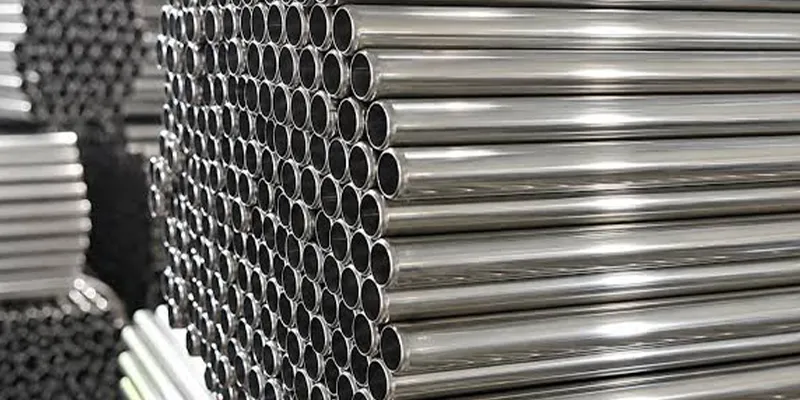
Under the sources reviewed for October 2026, US duty on Chinese stainless steel pipe can stack several layers: the base tariff, Section 301 China duties (generally 25% on steel products), Section 232 steel duties (50% of full customs value for steel articles), and, for in-scope welded austenitic stainless pressure pipe, anti-dumping and countervailing duties. Fees apply on top.
Section 232 was restructured by Presidential Proclamation 11021 of April 2, 2026, effective April 6, 2026: the duty now applies to the full customs value of covered metal articles rather than the metal content, at 50% for steel articles and primary derivatives in the first annex and 25% for a second group of derivatives. A further proclamation on June 1, 2026 adjusted the regime again, and CBP issued implementation guidance in June.
Section 232 applies to covered steel from all countries, so it is not a China-only measure. Chinese goods may also face Section 301 duties; tariff trackers report that the separate 12.5% Section 301 forced-labor duty that began July 24, 2026 does not apply to goods already covered by Section 232. Temporary measures have changed repeatedly in 2026 (for example, a 10% Section 122 surcharge that ended on July 24, 2026), so verify what applies on your entry date.
Trade remedies are separate and can be large. The US has had anti-dumping and countervailing duty orders on circular welded austenitic stainless pressure pipe from China since March 2009. The scope covers circular welded austenitic stainless pressure pipe not greater than 14 inches in outside diameter, including ASTM A312 or A778 products, and ASTM A358 products when produced to meet those specifications. The orders were continued after expedited sunset reviews in 2025. Entries are classified mainly under HTS 7306.40, and the written scope, not the HTS number, is what governs.
|
Duty or Fee Layer |
Typical Rate |
Notes |
|
Base (MFN) duty |
Varies by line, often low |
From the Harmonized Tariff Schedule for the exact tariff line |
|
Section 301 (China) |
25% on most steel lines |
Applies to China-origin goods on the listed tariff lines |
|
Section 232 (steel) |
50% of full customs value |
Applies from April 6, 2026 to covered steel articles from all countries; UK has a lower rate under the proclamation |
|
Anti-dumping and countervailing duties |
Set by each order |
Applies to in-scope welded austenitic stainless pressure pipe from China; deposit rates vary by exporter |
|
Merchandise processing fee |
About 0.3464% of value (with minimum and maximum) |
Charged on formal entries; check annual adjustments |
|
Harbor maintenance fee |
0.125% of value |
Applies to ocean shipments through US ports |
Table 5. Illustrative US duty layers for stainless steel pipe from China (October 2026). Always confirm the current rate on your entry date.
Illustration (not a quotation): on pipe with a customs value of $100,000, an assumed base duty of 0%, Section 301 at 25% and Section 232 at 50% would total about $75,000 in duty before any anti-dumping and countervailing duties, fees, freight, and brokerage. If the product is also in scope of the anti-dumping and countervailing orders, those cash deposits would add to this. The exact layers depend on the tariff line, the product scope, and the producer, so a classification and scope check before ordering is essential.
What Duties and Rules Apply to Chinese Stainless Pipe Imported into the European Union?
EU imports face ordinary customs duty and VAT, plus a quota system with a 50% out-of-quota duty on listed steel products (including seamless stainless tubes and pipes) from 1 July 2026, anti-dumping duties on certain Chinese stainless products, CBAM carbon reporting, and a melt-and-pour requirement from 1 October 2026.
|
EU Measure |
What It Does |
Key Facts |
|
Steel Regulation (EU) 2026/1384 |
Tariff-rate quotas on steel products; imports beyond quota pay an extra duty |
Applies from 1 July 2026; 50% ad valorem out-of-quota duty (previously 25%); about 18.3 million tonnes annual quota; categories include seamless stainless tubes and pipes |
|
Melt-and-pour evidence |
Importers must identify where steel was melted and poured |
Applies from 1 October 2026; the Commission set evidentiary requirements for traceability documentation |
|
Anti-dumping: seamless stainless tubes (China) |
Additional duty on Chinese producers |
Reported at about 48.3% to 71.9% since 30 May 2024 (industry summary of the EU regulation) |
|
Anti-dumping: stainless butt-welding fittings (China, Taiwan) |
Additional duty on fittings |
Reported at about 30.7% to 64.9% for China (Regulation 2023/809) |
|
CBAM (definitive period) |
Carbon cost reporting and certificates for imported steel products |
Definitive phase since 1 January 2026; annual de minimis threshold of 50 tonnes net mass |
|
Import declaration and EORI |
Customs declaration and trader registration |
EORI number required to import into the EU |
Table 6. Key EU measures for stainless steel pipe from China (2026). The out-of-quota duty is in addition to ordinary customs duties and anti-dumping duties. Verify in the EU TARIC database.
The EU also values goods differently from the US: customs value includes transport and insurance costs to the EU border, which is why the Incoterm and freight cost affect the duty base. Because quota use, anti-dumping rates, and CBAM requirements are product- and producer-specific, check them for the exact tariff code and producer before ordering.
How Does Customs Clearance Work from Shipment to Release?
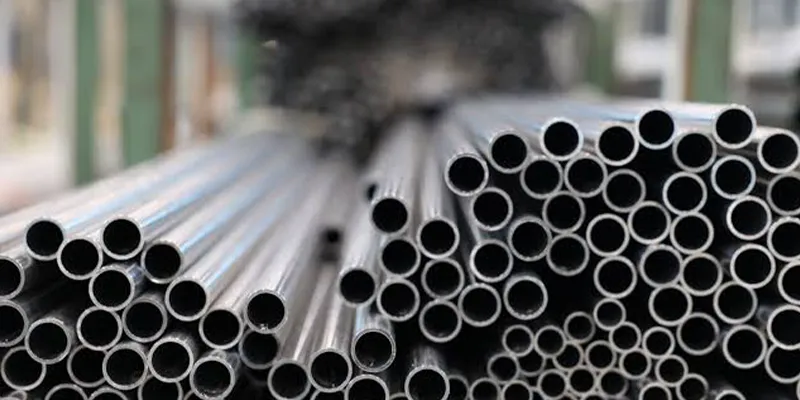
Clearance has two sides: the seller clears export in China, and the importer (or its broker) clears import at the destination. Prepare documents and classification before the ship departs, so that filing, duty payment, and release take days rather than weeks.
|
# |
Step |
Who |
Key Point |
|
1 |
Pre-shipment check |
Importer and broker |
Confirm HS code, duty layers, scope of trade remedies, and document set |
|
2 |
Export clearance in China |
Seller (FOB, FCA, CFR, CIF) |
Export declaration filed; with EXW the buyer must arrange this |
|
3 |
Advance filing |
Importer or broker |
US: Importer Security Filing before loading; EU: pre-arrival data and EORI |
|
4 |
Ocean transit |
Carrier |
Track vessel; arrange insurance if not provided by seller |
|
5 |
Import entry |
Importer or broker |
US: entry documents filed around arrival; EU: import declaration |
|
6 |
Duty and tax payment |
Importer |
Pay duties, fees, and VAT; trade remedy deposits where applicable |
|
7 |
Examination, if selected |
Customs |
Documents, physical inspection, or testing; consistent paperwork speeds this up |
|
8 |
Release and delivery |
Customs, carrier, importer |
Collect cargo, pay port charges, arrange inland transport |
|
9 |
Record keeping |
Importer |
Keep records; in the US, generally at least five years from entry |
Table 7. Typical customs clearance sequence for imported stainless steel pipe.
The importer of record is legally responsible for the accuracy of the entry, whatever the commercial terms say. That is why DDP, under which the seller handles import clearance, can leave a buyer exposed to errors it cannot see. Even under DAP or DDP, many buyers choose to remain the importer of record to keep control of classification and duty payment.
How Can You Verify the Quality and Authenticity of Chinese Stainless Steel Pipe?
Verify before payment and again on arrival: require a 3.1 mill certificate, match heat numbers to markings, run positive material identification, confirm dimensions and testing to the stated standard, and use independent pre-shipment inspection for significant orders.
|
Check |
Method or Standard |
Notes |
|
Certificate review |
EN 10204 type 3.1 or 3.2; match heat numbers to pipe markings |
Reject certificates without heat numbers or with mismatched markings |
|
Specification |
ASTM A312 (austenitic pipe), A790 (duplex), A358 (electric-fusion-welded) |
Confirm the grade, product form, and heat treatment in the order |
|
Material identity |
Positive material identification (handheld XRF or optical emission) |
Handheld XRF does not measure carbon accurately, so use laboratory analysis for L-grade carbon limits |
|
Dimensions |
Outside diameter, wall thickness, length, straightness (for stainless pipe sizes, ASME B36.19) |
Check against tolerances in the standard and purchase order |
|
Pressure and NDE |
Hydrostatic or nondestructive electric test as specified |
Request test records |
|
Corrosion testing |
Intergranular corrosion test (for example ASTM A262) if specified |
Important for welded or sensitization-sensitive service |
|
Surface and packing |
Pickled or finished condition, end caps, no carbon steel contamination, ISPM 15 wood packaging |
Contamination from carbon steel can cause rust spotting |
|
Independent inspection |
Third-party pre-shipment inspection |
Strongly recommended for first orders and critical service |
Table 8. Quality and authenticity checks for imported stainless steel pipe.
A supplier that is itself a manufacturer, controls its heats from melting to finishing, and can supply traceable certificates and test records lowers risk. For nickel alloys and duplex grades, where small chemistry errors change corrosion performance, positive material identification and laboratory confirmation are especially valuable.
What Are the Main Risks When Importing from China, and How Can You Reduce Them?
The main risks are tariff changes, trade-remedy exposure, origin and classification errors, quality and certificate fraud, payment risk, and delays. Each can be reduced with contract terms, upfront checks, and independent inspection.
|
Risk |
Why It Matters |
Mitigation |
|
Tariff and rule changes |
Rates and rules have changed repeatedly in 2026 |
Price validity limits, a tariff clause allocating changes, and a landed-cost check at order and at shipment |
|
Anti-dumping and countervailing exposure |
Duty deposits can exceed the product price in some orders |
Check order scope before purchase; ask the supplier for its exporter-specific rate in writing |
|
Origin evasion or transshipment |
Routing goods through another country to avoid duties can bring penalties |
Use truthful origin declarations; require melt-and-pour evidence; avoid suppliers offering to "re-route" |
|
Misclassification |
Wrong code leads to underpaid duty and penalties |
Broker review; binding rulings where needed |
|
Quality or certificate fraud |
Wrong grade or fake certificates can cause costly failures |
3.1/3.2 certificates, PMI, lab tests, third-party inspection |
|
Payment risk |
Large deposits paid to unknown sellers |
Staged payments, letters of credit, inspection before final payment |
|
Transit damage and delay |
Pipe can be damaged or contaminated in transit |
Cargo insurance (all-risks), proper packing, end caps, delivery milestones |
Table 9. Risk and mitigation checklist for importing stainless steel pipe.
Does Sourcing Stainless Pipe from China Still Make Sense?
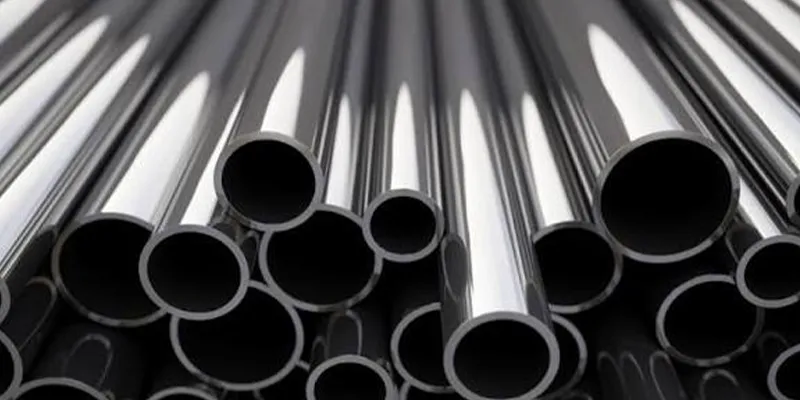
It can, but only after a full landed-cost comparison. Section 232 steel duties in the US apply to covered steel from all countries, so the China-specific penalty comes mainly from Section 301 and any anti-dumping and countervailing duties; in the EU, out-of-quota duties and anti-dumping measures vary by product and origin. The cheapest ex-works price is rarely the cheapest delivered cost.
Compare suppliers on total delivered cost, not price per tonne. Include freight, insurance, duty layers, fees, inspection, and the cost of delay or rejection. Consider whether the specific product is in scope of a trade remedy (for example, welded austenitic stainless pressure pipe up to 14 inches in the US, or seamless stainless tubes in the EU), whether a different product form or origin changes the duty, and how reliable the supplier's traceability is. Because rules are changing fast, build review points into long-term contracts.
Frequently Asked Questions
Which Incoterm is best for importing from China?
FOB (non-containerized sea cargo) or FCA (containers) give the buyer control of freight and insurance. CIF and CFR are workable if the supplier books the ship, but risk still passes at the Chinese port. Avoid EXW and DDP in most cases.
What is the HS code for stainless steel pipe?
Seamless stainless pipe is classified under heading 7304 (for example 7304.41 or 7304.49) and welded stainless pipe under 7306 (for example 7306.40). Fittings fall under 7307. The national tariff adds further digits.
What is an EN 10204 3.1 certificate?
A mill test certificate issued by the manufacturer's authorized inspection representative, independent of the manufacturing department, listing heat number, chemical analysis, and mechanical test results. Type 3.2 adds validation by an independent party.
Is there anti-dumping duty on Chinese stainless steel pipe?
In the US, yes for circular welded austenitic stainless pressure pipe up to 14 inches outside diameter (orders since 2009, continued in 2025). In the EU, anti-dumping duties apply to Chinese seamless stainless tubes and to stainless butt-welding fittings. Scope is product-specific, so check before ordering.
What US tariffs stack on steel pipe from China?
As of October 2026, sources reviewed show the base duty, Section 301 (generally 25% on steel lines), and Section 232 steel duties at 50% of full customs value, plus any anti-dumping and countervailing duties. Confirm current rates with your broker.
Who is responsible for customs clearance?
The importer of record is legally responsible for the accuracy of the import entry, regardless of the Incoterm. The seller clears export in China under FOB, FCA, CFR, CIF, and CIP.