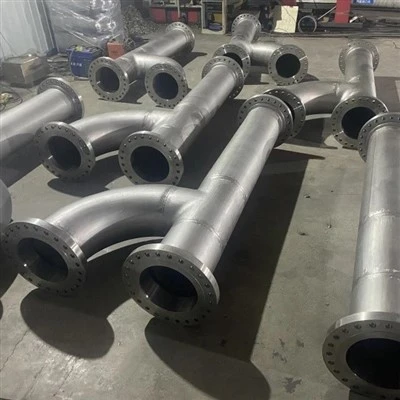
Introduction
Duplex stainless steel (DSS) has become one of the most sought-after materials in demanding industrial applications. It earns this reputation by combining the best attributes of austenitic and ferritic stainless steels into a single, dual-phase microstructure - roughly 50% austenite and 50% ferrite. The result is exceptional corrosion resistance, high mechanical strength, and outstanding resistance to stress corrosion cracking (SCC).
However, these advantages come with a critical caveat: duplex stainless steel is highly sensitive to improper welding. An incorrectly welded DSS joint can lead to phase imbalance, precipitate harmful intermetallic compounds (such as sigma phase), or introduce unwanted residual stress. Any of these outcomes can dramatically reduce the material's performance in service - sometimes causing catastrophic failures in pipelines, pressure vessels, or heat exchangers.

This guide covers everything you need to know about welding duplex stainless steel correctly: from understanding the metallurgy and selecting the right filler material, to controlling heat input, choosing the best welding process, and verifying weld quality through post-weld inspection.
Understanding Duplex Stainless Steel: Grades and Properties
Before picking up a welding torch, it is essential to identify which duplex grade you are working with. DSS grades span a wide range of alloy content and corrosion resistance, often quantified using the Pitting Resistance Equivalent Number (PREN):
PREN = %Cr + 3.3 × %Mo + 16 × %N
A higher PREN indicates better pitting corrosion resistance. The table below summarizes the most common duplex grades, their alloy compositions, and typical applications:
|
Grade |
PREN* |
Cr (%) |
Ni (%) |
Mo (%) |
Typical Application |
|
2101 (Lean) |
~26 |
21-22 |
1.5 |
0.1-0.8 |
Structural, mild corrosion environments |
|
2304 |
~26 |
21.5-24.5 |
3.0-5.5 |
0.05-0.6 |
Chemical processing, water treatment |
|
2205 (Standard) |
~35 |
21-23 |
4.5-6.5 |
2.5-3.5 |
Oil & gas, marine, heat exchangers |
|
2507 (Super) |
~42 |
24-26 |
6-8 |
3-5 |
Subsea pipelines, aggressive acids |
|
Zeron 100 |
~43 |
24-26 |
6-8 |
3-4 |
Highly corrosive offshore environments |
PREN = Pitting Resistance Equivalent Number. Values are approximate and depend on exact chemistry within the grade range.
Knowing the grade is not just academic - it directly determines the correct filler metal, heat input range, and post-weld inspection requirements.
Filler Metal Selection: The Foundation of a Sound Duplex Weld
Selecting the wrong filler metal is one of the most common and costly errors in duplex stainless steel welding. The guiding principle is to use an overalloyed filler - a filler metal with higher nickel (Ni) content than the base metal. This compensates for the dilution effect and the tendency for ferrite to dominate the weld zone during rapid solidification.
Key Selection Principle
The filler metal must restore the austenite-ferrite balance in the weld metal to the target range of 35–65% ferrite. If ferrite exceeds 70%, the joint becomes brittle and loses toughness. If austenite dominates below 25% ferrite, stress corrosion cracking resistance is compromised.
|
Base Metal Grade |
Recommended Filler |
AWS Classification |
Key Advantage |
|
2101 / 2304 |
ER2209 |
AWS A5.9 |
Cost-effective, good ferrite control |
|
2205 (Standard) |
ER2209 |
AWS A5.9 |
Industry standard, widely available |
|
2507 (Super) |
ER2594 |
AWS A5.9 |
Higher Ni/Mo for superduplex base metal |
|
Dissimilar joints |
ER2209 or 309LMo |
AWS A5.9 / A5.4 |
Balances dilution effects |
Always verify that filler metals are stored and handled correctly: SMAW electrodes must be kept dry and re-dried according to the manufacturer's recommendation (typically 300–350°C for 1–2 hours) to prevent hydrogen pickup.
Welding Processes: Choosing the Right Method
Multiple welding processes can be used successfully on duplex stainless steel, provided the welder follows grade-specific parameters. Each process has distinct advantages depending on the application:
|
Process |
Heat Input (kJ/mm) |
Interpass Temp. (°C) |
Shielding Gas |
Typical Use Case |
|
GTAW / TIG |
0.5 – 1.5 |
Max 150 |
Ar or Ar+2%N2 |
Root passes, thin sections |
|
GMAW / MIG |
0.8 – 2.0 |
Max 150 |
Ar+2%N2 |
Automated/high-volume production |
|
SMAW / MMA |
0.5 – 2.0 |
Max 150 |
N/A (flux coated) |
Field repairs, limited access |
|
SAW |
1.0 – 2.5 |
Max 150 |
Ar+N2 flux blend |
Heavy plate, structural fabrication |
|
FCAW |
0.8 – 2.0 |
Max 150 |
Ar+25%CO2 or Ar+N2 |
Offshore, construction sites |
Critical Parameter: Heat Input Control
Heat input is the single most important variable in duplex stainless steel welding. It is calculated as:
Heat Input (kJ/mm) = [Voltage (V) × Current (A) × 60] ÷ [Travel Speed (mm/min) × 1000]
The generally accepted heat input range for most duplex grades is 0.5 to 2.5 kJ/mm, with the preferred target being 0.8 to 1.5 kJ/mm. Heat input below 0.5 kJ/mm cools the weld too fast, trapping excess ferrite. Heat input above 2.5 kJ/mm can cause precipitation of sigma phase (an intermetallic compound) in the heat-affected zone (HAZ), severely reducing toughness and corrosion resistance.
Pre-Weld Preparation: Setting the Stage for Success
Even the best welding technique cannot compensate for poor preparation. The following pre-weld steps are non-negotiable:

Joint Design and Fit-Up
Use a full penetration butt weld design wherever possible to eliminate crevices that promote corrosion.
Bevel angle: 60–70° (included angle) is standard for butt joints. For pipes, use a 37.5° bevel per ASME B31.3 or equivalent standard.
Root gap: 2–3 mm for TIG root passes; maintain consistent fit-up to avoid variable heat input.
Minimize tack weld size; ensure tack welds meet the same quality requirements as the final weld.
Cleaning and Contamination Control
Degrease all surfaces with acetone or an approved industrial solvent before welding.
Remove all mill scale, paint, grease, and moisture from a minimum 25 mm on each side of the joint.
Use dedicated stainless steel wire brushes and grinding discs - never share tools with carbon steel to avoid iron contamination.
Wear clean gloves when handling prepared surfaces.
Preheat Requirements
In most cases, duplex stainless steel does NOT require preheating. In fact, preheating above 100°C is generally discouraged because it increases the risk of sigma phase formation. The exception is when ambient temperature is below 5°C or there is evidence of moisture - in these cases, a light warm-up to 15–50°C is acceptable.
Shielding Gas and Back Purging: Protecting the Weld from Oxidation
Nitrogen is a key alloying element in duplex stainless steel - it stabilizes the austenite phase and contributes directly to corrosion resistance. Shielding gases that include 1–3% nitrogen help maintain nitrogen content in the weld pool, which would otherwise be lost through volatilization during welding.
Standard duplex (2205): Argon + 2% N2 is recommended for GTAW and GMAW root and fill passes.
Pure argon: Acceptable for GTAW with nitrogen-rich filler metals, but less preferred.
Avoid CO2-rich gases: CO2 concentrations above 25% can cause excessive oxidation and reduce nitrogen retention.
Gas flow rate: 12–15 L/min for GTAW; 15–20 L/min for GMAW. Turbulent or insufficient flow causes porosity.
Back Purging for Root Passes
Back purging - flooding the inside of a pipe or vessel with inert gas - is mandatory for root passes on duplex stainless steel. Oxygen levels in the purge zone must be reduced to below 0.1% (1,000 ppm) before welding begins, and maintained below that level throughout root pass deposition. Purge gas: 100% argon or argon + 2% nitrogen. An oxygen analyzer should be used to verify purge quality before striking the arc.
Interpass Temperature and Cooling Rate Control

Controlling interpass temperature is as important as controlling heat input. The maximum interpass temperature for duplex stainless steel is 150°C (302°F) for standard duplex, and some superduplex specifications may require even lower limits (120°C).
Measure interpass temperature with a calibrated contact thermometer or infrared pyrometer at a distance of 25 mm from the weld centerline. Allow the weld to cool naturally - never use forced air cooling or water quenching, which can cause thermal shock and cracking.
If production pressures are high, plan for sufficient waiting time between passes. A useful rule of thumb: for a 6 mm fillet weld at moderate heat input (~1.0 kJ/mm), allow at least 3–5 minutes between passes to ensure the metal returns to below 150°C.
Post-Weld Treatment: Finishing and Restoration
Post-Weld Heat Treatment (PWHT)
Post-weld heat treatment (solution annealing) is sometimes required for highly critical applications or when the welded assembly has experienced excessive heat input. The typical solution anneal temperature for duplex grades is 1,020–1,100°C, followed by rapid water quenching. This dissolves sigma phase and restores the balanced microstructure. However, PWHT adds significant cost and is usually only specified in critical pressure vessel or subsea applications.
Pickling and Passivation
After welding, heat tint (oxidation discoloration) on the weld and HAZ must be removed to restore the passive chromium oxide film that gives stainless steel its corrosion resistance. This is achieved by:
Mechanical methods: Stainless steel wire brushing or grinding with dedicated abrasive discs.
Chemical pickling: Application of a nitric-hydrofluoric acid paste or spray (follow strict health and safety protocols; these chemicals are hazardous). Exposure time is typically 15–60 minutes followed by thorough water rinsing.
Passivation: After pickling, apply a nitric acid solution (20–50% by volume) to ensure maximum oxide film formation.
Common Welding Defects and How to Prevent Them
The table below summarizes the most frequently encountered defects when welding duplex stainless steel, their root causes, and proven prevention strategies:
|
Defect / Issue |
Cause |
Prevention |
Inspection Method |
|
Sigma phase embrittlement |
Excessive heat input or slow cooling |
Keep heat input <2.5 kJ/mm; control interpass temp. |
Charpy impact test, metallographic examination |
|
Excess ferrite (>70%) |
Insufficient filler Ni or too-low heat input |
Use overalloyed filler; increase heat input slightly |
Ferritescope measurement |
|
Lack of fusion |
Inadequate heat, poor technique |
Proper joint prep; consistent travel speed |
UT, radiographic testing |
|
Hydrogen cracking |
Contaminated consumables or base metal |
Dry consumables; clean base metal; preheat if needed |
Dye penetrant, magnetic particle testing |
|
Porosity |
Shielding gas issues or contamination |
Ensure correct gas flow 12-15 L/min; clean surfaces |
Visual + radiographic testing |
Post-Weld Inspection and Quality Assurance
Rigorous inspection is the final line of defense for ensuring a safe, reliable duplex stainless steel weld. A typical inspection regime includes:

Visual Inspection (VT)
The first and simplest check - performed immediately after welding and cleaning. Look for surface cracks, incomplete fusion, excessive undercut (>0.5 mm), overlap, or visible porosity. Use bright lighting and magnification where necessary.
Ferrite Content Measurement
Use a calibrated ferritescope (per ISO 8249 or AWS A4.2) to measure the ferrite number (FN) across the weld metal and HAZ. The acceptable range is typically FN 30–70 (approximately 35–65% ferrite by volume). Document measurements at defined intervals along the weld.
Non-Destructive Testing (NDT)
Dye Penetrant Testing (PT): Detects surface-breaking cracks and porosity. Mandatory on root passes and final cap passes for pressure-bearing joints.
Ultrasonic Testing (UT): Detects volumetric flaws including lack of fusion, slag inclusions, and internal cracks. Preferred for thicker sections (>6 mm).
Radiographic Testing (RT): Used for critical joints where a permanent record is required. Effective for detecting porosity, inclusions, and internal lack of fusion.
Corrosion Testing
For the most demanding applications (subsea, chemical processing), a ASTM G48 Method A or B pitting corrosion test may be specified. This involves immersing a test specimen in 6% ferric chloride solution at elevated temperature and examining for pitting or weight loss after 24 hours.
Compliance Standards and Reference Specifications
All duplex stainless steel welding should be conducted in accordance with relevant international standards. Key standards include:
ASME Section IX - Welding and Brazing Qualifications (pressure vessels and piping)
AWS D1.6 - Structural Welding Code for Stainless Steel
ISO 15614-1 - Specification and qualification of welding procedures for metallic materials
NORSOK M-601 - Welding and inspection of piping (offshore/subsea applications)
EN 1011-3 - Recommendations for welding of stainless steels
ASTM A240 / A276 - Material specifications for duplex stainless steel plate and bar
Welding Procedure Specifications (WPS) and Procedure Qualification Records (PQR) must be established and qualified before production welding begins on any code-governed work.
Conclusion
The key takeaways from this guide are straightforward: know your grade, choose an overalloyed filler metal, control heat input between 0.5 and 2.5 kJ/mm, maintain interpass temperature below 150°C, purge aggressively, clean thoroughly, and inspect rigorously. Follow these principles, and duplex stainless steel will reward you with welds that perform reliably for decades - even in the harshest environments on earth.
For material certifications, technical datasheets, or welding consultation specific to your project, contact our team or visit our online product catalog.