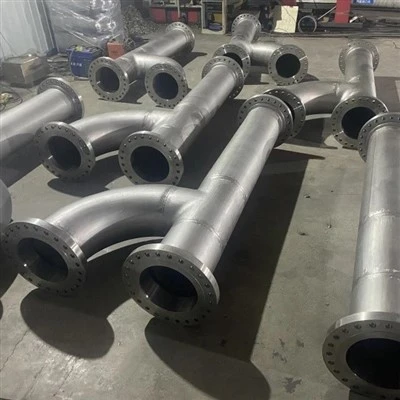
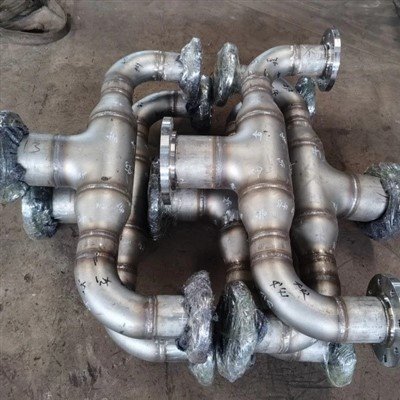
Exporting 310S flanges is not merely about logistics; it is a comprehensive supply chain management process that requires rigorous quality control, strategic packaging, and meticulous documentation.

At our facility, we have refined our export protocol over years of international trade to ensure seamless delivery to clients in Europe, the Americas, the Middle East, and Southeast Asia. Below, I outline our standardized export process, demonstrating how we mitigate risks.
What Are 310S Stainless Steel Flanges?
310S stainless steel flanges are disc-shaped fittings used to connect pipes, valves, or equipment in piping systems. They come in various types, including weld neck, slip-on, blind, socket weld, and threaded flanges, each suited to specific pressure and temperature requirements. Common standards include ASME B16.5, ANSI, DIN, and JIS, ensuring compatibility with international systems.

The applications of 310S flanges are diverse. In the oil and gas sector, they withstand corrosive environments in refineries and offshore platforms. Power plants rely on them for boiler and furnace components due to their creep strength. In chemical processing, they handle aggressive media like acids and alkalis without degrading.
Our factory produces these flanges using advanced techniques like forging, machining, and heat treatment, adhering to ISO 9001 and ASTM A182 specifications. This ensures they meet or exceed industry benchmarks for tensile strength, yield strength, and elongation.
Our production capacity allows for custom sizes from 1/2 inch to 48 inches, with pressure ratings up to Class 2500, making us a versatile partner for global projects.
Step-by-Step Export Process at Our Factory
Exporting 310S stainless steel flanges from China requires precision, regulatory knowledge, and logistical expertise. Our factory has refined this process over years of serving clients in Europe, North America, the Middle East, and Asia. Below, I detail each step, illustrating how we ensure seamless exports while maintaining product integrity.

Step 1: Initial Inquiry and Quotation
The export journey begins with client inquiries. Prospective buyers contact us via email, our website, or trade platforms like Alibaba or Made-in-China. We request detailed specifications, including flange type, dimensions, quantity, material certifications, and destination country.
Within 24-48 hours, our team provides a comprehensive quotation. This includes unit pricing based on current raw material costs (e.g., nickel and chromium prices from the London Metal Exchange), production lead time (typically 4-6 weeks for standard orders), and shipping estimates. We factor in Incoterms like FOB Shanghai, CIF destination port, or EXW to align with client preferences.
To build trust, we attach material datasheets, sample test reports, and references from past exports. For instance, in a recent shipment to a U.S. refinery, we customized 310S weld neck flanges with raised face finishes, quoting competitively at $50-200 per piece depending on size. This transparent approach persuades clients of our value proposition.
Step 2: Order Confirmation and Production
Upon quotation approval, we formalize the order with a proforma invoice and sales contract. A 30% deposit secures production slots, with the balance payable against shipping documents or via letter of credit for larger orders.
Production commences in our state-of-the-art facility in Wenzhou, China, a hub for stainless steel manufacturing. We source 310S billets from certified mills, ensuring traceability. The process involves:
Forging: Heating billets to 1150°C and shaping them under hydraulic presses for uniform grain structure.
Machining: Using CNC lathes for precise dimensions, with tolerances as tight as ±0.05 mm.
Heat Treatment: Solution annealing at 1050-1150°C followed by rapid quenching to optimize corrosion resistance.
Surface Finishing: Pickling, passivation, or polishing to achieve a smooth, oxide-free surface.
Throughout, our engineers monitor parameters using spectrometers and ultrasonic testers. For a typical 500-piece order, production takes 20-30 days, scalable for urgent needs.
Step 3: Quality Control and Testing
Quality is non-negotiable in exports. Our in-house lab conducts rigorous inspections per ASTM A182 and client specifications. Tests include:
Chemical composition analysis via optical emission spectrometry.
Mechanical testing for hardness (Brinell 217 max), impact, and fatigue.
Non-destructive testing: Ultrasonic for internal defects, magnetic particle for surface cracks, and dye penetrant for leaks.
Dimensional verification with calipers and CMM (Coordinate Measuring Machines).
Hydrostatic pressure testing up to 1.5 times the rated pressure.
Third-party inspections from agencies like SGS or TÜV are available upon request. In one case, for an Australian client, we achieved zero defects in a batch of 310S blind flanges, certified with EN 10204 3.1 mill test reports. This step ensures compliance with import regulations, avoiding costly rejections.
Step 4: Packaging and Logistics Preparation
Proper packaging prevents damage during transit. We use wooden crates or pallets, lined with moisture-proof paper and secured with steel straps. Each flange is individually wrapped in plastic to guard against corrosion, with desiccants for humidity control. Labels include part numbers, weights, and handling instructions.
Logistics are coordinated with reliable forwarders like Maersk or COSCO. We select optimal routes-sea freight for bulk orders (20-40 days to Europe), air for urgent small batches (3-7 days). Costs are optimized; for example, a 20-foot container of flanges to Dubai might cost $2,000-3,000 in freight.
We handle export declarations through China's customs system, obtaining necessary certificates like the Certificate of Origin (Form A for GSP benefits) and fumigation certificates for wooden packaging.
Step 5: Customs Clearance and Documentation
Documentation is the backbone of smooth exports. Our team prepares:
Commercial invoice and packing list.
Bill of lading or air waybill.
Material safety data sheets (MSDS) for hazardous classifications, though 310S is generally non-hazardous.
Export license if required (rare for stainless steel).
Insurance certificates for CIF terms.
For destination customs, we advise on tariffs-e.g., U.S. Section 232 duties on steel imports, potentially 25%, though exemptions apply. We comply with REACH in the EU and RoHS for electronics applications. Digital tools like single-window platforms expedite clearance, reducing delays to 1-2 days.
Step 6: Delivery, Tracking, and After-Sales Support
Post-shipment, clients receive tracking details via GPS-enabled systems. Upon arrival, we coordinate with local agents for unloading and final delivery.
Our commitment extends beyond delivery. We offer warranties, technical support for installation, and replacement for verified issues. Feedback loops help refine future exports. For a European power plant project, our post-delivery audits ensured 100% client satisfaction, leading to repeat orders.
Conclusion
At our factory, we have institutionalized these steps into a seamless workflow designed to protect your investment and support your projects. We do not just sell metal products; we deliver supply chain certainty.
By choosing us as your partner, you gain access to a team that understands the complexities of international trade in the metal industry. We invite you to contact us for your next requirement.
Contact our sales team today to discuss your 310S flange requirements and experience a streamlined export process.