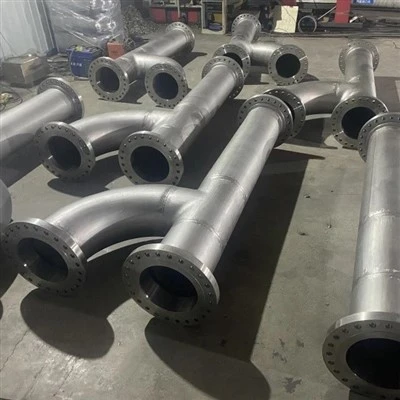
Stainless steel is not simply a material - it is a family of engineered alloys whose final properties are profoundly shaped by the thermal history applied after forming. Two pieces of identically composed 316L stainless steel can behave completely differently in service if one has been correctly solution-annealed and the other has not.
Heat treatment is the controlled application of heating and cooling cycles to a metal to achieve a desired microstructure and, therefore, specific mechanical, corrosion, and physical properties. For stainless steels and nickel-based alloys, heat treatment is not optional - it is a fundamental step in producing a product that meets specification and performs reliably.

This article explains three of the most critical heat treatment processes applied to stainless steel: annealing, solution treatment, and aging (precipitation hardening). We cover the metallurgical basis of each process, the correct process parameters, the effects on material properties, and common mistakes that lead to product failure.
Section 1: The Metallurgical Foundation
Before diving into specific processes, it is essential to understand what happens inside the steel at the microscopic level - the microstructure - and why it responds to heat the way it does.
Stainless Steel Microstructures
Stainless steel is not a single material but a classification covering five distinct microstructural families, each with different responses to heat treatment. Understanding which family you are working with is the first step in applying the correct thermal process.
Table 1: Stainless Steel Families and Their Heat Treatment Responsiveness
|
Family |
Examples |
Hardenable by HT? |
Primary HT Process |
Key Properties |
|
Austenitic |
304, 316, 310 |
No (cold work only) |
Annealing / Solution |
Excellent corrosion, ductility |
|
Ferritic |
430, 446 |
No |
Annealing |
Moderate corrosion, magnetic |
|
Martensitic |
410, 420, 440C |
Yes (quench & temper) |
Hardening + Tempering |
High strength, moderate corrosion |
|
Duplex |
2205, 2507 |
No |
Solution Annealing |
High strength + corrosion |
|
Precipitation Hardening |
17-4 PH, 15-5 PH, A286 |
Yes (aging) |
Solution + Aging |
Very high strength |
What Heat Treatment Actually Changes
At the atomic scale, heat treatment achieves several critical outcomes:
Dissolution of precipitates - harmful carbide or sigma-phase particles that form along grain boundaries during fabrication are dissolved back into solid solution.
Recrystallization - work-hardened, deformed grain structures caused by cold or hot forming are replaced by new, stress-free equiaxed grains, restoring ductility.
Homogenization - chemical segregation from the casting or welding process is reduced, producing a more uniform alloy composition.
Controlled precipitation - in precipitation-hardening alloys, specific heat sequences cause fine particles (typically copper-rich or intermetallic phases) to form within grains, dramatically increasing strength.
Section 2: Annealing
Annealing is the most widely applied heat treatment for stainless steel. The term refers to a broad family of thermal cycles - all of which involve heating to an elevated temperature and controlled cooling - aimed at softening the material, relieving residual stresses, and restoring or improving corrosion resistance.

Full Annealing vs. Process Annealing
Full annealing heats the material above the recrystallization temperature and cools it slowly enough to produce maximum softness. Process annealing (also called intermediate annealing or bright annealing) is performed between cold-working steps and is optimized for speed and surface quality rather than maximum softening.
The Sensitization Problem
The most critical risk associated with improper heat treatment of austenitic stainless steel is sensitization. When austenitic stainless steel is heated - or slowly cooled through - the temperature range of approximately 425°C to 870°C (800°F to 1600°F), chromium carbides (Cr23C6) precipitate along grain boundaries.
This depletes the surrounding area of chromium, dropping local content below the 10.5% threshold needed for passivation. The result is a network of chromium-depleted zones that are highly vulnerable to intergranular corrosion, sometimes called weld decay when it occurs adjacent to weld heat-affected zones.
|
Critical Knowledge: The sensitization range of 425–870°C (800–1600°F) is sometimes called the 'carbide precipitation range' or 'danger zone.' Always cool austenitic stainless steel rapidly through this range after annealing. |
Table 2: Annealing Parameters by Stainless Steel Grade Family
|
Family |
Anneal Temp (°C) |
Anneal Temp (°F) |
Cooling Method |
Purpose |
|
Austenitic (304, 316) |
1010–1120°C |
1850–2050°F |
Water quench or rapid air cool |
Dissolve carbides; restore ductility & corrosion resistance |
|
Austenitic (L grades: 304L, 316L) |
1010–1065°C |
1850–1950°F |
Water quench or rapid air cool |
Minimize carbide risk; low carbon content helps |
|
Ferritic (430) |
730–840°C |
1350–1550°F |
Air cool |
Soften; relieve stress; improve formability |
|
Martensitic (410, 420) |
650–760°C |
1200–1400°F |
Slow cool (furnace) |
Soften for machining; subcritical anneal |
|
Duplex (2205, 2507) |
1020–1100°C |
1870–2010°F |
Water quench (mandatory) |
Restore austenite/ferrite balance; dissolve sigma phase |
Bright Annealing
Bright annealing is a specialized process performed in a controlled atmosphere furnace - typically hydrogen, dissociated ammonia, or nitrogen-hydrogen mixtures - to prevent surface oxidation during heating. The result is a clean, reflective surface that requires no post-anneal pickling or acid cleaning, making it ideal for tubing, strip, and wire products used in food, pharmaceutical, and semiconductor applications.
Dew point control is critical in bright annealing. Moisture in the furnace atmosphere produces water vapor that reacts with chromium, forming a dull, oxidized surface - defeating the purpose of the process. A dew point of -40°C or lower is typically specified.
Section 3: Solution Treatment
Solution treatment - also called solution annealing or, for nickel alloys, solution heat treatment - is a specific, high-temperature anneal designed to dissolve all secondary phases into a homogeneous solid solution. It is the essential first step for precipitation-hardening alloys and is equally important for duplex stainless steels.

How Solution Treatment Works
When stainless steel is fabricated - through casting, rolling, welding, or forging - it inevitably develops a heterogeneous microstructure: some areas are richer in alloying elements than others, and intermetallic phases or carbides may have formed. Solution treatment heats the material to a temperature high enough that all these phases dissolve, creating a uniform single-phase solid solution.
The material is then rapidly quenched - typically in water - to freeze this homogeneous microstructure in place. The rapid cooling prevents the re-precipitation of carbides and intermetallic phases that would otherwise form on slow cooling.
Solution Treatment of Duplex Stainless Steel
Duplex stainless steels such as 2205 and 2507 contain roughly equal proportions of austenite and ferrite phases - a microstructure that gives them exceptional strength and corrosion resistance. However, this balance is highly sensitive to temperature and can be destroyed by fabrication.
Above approximately 1050°C, the ferrite phase expands at the expense of austenite. Below about 850°C, harmful intermetallic phases - sigma, chi, and alpha-prime - can precipitate and severely embrittle the material. Solution treatment at the correct temperature and followed by rapid quench is mandatory after any hot or cold forming operation.
Table 3: Solution Treatment Parameters for Key Grades
|
Grade / Alloy |
Solution Temp (°C) |
Solution Temp (°F) |
Hold Time |
Quench Method |
|
17-4 PH (Condition A) |
1040°C |
1900°F |
30 min + 3 min/mm thickness |
Air cool or water quench |
|
15-5 PH (Condition A) |
1040°C |
1900°F |
30 min minimum |
Air cool or water quench |
|
2205 Duplex |
1020–1100°C |
1870–2010°F |
10–30 min (min 30 min) |
Water quench (mandatory) |
|
2507 Super Duplex |
1050–1120°C |
1920–2050°F |
20–30 min minimum |
Water quench (mandatory) |
|
Alloy 625 (Ni-Cr-Mo) |
1100–1175°C |
2010–2150°F |
1–4 hours depending on section |
Water quench or rapid air |
|
Alloy 718 (Ni superalloy) |
955–1010°C |
1750–1850°F |
1 hour minimum |
Water quench or air cool |
Effect of Solution Treatment on Mechanical Properties
Solution treatment predictably reduces strength while significantly increasing ductility and toughness. For austenitic grades like 316, it also maximizes corrosion resistance by ensuring full dissolution of any sensitizing carbides. The table below compares properties before and after solution treatment for common grades.
Table 4: Mechanical Property Changes After Solution Treatment
|
Grade |
Condition |
UTS (MPa) |
Yield (MPa) |
Elongation (%) |
Hardness (HRC/HB) |
|
316L |
Cold worked |
700–900 |
600–750 |
15–25 |
~HB 200 |
|
316L |
Solution annealed |
485–620 |
170–310 |
40–50 |
~HB 140 |
|
2205 |
As-welded (no HT) |
620–700 |
450–500 |
20–25 |
~HB 270 |
|
2205 |
Solution annealed |
620–880 |
450–620 |
25–35 |
~HB 250 |
|
17-4 PH |
Condition A (solution) |
1000–1070 |
860–1000 |
10–14 |
~HRC 33 |
Section 4: Aging (Precipitation Hardening)
Aging - also known as precipitation hardening or age hardening - is a heat treatment process that dramatically increases the strength and hardness of certain stainless steel grades by causing finely dispersed precipitates to form within the metal matrix.

Unlike conventional carbon steel hardening (which requires quenching from high temperatures), precipitation hardening is a two-stage process: first solution treatment to create a supersaturated solid solution, followed by aging at a lower temperature to cause controlled precipitation. The process is safe, predictable, and produces some of the highest strength-to-weight ratios achievable in stainless steel.
The Precipitation Hardening Mechanism
After solution treatment, the material is in Condition A: a relatively soft, homogeneous supersaturated solution. When heated to the aging temperature (typically 480–620°C / 900–1150°F), alloying elements - such as copper in 17-4 PH or titanium and aluminum in A-286 - begin to diffuse and cluster into extremely fine nanoscale particles called precipitates.
These precipitates are coherent with the matrix - meaning they share the same crystal lattice - and they act as obstacles to dislocation motion. Since plastic deformation requires dislocation movement, blocking this movement dramatically increases the force required to deform the material, manifesting as increased strength and hardness.
|
Key Insight: Over-aging (too high a temperature or too long a hold time) causes the precipitates to coarsen, reducing their effectiveness. Under-aging leaves insufficient precipitate volume. The specified time-temperature combination is critical to achieving target properties. |
17-4 PH: The Industry Standard PH Grade
Grade 17-4 PH (UNS S17400, also known as Type 630) is the most widely used precipitation-hardening stainless steel. It contains approximately 17% chromium, 4% nickel, and 4% copper, and achieves its strength through copper-rich precipitate formation during aging. Critically, 17-4 PH is essentially fully martensitic after solution treatment, which allows multiple aged conditions to be specified by adjusting the aging temperature.
Table 5: 17-4 PH Condition Codes and Resulting Mechanical Properties
|
Condition |
Aging Temp & Time |
UTS (MPa) |
0.2% Yield (MPa) |
Elongation (%) |
Hardness (HRC) |
|
H900 |
482°C / 900°F | 1 hr |
≥ 1310 |
≥ 1170 |
≥ 10 |
40–43 |
|
H925 |
496°C / 925°F | 4 hr |
≥ 1170 |
≥ 1000 |
≥ 10 |
38–42 |
|
H1025 |
552°C / 1025°F | 4 hr |
≥ 1070 |
≥ 1000 |
≥ 12 |
35–39 |
|
H1075 |
579°C / 1075°F | 4 hr |
≥ 1000 |
≥ 860 |
≥ 13 |
32–36 |
|
H1150 |
621°C / 1150°F | 4 hr |
≥ 930 |
≥ 720 |
≥ 16 |
28–32 |
|
H1150M (double aged) |
760°C 2hr + 621°C 4hr |
≥ 860 |
≥ 655 |
≥ 18 |
25–29 |
The pattern is clear: lower aging temperatures produce higher strength but lower ductility and toughness. The H900 condition is specified when maximum strength is needed (aerospace fasteners, tooling), while H1150M is preferred when toughness and corrosion resistance take priority (pressure vessels, marine components).
Other Precipitation-Hardening Grades
Table 6: Key Precipitation-Hardening Grades Compared
|
Grade |
UNS No. |
Max UTS (MPa) |
Aging Range (°C) |
Primary Applications |
|
17-4 PH |
S17400 |
~1450 |
480–621 |
Aerospace, chemical, food, oil & gas |
|
15-5 PH |
S15500 |
~1310 |
496–621 |
Aerospace frames, nuclear components |
|
17-7 PH |
S17700 |
~1650 |
496–566 |
Springs, strip, diaphragms |
|
A-286 (Fe-Ni) |
S66286 |
~1100 |
715–760 |
Jet engine discs, fasteners (to 650°C) |
|
Custom 465 |
S46500 |
~1724 |
455–510 |
Landing gear, structural aerospace |
Section 5: Common Heat Treatment Defects and How to Prevent Them
Even well-specified processes can go wrong. Understanding the root causes of heat treatment defects - and how to prevent them - is as important as knowing the correct parameters.
Table 7: Common Heat Treatment Defects, Causes, and Prevention
|
Defect |
Root Cause |
Effect on Material |
Prevention |
|
Sensitization |
Slow cooling through 425–870°C range |
Intergranular corrosion; weld decay |
Rapid quench; use L grades (304L, 316L) or stabilized grades (321, 347) |
|
Sigma phase embrittlement |
Prolonged exposure 600–900°C in duplex |
Severe loss of toughness; brittle fracture |
Correct solution anneal + rapid quench; avoid slow cool in this range |
|
Distortion / warping |
Non-uniform heating or quench |
Dimensional non-conformance |
Use proper fixture; uniform heat soak; controlled quench rate |
|
Scale / oxidation |
Air atmosphere at high temperature |
Surface contamination; reduced corrosion resistance |
Use controlled atmosphere (bright anneal) or post-anneal pickling |
|
Over-aging (PH grades) |
Excessive time or temperature in aging cycle |
Precipitate coarsening; strength loss |
Strictly control aging temperature (±1°C); use certified furnaces |
|
Under-aging (PH grades) |
Insufficient time or temperature |
Failure to reach target strength |
Verify furnace calibration; use hardness testing to confirm |
|
Carburization / nitriding |
Contaminated furnace atmosphere |
Surface hardening; embrittlement |
Clean furnace thoroughly; verify atmosphere purity |
Section 6: Applicable Standards and Specifications
Heat treatment of stainless steel and nickel alloys is governed by a comprehensive framework of international standards. Compliance with these standards is mandatory for aerospace, nuclear, oil & gas, and medical applications.
Table 8: Key International Standards for Stainless Steel Heat Treatment
|
Standard |
Issuing Body |
Scope & Application |
|
AMS 2759 |
SAE International |
General heat treatment of steel parts (aerospace); includes PH grades |
|
AMS 2759/3 |
SAE International |
Specific requirements for precipitation hardening of corrosion-resistant steels |
|
ASTM A276 |
ASTM International |
Specification for stainless steel bars and shapes; includes HT condition |
|
ASTM A480 |
ASTM International |
General requirements for flat-rolled stainless; references HT processes |
|
EN 10088-3 |
CEN (Europe) |
Technical delivery conditions; heat treatment states for stainless bars |
|
NACE MR0175 / ISO 15156 |
NACE / ISO |
Sulfide stress corrosion cracking requirements; governs HT for sour service |
|
API 6A / 17D |
API |
Heat treatment of valves and wellhead equipment for oil & gas |
Conclusion
Heat treatment is not an afterthought - it is a core part of the metallurgical design of stainless steel products. Annealing restores the microstructure damaged by forming and welding, solution treatment creates the homogeneous baseline required for further processing and use, and aging transforms a relatively soft material into one of the strongest corrosion-resistant alloys available.
Each process has defined temperature windows, hold times, and cooling requirements that are non-negotiable. Deviations - whether from inadequate furnace control, improper atmosphere management, or skipped steps - lead to predictable and preventable failures: sensitization, embrittlement, distortion, and strength shortfall.
Whether you are a procurement specialist selecting a certified supplier, an engineer designing a fabrication sequence, or a student learning the fundamentals of physical metallurgy, understanding these three heat treatment processes gives you the foundational knowledge to ask the right questions and make better decisions.
Always demand documentation: mill test reports (MTRs) should specify the heat treatment condition and reference the applicable standard. For high-value applications, third-party verification of heat treatment records - including furnace charts, load thermocouples, and quench records - is not excessive caution; it is professional due diligence.
Frequently Asked Questions (FAQ)
Yes, but with important caveats. Welded 17-4 PH should typically be re-solution treated (Condition A) before aging to ensure a uniform microstructure across the base metal, heat-affected zone, and weld metal. Aging without prior solution treatment of the weld can result in non-uniform properties and reduced corrosion resistance.
Q: Why must duplex stainless steel be water quenched and not air cooled after annealing?
Sigma phase and other intermetallic compounds begin to form rapidly in duplex stainless steels when held or slowly cooled below approximately 1000°C. Even brief exposure in the 600–900°C range can cause catastrophic loss of toughness and corrosion resistance. Water quenching is the only reliable method to pass through this temperature range quickly enough to prevent precipitation.
Q: What is the difference between 304 and 304L, and does it affect heat treatment?
The 'L' designation indicates a low-carbon variant (maximum 0.03% C vs. 0.08% C for standard 304). The lower carbon content significantly reduces the risk of sensitization during fabrication and heat treatment, because less carbon is available to form chromium carbides. From a heat treatment standpoint, 304L can tolerate slower cooling rates and lower annealing temperatures without the same sensitization risk as standard 304.
Q: How do I verify that heat treatment has been performed correctly?
The primary verification methods are: (1) Review furnace records - time-temperature charts with thermocouple data for each load; (2) Hardness testing - as-annealed or aged hardness values should fall within specification limits; (3) Tensile and impact testing on test coupons from the same heat and lot; (4) Microstructural examination by metallographic sectioning to confirm phase balance (especially for duplex grades); (5) Corrosion testing per ASTM A262 (sensitization test) for austenitic grades used in aggressive environments.