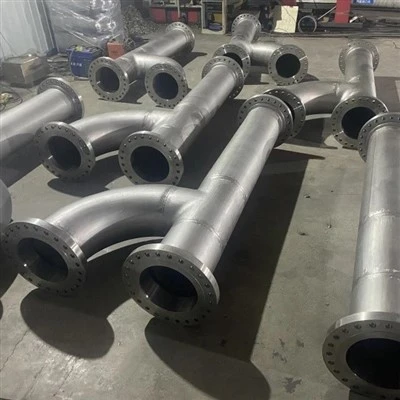
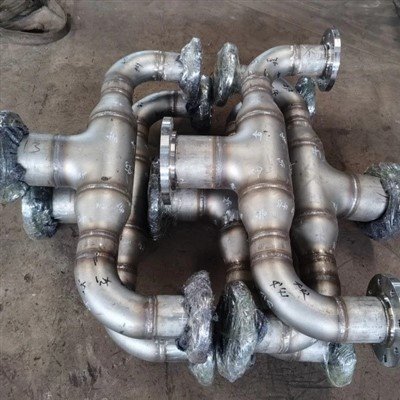
In 2026, mill-direct Hastelloy C276 (UNS N10276) prices range from approximately USD 42 to 75 per kg for plate, 55 to 90 per kg for pipe, and 80 to 160 per kg for forgings and fittings, depending on form, thickness, and order volume.

The single largest cost driver is molybdenum (15-17 percent of the alloy), which alone accounts for roughly 35-45 percent of the raw material value. C276 costs about 12 to 16 times more than 316L stainless steel per kg, but delivers 20-40 times longer service life in aggressive environments, lowering total cost of ownership.
What Is the Current Price of Hastelloy C276 per Kg in 2026?
As of 2026, mill-direct C276 pricing is approximately USD 42-75 per kg for plate, 55-90 per kg for seamless pipe, 50-80 per kg for bar, and 80-160 per kg for forgings and fittings, with distributor premiums adding 15-30 percent over mill base prices.
C276 is a specialty nickel alloy whose price is set by a combination of raw material cost (nickel, molybdenum, tungsten, chromium) and the conversion premium charged by the limited number of mills capable of melting and rolling it. The figures below reflect indicative 2026 mill-direct pricing for standard stock sizes in container-load or project quantities; small lot sizes, exotic dimensions, and urgent deliveries carry substantial premiums.
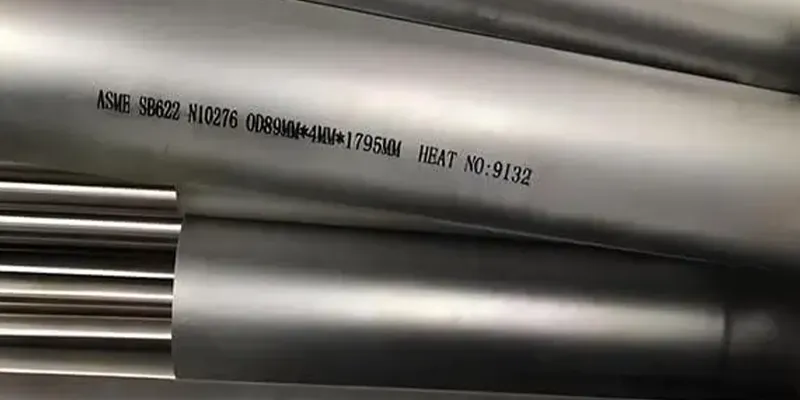
Distributors in Europe and North America typically add 15-30 percent to mill base prices to cover inventory carrying cost, cutting, and certification. Chinese domestic mill prices are generally 10-20 percent lower than Western mill prices for comparable chemistry, though lead times and certification (EN 10204 3.2 vs 3.1) differ. Because C276 is not traded on a public exchange like stainless 304, buyers should always request a validity-dated quote rather than relying on published list prices, which can change weekly with metal surcharges.
Table 1. Indicative 2026 C276 Price Ranges by Product Form (USD per kg, mill-direct)
|
Product Form |
Typical Thickness / Size |
Price Range (USD/kg) |
Distributor Premium |
|
Plate (hot-rolled) |
6-50 mm |
42 - 60 |
15-25 percent |
|
Plate (thin, 3-6 mm) |
3-6 mm |
55 - 75 |
15-25 percent |
|
Seamless Pipe |
1/2 to 12 inch, SCH 40-160 |
55 - 90 |
20-30 percent |
|
Welded Pipe |
up to 48 inch |
48 - 70 |
15-25 percent |
|
Bar / Rod |
20-200 mm dia. |
50 - 80 |
15-25 percent |
|
Forgings (flanges, blocks) |
rings, discs |
90 - 160 |
10-20 percent |
|
Butt-weld Fittings |
elbows, tees, reducers |
80 - 150 |
20-30 percent |
|
Wire / Electrode (ERNiCrMo-4) |
1-5 mm |
70 - 120 |
10-20 percent |
Source: JN Alloy 2026 mill price book; aggregated Western and Chinese mill quotations Q1-Q3 2026; industry distributor catalogs. Indicative only; request validity-dated quote.
What Drives the Price of C276? Raw Material Breakdown
The raw material value of C276 is dominated by nickel (about 57 percent of mass) and molybdenum (15-17 percent), with tungsten (3-4.5 percent) and a high conversion premium together making up the remainder; raw metal typically represents 55-70 percent of the final mill price.
To understand C276 pricing, break the alloy into its constituent metal costs at typical 2026 reference prices: nickel approximately USD 17,000 per tonne (USD 17 per kg), molybdenum approximately USD 42 per kg, tungsten approximately USD 45 per kg, chromium approximately USD 2.2 per kg, and iron scrap approximately USD 0.5 per kg. Applying the nominal C276 composition (57 percent Ni, 16 percent Mo, 4 percent W, 16 percent Cr, 5.5 percent Fe), the embedded raw metal value is roughly: Ni 57 percent x 17 = USD 9.7 per kg; Mo 16 percent x 42 = USD 6.7 per kg; W 4 percent x 45 = USD 1.8 per kg; Cr 16 percent x 2.2 = USD 0.35 per kg; Fe 5.5 percent x 0.5 = USD 0.03 per kg.
Sum = approximately USD 18.6 per kg of raw metal. The mill then applies a conversion premium of roughly 2.3 to 3.5 times the raw metal value to cover melting in vacuum induction or electric-arc furnaces, hot and cold rolling, solution annealing, pickling, non-destructive testing, and certification. This conversion premium is high because very few mills worldwide can process C276 without cross-contamination, and batch sizes are small. The result is a final mill price of USD 42-75 per kg for plate, consistent with the market range in Table 1.
Table 2. Embedded Raw Metal Value of C276 (2026 Reference Prices)
|
Element |
Composition |
2026 Reference Price |
Contribution (USD/kg) |
|
Nickel (Ni) |
57 percent |
USD 17 per kg |
9.69 |
|
Molybdenum (Mo) |
16 percent |
USD 42 per kg |
6.72 |
|
Tungsten (W) |
4 percent |
USD 45 per kg |
1.80 |
|
Chromium (Cr) |
16 percent |
USD 2.2 per kg |
0.35 |
|
Iron (Fe) |
5.5 percent |
USD 0.5 per kg |
0.03 |
|
Other (Co, Mn, Si) |
1.5 percent |
negligible |
0.02 |
|
Total Raw Metal |
100 percent |
- |
approximately 18.6 |
|
Conversion Premium (x) |
- |
2.3 - 3.5x |
multiplier |
|
Final Mill Price (plate) |
- |
- |
USD 42 - 75 per kg |
Source: LME nickel reference; IMOA molybdenum price index 2026; tungsten market reports; JN Alloy cost model.
How Does Molybdenum Cost Affect C276 Pricing?
Molybdenum is the single most volatile and influential cost driver for C276, contributing roughly 35-45 percent of the raw material value; every USD 10 per kg move in molybdenum changes the C276 mill price by approximately USD 1.6 per kg (about 2.5-4 percent of the total price).

Molybdenum is the element that gives C276 its signature resistance to reducing acids and chloride pitting, and it is also the most expensive alloying addition after nickel. Because C276 contains 15-17 percent molybdenum, the alloy is highly exposed to molybdenum price swings.
Historical data shows molybdenum prices have been extremely volatile: approximately USD 7 per kg in 2002, spiking to over USD 100 per kg in 2005 during a supply crisis, settling around USD 30-35 per kg in 2015-2019, then rising to USD 45-50 per kg in 2022-2023 amid energy and supply shocks, and trading around USD 40-45 per kg in 2026. A USD 10 per kg move in molybdenum translates directly to USD 1.6 per kg of C276 (16 percent of 10), which on a 10-tonne order equals USD 16,000 of cost variation.
Buyers should monitor the International Molybdenum Association (IMOA) price index and consider price-escalation clauses in long-term supply contracts to share molybdenum volatility risk with the mill. When molybdenum is high, C276's price premium over lower-molybdenum alloys (such as 904L at 4-5 percent Mo, or Alloy 825 at 3 percent Mo) widens, making substitution analysis more valuable.
Table 3. Molybdenum Price History and C276 Price Impact
|
Year |
Mo Price (USD/kg) |
C276 Plate Estimate (USD/kg) |
Notes |
|
2002 |
7 |
28 - 38 |
Low baseline |
|
2005 |
100+ |
70 - 110 |
Supply crisis peak |
|
2010 |
32 |
38 - 52 |
Post-crisis normalization |
|
2015 |
30 |
36 - 50 |
Oversupply period |
|
2019 |
28 |
35 - 48 |
Stable low |
|
2022 |
48 |
45 - 72 |
Energy and supply shock |
|
2023 |
45 |
44 - 70 |
Elevated |
|
2026 (current) |
40 - 45 |
42 - 75 |
Moderately elevated |
Source: IMOA molybdenum market reports 2002-2026; historical C276 price reconstruction from mill cost models.
How Does C276 Price Compare to Other Corrosion-Resistant Alloys?
C276 is one of the most expensive commonly specified corrosion-resistant alloys, priced at 12-16 times 316L stainless steel, 3-4 times Alloy 825, and 2.2-3.0 times Inconel 625 per kg, but occupies the top tier for resistance to reducing acids and severe sour service where cheaper alloys fail.
Material selection is ultimately a trade-off between upfront price and corrosion performance. The table below positions C276 against the alloys it is most often compared with. 316L stainless steel at USD 3-4 per kg is the baseline; it works in mild environments but fails in reducing acids and high-chloride sour service. Alloy 825 at USD 12-18 per kg covers moderate sulfuric acid and sour service.
Inconel 625 at USD 18-28 per kg covers oxidizing media, seawater, and moderate sour service with higher strength. C276 at USD 42-75 per kg is reserved for the most aggressive reducing acid and severe sour environments. The price ratio between C276 and 316L (about 14x) is large, but in service where 316L lasts 3-5 years and C276 lasts 20-30 years, the lifecycle cost favors C276 despite the higher initial price. A useful rule: specify C276 only where the corrosion environment genuinely requires it; otherwise a lower-tier alloy cuts material cost by 50-85 percent.
Table 4. 2026 Price Comparison Across Corrosion-Resistant Alloys (USD per kg, plate)
|
Alloy |
UNS |
Price (USD/kg) |
Relative to C276 |
Typical Service |
|
304L SS |
S30403 |
2.5 - 3.5 |
0.05x (20x cheaper) |
Mild, atmospheric |
|
316L SS |
S31603 |
3.0 - 4.5 |
0.07x (14x cheaper) |
General corrosion, food |
|
904L SS |
N08904 |
9 - 14 |
0.20x (5x cheaper) |
Sulfuric acid, seawater |
|
Alloy 825 |
N08825 |
12 - 18 |
0.28x (3.5x cheaper) |
Sour, moderate H2SO4 |
|
Inconel 625 |
N06625 |
18 - 28 |
0.42x (2.4x cheaper) |
Seawater, oxidizing, sour |
|
Hastelloy C22 |
N06022 |
48 - 80 |
1.05x (similar) |
Oxidizing + reducing mixed |
|
Hastelloy C276 |
N10276 |
42 - 75 |
1.00x (baseline) |
Reducing acids, severe sour |
|
Hastelloy C2000 |
N10200 |
50 - 90 |
1.15x (15 percent more) |
Mixed acid, H2SO4 |
Source: JN Alloy 2026 price book; aggregated market quotations; IMOA and SPE nickel alloy cost surveys.
What Are the Historical C276 Price Trends from 2020 to 2026?
C276 prices followed a volatile path from 2020 to 2026: a COVID-depressed low near USD 33 per kg in 2020, a surge to USD 60-90 per kg in 2022 driven by energy and nickel/molybdenum shocks, a correction to USD 42-65 per kg in 2024, and stabilization at USD 42-75 per kg in 2026.

Tracking historical pricing helps buyers time purchases and understand volatility. In 2020, the COVID-19 demand shock depressed base metal prices and C276 plate traded near USD 33-40 per kg. The 2021-2022 period saw aggressive recovery: the LME nickel short squeeze in March 2022 (when nickel briefly spiked above USD 100,000 per tonne) and concurrent molybdenum and energy cost inflation pushed C276 plate to USD 60-90 per kg. As nickel and molybdenum retreated from their peaks in 2023-2024, C276 corrected to USD 42-65 per kg.
By 2026, prices have stabilized in the USD 42-75 per kg band reflecting moderately elevated but no longer crisis-level metal costs. The key lesson for procurement: C276 pricing is correlated but lags base metal markets by 1-3 months because mills reprice using quarterly surcharge formulas. Buyers who lock pricing during metal troughs (such as late 2020 or mid-2024) capture meaningful savings versus peak-period buying.
Table 5. C276 Plate Price Trend 2020-2026 (USD per kg, mill-direct)
|
Year |
Low |
High |
Average |
Market Context |
|
2020 |
33 |
42 |
37 |
COVID demand shock, low base metals |
|
2021 |
40 |
58 |
48 |
Recovery, nickel rising |
|
2022 |
55 |
90 |
70 |
LME nickel squeeze, energy crisis |
|
2023 |
45 |
72 |
58 |
Correction from peak |
|
2024 |
42 |
65 |
52 |
Base metals normalized |
|
2025 |
43 |
70 |
55 |
Moderate Mo elevation |
|
2026 (YTD) |
42 |
75 |
56 |
Stabilized, moderately elevated |
Source: JN Alloy historical quotation archive; LME nickel and IMOA molybdenum annual reviews 2020-2026.
What Supply Chain Factors Affect C276 Availability and Price?
C276 supply is concentrated in a small number of Western and Chinese mills, with lead times of 8-20 weeks for non-stock sizes; the dominant supply chain risks are molybdenum and tungsten geographic concentration (China produces about 40 percent of molybdenum and over 80 percent of tungsten), energy costs in melting, and geopolitical trade restrictions.
Unlike commodity stainless steel, C276 is produced by only a handful of qualified mills globally - Haynes International and a few European and Chinese producers - because of the technical difficulty of melting high-molybdenum nickel alloys without contamination and the need for vacuum or controlled-atmosphere furnaces. This supply concentration means capacity is tight and lead times extend during demand peaks. On the raw material side, molybdenum supply is concentrated in China (about 40 percent of global mine output), Chile, and the United States, while tungsten is even more concentrated with China producing over 80 percent of world supply.
Trade policy - such as export controls, tariffs, and sanctions - can therefore move both price and availability quickly. Energy cost is a major conversion factor: melting and rolling C276 is energy-intensive, so European and North American mill prices track regional electricity and natural gas costs. The Russia-Ukraine conflict and subsequent sanctions disrupted some nickel and specialty metal flows in 2022, contributing to the price spike. Buyers mitigate these risks through dual-sourcing, longer-horizon planning, and maintaining strategic inventory of critical sizes.
Table 6. C276 Supply Chain Risk Factors
|
Risk Factor |
Impact on Price |
Impact on Lead Time |
Mitigation |
|
Mo price volatility |
High (USD 1.6/kg per USD 10 Mo) |
Low |
Escalation clauses, Mo index monitoring |
|
W price volatility |
Moderate (USD 0.45/kg per USD 10 W) |
Low |
Long-term contracts |
|
China export policy |
High |
High |
Dual-source (Western + Chinese mills) |
|
Mill capacity tightness |
Moderate |
High (8-20 weeks) |
Early procurement, buffer stock |
|
Energy cost (EU/US) |
Moderate |
Low |
Source from low-energy-cost regions |
|
Geopolitical (sanctions) |
High |
High |
Diversified origin, certified traceability |
|
Freight / logistics |
Low-Moderate |
Moderate |
Consolidated shipments, INCOTERMS planning |
Source: IMOA supply reports; USGS mineral commodity summaries; trade policy analysis 2022-2026.
How Do Product Form and Order Size Affect C276 Price?
C276 price per kg varies strongly by product form and order quantity: thin plate and seamless pipe carry the highest per-kg premiums, forgings and fittings cost 2-3 times plate due to conversion and yield loss, and order volumes above 5-10 tonnes typically earn 8-15 percent volume discounts.
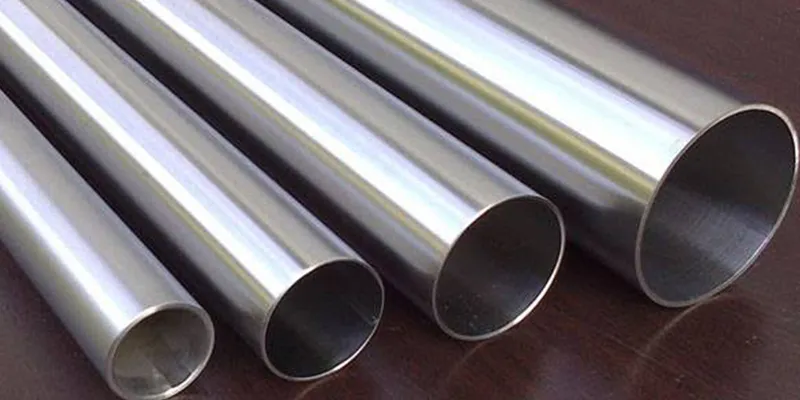
The conversion cost embedded in the final price depends heavily on how difficult the product form is to manufacture. Thin-gauge plate (below 6 mm) requires additional cold rolling and annealing cycles, raising cost. Seamless pipe requires piercing and elongation of solid billets, with significant yield loss, pushing prices to 1.3-1.5 times plate. Forgings and fittings are the most expensive forms because they start from forged billet (itself a conversion step) and then undergo machining with high scrap rates; a flange may consume 2-3 times its final weight in starting material.
Order size is the second major lever. Mills allocate fixed setup and quality-cost (QC) costs across the order; a 10-tonne plate order spreads these costs far more efficiently than a 200 kg order, so per-kg pricing drops by 8-15 percent at project scale. Buyers should consolidate requirements across a project or multiple projects, standardize on fewer sizes, and avoid rush orders, which can add 20-40 percent premiums for expedited melting slots and air freight.
Table 7. Price Multipliers by Form and Volume
|
Scenario |
Price Multiplier vs Plate Base |
Why |
|
Plate, 6-50 mm, 10 t order |
1.00x (baseline) |
Most efficient form |
|
Plate, 3-6 mm, 10 t order |
1.20x |
Extra cold rolling |
|
Seamless pipe, project qty |
1.3 - 1.5x |
Billet piercing, yield loss |
|
Bar, 20-200 mm |
1.1 - 1.3x |
Forging + machining |
|
Forgings (flanges) |
2.0 - 2.5x |
Billet + machining scrap |
|
Fittings |
1.8 - 2.5x |
Forming + machining |
|
Small lot (under 500 kg) |
1.2 - 1.4x |
Setup cost spread over small qty |
|
Rush / expedited |
1.2 - 1.4x |
Premium melting slot, air freight |
|
Project volume 10 t+ |
0.85 - 0.92x |
Volume discount |
Source: JN Alloy quotation model; mill conversion cost studies 2024-2026.
How Do Regional Prices Differ (China vs Europe vs North America)?
Chinese mill C276 prices are typically 10-20 percent lower than Western mills for equivalent chemistry, but European and North American buyers often pay a further 15-30 percent distributor premium; total landed cost after tariffs, freight, and certification can erase much of the Chinese price advantage for smaller orders.
Global C276 pricing shows a clear regional structure. Chinese domestic mills (such as those in Jiangsu and Zhejiang) offer the lowest base prices because of lower energy and labor costs, proximity to molybdenum and tungsten supply, and large domestic specialty alloy production capacity.
European mills (Germany, Sweden, Italy) and North American mills (USA) price 10-20 percent higher at the mill level due to energy and environmental compliance costs. However, most buyers do not buy directly from mills; they buy through distributors who add 15-30 percent for inventory, cutting, and certification. For a European or North American buyer sourcing from China, the apparent saving must be netted against: ocean freight, import tariffs (for example, US Section 232 stainless/nickel alloy tariffs and anti-dumping duties on some Chinese specialty steels), third-party inspection, and EN 10204 3.2 versus 3.1 certification costs.
For container-load project orders, Chinese origin usually remains cheaper even after these costs; for small or urgent orders, local Western stock may be more cost-effective once expedited freight and tariffs are included. A qualified Chinese mill-direct supplier with full Western-standard certification (such as JN Alloy) can offer the best of both.
Table 8. Regional C276 Plate Price Comparison (USD per kg, indicative)
|
Source Region |
Mill Base Price |
Typical Buyer Price (distributor) |
Notes |
|
China (mill-direct) |
38 - 60 |
42 - 68 (FOB, ex-works) |
Lowest base, certification varies |
|
China (via trader) |
42 - 65 |
50 - 80 (landed) |
Includes freight, margin |
|
Europe (mill) |
48 - 72 |
60 - 95 (distributor) |
EN 10204 3.2 standard |
|
North America (mill) |
50 - 78 |
62 - 100 (distributor) |
Section 232 tariff may apply |
|
India (mill) |
42 - 64 |
50 - 82 (landed) |
Growing capacity, longer lead |
Source: JN Alloy 2026 global quotation comparison; trade tariff schedules; distributor catalog surveys.
How Can Procurement Reduce C276 Cost Without Compromising Quality?
Buyers can reduce C276 procurement cost by 15-35 percent through five levers: consolidating volume for discounts, specifying only the certification actually required, standardizing on fewer sizes, timing purchases to molybdenum troughs, and using qualified Chinese mill-direct supply with full Western certification instead of Western distributors.

Reducing C276 cost does not require sacrificing metallurgical quality; it requires buying smarter.
First, consolidate requirements across projects to reach the 10-tonne threshold where volume discounts of 8-15 percent apply.
Second, right-size certification: not every application needs EN 10204 3.2 with full third-party inspection; 3.1 may suffice for non-critical parts, saving inspection cost.
Third, standardize dimensions to reduce setup changes and scrap.
Fourth, monitor the IMOA molybdenum index and time large buys when molybdenum is depressed; a USD 10 per kg Mo move equals USD 1.6 per kg C276, so timing matters.
Fifth, evaluate qualified Chinese mill-direct suppliers who hold ISO 9001 and can issue EN 10204 3.1/3.2 with full traceability and PMI; this typically saves 15-25 percent versus Western distributor pricing with no metallurgical compromise.
Finally, consider design optimization: where only a corrosion barrier is needed (not full structural thickness), use C276 cladding or weld overlay on carbon steel instead of solid C276, which can cut material cost by 50-70 percent for vessels and columns.
- Consolidate orders to 10 t+ for 8-15 percent volume discount
- Specify EN 10204 3.1 instead of 3.2 where code permits (saves inspection cost)
- Standardize on common thicknesses and sizes to reduce setup and scrap
- Track IMOA Mo index; buy during molybdenum price troughs
- Use qualified Chinese mill-direct supply with full Western certification
- Specify C276 cladding or weld overlay instead of solid C276 for corrosion barriers
- Avoid rush orders; plan 12-20 weeks ahead to skip expedite premiums
- Negotiate molybdenum escalation clauses to share volatility risk
When Should You Substitute C276 with a Cheaper Alloy?
Substitute C276 only when the service environment does not require its unique reducing-acid and severe-sour resistance: use 904L or Alloy 825 for moderate sulfuric acid, Inconel 625 for oxidizing media and seawater, or C22 for mixed acid - each can cut material cost by 50-85 percent while remaining fit for service.
Over-specifying C276 is a common and expensive mistake. The decision should be driven by the actual corrosive environment, not by habit or conservatism. If the service is moderate sulfuric acid (below 40 percent, room temperature), Alloy 825 or 904L at one-third to one-fifth the price will perform adequately. If the service is oxidizing acid, seawater, or flue gas with chloride but no strong reducing species, Inconel 625 at about 40 percent of the price is the better choice and offers higher strength.
For mixed oxidizing-reducing acid streams (where C276 struggles and C2000 is the ideal), C22 (UNS N06022) is a close alternative at similar cost. The key is to perform a corrosion assessment against the actual process chemistry (concentration, temperature, chloride, pH, H2S) rather than defaulting to C276. A simple rule: if 316L, 904L, 825, or 625 can meet the corrosion rate target (typically below 0.1 mm per year with adequate margin), use the cheaper alloy; reserve C276 for documented reducing-acid or severe-sour conditions where the others fail.
Table 9. Substitution Decision Guide
|
Service Environment |
C276 Needed? |
Cheaper Alternative |
Potential Saving |
|
Dilute H2SO4 below 10 percent, RT |
Often over-specified |
904L or 825 |
60-80 percent |
|
H2SO4 10-60 percent, warm |
Yes (C276 or C2000) |
C2000 (similar cost) |
0-15 percent |
|
HCl any concentration |
Yes |
None (C276 only) |
0 percent |
|
Seawater, oxidizing |
No |
625 or 254 SMO |
50-70 percent |
|
Sour gas, moderate (NACE I-IV) |
Maybe |
825 or 625 Grade 2 |
40-60 percent |
|
Sour gas, severe (HCl, high H2S) |
Yes |
None |
0 percent |
|
HNO3, oxidizing acid |
No |
625 or C2000 |
30-50 percent |
|
Mixed acid (H2SO4-HNO3) |
Maybe |
C2000 |
0-15 percent |
Source: NACE MR0175/ISO 15156; corrosion engineering selection guides; JN Alloy application database.
Case Study: Molybdenum Spike Impact on a 2022 EPC Project
An EPC contractor procuring 45 tonnes of C276 plate for a Middle East desulfurization project in early 2022 faced a 60 percent material cost overrun when molybdenum and nickel prices spiked between quote and order; switching 70 percent of the scope to C276-clad carbon steel and 904L saved USD 2.1 million versus the original solid-C276 plan.

The EPC firm received a budgetary quote for 45 tonnes of solid C276 plate at USD 52 per kg in Q4 2021 (total USD 2.34 million). By the time the purchase order was released in Q2 2022, the LME nickel squeeze and molybdenum surge had pushed C276 to USD 82 per kg, raising the projected cost to USD 3.69 million - a USD 1.35 million (58 percent) overrun that threatened project economics. A value-engineering review identified that only the absorber quench zone (about 30 percent of the surface area) required solid C276 for severe reducing-acid service.
The remaining 70 percent of the vessel walls were redesigned with C276 cladding (3-5 mm overlay) on SA-516 Gr 70 carbon steel, and the associated piping was downgraded to 904L where service was moderate sulfuric acid. The revised material cost was approximately USD 1.59 million - a saving of USD 2.1 million versus the original solid-C276 plan and USD 0.34 million versus the inflated Q2 2022 solid-C276 price. The project was delivered on budget with no corrosion-performance compromise because the redesign was based on a zone-specific corrosion assessment. This case illustrates the value of right-specification and timing awareness in volatile markets.
Source: JN Alloy EPC value-engineering case (anonymized); project procurement records 2021-2022.
What Is the C276 Price Outlook for Late 2026 and 2027?
The C276 price outlook for late 2026 through 2027 is for moderate stability in the USD 42-78 per kg range, with upside risk from molybdenum supply tightness and energy costs and downside potential if Chinese molybdenum output expands; buyers should plan at the midpoint and use escalation clauses rather than betting on sharp declines.
Forecasting C276 pricing requires reading the underlying drivers. Molybdenum supply is expected to remain moderately tight through 2026-2027 because new mine capacity (for example, expansions in Chile and China) comes online slowly, while demand from stainless and specialty alloys grows with energy-transition infrastructure (desalination, FGD, chemical). This supports molybdenum in the USD 38-48 per kg band, implying C276 plate stays near USD 42-75 per kg. Nickel, by contrast, faces potential oversupply from Indonesian laterite capacity, which could cap the nickel component of C276 cost. Energy costs in Europe remain a structural premium for Western mills.
Geopolitical risk (tariffs, export controls) is the main wildcard: any new restriction on Chinese tungsten or molybdenum export could spike prices 10-20 percent within weeks. Net outlook: plan budgets at the midpoint (about USD 58 per kg plate), avoid speculative forward buying, and use molybdenum-indexed escalation clauses so neither buyer nor mill carries the full volatility risk. Long-term, increased Chinese specialty alloy capacity may gradually compress the Western premium.
Table 10. 2026-2027 Price Scenarios (C276 Plate, USD per kg)
|
Scenario |
Probability |
Price Range |
Trigger |
|
Base case (stable) |
55 percent |
42 - 75 |
Mo USD 38-48, nickel stable |
|
Bull case (supply shock) |
20 percent |
75 - 110 |
Mo export restriction, energy spike |
|
Bear case (oversupply) |
25 percent |
35 - 55 |
Mo mine expansion, nickel glut |
Source: IMOA 2026-2027 supply-demand outlook; JN Alloy market analysis; commodity bank forecasts.
What Should a C276 Purchase Specification Include to Control Cost?
A cost-effective C276 purchase specification should state the exact UNS N10276 designation, required ASTM product form, the minimum certification level (3.1 vs 3.2), acceptance of qualified Chinese mill-direct supply, PMI verification, and a molybdenum-indexed price escalation clause - this prevents both over-specification and quality risk.
Ambiguous specifications are a hidden cost driver. Buyers who simply write 'Hastelloy C276' without referencing the UNS number or ASTM form may receive material with unnecessary extras or, worse, material that does not meet the needed standard.
The specification should: (1) name UNS N10276 and the relevant ASTM standard (B575 plate, B622 pipe, B574 bar, B564 forging, B366 fitting); (2) state the required condition (solution annealed); (3) specify certification level - EN 10204 3.1 is usually sufficient and cheaper than 3.2; (4) explicitly permit qualified Chinese mill-direct supply with full traceability to widen the supplier pool and reduce cost; (5) require positive material identification (PMI) on every piece; and (6) include a molybdenum (and optionally nickel) price-escalation clause referencing the IMOA index so that extreme metal moves are shared. Clarity also helps suppliers quote accurately, reducing the chance of costly late changes or rejection.
State UNS N10276 and ASTM product form (B575/B622/B574/B564/B366)
Specify solution-annealed condition
Choose EN 10204 3.1 vs 3.2 deliberately (3.1 usually sufficient)
Permit qualified Chinese mill-direct supply with full traceability
Require PMI (XRF) verification on every plate, pipe, and forging
Include Mo-indexed price escalation clause (IMOA reference)
Define acceptance criteria: hardness below 35 HRC, no sensitization (ASTM G28)
State INCOTERMS and inspection responsibility clearly
Request validity period on quote (7-30 days typical)
For clad applications, specify overlay alloy and thickness separately
Frequently Asked Questions
Q: What is the price of Hastelloy C276 per kg in 2026?
A: In 2026, mill-direct C276 prices are approximately USD 42-75 per kg for plate, 55-90 per kg for seamless pipe, 50-80 per kg for bar, and 80-160 per kg for forgings and fittings. Distributors add 15-30 percent. These are indicative ranges; always request a validity-dated quote because the molybdenum surcharge can shift the price weekly. Chinese mill-direct supply is typically 10-20 percent lower than Western mills for equivalent chemistry with full certification.
Q: Why is Hastelloy C276 so expensive compared to stainless steel?
A: C276 costs 12-16 times more than 316L stainless steel per kg because it contains about 57 percent nickel, 15-17 percent molybdenum, and 3-4.5 percent tungsten - all expensive metals - plus a high conversion premium (2.3-3.5x raw metal value) charged by the few mills capable of melting and rolling it without contamination. However, in aggressive reducing-acid and severe-sour service where 316L fails in 3-5 years, C276 lasts 20-30 years, making its lifecycle cost competitive despite the high initial price.
Q: How much does molybdenum price affect C276 cost?
A: Molybdenum contributes roughly 35-45 percent of C276's raw material value. Every USD 10 per kg move in molybdenum changes the C276 mill price by about USD 1.6 per kg (since C276 contains 16 percent Mo). On a 10-tonne order, a USD 10 Mo move equals USD 16,000 of cost variation. Molybdenum itself has been highly volatile, ranging from USD 7 per kg in 2002 to over USD 100 per kg in 2005, and trading around USD 40-45 per kg in 2026.
Q: Is Chinese Hastelloy C276 cheaper and is it reliable?
A: Chinese mill-direct C276 is typically 10-20 percent cheaper than Western mills for equivalent UNS N10276 chemistry. Reliability depends entirely on the supplier's quality system: a qualified Chinese mill with ISO 9001 certification, full traceability, EN 10204 3.1/3.2 MTC, and PMI verification delivers material metallurgically identical to Western product. Buyers should verify certification, request third-party inspection for critical orders, and confirm the mill appears on the project's qualified vendor list. Price advantage without verification is a risk; verification without price advantage is wasted budget.
Q: When should I not use C276 to save money?
A: Do not use C276 where a cheaper alloy meets the corrosion requirement. For moderate sulfuric acid below 40 percent at room temperature, use 904L or Alloy 825 (one-third to one-fifth the cost). For seawater, oxidizing acid, or flue gas with chloride, use Inconel 625 (about 40 percent of C276 price) which also has higher strength. For severe mixed acid where C276 struggles, use C2000. Reserve solid C276 for documented reducing-acid (HCl, hot dilute H2SO4, H3PO4) and severe-sour (high H2S, HCl present) service. Over-specifying C276 can waste 50-85 percent of material cost.
Q: How can I reduce my C276 procurement cost?
A: Five practical levers: (1) consolidate orders to 10 tonnes or more for 8-15 percent volume discounts; (2) specify only the certification actually required (3.1 instead of 3.2 where code permits); (3) standardize on fewer sizes to reduce setup and scrap; (4) time purchases to molybdenum price troughs by monitoring the IMOA index; and (5) use qualified Chinese mill-direct supply with full Western-standard certification instead of Western distributors. For corrosion-barrier applications, specify C276 cladding or weld overlay on carbon steel instead of solid C276 to cut material cost 50-70 percent.
Q: What is the C276 price outlook for 2027?
A: The base-case outlook for 2027 is moderate stability in the USD 42-78 per kg range for plate, supported by moderately tight molybdenum supply (USD 38-48 per kg) and stable nickel. Upside risk comes from molybdenum export restrictions or energy-cost spikes (could push to USD 75-110 per kg); downside risk comes from new molybdenum mine capacity and nickel oversupply (could fall to USD 35-55 per kg). Buyers should budget at the midpoint, avoid speculative forward buying, and use molybdenum-indexed escalation clauses to share volatility risk.