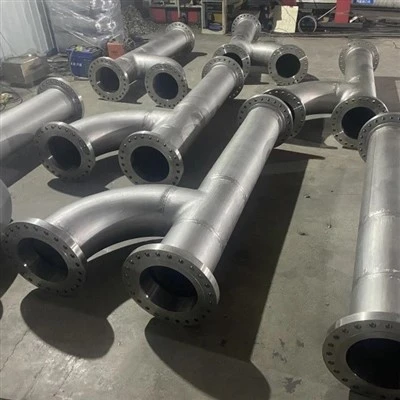
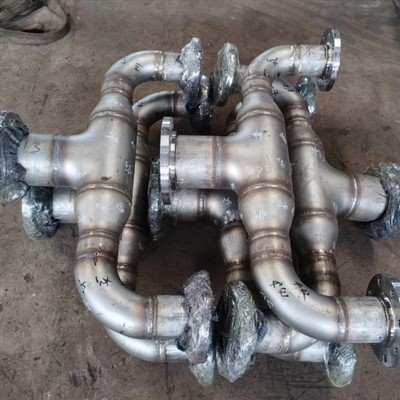
A batch reactor is not one chemical service. It is a sequence of services. Monday may be a reducing hydrochloric acid synthesis, Wednesday an oxidising cleaning cycle, and Friday a chlorinated solvent step in the same vessel. A material that survives the average recipe can still fail on the one upset, the one contaminated feed drum or the one new cleaning agent. This article sets out a practical, comparative method for re-reviewing Hastelloy C276 (UNS N10276 / W.Nr 2.4819) whenever the process chemistry changes. It is written for engineers, management-of-change reviewers and procurement teams, and it uses plain language: a passive film is treated like a thin, self-repairing skin on the metal.

Is Hastelloy C276 a Safe Default for a Multi-Product Batch Reactor?
Yes - C276 is the most defensible single-alloy starting point for a multipurpose batch reactor, because its nickel-chromium-molybdenum-tungsten chemistry covers a wider range of reducing acids, mixed acids and chloride-bearing streams than any stainless steel. It is a baseline, not an exemption: every new campaign still needs a documented chemistry review.
A multi-product reactor has to tolerate uncertainty. You rarely know every future recipe at the design stage, so the alloy must have a broad operating window rather than a narrow optimum. C276 was developed for exactly that problem. Its nominal composition - nickel balance at about 57%, chromium 14.5-16.5%, molybdenum 15.0-17.0%, tungsten 3.0-4.5%, iron 4.0-7.0%, carbon 0.01% maximum and silicon 0.08% maximum - gives it two independent defence mechanisms. Molybdenum and tungsten stabilise the surface film in reducing acids and chloride media. Chromium builds the oxide film that resists oxidising media. Nickel holds the whole structure together and makes chloride stress corrosion cracking unlikely.
The very low carbon and silicon limits matter just as much. They suppress grain-boundary precipitation during welding, which is why a C276 vessel can normally be put into service as-welded without a full post-weld solution anneal. For a reactor with many nozzles, an agitator, baffles and jacket connections, that fabricability is a practical advantage over more sensitive alloys.
Where the answer changes: C276 is not the best alloy for strongly oxidising media, for hot concentrated hydrochloric acid, or for hot concentrated sulfuric acid. A reactor whose campaigns drift in those directions needs an upgrade path, not blind confidence. The comparison sections below show exactly where those boundaries sit.
Table 1. C276 at a glance: the properties a batch-reactor reviewer actually uses
|
Item |
Value |
Why it matters in a changing-chemistry review |
|
Designation |
UNS N10276 / W.Nr 2.4819 / NiMo16Cr15W |
Fixes the MTR and PMI check so substitution is caught |
|
Cr / Mo / W (wt%) |
14.5-16.5 / 15.0-17.0 / 3.0-4.5 |
Cr = oxidising defence; Mo + W = reducing and chloride defence |
|
C / Si (max, wt%) |
0.01 / 0.08 |
Suppresses weld HAZ precipitation; as-welded use is normally acceptable |
|
Tensile / yield (min) |
690 MPa / 283 MPa (100 / 41 ksi) |
Sets Code allowable stress and wall thickness |
|
Elongation (min) |
40% |
Confirms ductility for formed heads and nozzles |
|
Density |
8.89 g/cm3 |
Vessel weight, agitator loads and support design |
|
Thermal conductivity |
9.7 W/m-K |
Jacket heating response; slow compared with carbon steel |
|
CTE / modulus |
11.2 um/m-deg C / 205 GPa |
Thermal cycling and nozzle restraint during campaign changes |
|
ASME VIII-1 ceiling |
677 deg C (1250 deg F) |
The design temperature limit; not the oxidation figure |
|
Weld filler |
ERNiCrMo-4 (AWS A5.14) |
Keeps weld metal corrosion behaviour close to base metal |
Why Does Changing Process Chemistry Matter More Than the Nameplate Reagent?
A corrosion table usually says something like "C276 in 10% HCl". That is one point in a much larger space. Ten percent HCl at 25 deg C under a nitrogen blanket is a mild duty for C276. The same 10% HCl at boiling, open to air and carrying a few hundred ppm of ferric ion is a different chemical environment. The reagent has not changed; the surface chemistry has.
- Concentration changes the activity of the aggressive species and can flip an acid from reducing to oxidising. Dilute sulfuric acid is reducing; concentrated sulfuric acid is oxidising.
- Temperature accelerates reaction kinetics. As a rough screening rule, a 10 deg C rise often doubles a corrosion rate, but the real multiplier must come from test data.
- Oxidising impurities - dissolved oxygen, Fe3+, Cu2+, free chlorine, hypochlorite - disturb the passive film on C276 and can raise rates sharply in HCl.
- Halides (chloride, fluoride) drive localised attack. Chloride concentrates inside crevices; fluoride attacks glass linings and changes phosphoric acid behaviour.
- Agitation, solids and velocity add erosion-corrosion, which is not captured by a static immersion test.
- Cleaning, passivation and sterilisation steps are often more oxidising than the production reaction itself.
What Variables Define the Chemistry Envelope of a Batch Campaign?
Ten variables define the envelope - reagent identity, concentration, temperature, pH, pressure, oxidising or reducing character, halide content, oxidising impurities, mechanical conditions and cleaning steps. Record the worst credible value of each, not the set-point.
A review is only as good as the data sheet behind it. Use the table below as the minimum data collection template in a management-of-change (MOC) file. Anything left blank is an assumption, and assumptions are where unplanned corrosion comes from.
Table 2. Minimum chemistry-envelope data sheet for one campaign
|
Variable |
What to record |
Why it changes the material decision |
|
Reagent / solvent |
Full chemical name, grade, supplier |
Different impurities and inhibitor packages between suppliers |
|
Concentration range |
Start, end and any in-batch dosing peak |
Corrosion rates are non-linear in concentration |
|
Temperature |
Normal, maximum, upset, jacket limit |
Usually the strongest accelerator of attack |
|
pH / acidity |
Measured at temperature if possible |
Controls whether the passive film can reform |
|
Pressure / vacuum |
Absolute pressure, venting, blanketing gas |
Affects dissolved oxygen and boiling point |
|
Redox character |
Reducing, oxidising or mixed |
Decides Cr-rich versus Mo-rich alloy choice |
|
Chloride / fluoride |
ppm, including from wash water and salt feeds |
Drives pitting, crevice attack and SCC risk |
|
Oxidising impurities |
Dissolved O2, Fe3+, Cu2+, Cl2, peroxide |
Can raise HCl corrosion rates sharply |
|
Solids / agitation |
Slurry wt%, tip speed, baffles |
Adds erosion-corrosion and impingement |
|
Cleaning / CIP |
Agent, concentration, temperature, duration |
Often the most oxidising step in the whole cycle |
Note: Practical rule: if the new campaign differs from the approved one in ANY of these ten fields, the material review must be re-opened. A change in feed supplier alone counts, because trace chloride or iron content changes with source.
How Does C276 Compare With C22, B-3, 316L and Alloy 20 Across Changing Chemistries?
C276 offers the broadest single-alloy coverage. C22 wins in oxidising and mixed-acid duty; B-3 wins in pure hot reducing HCl but fails when oxidisers appear; Alloy 20 wins commercially in clean sulfuric acid; 316L wins only in mild, chloride-free duty. For a reactor whose chemistry changes, breadth of coverage is usually worth more than peak performance in one medium.
The comparison is best understood as a trade between chromium and molybdenum. Chromium builds the oxide film that survives oxidising conditions. Molybdenum stabilises the metal surface when the environment is reducing. An alloy cannot maximise both at once, so every grade is a compromise. The table below is a screening comparison, not a substitute for coupon testing.
Table 3. Comparative screening for a multipurpose batch reactor
|
Alloy |
Key chemistry |
Strongest in |
Weakest in |
Fit for changing chemistry |
|
Hastelloy C276 (N10276) |
Ni ~57, Cr 15.5, Mo 16, W 4 |
HCl, mixed acids, wet chlorine, chloride-bearing reducing media |
Hot nitric acid, hypochlorite, hot conc. HCl, hot conc. H2SO4 |
Best broad baseline; 60+ years of field history |
|
Hastelloy C22 (N06022) |
Ni ~56, Cr 21, Mo 13, W 3 |
Oxidising acids, oxidising chlorides, mixed acids, as-welded HAZ |
Strongly reducing hot HCl |
Better if CIP / nitration / oxidisers dominate |
|
Hastelloy B-3 (N10675) |
Ni-Mo, very low Cr |
Pure hot reducing HCl |
Any oxidiser, Fe3+, Cu2+, aeration |
Poor - a single oxidising campaign can be fatal |
|
Alloy 20 (N08020) |
Fe-Ni-Cr-Cu-Mo |
Clean non-aerated H2SO4 at moderate temperature |
Hot HCl, chlorides, high temperature |
Poor - narrow chemistry window, 427 deg C VIII-1 cap |
|
316L (S31603) |
Fe-Cr-Ni-Mo, PREN about 24 |
Mild aqueous, dilute organics, neutral pH |
HCl, hot chlorides, oxidising chloride cleaners |
Only if the envelope stays genuinely mild |
|
Inconel 625 (N06625) |
Ni-Cr-Mo-Nb |
High temperature, fatigue, seawater, phosphoric acid |
Hot HCl and hot H2SO4 |
Niche - chosen for strength, not acid breadth |
|
Glass-lined carbon steel |
Inert glass on steel |
Almost all acids except HF and strong alkali |
Thermal shock, impact, abrasion, HF |
Chemically broad but mechanically fragile |
Note the honest exception. In clean, non-aerated sulfuric acid at about 80 deg C, Alloy 20 can show lower corrosion rates than C276 and costs less - see the JN Alloy sulfuric acid comparison. C276 is not automatically the winner in every acid. What it wins is flexibility: one vessel, many campaigns. Where the plant runs a single fixed recipe, a narrower, cheaper alloy may be the better commercial decision.
For a deeper side-by-side of the two Ni-Cr-Mo grades, use the site's C276 vs C22 equipment guide and its oxidising-versus-acid comparison. Both agree on the same boundary: more chromium for oxidising, more molybdenum for reducing.
Which Single Change in a Recipe Is Most Likely to Break a C276 Reactor?
The most dangerous change is a shift from reducing to oxidising conditions - a new nitric or hypochlorite step, ferric or cupric contamination, or simple aeration of an HCl batch. The second most dangerous is raising temperature on hot concentrated HCl. Both changes attack C276 where its chromium content is lowest.

C276 has roughly 15 percent chromium against C22's roughly 21 percent. Under strongly oxidising conditions the protective film is chromium oxide, so the lower-chromium alloy has a thinner margin. This is why the pharmaceutical reactor comparison favours C22 when nitric passivation, hypochlorite and peracetic acid are part of the routine cycle.
The second boundary is thermal. C276 handles all HCl concentrations at ambient temperature and dilute HCl up to boiling; published laboratory data put the rate near 0.08 mm/yr in boiling 10% HCl and about 0.15 mm/yr in 37% HCl at 60 deg C. Above roughly 80 deg C and 20% HCl, the margin narrows quickly. Tantalum is the only reliable step up. A new campaign that adds a hot concentrated HCl stripping step belongs in a different material, not in a revised operating procedure.
Table 4. Change-event risk ranking for an existing C276 reactor
|
Change event |
Mechanism |
Risk level |
Action before approval |
|
New nitric acid or hypochlorite step |
Oxidising attack, chromium-limited |
High |
Coupon test; evaluate C22 or lining |
|
Ferric / cupric salt catalyst introduced |
Oxidising ions disrupt passive film |
High |
Measure redox potential; coupon test |
|
Loss of nitrogen blanketing on HCl |
Dissolved oxygen raises rate |
High |
Restore inerting; re-measure corrosion |
|
Temperature increase above approved band |
Kinetic acceleration of all mechanisms |
High |
Recheck isocorrosion data and Code stress |
|
Hot concentrated HCl stripping step |
Beyond C276 practical HCl envelope |
Very high |
Upgrade material or change process |
|
Chloride rising in wash water or feed |
Pitting and crevice attack |
Medium-high |
Test CPT / CCT; review crevices |
|
New fluoride-containing catalyst |
Complexing, glass-lining attack |
Medium-high |
Coupon test in real liquor |
|
New CIP detergent or sanitant |
Oxidising cleaning chemistry |
Medium |
Include CIP step in coupon exposure |
|
Agitator speed or solids loading increase |
Erosion-corrosion |
Medium |
Check velocity limits and impingement zones |
|
Longer batch hold time |
Longer exposure; stagnant zones |
Low-medium |
Recalculate cumulative wall loss |
How Do Reducing Acids and Oxidising Acids Pull the Material Choice in Opposite Directions?
They reward opposite alloying elements. Reducing acids attack the passive film, so molybdenum-rich C276 wins; oxidising acids help rebuild a chromium-oxide film, so chromium-rich C22 wins. A reactor that alternates between the two has no single perfect alloy - it needs the broader one, plus testing at the oxidising boundary.
Think of the passive film as a self-repairing skin. In an oxidising liquid, oxygen is available and the skin heals quickly; chromium is the ingredient that makes the healing fast and durable. In a reducing liquid, oxygen is scarce, the skin cannot repair itself, and the metal needs molybdenum to slow down direct dissolution. That is the entire logic behind the Ni-Cr-Mo alloy family.
Sulfuric acid is the awkward case because it changes character with concentration. Dilute H2SO4 behaves as a reducing acid; concentrated H2SO4 behaves as an oxidising acid, with a crossover commonly placed in the 60-70% region. Published data for C276 give roughly 0.20 mm/yr in boiling 50% H2SO4 and about 0.50 mm/yr in 98% acid at 70 deg C - the latter is marginal rather than comfortable. A campaign that starts dilute and ends concentrated crosses that boundary inside one batch.
Table 5. Reducing versus oxidising: which element protects, and which alloy to shortlist
|
Chemistry type |
Typical media |
Protective element |
C276 (Mo-rich) |
C22 (Cr-rich) |
Screening choice |
|
Strongly reducing |
HCl, dilute H2SO4, wet HCl gas |
Mo + W |
Excellent |
Good |
C276 |
|
Mixed reducing / oxidising |
H2SO4 + HCl, impure H3PO4 |
Both |
Very good |
Excellent |
C22 unless HCl dominates |
|
Oxidising acid |
HNO3, chromic acid |
Cr |
Limited |
Excellent |
C22 |
|
Oxidising chlorides |
NaOCl, ClO2, FeCl3, CuCl2 |
Cr |
Limited |
Excellent |
C22 |
|
Wet chlorine / hypochlorite |
Chlor-alkali, bleach |
Cr |
Good |
Excellent |
C22 |
|
Concentrated H2SO4 (hot) |
98% acid, elevated temperature |
Cr + special |
Marginal |
Marginal |
Qualify by test; consider Alloy 20 / G30 |
Note: Published CPT, CCT and PREN values are screening indices, not material constants. They vary with test method, surface finish, heat and exposure time. Use them to rank candidates, then confirm the winner with a coupon in the real process liquor.
What Happens When Chlorides or Fluorides Appear in a Campaign That Was Specified for Clean Acid?
Halides change the failure mode from uniform thinning to localised pitting and crevice attack, which is far harder to detect and can penetrate a wall in months. Even a few hundred ppm of chloride in a wash-water change is enough to justify a new review; fluoride additionally rules out glass linings.

Uniform corrosion is predictable: you measure a rate in mm/yr, subtract it from the wall thickness and set an inspection interval. Localised corrosion is not predictable that way. A pit is a tiny anode surrounded by a large cathode, so the attack concentrates in one spot. A vessel can lose less than 0.05 mm on average and still leak at a gasket face.
C276 is genuinely strong here. Its molybdenum and tungsten content and high nickel base give excellent resistance to pitting, crevice corrosion and chloride stress corrosion cracking - see the C276 SCC review and the crevice corrosion note on this site. But "excellent" is not "immune". Chloride concentration inside a crevice can rise far above the bulk value as water evaporates and the local solution acidifies, so the local critical crevice temperature is always lower than the bulk figure suggests.
Fluoride is a separate case. In wet-process phosphoric acid, fluoride and chloride contaminants are why a nominally "pure acid" table can mislead. Fluoride also attacks silica-based glass linings, so a campaign change that introduces HF or fluoride salts may force a change of lining strategy rather than a change of alloy.
Table 6. Halide-driven review triggers
|
Trigger |
Typical source in a batch plant |
Failure mode on C276 |
Review action |
|
Chloride above approved limit |
Wash water, salt feeds, brines, HCl carryover |
Pitting, crevice corrosion |
Recheck CPT / CCT; inspect gasket grooves |
|
Oxidising chloride |
NaOCl, ClO2, FeCl3, CuCl2 |
High-rate localised attack |
Strong candidate for C22 upgrade |
|
Fluoride / HF |
Catalysts, wet-process acid, etchants |
Complexing; glass-lining destruction |
Coupon test; exclude glass lining |
|
Chloride + high temperature |
Hot concentrated brine campaigns |
Crevice attack at lower bulk temperature |
Lower allowable operating temperature |
|
Stagnant dead leg |
Sample lines, bottom drains, baffle gaps |
Differential aeration cell |
Redesign for drainability |
Do Aeration, Ferric Ions and Dissolved Oxygen Change the Corrosion Rate?
Yes, often dramatically. Dissolved oxygen and oxidising metal ions such as Fe3+ and Cu2+ raise C276 corrosion rates in HCl by disturbing the passive film without rebuilding it. Nitrogen blanketing lowers them. Any corrosion test that does not state aeration is not comparable to plant reality.
This is the most under-recorded variable in batch plants. A vessel specified on the basis of de-aerated laboratory HCl data can be operated with an open manway, a vented condenser or an air-driven pump, and the measured rate then changes for reasons nobody linked to a material decision. In reducing acids, a little oxidiser is worse than none at all: it is enough to break down the protective surface but not enough to passivate it.
The practical controls are simple and should appear in the MOC file: keep the nitrogen blanket where the original data assumed it; record dissolved oxygen or redox potential during the qualification test; avoid ferric and cupric salt catalysts in HCl campaigns; and treat any new oxidising additive as a full chemistry change. Where aeration cannot be controlled, choose the alloy with the wider margin rather than the one with the best published number.
Table 7. Same acid, different redox conditions - qualitative effect on C276
|
Condition |
Passive film behaviour |
Expected rate trend |
Control measure |
|
De-aerated HCl, nitrogen blanket |
Film dissolution slow and stable |
Lowest |
Maintain blanket; monitor O2 |
|
Air-saturated HCl |
Film disturbed, repair incomplete |
Higher |
Avoid open venting; re-test |
|
HCl + ferric ions |
Oxidising ion accelerates dissolution |
Much higher |
Exclude Fe3+ catalysts |
|
HCl + cupric ions |
Same mechanism as Fe3+ |
Much higher |
Exclude Cu2+ salts |
|
HCl + free chlorine / hypochlorite |
Strongly oxidising |
Highest; C22 territory |
Change alloy or eliminate step |
How Much Does Temperature Change the Corrosion Risk?
Temperature is usually the strongest accelerator, and C276 has three different published temperature ceilings that must never be mixed up. The ASME Section VIII Division 1 design ceiling is 677 deg C (1250 deg F); about 1040 deg C (1900 deg F) is oxidation resistance in air, not a strength limit; and NACE MR0175 / ISO 15156-3 caps sour-service listing at 232 deg C (450 deg F).
Corrosion is a chemical reaction, and reaction rates climb steeply with temperature. A widely used screening heuristic is that a 10 deg C rise roughly doubles a rate, but the multiplier must come from isocorrosion data or a coupon test for the actual liquor. Temperature also reduces allowable stress, so a hotter campaign affects both corrosion life and the pressure boundary calculation.
The three-number confusion is worth stating plainly, because it is a common specification error. The 1040 deg C figure describes how long the alloy resists scaling in air; it says nothing about load-carrying capacity. The 677 deg C figure is the Code design ceiling for UNS N10276 in Section VIII Division 1. The 232 deg C figure comes from the NACE sour-service listing for H2S environments. A 90 deg C batch reactor is far below all three, but the moment someone writes "rated to 1900 deg F" into a vessel data sheet, the design basis is wrong.
There is also a metallurgical window to avoid during fabrication and repair: mu phase and carbides can precipitate in roughly the 600-1150 deg C range. That is why a full solution anneal at 1120-1175 deg C is followed by a rapid water quench rather than a slow air cool. Air cooling through the precipitation band can quietly reduce corrosion resistance even when the hardness looks normal.
Table 8. Which temperature number applies to which question
|
Question |
Correct number |
Source / meaning |
Wrong number to avoid |
|
What is the Code design ceiling? |
677 deg C (1250 deg F) |
ASME VIII Div. 1 allowable-stress listing |
1040 deg C |
|
How hot before it scales in air? |
About 1040 deg C (1900 deg F) |
Oxidation resistance only |
Using it for strength |
|
Limit in H2S sour service? |
232 deg C (450 deg F) |
NACE MR0175 / ISO 15156-3 Table A.26 |
677 deg C |
|
Solution anneal range? |
1120-1175 deg C + water quench |
Dissolves precipitates, restores resistance |
Slow air cooling |
|
Precipitation danger band? |
Roughly 600-1150 deg C |
Mu phase and carbides |
Long holds in this band |
Can Cleaning-in-Place (CIP) and Passivation Chemistry Damage C276?
Yes - oxidising cleaning and sanitising agents are the chemistries where C276 is weakest relative to higher-chromium alloys. Nitric acid passivation, sodium hypochlorite, chlorine dioxide and peracetic acid must be included in the review with the same weight as the production reaction, and sometimes with more.
Production chemists naturally focus on the product recipe. Corrosion engineers focus on the whole duty cycle. A reactor may spend 8 hours in a mild reducing synthesis and 2 hours at 80 deg C in an oxidising chlorinated cleaner. The cleaner can dominate total wall loss and is usually the step that initiates pitting at gasket faces.
- Nitric acid passivation at 20-50% is strongly oxidising and is standard after fabrication and major repairs.
- Sodium hypochlorite and chlorine dioxide are oxidising chloride sources; both attack marginal passive films.
- Peracetic acid and peroxide sterilants are oxidising and can raise redox potential well above the production step.
- Hot alkali caustic washes introduce their own stress-related concerns and must be listed separately.
- Rinse water quality matters: chloride left behind after an oxidising cleaner concentrates as the vessel dries.
If oxidising CIP is routine, C22 in pharmaceutical reactors is the natural comparison and often the better specification. If production is dominated by reducing acid and the oxidising step is rare, short and cool, C276 remains defensible - but the CIP conditions should be written into the coupon test rather than assumed harmless.
Are Gaskets, Nozzles, Agitators and Dead Legs the Weakest Points When Chemistry Changes?
Very often, yes. The shell plate passes the chemistry screen while a gasket groove, a thermowell, an agitator seal or a bottom drain fails. A review that only checks the vessel alloy is incomplete; it must check the whole wetted assembly and its drainability.
Local chemistry inside a narrow gap is different from the bulk. Oxygen is consumed, metal ions accumulate, pH falls and chloride concentrates. That is crevice corrosion, and it starts at a lower temperature than bulk pitting. Flange faces, gasket grooves, lap joints, threaded connections, sample lines and the underside of baffles are the classic initiation sites.
Agitators add a second mechanism: high local velocity and impingement. Slurries and crystals remove the passive film mechanically, so erosion-corrosion can outrun uniform corrosion even when the alloy is well chosen. The fix is often geometric - larger radii, smoother finish, no stagnant pockets - rather than a more expensive alloy.
Table 9. Wetted-component checklist for a chemistry-change review
|
Component |
Typical weak point |
What to verify |
|
Shell and heads |
Uniform thinning |
Corrosion allowance, UT grid baseline |
|
Weld seams and HAZ |
Preferential attack |
Filler, as-welded condition, NDT records |
|
Flange faces / gaskets |
Crevice corrosion |
Gasket material, surface finish, bolt load |
|
Nozzles and thermowells |
Stagnant pockets |
Drainability, flush-mounted design |
|
Agitator and baffles |
Erosion-corrosion, impingement |
Tip speed, solids, clearances |
|
Bottom drain / sample line |
Dead leg, residual chemistry |
Flush and drain procedure between campaigns |
|
Jacket and coils |
Different fluid on the other side |
Leak path cross-contamination scenario |
|
Instrument seals |
Small crevice + different alloy |
Galvanic compatibility |
Do Welds and Heat-Affected Zones Need a Different Review Than the Base Metal?
Yes. Confirm the filler is ERNiCrMo-4, confirm the joint will be used as-welded, and include weld metal in the coupon test. C276's low carbon and silicon make this simpler than for most alloys, but a weld is still a separate material with its own microstructure.
Rationale: Welding briefly heats the metal next to the bead into the precipitation range. In many alloys that depletes chromium at grain boundaries and creates a narrow band that corrodes first. C276 was developed specifically to resist this: carbon 0.01% maximum and silicon 0.08% maximum suppress grain-boundary precipitation, so post-weld heat treatment is generally not required. That is a major reason it is practical for large vessels with dozens of nozzles.
The matching filler is AWS A5.14 / ASME SFA-5.14 ERNiCrMo-4; see the C276 filler metal note. Do not substitute the C22 filler ERNiCrMo-10 unless the procedure is deliberately qualified under ASME Section IX. Also check that the weld map, WPS/PQR, and any repair welds are in the documentation package - a repair made years later with the wrong filler is a classic source of an unexpected leak after a chemistry change. The B-3 reactor fabrication guide shows how much more restrictive a less weldable alloy can be.
When Should C276 Be Upgraded to C22, C2000 or Tantalum?
Upgrade when the worst-case envelope, not the average recipe, crosses a known boundary: oxidising media calls for C22 or C2000; hot concentrated HCl calls for tantalum; and hot concentrated sulfuric acid calls for a dedicated acid alloy or a lining. The upgrade decision should be tied to a written trigger, not to a general feeling that a "better" alloy is safer.

Upgrading has a cost and a lead time, so the decision should be discriminating. C22 brings 20.0-22.5 percent chromium and a wider as-welded safety margin in oxidising chlorides. C2000 adds copper and is positioned as a broadly universal corrosion alloy. G30 is aimed at phosphoric and nitric acid service. Tantalum is effectively inert to hot concentrated HCl but is expensive, is normally used as a lining or a clad layer, and is attacked by HF and strong alkali.
Table 10. Upgrade matrix by campaign-change trigger
|
Observed trigger |
C276 margin |
Candidate upgrade |
Caveat |
|
New nitric / hypochlorite / FeCl3 step |
Low |
C22 |
Loses some hot-HCl advantage |
|
Oxidising plus reducing mixed acids |
Moderate |
C22 or C2000 |
Verify by coupon in real liquor |
|
HCl above about 80 deg C and 20% |
Very low |
Tantalum lining or cladding |
Not for HF or strong alkali |
|
Hot concentrated H2SO4 |
Marginal |
Alloy 20 / G30 |
Confirm concentration and temperature |
|
Fluoride-rich phosphoric acid |
Moderate |
Qualify by test; consider G30 |
Glass lining excluded |
|
Frequent thermal shock |
Good |
Solid C276 over glass lining |
Check CTE and nozzle restraint |
When Is a Cheaper Alloy (316L, Alloy 20, B-3) Actually the Better Choice?
When the plant runs one fixed, well-characterised recipe and the envelope stays inside that alloy's narrow window. C276 buys flexibility; if flexibility has no value, the premium is not justified. This is the counter-intuitive finding that a credible comparison must state openly.
316L is the least expensive option and is entirely adequate for mild aqueous, neutral or dilute organic campaigns with negligible chloride. Alloy 20 is the classic sulfuric-acid alloy: in clean, non-aerated H2SO4 at moderate temperature it can outperform C276 on rate and on price, though it is capped at 427 deg C (800 deg F) in ASME Section VIII Division 1, at 343 deg C (650 deg F) in Section XII, and is not permitted in Section I. B-3 is optimised for pure hot reducing HCl and can beat C276 there, but its very low chromium content makes it vulnerable the moment an oxidiser appears.
The reason C276 still wins the multipurpose case is that none of those alloys tolerates a change of character. A plant that may produce five different products over ten years is buying an option on unknown future chemistries. If that option has no value - a dedicated single-product line - a narrower alloy is the more honest engineering and commercial answer. The C276 price-factor overview and the Alloy 31 comparison help frame the economics.
How Does Lining (Glass-Lined or PTFE) Compare With Solid C276 for Campaign Flexibility?
Linings offer outstanding chemical breadth but poor mechanical and thermal flexibility; solid C276 offers slightly narrower chemical breadth but tolerates agitation, thermal cycling, nozzles and repairs. For a reactor whose campaigns AND mechanical duty change often, solid C276 is usually the lower-risk choice.
Glass lining resists nearly all acids except HF and strong alkali, and PTFE resists most aggressive media with very low contamination risk. Both are attractive on paper for a multi-product plant. Their weakness is physical: glass chips under impact and thermal shock; PTFE creeps, permeates and is limited by temperature and vacuum. Both are difficult to repair in place, and a single hidden defect exposes the underlying carbon steel to the full acid.
Solid C276 has no coating to damage. It accepts welded nozzles, agitator modifications and jacket changes; it survives thermal cycling; it can be inspected by UT and PMI; and it can be repaired by qualified welding. That is why it is common in harsh, mechanically active services such as FGD absorber internals, where slurry abrasion and acidic condensate arrive together.
Table 11. Solid C276 versus lined carbon steel in batch service
|
Criterion |
Solid C276 |
Glass-lined steel |
PTFE-lined steel |
|
Chemical breadth |
Very wide, weakest in oxidisers |
Widest except HF / alkali |
Very wide |
|
Thermal shock |
Good |
Poor |
Limited by liner |
|
Abrasion / slurry / agitation |
Good |
Poor |
Poor |
|
Vacuum service |
Good |
Good |
Limited |
|
Field repair |
Qualified welding |
Difficult, specialist |
Liner replacement |
|
Inspection |
UT, PMI, coupons |
Spark test, visual |
Visual, leak detection |
|
Hidden-defect consequence |
Gradual thinning |
Rapid shell attack |
Rapid shell attack |
|
Typical choice |
Multipurpose, hot, agitated |
Clean, mild, low-impact |
Corrosive, cool, low-pressure |
How Do You Run a Formal Process-Chemistry Change Review?
A defensible review is a ten-step loop: list every campaign, classify redox character, record impurities, build a worst-case envelope, screen it against known alloy limits, check welds, check crevices, run representative testing, set inspection intervals, and document the decision with an automatic re-trigger on any future change.
The value of a checklist is that it turns an opinion into a record. When a recipe changes two years later, the MOC reviewer should be able to see exactly which assumptions were made and which tests supported them. The ten steps below are written so that each produces one artefact that can be filed.
- List every campaign and its full chemistry. Write down each product recipe, cleaning cycle, passivation step and start-up/shut-down condition. Include the reagent, concentration range, temperature range, pH, pressure, agitation speed, batch duration and any added salts or catalysts.
- Mark the oxidising / reducing character of each stream. Label each step reducing, oxidising or mixed. Chromium protects against oxidising media; molybdenum protects against reducing media. This single label predicts most alloy comparisons.
- Record the impurities, not just the pure reagent. Note chloride, fluoride, ferric and cupric ions, dissolved oxygen, free chlorine, sulphur species and solvent residues. Trace contaminants frequently control corrosion in real plants.
- Build a worst-case envelope table. For each variable take the most aggressive value that can plausibly occur, including an upset or a mis-charged batch. Use that envelope, not the nominal set-point.
- Screen the envelope against the alloy's known limits. Compare the envelope with published isocorrosion data for C276 and with the known gaps: oxidising acids, aerated HCl, hot concentrated HCl and hot concentrated H2SO4.
- Check welds, HAZ, filler and heat treatment separately. Confirm ERNiCrMo-4 filler, weld maps, and as-welded condition. A weld can be the weakest point even when the base plate passes the chemistry screen.
- Check crevices, gaskets, nozzles and dead legs. Flange faces, gasket grooves, agitator seals and sample points create stagnant zones where local chemistry is far more aggressive than the bulk.
- Run representative corrosion testing. Expose coupons of the actual heat and weld metal to the real campaign liquor at worst-case temperature; use ASTM G31 immersion practice and ASTM G48 where localised attack is the concern.
- Set inspection and monitoring intervals. Fix baseline UT thickness grids, corrosion coupons or probes, and a maximum acceptable corrosion rate. Shorten the interval after any approved chemistry change.
- Document, approve and re-trigger on change. Record the decision, MTR/PMI traceability, test results and approval signatures in the MOC file. Make any future recipe or supplier change automatically re-open step 1.
Table 12. Review artefacts produced by each step
|
Step |
Artefact to file |
Owner |
|
1-3 Campaign, redox and impurity data |
Signed chemistry envelope sheet |
Process chemistry |
|
4 Worst-case envelope |
Envelope table with upset scenarios |
Process / MOC |
|
5 Alloy screening |
Written alloy comparison and shortlist |
Materials engineer |
|
6-7 Weld and crevice review |
Weld map, filler record, component checklist |
Fabrication / inspection |
|
8 Corrosion testing |
Coupon report with exposure conditions |
Corrosion lab |
|
9 Inspection plan |
UT grid, coupon locations, interval, acceptance rate |
Inspection |
|
10 Approval and re-trigger |
Signed MOC decision and change trigger list |
MOC board |
Which Tests Give Defensible Evidence Before You Approve a New Campaign?
A coupon test in the real process liquor at worst-case temperature, using the actual heat and weld metal, is the single most defensible evidence. Add ASTM G48-type testing when localised attack is the concern, and always state aeration, impurity levels and exposure time.
Published corrosion tables are screening data generated in clean reagent-grade solutions. Real batch liquors contain catalyst residues, solvent traces, dissolved oxygen and solids. The only way to close that gap is to expose a weighed sample of the actual material to the actual liquor. ASTM G31 gives the immersion-corrosion practice; ASTM G48 covers pitting and crevice resistance in ferric chloride. Electrochemical methods can add speed, but weight-loss coupons remain the reference that an inspector can audit.
- Test base metal AND weld metal AND HAZ, because the review covers the whole joint.
- Test at the maximum credible temperature, not the normal set-point.
- Include the cleaning / CIP chemistry as a separate exposure, not just the production liquor.
- State aeration: nitrogen blanket, air-saturated, or with measured Fe3+ / Cu2+ addition.
- Run long enough to detect localised attack, not just uniform weight loss; examine coupons under magnification afterwards.
- Keep the report with the MTR and heat number so the result is traceable to the installed vessel.
A common mistake is to accept a supplier's generic "excellent resistance" statement as qualification. That statement describes a class of alloys, not the heat in your vessel under your chemistry. JN Alloy lists spectrum analysis, PMI, radiography, hydrostatic testing and metallographic examination among its in-house testing capability; ask for the actual records rather than the capability list.
What Documentation and Traceability Should a C276 Reactor Carry?
At minimum, an EN 10204 3.1 mill test report per heat, PMI results on every wetted component, a weld map with WPS/PQR and filler lot, NDT and hydrostatic test records, and the chemistry-review file. Without these, a later failure cannot be investigated.
Rationale: Traceability is what turns a material claim into an auditable fact. It also protects the plant when a chemistry change is proposed years after construction: the reviewer needs to know whether the shell is C276 plate to ASTM B575, whether the nozzles are B366 fittings, and whether the flanges are B564 forgings. Mixed product forms from different heats are normal; unrecorded substitutions are not.
Table 13. Product form to specification map for UNS N10276
|
Reactor part |
ASTM specification |
ASME equivalent |
Document to request |
|
Shell, heads, plate |
B575 |
SB-575 |
3.1 MTR, heat number, UT report |
|
Seamless pipe / tube |
B622 |
SB-622 |
3.1 MTR, hydro or NDE record |
|
Welded pipe |
B619 |
SB-619 |
Weld procedure, NDE record |
|
Welded tube |
B626 |
SB-626 |
3.1 MTR, bead condition |
|
Bar, shaft, agitator stock |
B574 |
SB-574 |
3.1 MTR |
|
Wrought fittings, elbows, tees |
B366 |
SB-366 |
3.1 MTR, PMI |
|
Flanges, forgings, nozzle blocks |
B564 |
SB-564 |
3.1 MTR, PMI |
|
All welded joints |
ASME Section IX |
WPS / PQR |
ERNiCrMo-4 filler lot record |
For the pressure boundary, also file the ASME Section VIII Division 1 calculation and the B31.3 process piping basis, plus the reactor vessel shell fabrication and inspection package. JN Alloy supplies C276 in plate, pipe, fittings, flanges, forgings and prefabricated assemblies, which makes a single-source documentation package possible.
How Should Inspection Intervals Change After a Chemistry Change?
Shorten the first interval immediately after any approved change, then extend it only when measured rates are stable and low. Set the interval from a measured corrosion rate and the minimum required wall, never from the calendar alone.

The old interval was justified by the old chemistry. Once the envelope changes, that justification is gone. A practical approach is to install coupons or electrical-resistance probes, take a baseline UT thickness grid at fixed, marked locations, and re-measure after one campaign or three to six months. If the measured rate is low and uniform and no localised attack is found, extend the interval with a documented calculation. If pitting is found, do not average it into a rate - treat it as a defect and assess the component.
API 510 provides the in-service inspection, rerating and repair framework for pressure vessels. Whatever interval is chosen, the chemistry-change trigger should be written into the inspection plan so that the next recipe change automatically produces a review rather than relying on someone remembering.
Table 14. Inspection response to chemistry-change outcomes
|
Measured outcome |
Interpretation |
Interval decision |
Additional action |
|
Uniform rate within allowance |
Chemistry behaves as predicted |
Return to normal interval |
File result, keep coupons |
|
Rate higher than predicted but uniform |
Accelerated general attack |
Shorten interval; recompute remaining life |
Re-run coupon at worst case |
|
Pitting or crevice attack |
Localised mechanism active |
Do NOT extend; inspect all crevices |
NDE, gasket and drain redesign |
|
Weld / HAZ preferential attack |
Filler or heat-treatment issue |
Immediate engineering review |
Check filler lot and WPS |
|
Discoloured or roughened surface |
Film instability, early warning |
Shorten interval |
Check oxidiser ingress |
What Are the Cost and Lead-Time Consequences of Choosing C276?
C276 costs several times more than 316L per kilogram and more again as fabricated plate, fittings and prefabricated spools; the business case is total cost over the reactor life, not purchase price. Its value is that a single vessel can accept many future campaigns without revalidation or re-materialling.
Rationale: For a multipurpose reactor, the largest costs are usually not the metal. They are unplanned downtime, campaign restrictions, product contamination, revalidation and the engineering work needed to re-qualify a vessel when a new product is introduced. A material with a broad chemistry window removes those costs from the business case. That is why a C276 vessel can be cheaper over 15-20 years than a 316L vessel that has to be replaced or restricted twice.
The premium is still real. Nickel, molybdenum and tungsten content drive the raw material price; complex heads, thick plate, welded nozzles and NDE drive fabrication; and nickel-alloy lead times are longer than stainless. The 2026 C276 price-factor overview explains the market drivers, and the Hastelloy pipe range shows which product forms are stocked. Where only the wetted surface needs the alloy, C276 cladding or a lining on carbon steel can cut cost while preserving much of the chemical resistance.
Table 15. Cost structure of a C276 batch reactor (qualitative)
|
Cost element |
Compared with 316L |
Why |
Ways to control |
|
Raw plate / pipe |
Several times higher |
Ni, Mo, W content |
Clad construction, accurate wall sizing |
|
Fittings and flanges |
Higher |
B366 / B564 forging route |
Standardise nozzle schedule |
|
Fabrication and welding |
Higher |
Qualified WPS, NDE, PMI |
Shop prefabrication, fewer field welds |
|
Lead time |
Longer |
Nickel-alloy mill schedules |
Early MTR and order release |
|
Inspection and revalidation |
Often lower over life |
Fewer chemistry restrictions |
Coupon programme, documented MOC |
|
Downtime risk |
Lower |
Broader chemistry window |
Worst-case envelope review |
What Are the Most Common Mistakes in Batch-Reactor Material Reviews?
The five recurring mistakes are reviewing only the nameplate reagent, ignoring cleaning chemistry, treating published corrosion rates as design allowables, forgetting crevices and welds, and quoting the wrong temperature ceiling. All five are avoidable with the checklist in this article.
Rationale: Each mistake has the same root cause - someone replaced a system question with a single data point. The table below pairs each mistake with the correction, so it can be used directly in an MOC review meeting.
Table 16. Review mistakes and their corrections
|
Mistake |
Why it fails |
Correction |
|
Approve against the pure reagent only |
Impurities and cleaning steps dominate real rates |
Use the full ten-variable envelope |
|
Ignore CIP and passivation |
Oxidising cleaners are C276's weakest duty |
Include cleaning liquor in coupon test |
|
Quote 1040 deg C as a design limit |
It is oxidation resistance, not Code strength |
Use 677 deg C ASME VIII-1; confirm in Section II-D |
|
Trust PREN / CPT as field performance |
Test-method-dependent screening indices |
Rank with them, decide with coupons |
|
Review the shell but not the gaskets |
Crevice chemistry is more aggressive than bulk |
Component-by-component checklist |
|
Use average temperature, not peak |
Rates rise steeply with temperature |
Use worst credible temperature |
|
Skip PMI on fittings and flanges |
Mixed grades enter through small components |
PMI every wetted component |
|
Assume aerate/de-aerate does not matter |
Dissolved O2 changes HCl rates sharply |
State aeration in data sheet and tests |
Which ASTM and ASME Standards Apply to Each Part of a C276 Reactor?
ASTM B575 / B622 / B619 / B626 / B574 / B366 / B564 define the product forms; ASME Section VIII Division 1 governs the vessel, ASME B31.3 the process piping, ASME Section IX the welding qualification, and API 510 the in-service inspection. NACE MR0175 / ISO 15156-3 applies only if H2S is present.
Rationale: Standards are not decoration - each one answers a different question. Product specifications define what you buy. Construction codes define how you calculate wall thickness and pressure. Welding qualifications define who may join it. Inspection codes define when you look again. Confusing them is how a vessel ends up with correct plate and an incorrect pressure rating.
Table 17. Standards map by question
|
Question |
Standard |
Applies to |
|
What is the plate made to? |
ASTM B575 / ASME SB-575 |
Shell, heads, baffles |
|
What is the pipe made to? |
ASTM B622 / B619 / B626 |
Nozzles, coils, transfer lines |
|
What are fittings and flanges? |
ASTM B366 / B564 |
Elbows, tees, flange forgings |
|
How is the vessel rated? |
ASME BPVC Section VIII Div. 1 |
Pressure boundary design |
|
How is piping rated? |
ASME B31.3 |
Process piping |
|
How is welding qualified? |
ASME Section IX + AWS A5.14 |
WPS / PQR, ERNiCrMo-4 filler |
|
How is corrosion tested? |
ASTM G31 / ASTM G48 |
Coupon immersion, pitting / crevice |
|
How is it inspected in service? |
API 510 |
UT grids, intervals, rerating |
|
Is H2S present? |
NACE MR0175 / ISO 15156-3 |
Sour-service hardness and cold-work limits |
|
Is it sanitary service? |
ASME BPE |
Surface finish, CIP / SIP design |
Frequently Asked Questions
Q1. Is Hastelloy C276 a good default material for a multipurpose batch reactor?
A: Yes, as a starting baseline. Its Ni-Cr-Mo-W chemistry covers a wider range of reducing acids, mixed acids and chloride-bearing streams than any stainless steel. It is not chemistry-independent: oxidising media, hot concentrated hydrochloric acid and hot concentrated sulfuric acid still require an upgrade or a different alloy. Every new campaign should be re-screened.
Q2. What is the single most important variable to review when process chemistry changes?
A: The oxidising or reducing character of the liquid, together with temperature. C276 is rich in molybdenum, which excels in reducing acids; alloys with more chromium, such as C22, are stronger in oxidising media. A change from a reducing recipe to an oxidising cleaning or nitration step is the most common reason to re-open the material review.
Q3. Can C276 handle hydrochloric acid in a batch reactor?
A: It is the standard nickel-alloy choice for HCl, covering all concentrations at ambient temperature and dilute acid up to boiling, where published laboratory rates are around 0.08 mm/yr in boiling 10% HCl and about 0.15 mm/yr in 37% HCl at 60 deg C. Hot concentrated HCl above roughly 80 deg C and 20% approaches the practical limit; tantalum is the usual next step.
Q4. Does aeration or dissolved oxygen make HCl more aggressive to C276?
A: Yes. Dissolved oxygen and oxidising metal ions such as ferric (Fe3+) and cupric (Cu2+) disturb the passive surface without repassivating it, so corrosion rates rise sharply. Nitrogen blanketing lowers them. Always state aeration in the corrosion test specification.
Q5. What is the maximum temperature for a C276 reactor?
A: For a code-stamped pressure vessel, the ASME Section VIII Division 1 allowable-stress listing for UNS N10276 extends to 677 deg C (1250 deg F), and that is the design ceiling to confirm against Section II Part D. About 1040 deg C (1900 deg F) is an oxidation-resistance figure for air exposure, not a strength limit. NACE MR0175 / ISO 15156-3 sour-service listings cap C276 at 232 deg C (450 deg F). These are three different numbers.
Q6. Should I choose C22 instead of C276 for a batch reactor?
A: Choose C22 when the campaign envelope is dominated by oxidising media: nitric acid, hypochlorite or chlorine dioxide sanitisation, ferric or cupric chloride, wet chlorine, or mixed oxidising acids. Choose C276 for strongly reducing duty, especially HCl. See the C276 vs C22 comparison on the JN Alloy site for a full side-by-side table.
Q7. Is 316L stainless steel ever acceptable for a multi-product reactor?
A: Yes, for mild aqueous, dilute organic acid or neutral campaigns with negligible chloride and no HCl. It is not suitable for hydrochloric acid at meaningful concentration, hot chlorides or oxidising chloride cleaners. Its low cost makes it the right answer where the chemistry envelope stays genuinely mild.
Q8. Where does Alloy 20 beat C276?
A: In clean, non-aerated sulfuric acid at moderate temperature, Alloy 20 can be the more economical choice and can show lower corrosion rates than C276. It is capped at 427 deg C (800 deg F) in ASME Section VIII Division 1 and is not permitted in Section I. It does not tolerate hot HCl, so it is a poor fit for flexible multi-acid reactors.
Q9. What about Hastelloy B-3 for hydrochloric acid campaigns?
A: B-3 is a Ni-Mo alloy optimised for reducing HCl and can outperform C276 in pure hot HCl. It has very little chromium, so it loses resistance quickly when oxidisers, ferric ions or aeration appear. That makes it a poor fit for a reactor whose chemistry changes between campaigns.
Q10. Do I need post-weld heat treatment for a C276 reactor?
A: Generally no. C276 was developed with very low carbon (0.01% max) and silicon (0.08% max) to resist grain-boundary precipitation in the weld heat-affected zone, so vessels are normally used as-welded. Where a full solution anneal is required, the typical cycle is 1120-1175 deg C followed by rapid water quenching.
Q11. Which filler metal should be specified for C276 welds?
A: AWS A5.14 / ASME SFA-5.14 ERNiCrMo-4 is the standard matching filler for C276. Do not substitute ERNiCrMo-10 (the C22 filler) unless the welding procedure is deliberately designed for it and qualified under ASME Section IX.
Q12. Are gaskets and nozzles really a corrosion risk?
A: Yes. Crevice corrosion under gaskets, at flange faces and in stagnant nozzle pockets can start at temperatures well below the bulk-liquid pitting threshold, because the trapped solution becomes more concentrated and more acidic. Review gasket material, surface finish and drainability as part of the MOC review, not just the shell alloy.
Q13. Can CIP and passivation chemicals damage C276?
A: Oxidising cleaning agents - nitric acid passivation, sodium hypochlorite, chlorine dioxide and peracetic acid - are the chemistries where C276 is weakest relative to higher-chromium alloys. If aggressive oxidising CIP is a routine part of the cycle, C22 or a lined vessel deserves a serious look.
Q14. What standards apply to C276 reactor components?
A: ASTM B575 for plate/sheet, B622 for seamless pipe and tube, B619 for welded pipe, B626 for welded tube, B574 for bar, B366 for wrought fittings and B564 for forgings and flanges. Code construction uses the ASME SB- equivalents, ASME Section VIII Div. 1 for the vessel and ASME B31.3 for process piping.
Q15. How do I verify the material I actually received is C276?
A: Require an EN 10204 3.1 mill test report tied to the heat number, then run positive material identification (PMI) on each plate, fitting and weld. JN Alloy lists spectrum analysis and PMI among its in-house testing capabilities.
Q16. How often should a C276 batch reactor be inspected after a chemistry change?
A: Set the interval from a measured corrosion rate and a minimum remaining wall, not from the calendar. A common approach is a baseline UT thickness grid plus coupons or probes, then a shortened first interval (for example one campaign or three to six months) after any approved change, extended only when measured rates are stable and low.
Q17. Is a glass-lined reactor more flexible than solid C276?
A: Glass lining resists almost all acids except HF and strong alkali, but it is brittle, sensitive to thermal shock and mechanical impact, and a single chip exposes the carbon-steel shell. Solid C276 tolerates agitation, thermal cycling and nozzle modifications, which usually makes it the safer choice where campaigns and mechanical duty change often.
Q18. Does C276 resist stress corrosion cracking?
A: Very well. Its high nickel content makes chloride stress corrosion cracking far less likely than in 316L or other austenitic stainless steels. That is one of the main reasons it is chosen for chloride-bearing and sour-service equipment, although NACE MR0175 hardness and cold-work limits still apply in H2S service.
Q19. What is the biggest mistake in a batch-reactor material review?
A: Approving the alloy against the nameplate reagent only. Real failures come from upsets, impurities, cleaning steps, aeration and stagnant crevices. The review must cover the worst-case envelope and the whole wetted assembly, not just the vessel shell.
Q20. Can C276 be used for fluorine or HF-containing campaigns?
A: Aqueous HF is moderate and must be qualified by concentration, temperature and aeration. Anhydrous HF at elevated temperature is normally a Monel 400 duty. Fluoride contamination in phosphoric or sulfuric acid deserves a coupon test rather than a catalogue answer.
Q21. How much more does C276 cost than 316L?
A: Several times more per kilogram, and the premium grows with product form and fabrication complexity. The right comparison is total cost over the reactor life: avoided campaign restrictions, fewer inspections, no revalidation and no unplanned downtime. JN Alloy publishes a 2026 price-factor overview for C276.
Q22. What should I send a supplier to get a proper recommendation?
A: The full campaign chemistry list (reagents, concentrations, temperatures, impurities, cleaning agents), design pressure and temperature, vessel and nozzle sizes, required code stamping, desired product forms and inspection documents. That is enough to shortlist the alloy and identify which campaigns need coupon testing.