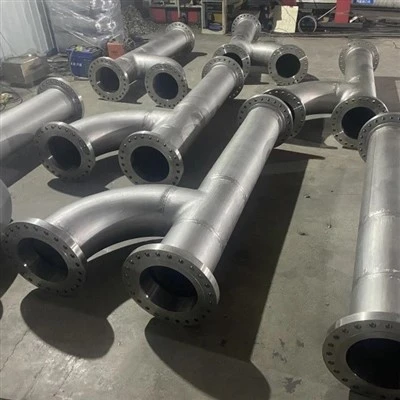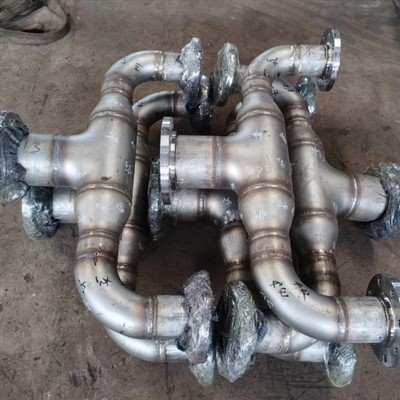
A Hastelloy B3 reactor is fabricated by welding low-carbon Ni-Mo plate (UNS N10675) under strict heat-input control, applying a matched B3 filler (AWS ERNiMo-10), and verifying every joint with PMI + RT/PT plus a hydrostatic test. Get the cleanliness, interpass temperature, and overlay procedure right, and the vessel will hold hydrochloric acid from 0 % to 40 % at temperatures up to the boiling point.

What Is Hastelloy B3 and Why Is It Used for Reactors?
Hastelloy B3 (UNS N10675, W.Nr. 2.4600) is a nickel-molybdenum alloy engineered specifically for reducing-acid service, and it is the workhorse material for reactors that handle hydrochloric acid, wet HCl gas, sulfuric acid (≤ 60 %), phosphoric acid, and other chloride-rich process streams where stainless steels and even C-276 fail.
The alloy contains roughly 28 % molybdenum and 1–3 % iron on a nickel base, with chromium kept very low (≤ 3 %) and iron + chromium capped to limit the formation of brittle Ni₄Mo and sigma phases during exposure to 600–900 °C. That phase-control chemistry is what separates B3 from its predecessor Hastelloy B (which suffered from weld HAZ cracking) and from C-276 (which has more Cr for oxidizing service but is more prone to precipitation in long reducing-service exposure). In a reactor vessel, that translates into predictable corrosion rates - typically 0.05–0.25 mm/yr in 20 % HCl at 80 °C - and a fabricable weld that does not crack upon cool-down.
JN Alloy stocks Hastelloy B3 plate, sheet, bar, weld overlay wire, and weld overlay strip; we supply them as raw material and as pre-formed heads, shells, and complete reactor vessels for chemical, pharma, and lithium processing customers.
How Does Hastelloy B3 Compare to B2 and C-276 in Reactor Service?
Choose B3 by default for HCl-dominant and pure reducing acid streams, choose B2 only when ASME code or a legacy data set requires it, and choose C-276 only when the stream swings into oxidizing contaminants (Fe³⁺, Cu²⁺, HNO₃, dissolved oxygen).
The decision is driven by the Pourbaix diagram of the process - specifically the redox potential and the chloride level. The table below summarizes the practical engineering trade-offs JN Alloy's engineering team uses when qualifying a reactor.
|
Selection criterion |
Hastelloy B3 (UNS N10675) |
Hastelloy B2 (UNS N10665) |
Hastelloy C-276 (UNS N10276) |
|
Base composition |
Ni – 28 Mo – 1.5 Fe – 1 Cr |
Ni – 26 Mo – 2 Fe – 1 Cr |
Ni – 16 Mo – 15 Cr – 5 Fe – 4 W |
|
ASME code case |
Code Case 2486 (wrought) |
ASME SB-333 since 1980s |
ASME SB-334, broadly accepted |
|
20 % HCl, 80 °C corrosion rate |
0.05–0.15 mm/yr (excellent) |
0.05–0.20 mm/yr (excellent) |
0.20–0.50 mm/yr (acceptable) |
|
10 % H₂SO₄, 100 °C corrosion rate |
< 0.10 mm/yr |
< 0.10 mm/yr |
0.10–0.30 mm/yr |
|
Resistance to oxidizing acid (FeCl₃, HNO₃) |
Poor - avoid |
Poor - avoid |
Excellent |
|
HAZ cracking tendency after welding |
Low (stabilized chemistry) |
Moderate (requires strict PWHT control) |
Low |
|
Weldability / filler metal |
AWS ERNiMo-10 |
AWS ERNiMo-7 |
AWS ERNiCrMo-4 |
|
Typical reactor use case |
HCl absorbers, chlor-alkali, lithium brine |
Legacy HCl reactors, sulfuric acid alkylation |
Mixed-acid reactors, FGD scrubbers |
Key takeaway for procurement: Specifying C-276 for a pure HCl vessel is the most common over-spec we see. Engineers pay 25–40 % more for a C-276 shell when B3 would have outperformed it in service. Conversely, specifying B3 for a stream containing nitric acid or ferric chloride leads to rapid perforation - C-276 or even Alloy 20 is the correct call there.
What Are the Best Welding Practices for Hastelloy B3 Reactors?
Weld B3 with gas tungsten arc welding (GTAW / TIG) using AWS ERNiMo-10 filler, keep interpass temperature at or below 93 °C (200 °F), restrict heat input to 0.5–1.5 kJ/mm, and avoid post-weld heat treatment unless the procedure qualification specifically requires it.

B3 is a solid-solution-strengthened alloy, so its mechanical properties come from the Ni-Mo matrix - not from a hard phase that needs tempering. Heat, in fact, is the enemy: prolonged exposure between 600 and 900 °C precipitates Ni₄Mo and a long-range-ordered phase that hardens the alloy but embrittles it and drops its corrosion resistance by 30–60 %. The welding procedure must therefore:
- Use a matched filler (ERNiMo-10) - AWS A5.14 classifies it for B3. ERNiMo-7 (B2 filler) is metallurgically acceptable but lacks the B3 phase stabilization; do not substitute ERNiCrMo-4 (C-276 filler) on reducing-acid service as it raises Cr content and reduces HCl resistance.
- Keep heat input between 0.5 and 1.5 kJ/mm. On a 6 mm wall, this translates to roughly 80–120 A on DCEN with a 2.4 mm tungsten electrode and 8–12 L/min argon backing.
- Cap interpass temperature at 93 °C (200 °F). Use temperature-indicating crayons (Tempil sticks rated to 93 °C) on every weld pass - this is the single most cited deviation in B3 fabrication audits.
- Skip PWHT by default. A B3 vessel typically requires no post-weld heat treatment for corrosion performance. Solution annealing at 1065 °C followed by rapid quench is only used for heavily cold-worked heads or after severe forming.
- Purge the root and back side with argon or argon-helium. B3 has no titanium or aluminum to act as a deoxidizer; oxygen contamination in the root leads to sugary oxide films and underbead porosity. A trailing shield is non-negotiable on circumferential seams.
For thick sections above 19 mm, switch to plasma or hot-wire GTAW; for clad application, switch to submerged-arc strip welding (SAW with EQNiMo-10 strip). JN Alloy's fabrication team uses both and can share qualified WPS sheets on request.
Which Filler Metal Should You Use for B3 Welding - Match or Overmatch?
Use a matching filler, AWS ERNiMo-10 (or strip EQNiMo-10), for B3-to-B3 welds; the only commonly accepted overmatch is ERNiCrMo-4 (C-276 filler) when the vessel transitions to a C-276 flange or nozzle.
A "matching" filler in nickel alloys means the same composition family as the base metal - not bit-for-bit identical, but within the same AWS classification. For B3 this is ERNiMo-10 (ASME SFA-5.14). Two practical scenarios break the match rule:
- Dissimilar joints to C-276 or Alloy 625 flanges. ERNiCrMo-4 is the industry standard transition filler because it tolerates the dilution from both B3 and C-276 and resists cracking. JN Alloy commonly supplies overlay-and-butt transitions of B3 to C-276 flanges with this filler.
- Dissimilar joints to carbon or low-alloy steel shells. Use ERNi-1 or ERNiCrMo-3 buttering first, then ERNiMo-10 on the B3 side. Do not run ERNiMo-10 directly onto carbon steel - it will crack from carbon dilution.
Keep filler metal storage in dedicated, marked cabinets at 5–25 °C and < 50 % RH; rebake any filler that has been opened for more than four hours, per AWS A5.01 storage guidance.
How Should You Control Heat Input to Avoid B3 Weld Defects?
Record every weld pass's amperage, voltage, and travel speed on the WPS traveler; reject any pass exceeding 1.5 kJ/mm or exceeding 93 °C interpass.

The two defects heat-input control prevents are ductility-dip cracking (DDC) in the HAZ and precipitation of the brittle Ni₄Mo phase along the fusion boundary. Both are time-and-temperature-dependent and both are detectable only by metallographic examination - by the time you see them, you are already repairing. The control point is operational, not analytical.
A practical heat-input formula to write on every traveler card:Heat input (kJ/mm) = (V × A × 0.06) / (travel speed in cm/min), using the standard 60 % arc efficiency factor for GTAW.
For a 12 mm B3 butt joint welded root-side hot, set V = 10 V, A = 100 A, travel speed 8 cm/min:(10 × 100 × 0.06) / 8 = 0.75 kJ/mm - comfortably inside the 1.5 kJ/mm ceiling.
If the procedure qualification (PQR) was done at 1.2 kJ/mm, the WPQ limits production welds to ≤ 1.2 kJ/mm - not ≤ 1.5 kJ/mm. The PQR ceiling is always tighter than the universal guideline.
What Pre-Weld Cleaning and Post-Weld Treatment Does B3 Require?
Pre-weld, degrease, abrasive-buff, and acetone-wipe within four hours of welding; post-weld, perform a full-vessel pickle (HNO₃ + HF) and passivation, but skip stress-relief heat treatment.
Nickel-molybdenum alloys do not form a self-healing passive film the way stainless steels do. Any oil, marker, sulfur, or lead that touches the surface before welding becomes a subsurface sulfide or oxide stringer - a guaranteed corrosion initiation site in HCl. The pre-weld cleaning sequence JN Alloy uses is:
- Degrease with an acetone or isopropyl alcohol wipe, lint-free cloth.
- Mechanical abrade with a dedicated stainless-steel wire brush or 60-grit alumina flap disc - never use a wheel that has previously touched carbon steel.
- Final solvent wipe within four hours of striking the arc; if the area sits longer, re-abrade.
- Cover with kraft paper or plastic if the weld joint will sit overnight before fit-up.
Post-weld, pickle the entire inner surface with a 10–20 % HNO₃ + 1–3 % HF bath at 50–60 °C, then rinse with deionized water and dry. This removes the heat tint and chromium-depleted layer left by the weld. Do not run a 595 °C stress relief - that temperature window is precisely where Ni₄Mo precipitation accelerates.
How Do You Select Between Lined, Overlay, and Solid B3 Reactors?
Use solid B3 for vessels below ~2 m diameter and 5 m³ capacity; use weld-overlay-lined carbon steel for larger field-erected reactors; use loose sheet lining only for low-pressure, replaceable-lining applications.
Solid B3 is the cleanest metallurgical answer but also the most expensive - B3 plate runs roughly 6–9 times the price of ASTM A516-70 carbon steel plate. For a 4 m diameter × 8 m tall reactor, that capital-cost delta is six figures. The overlay-lined design recovers most of the corrosion resistance at a fraction of the cost.
|
Design option |
Capital cost premium |
Best for |
Limitations |
|
Solid B3 |
Highest |
Small reactors < 5 m³, ultra-pure pharma / lithium |
Heavy lift, expensive repairs |
|
Weld-overlay-lined CS |
~30–40 % of solid cost |
Field-erected reactors 5–50 m³ |
Overlay must be ≥ 3 mm, qualified to ASME SA-265 |
|
Loose sheet lining |
~25 % |
Tank farm, low-pressure HCl storage |
Backing weld at nozzle penetrations is a leak risk |
For most chemical clients, JN Alloy supplies a weld-overlay-lined vessel: A516-70 base shell, B3 overlay strip welded to the corrosion face, then post-overlay solution anneal at 1065 °C and quench to restore corrosion resistance. This gives a 3–6 mm corrosion allowance with a metallurgically bonded liner - no crevice for acid to wick behind.
What Weld Overlay Techniques Work Best for B3 Reactor Linings?
Use the strip-electrode submerged-arc welding (SAW-S) process with EQNiMo-10 strip (typically 30 × 0.5 mm) for the bulk and electro-slag welding (ESW) for the high-deposition-rate backing, then finish with one or two GTAW cosmetic passes with ERNiMo-10.

Overlaying a 5 m diameter × 8 m reactor vessel needs ~200 kg of filler per square meter of corrosion face. That is not a hand-wire job. SAW strip overlay at 250–400 mm/min with 600–800 A on the strip is the standard production process. Three operational rules:
- Keep overlay ≥ 3 mm in the final chemistry. Dilution from the carbon-steel substrate can pull Cr and Fe up and Mo down - under-thickness or low-deposition passes produce a layer that is no longer "B3."
- Use a backing overlay first. Weld a 2–3 mm butter of ERNiCrMo-4 onto the carbon steel, then run the ERNiMo-10 overlay. The butter acts as a transition filler that tolerates the carbon dilution.
- Verify overlay chemistry. Take a chemical analysis coupon at the start of every overlay campaign, then one every 200 mm of vessel length. Spec: 27–32 % Mo, ≤ 3 % Cr, ≤ 3 % Fe on the final overlay face, per ASME SA-265.
ESW (electro-slag strip welding) is faster but produces a coarser grain and slightly lower Mo recovery; JN Alloy uses it on vessels > 25 m³ where production throughput matters more than the last 5 % of corrosion performance.
How Do You Inspect and Quality-Check a B3 Reactor?
Inspect in this order: visual (100 %) → dimensional (100 %) → surface PT on all welds (100 %) → volumetric RT on all butt welds ≥ 19 mm (100 %) → PMI on every plate and weld coupon (100 %) → hydrotest at 1.5 × design pressure (100 %), then a final inner pickle + passivation.
The QC chain mirrors ASME Section V and Section VIII Div 1 for a nickel-alloy pressure vessel. The order matters: each step catches the failures the next step assumes have already been screened out. JN Alloy's standard inspection plan, supplied with every vessel, includes:
- Visual examination (VT) to AWS QC1, acceptance per ASME V Article 9.
- Dye-penetrant examination (PT) on all welds - ASTM E165, water-washable or post-emulsifiable.
- Radiographic examination (RT) per ASME V Article 2 on all butt welds ≥ 19 mm wall thickness. Spot RT on nozzle welds.
- Positive material identification (PMI) with an XRF analyzer on every plate, head, and nozzle flange before fit-up. A common field failure is a piece of C-276 plate smuggled into a B3 vessel because the two look identical.
- Hydrostatic test at 1.5 × design pressure (or 1.3 × for ASME VIII Div 1 Alternative Rules) held for 30 minutes, followed by a soap-solution leak check on every nozzle weld.
- Final pickle and passivation as described in the cleaning section above.
Every step is recorded on an Inspection and Test Plan (ITP) traveler that travels with the vessel from plate receiving to shipping release. JN Alloy provides the ITP template in the quotation package so clients can align their own inspectors to the milestones.
Which Non-Destructive Testing Methods Are Required for B3?
B3 vessels typically require PT on all welds and RT on butt welds; UT and eddy-current testing are optional but recommended on thick overlays and cold-formed heads respectively.
The required NDT scope is set by the construction code (ASME VIII Div 1 in North America, EN 13445 in EU, GB 150 in China). All three codes treat nickel alloys like stainless steels for NDT purposes, with a few practical differences:
- PT - ASTM E165 with a water-washable or post-emulsifiable penetrant. Acceptance per ASME V T-640. Use this to catch surface cracks from DDC.
- RT - ASME V Article 2, acceptance per VIII Div 1 UW-51. Use X-ray or Ir-192. RT is the only volumetric method that can pick up planar HAZ cracking.
- UT - ASME V Article 5 for shear-wave detection of laminations in the parent plate. Optional but recommended on plates > 50 mm.
- Eddy current (array or pulsed) - useful for scanning the inner surface of an overlay after machining to confirm overlay thickness. ASTM E2159 is a workable standard.
- Ferrite content (only applicable to B3 if any inadvertent stainless contamination has occurred) - calibrate the Feritscope on a known B3 sample; the alloy is essentially non-magnetic, so any reading above ~5 FN indicates contamination.
JN Alloy can run all five methods in-house; for client-witnessed third-party inspection, we schedule Lloyd's, TÜV, SGS, BV, or DNV at the quoting stage.
What Documentation Package Must Travel with a B3 Reactor?
A B3 reactor ships with an EN 10204 3.1 / 3.2 material certificate set, ASME U2 / U3 / U4 form set, all welder WPQ + WPS + PQR, NDT reports, hydrostatic test record, ITP traveler, and a nameplate traceable to the original heat numbers.
ASME Section VIII requires that every pressure vessel leave the shop with a data report (U-1 for UM, U-2 for U, U-3 for U3). For a B3 vessel, the supplementary documentation is what proves the metallurgy actually matches the nameplate and that the QC plan was followed. The standard JN Alloy package is:
- Mill test certificates (MTC) - 3.1 certificates on every plate, head, flange, fitting. EN 10204 3.2 with TÜV / LR / DNV witness if the client orders it.
- Welding documentation - WPS sheets, PQR records, and WPQ certificates for every welder who touched the vessel.
- NDT reports - VT, PT, RT, UT records, with film or digital radiographs retained for 7 years.
- PMI record - XRF analyzer printouts with calibration log, locked to plate heat number.
- Hydrostatic test report - pressure, duration, ambient temperature, leak-check results.
- Heat treatment record - for solution-annealed heads and overlays.
- ITP traveler - stage-by-stage sign-off with inspector initials.
- Nameplate - ASME-stamped with manufacturer serial, design pressure, design temperature, material spec, year built.
A vessel that ships without this complete package is, in our experience, a vessel that arrives at site with a question that someone cannot answer. The package is the cheapest insurance on a reactor.
B3 Reactor Welding - Quick-Reference Parameter Card
|
Parameter |
GTAW (TIG) - B3 to B3 |
SAW strip - overlay on CS |
|
Filler |
ERNiMo-10 (Ø 1.6 / 2.4 mm) |
EQNiMo-10 strip (30 × 0.5 mm) |
|
Process gas |
Argon 99.99 %, 8–12 L/min torch, 15–25 L/min trailing shield |
Flux + backing argon |
|
Current / polarity |
DCEN, 80–130 A |
DCEP, 600–800 A |
|
Voltage |
9–12 V |
25–32 V |
|
Travel speed |
6–10 cm/min |
25–40 cm/min |
|
Heat input ceiling |
1.5 kJ/mm |
2.5 kJ/mm |
|
Interpass temperature max |
93 °C (200 °F) |
150 °C (300 °F) |
|
PWHT |
None (as-welded) |
Solution anneal 1065 °C + quench after full overlay |
|
NDT scope |
PT + RT on all butt welds |
PT + ultrasonic on overlay, sampling RT |
Frequently Asked Questions
What is the difference between Hastelloy B2 and B3?
B3 is the successor to B2. The two share a Ni-26/28-Mo base, but B3 stabilizes the chemistry with tighter iron and chromium controls and adds small titanium and aluminum getters. The result is dramatically lower HAZ-cracking risk and stable corrosion performance after welding. Practically, B2 requires more aggressive PWHT control; B3 welds ship as-welded.
Is Hastelloy B3 the same as Alloy B-3?
Yes. "Hastelloy" is the Haynes International trade name; the generic designation is Nickel Alloy B-3 or UNS N10675. Other producers such as Special Metals distribute equivalent grades under different names (e.g., Alloy B-3 in their catalog).
Can Hastelloy B3 be welded without post-weld heat treatment?
Yes, in nearly all cases. B3 vessels are placed in service in the as-welded condition. Solution annealing at 1065 °C followed by rapid cooling is used for severely cold-worked heads and after weld overlay of carbon steel, but it is not required for routine welding.
What filler metal is used for Hastelloy B3?
AWS A5.14 ERNiMo-10 (wire) or EQNiMo-10 (strip) is the standard matching filler. ERNiMo-7 (B2 filler) is metallurgically acceptable but lacks the B3 phase-stabilization package. ERNiCrMo-4 (C-276 filler) is used only on transition welds to C-276 or stainless components.
What is the maximum interpass temperature for Hastelloy B3?
93 °C (200 °F). This is the figure quoted in ASME Section IX qualification envelopes for B3 procedures and matches the original Haynes technical bulletin. Exceeding it risks Ni₄Mo precipitation in the weld and HAZ.
What is the maximum operating temperature for Hastelloy B3?
For pure reducing-acid service, B3 is rated up to approximately 400 °C continuously, though most chemical reactors operate below 200 °C. Above 400 °C, B3 is not recommended - the alloy is not designed for high-temperature strength, and grain growth combined with phase precipitation degrades ductility.
Can B3 be used in hydrochloric acid at all concentrations?
Yes. B3 is rated for 0 % to 40 % HCl across the full temperature range up to boiling. Above 40 % HCl or in the presence of strong oxidizers (Fe³⁺, Cu²⁺, free Cl₂, HNO₃), corrosion rates climb and a different alloy is required.
Can B3 be used in sulfuric acid?
Yes, up to about 60 % concentration below 100 °C. Beyond that, corrosion rates climb sharply. For mixed sulfuric + oxidant streams, Hastelloy C-276 or Alloy 20 is generally preferred.
What NDT is mandatory for a B3 reactor?
Per ASME V Article 4 & 6 and VIII Div 1: visual examination of every weld, dye-penetrant testing on every weld surface, and radiographic testing on all butt welds ≥ 19 mm. Ferromagnetic / ferrite checks are not required for B3 - the alloy is essentially non-magnetic.
Is PMI mandatory on a B3 vessel?
Yes, on every plate, head, and consumable batch before fit-up. The cost of a PMI XRF scan is negligible compared with the cost of cutting open a reactor after a 316L plate mistakenly landed in the B3 lay-down yard.
Can a B3 reactor be built on a carbon-steel substrate with overlay?
Yes - this is the most common design for field-erected vessels larger than 5 m³. A516-70 carbon steel is weld-overlaid with EQNiMo-10 to a minimum 3 mm thickness, qualified to ASME SA-265, solution annealed at 1065 °C, water quenched, and pickled.
What standards apply to a B3 reactor?
ASME SB-333 (plate), SB-619 (welded pipe), SB-775 (fittings), SB-829 (general), ASME Section IX (welding), Section V (NDT), Section VIII (vessels), ASTM B333 (plate), AWS A5.14 (filler), and ISO 15156 / NACE MR0175 for sour-service compatibility.
What is the corrosion rate of B3 in 20 % HCl at 80 °C?
Typically 0.05 to 0.15 mm/year per Haynes published isocorrosion data. This puts B3 well inside the 0.5 mm/year "good" envelope for chemical reactors and supports a design life exceeding 20 years on standard 6 mm corrosion allowance.
Why does B3 fail in nitric acid?
B3 contains ≤ 3 % chromium - far below the ~ 16 % minimum required to form a stable passive film in oxidizing acids. Nitric acid, ferric chloride, and cupric chloride quickly attack the Ni-Mo matrix. Use Alloy 20 or C-276 in oxidizing service.
Can B3 be cold-formed?
Yes, to a limit of about 20 % cold work without intermediate annealing. Greater deformation requires a solution anneal at 1065 °C followed by rapid cooling to restore corrosion resistance. Headed ends, nozzle reinforcing pads, and dished heads are routinely cold-formed.
Can B3 be machined?
Yes, but it work-hardens aggressively. Use sharp carbide tools, positive rake, lower cutting speeds (10–25 m/min), and generous flood coolant. Do not let chips gall; they will leave a rough surface that is hard to pickle clean.
What is the ASME code case for B3?
ASME Code Case 2486 governs the use of SB-333 nickel-molybdenum alloy (UNS N10675) in Section VIII Div 1 construction. The case was last updated in 2018 and is widely accepted by U.S. state and Canadian provincial authorities.
How long does it take to fabricate a B3 reactor?
JN Alloy's lead time runs 14–22 weeks for a typical 5–20 m³ solid-B3 vessel, including material procurement, forming, welding, NDT, hydrotest, and shipping. Overlay-lined vessels run 18–28 weeks because of the post-overlay solution anneal and quench cycle.