What Is a Flange Rating? A Plain-Language Overview
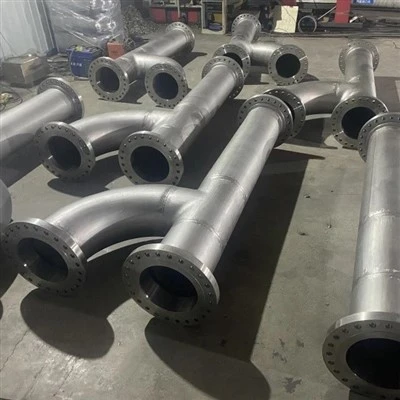
A flange is a disc-shaped mechanical fitting that connects two sections of pipe, a valve, or equipment. It works by bolting two matching flanges together with a gasket in between, forming a tight, pressure-resistant seal that can later be unbolted for inspection or maintenance.
Every flange carries a pressure class - a number that tells engineers the maximum pressure the joint can safely handle at a given temperature. The higher the class number, the higher the allowable pressure. Getting this number wrong can lead to catastrophic failure, regulatory non-compliance, or costly downtime.

Flange pressure classes in North America are standardized by the American Society of Mechanical Engineers (ASME). The governing document for pipe flanges is ASME B16.5 (NPS 1/2 through NPS 24).
This bulletin explains what each class number means, how pressure ratings change with temperature, which face types and materials to pair with each class, and how to match a flange class to your actual operating conditions.
Governing Standards: Who Sets the Rules?
Industrial flanges are not designed by individual engineers from scratch. They are manufactured to well-established dimensional and pressure standards, which define everything from bolt-hole patterns to pressure–temperature ratings.
ASME B16.5 - The Primary Standard
ASME B16.5, Pipe Flanges and Flanged Fittings: NPS 1/2 through NPS 24, is the dominant standard in North America and widely adopted internationally. It covers seven pressure classes - 150, 300, 400, 600, 900, 1500, and 2500 - and defines pressure–temperature (P-T) ratings for 22 material groups. All comparative data in this bulletin for pressure ratings is sourced from ASME B16.5-2017.
ASME B16.47 - Large-Diameter Flanges
For flanges NPS 26 through NPS 60, ASME B16.47 applies. It defines two series: Series A (derived from MSS SP-44) and Series B (derived from API 605). Series A flanges are heavier and suited to pipeline systems; Series B are lighter, common in process plant use.
ASME B16.20 - Ring Joint Gaskets
ASME B16.20 governs metallic gaskets for Ring Type Joint (RTJ) flanges - the oval and octagonal rings used in high-pressure, high-temperature, and sour gas applications.
ASME B31.3 - Process Piping Code
ASME B31.3 specifies design, fabrication, and testing requirements for process piping. It assigns piping service categories (B through F) that directly influence minimum flange class requirements. Engineers must align their flange class selections with the B31.3 fluid category of the service.
NACE MR0175 / ISO 15156 - Sour Service
For services containing hydrogen sulfide (H2S) - known as sour service - NACE MR0175 (now published jointly as ISO 15156) mandates specific material hardness limits, heat treatment requirements, and material selection criteria that supersede standard pressure class decisions.
Seven ASME Pressure Classes: What the Numbers Really Mean
A pressure class is not a single pressure value - it is a family of pressure–temperature curves. The allowable pressure decreases as temperature increases, because metals become less strong at higher temperatures. This is why the same Class 150 flange rated at 285 psi at 100°F can only handle 170 psi at 800°F.

Class 150
Class 150 is the lowest and most common flange class, used in water systems, HVAC, low-pressure steam, and light-duty process lines. Its maximum rated pressure is 285 psi at ambient temperature (100°F) for carbon steel A105. Class 150 uses 4-bolt patterns on smaller sizes. It is the most cost-effective choice and should only be selected when operating conditions clearly fall within its P-T envelope.
Class 300
Class 300 roughly doubles the pressure capacity of Class 150 (740 psi at 100°F for A105). It is the standard choice for medium-pressure process services, steam systems, and general refinery applications. Class 300 flanges are physically larger and heavier than Class 150.
Class 400
Class 400 is less commonly specified - it sits between 300 and 600 and is used mainly in elevated-temperature steam applications where the Class 300 P-T envelope is exceeded but Class 600 would be over-engineered. Maximum pressure is 990 psi at ambient for A105.
Class 600
Class 600 (1,480 psi at ambient, A105) is the standard class for high-pressure process piping, refinery units, and compressed gas systems. It is often the minimum class specified in NACE sour-gas service. Class 600 and above typically use Ring Type Joint (RTJ) face to achieve a metal-to-metal seal.
Class 900
Class 900 (2,220 psi at ambient) is used in natural gas pipelines, high-pressure steam, and other demanding process services. Its larger bolt pattern and greater wall thickness provide a significant safety margin for cyclic or high-vibration applications.
Class 1500
Class 1500 (3,705 psi at ambient) is specified for power-generation boiler feedwater lines, high-pressure steam turbines, and similar severe applications. Flanges at this class are significantly heavier and require precision machined gasket seating surfaces.
Class 2500
Class 2500 (6,170 psi at ambient) is the highest class defined in ASME B16.5. It is used in hydrogen service, ultra-high-pressure process lines, and wellhead connections. Class 2500 flanges are extremely heavy and costly. Any specification at this level must be reviewed by a licensed pressure vessel engineer.
Table 1: ASME B16.5 Pressure–Temperature Ratings - Carbon Steel A105 and 316L Stainless Steel
ASME B16.5 Pressure–Temperature Ratings | |||||||
Temperature (°F) | Class 150 | Class 300 | Class 400 | Class 600 | Class 900 | Class 1500 | Class 2500 |
Carbon Steel - ASTM A105 (Group 1.1) | |||||||
| 100°F (38°C) | 285 psi | 740 psi | 990 psi | 1480 psi | 2220 psi | 3705 psi | 6170 psi |
| 200°F (93°C) | 260 psi | 675 psi | 900 psi | 1350 psi | 2025 psi | 3375 psi | 5625 psi |
| 400°F (204°C) | 230 psi | 600 psi | 800 psi | 1200 psi | 1800 psi | 3000 psi | 5000 psi |
| 600°F (316°C) | 200 psi | 520 psi | 695 psi | 1040 psi | 1560 psi | 2600 psi | 4330 psi |
| 800°F (427°C) | 170 psi | 430 psi | 575 psi | 860 psi | 1290 psi | 2155 psi | 3590 psi |
Stainless Steel - ASTM A182 Grade F316L (Group 2.3) | |||||||
| 100°F (38°C) | 275 psi | 720 psi | 960 psi | 1440 psi | 2160 psi | 3600 psi | 6000 psi |
| 400°F (204°C) | 215 psi | 560 psi | 750 psi | 1125 psi | 1685 psi | 2810 psi | 4685 psi |
| 600°F (316°C) | 170 psi | 440 psi | 590 psi | 880 psi | 1320 psi | 2205 psi | 3670 psi |
| 800°F (427°C) | 140 psi | 365 psi | 490 psi | 730 psi | 1095 psi | 1825 psi | 3045 psi |
Table 2: Flange Class Comparison - Pressure, Weight, Cost, and Application
Flange Class Comparison Summary | ||||||
Class | Max Pressure (150°F, carbon steel) | Bolt Pattern | Relative Weight | Typical Application | Cost Index (Class 150 = 1.0) | Piping Class (ASME B31.3) |
| Class 150 | 285 psi | 4-bolt | 1.0× | Low-pressure utilities, water, HVAC | 1.0× | B |
| Class 300 | 740 psi | 4–8 bolt | 2.0× | General process lines, steam to 600°F | 1.8× | C |
| Class 400 | 990 psi | 8-bolt | 2.5× | Moderate process, high-temp steam | 2.5× | C/D |
| Class 600 | 1,480 psi | 8-bolt | 3.5× | Refineries, high-pressure process piping | 3.5× | D |
| Class 900 | 2,220 psi | 8-bolt | 5.0× | High-pressure gas, pipeline interconnects | 5.0× | E |
| Class 1500 | 3,705 psi | 8-bolt | 7.5× | Power generation, high-pressure steam | 7.5× | E/F |
| Class 2500 | 6,170 psi | 8-bolt | 8–12 bolt | Hydrogen service, ultra-HP process | 12.0× | F |
Flange Face Types: How Sealing Is Achieved
The face of a flange is the machined surface on which the gasket sits. Different face types are suited to different pressure levels, fluid types, and gasket materials. Mismatching face types - for example, bolting a raised face flange against a flat face cast-iron valve - can cause the cast-iron flange to crack under bolt load.

Raised Face (RF)
The most common face type. A concentric circular raised area (typically 1/16 inch high for Class 150/300, 1/4 inch for higher classes) concentrates gasket load. Used with spiral wound or ring gaskets in most process applications.
Flat Face (FF)
The flange face is flush with the pipe end. Used when mating to equipment with flat-face flanges, such as pumps with cast iron bodies or ASME Class 125 equipment. Requires a full-face gasket to distribute bolt load and prevent brittle equipment flanges from cracking.
Ring Type Joint (RTJ)
A groove machined into the flange face accepts a solid metal ring gasket (oval or octagonal cross-section). The ring deforms under bolt load to create a metal-to-metal seal suitable for Class 600 and above, high-temperature steam, and H2S sour service. Governed by ASME B16.20.
Tongue and Groove (T&G)
One flange has a raised ring (tongue); the mating flange has a matching recess (groove). The gasket is fully confined and cannot be blown out, making this face type preferred for toxic, lethal, or highly volatile services. Used for pump covers and vessel nozzles.
Male and Female (M&F)
Similar to T&G but with a flat gasket ring seated in the female face recess. Used in critical or lined piping systems where gasket position must be precisely controlled.
Table 3: Flange Face Types - Standards, Gaskets, and Applications
Flange Face Types - Standards and Selection Guide | |||||
Face Type | Standard | Applicable Classes | Gasket Type | Sealing Performance | Typical Service |
| Raised Face (RF) | ASME B16.5 | 150–2500 | Spiral wound / ring | Good | General process, utilities |
| Flat Face (FF) | ASME B16.5 | 125/150 ASME | Full-face soft gasket | Moderate | Low-pressure; cast iron valves |
| Ring Type Joint (RTJ) | ASME B16.20 | 300–2500 | Oval / octagonal ring | Excellent | High-pressure, high-temp, H2S |
| Tongue & Groove (T&G) | ASME B16.5 | 150–2500 | Flat/spiral wound | Very Good | Toxic/lethal service, pumps |
| Male & Female (M&F) | ASME B16.5 | 150–2500 | Flat ring | Very Good | Critical service, lined piping |
Flange Materials: Matching Metal to the Process
The correct pressure class alone is insufficient to define a flange. The material must be compatible with the process fluid, operating temperature, corrosion environment, and any applicable code requirements. ASME B16.5 organizes flange materials into numbered groups, each with its own P-T rating tables.
Carbon Steel Flanges (Groups 1.1 and 1.2)
ASTM A105 (forged) is the most widely used flange material globally. It covers ambient to moderate temperature service in non-corrosive or mildly corrosive media. For low-temperature service (down to -50°F), ASTM A350-LF2 (Group 1.2) is specified, with impact-tested forgings as required by ASME B31.3.
Stainless Steel Flanges (Groups 2.2, 2.3, 2.4)
316L (A182-F316L, Group 2.3): The industry standard for corrosion-resistant flanges. The low-carbon 'L' grade prevents weld sensitization. Suitable for chemical processing, pharmaceutical, food/beverage, and marine splash zone environments. PREN (Pitting Resistance Equivalent Number) approximately 24.
317L (A182-F317L, Group 2.3): Higher molybdenum content than 316L improves resistance to sulfuric and acetic acids. Specified in pulp and paper mills and acid-handling systems. PREN approximately 28.
904L (A182-F904L, UNS N08904, Group 2.4): A super-austenitic grade with 4.5% Mo and 1.5% Cu, specifically designed for sulfuric acid resistance. Outperforms 316L significantly in dilute H2SO4. PREN approximately 36. EETA stocks and supplies 904L flanges.
254 SMO / F44 (A182-F44, UNS S31254, Group 2.4): A 6% molybdenum super-austenitic grade offering outstanding resistance to seawater pitting, crevice corrosion, and chloride-induced stress corrosion cracking (SCC). PREN approximately 43. Used extensively in desalination, offshore, and bleach plant service. EETA stocks and supplies 254 SMO flanges.
Nickel Alloy Flanges (Groups 3.1–3.4)
Monel 400 (B564-N04400, Group 3.2): Outstanding resistance to hydrofluoric acid and seawater. Used in HF alkylation units, marine pump trim, and saltwater desalination.
Hastelloy C-276 (B564-N10276, Group 3.3): The benchmark material for severe corrosion service - aggressive acids, wet chlorine, flue gas desulfurization (FGD). Rated to 1,000°F. EETA supplies C-276 flanges to Class 150 through 1500.
Inconel 625 (B564-N06625, Group 3.3): Exceptional high-temperature strength and oxidation resistance to 1,800°F. Specified in offshore subsea, aerospace-grade chemical plants, and high-temperature gas service. EETA supplies Inconel 625 flanges in all standard classes.
Table 4: Flange Material Groups, ASTM Specifications, and Corrosion Performance
Flange Material Groups & ASME B16.5 Classification | ||||||
Material | ASTM Spec | ASME B16.5 Group | Typical Industry | Max Temp (°F/°C) | Corrosion Resistance | EETA Supply |
| Carbon Steel | A105 / A350-LF2 | 1.1 / 1.2 | Petrochemical, power | 800°F / 427°C | Low | No |
| 316L Stainless Steel | A182-F316L | 2.3 | Chemical, pharma, food | 850°F / 454°C | High | Yes |
| 317L Stainless Steel | A182-F317L | 2.3 | Pulp & paper, acids | 850°F / 454°C | High | Yes |
| 904L Stainless Steel | A182-F904L (UNS N08904) | 2.4 | Sulfuric acid, desalination | 900°F / 482°C | Very High | Yes |
| 254 SMO (6Mo) | A182-F44 (UNS S31254) | 2.4 | Seawater, bleach, acids | 900°F / 482°C | Very High | Yes |
| Alloy 400 (Monel) | B564-N04400 | 3.2 | Marine, HF acid service | 900°F / 482°C | Excellent | Yes |
| Alloy C-276 (Hastelloy) | B564-N10276 | 3.3 | Severe corrosion, FGD | 1000°F / 538°C | Superior | Yes |
| Inconel 625 | B564-N06625 | 3.3 | Offshore, high-temp gas | 1800°F / 982°C | Superior | Yes |
How to Select the Right Flange Class: A Step-by-Step Decision Framework
Selecting the correct flange class requires a systematic approach. Engineers must not simply round up to the next class - both over-specification (unnecessary cost and weight) and under-specification (safety failure) are serious engineering errors.

Step 1 - Define Maximum Allowable Operating Pressure (MAOP)
Establish the highest pressure the system can reach, including surge, upset, and relief valve set conditions. Add a design margin per your applicable code (typically 10–33% above normal operating pressure).
Step 2 - Define Maximum Allowable Operating Temperature (MAOT)
Determine the maximum process temperature and account for excursions. Remember that pressure ratings decrease with temperature - always check the P-T table at your MAOT, not at ambient.
Step 3 - Identify the Material Group
Select a flange material compatible with the process fluid. Use corrosion tables (NACE, Outokumpu Handbook, vendor data) to confirm chemical compatibility. Identify the corresponding ASME B16.5 material group number for your selected alloy.
Step 4 - Look Up the P-T Rating
Cross-reference your MAOP, MAOT, and material group in the ASME B16.5 P-T rating tables. Select the lowest class whose P-T rating exceeds your design pressure at design temperature.
Step 5 - Check Code Requirements
Confirm the selected class satisfies ASME B31.3 piping class minimums for the fluid category. For sour service, apply NACE MR0175 / ISO 15156 requirements. For fire case or lethal service, additional restrictions may apply.
Step 6 - Specify Face Type and Gasket
For Class 150–300 in clean, non-lethal service: Raised Face with spiral wound gasket is standard. For Class 600 and above, or in H2S, high-temperature steam, or lethal service: Ring Type Joint (RTJ) is preferred. Consult ASME PCC-1 for gasket seating stress requirements.
Table 5: Flange Class & Material Selection Matrix by Service Condition
Flange Class & Material Selection Matrix | ||||||
Service Condition | Recommended Class | Face Type | Material Group | Gasket | Key Standard | Risk Level |
| Water supply / HVAC (< 150 psi, < 300°F) | Class 150 | Raised Face | 1.1 | Spiral wound | ASME B16.5 | Low |
| Low-pressure steam (150–285 psi, ≤ 600°F) | Class 150 | Raised Face | 1.1 | Spiral wound | ASME B16.5 | Low |
| Medium-pressure process (300–720 psi) | Class 300 | Raised Face | 1.1 or 2.3 | Spiral wound | ASME B16.5 | Moderate |
| High-pressure gas / oil (600–1,400 psi) | Class 600 | Ring Joint | 1.1 | Oval ring | ASME B16.5 / B16.20 | High |
| High-temp steam (> 750°F, > 1,500 psi) | Class 900–1500 | Ring Joint | 1.1 | Octagonal ring | ASME B16.5 / ASME PTC | High |
| Seawater / marine corrosion service | Class 150–300 | Raised/RTJ | 2.3 / 3.2 | Spiral wound | NACE MR0175 | Moderate |
| H2S / sour gas (NACE service) | Class 600–900 | Ring Joint | 1.2 (HIC tested) | Oval ring | NACE MR0175 / ISO 15156 | Critical |
| Concentrated acids (H2SO4, HCl) | Class 150–300 | Raised Face | 2.4 / 3.3 | PTFE envelope | ASME B16.5 | High |
| Cryogenic (LNG, < −100°F) | Class 150–300 | Raised Face | 1.2 (low-temp) | Spiral wound | ASME B31.3 / MSS SP-44 | High |
| Ultra-high-pressure H2 or process (> 5,000 psi) | Class 2500 | Ring Joint | 1.1 / 2.3 | Octagonal ring | ASME B16.5 | Critical |
Frequently Asked Questions
Q1: Can I mate a Class 300 flange to a Class 150 flange?
Answer You can physically bolt them together since bolt hole patterns match within certain size ranges, but the assembly is rated to the lower class (Class 150). This is sometimes done intentionally during a system upgrade, but the lower-class component becomes the limiting factor. ASME B31.3 requires the joint to be rated to the weakest component.
Q2: What does the 'L' in 316L mean, and does it matter for flanges?
Answer The 'L' stands for Low Carbon - maximum 0.03% carbon content versus 0.08% for standard 316. Low-carbon grades prevent chromium carbide precipitation in the heat-affected zone during welding, which causes a condition known as sensitization that dramatically reduces corrosion resistance. For welded flange connections, always specify the L-grade.
Q3: What is PREN and why does it matter for flange selection?
Answer PREN (Pitting Resistance Equivalent Number) is a formula-based index that predicts a stainless steel's resistance to pitting corrosion: PREN = %Cr + 3.3 × %Mo + 16 × %N. A PREN above 40 is typically required for submerged seawater service. For context: 316L has PREN ~24, 904L has PREN ~36, and 254 SMO has PREN ~43. Selecting a flange material solely by pressure class without considering PREN in corrosive services leads to premature failure.
Q4: When is a Ring Type Joint (RTJ) flange required?
Answer RTJ flanges are required or strongly recommended in four scenarios: (1) Class 600 and above, (2) temperatures above 750°F (400°C), (3) H2S sour service per NACE MR0175, and (4) lethal or toxic fluid service. RTJ creates a metal-to-metal seal independent of gasket material degradation, providing superior blowout resistance.
Q5: What is the difference between ASME B16.5 and ASME B16.47?
Answer ASME B16.5 covers pipe flanges from NPS 1/2 to NPS 24. ASME B16.47 covers large-diameter flanges from NPS 26 to NPS 60. B16.47 Series A flanges (from MSS SP-44) are heavier and used in pipelines; Series B flanges (from API 605) are lighter and used in process plants. If you are specifying flanges larger than NPS 24, you must reference B16.47.
Q6: Can a Class 150 flange handle full vacuum?
Answer Yes - Class 150 flanges are routinely used in vacuum service. The concern in vacuum service is gasket blowout risk (which does not apply) and potential flange distortion under full vacuum differential. For deep vacuum (< 1 mmHg), consult the equipment manufacturer and verify the bolted joint design using ASME PCC-1 methodology.
Q7: How do I confirm the pressure rating if my material is not in ASME B16.5?
Answer If your exact material is not listed, locate the closest ASME B16.5 material group based on minimum tensile and yield strength. In such cases, the rating may be calculated per ASME B16.5 Appendix II, or the flange may be designed as a special flange per ASME Section VIII, Division 1, Appendix 2. Always involve a licensed pressure vessel engineer for non-standard material applications.