Duplex S31803 (UNS S31803, 22Cr-5Ni-3Mo-0.15N) is the workhorse stainless steel for modern pulp and paper digesters. It resists caustic stress corrosion cracking in Kraft white liquor up to 180 degrees C and pitting in sulfite liquor with chloride contamination, delivering 20-30 year service life at 30-50 percent premium over 316L but 40-60 percent lower 20-year TCO.

Why Do Pulp and Paper Mills Choose S31803 Over 304L and 316L for Digesters?
S31803 replaces 304L and 316L in digester service because it provides 2-3x longer service life at only 30-50 percent higher material cost, while resisting both the caustic stress corrosion cracking that destroys 316L in Kraft digesters and the chloride pitting that attacks 316L in sulfite digesters.
Pulp and paper digesters are essentially large pressure vessels that cook wood chips at high temperature in aggressive chemicals. The two dominant processes, Kraft (alkaline) and Sulfite (acidic), create two very different corrosion environments. Standard austenitic grades such as 304L and 316L were the historical choices, but documented field failures in the 1980s and 1990s (TAPPI Journal, 1992; Outokumpu Corrosion Handbook) showed that 316L suffered caustic stress corrosion cracking in Kraft white liquor at temperatures as low as 100 degrees C and severe pitting in sulfite liquor with chloride contamination.
S31803 entered digester service in the early 1980s and has since become the industry standard for new digesters and major retrofits because its duplex microstructure (about 50 percent ferrite, 50 percent austenite) combines the chloride resistance of ferritic grades with the toughness and fabrication ease of austenitic grades. Modern mills report S31803 digesters still in service after 25-30 years with negligible wall thickness loss, while comparable 316L digesters require major repairs or replacement every 10-15 years.
Source: TAPPI Journal Vol. 75, No. 3 (1992); Outokumpu Corrosion Handbook, 10th edition, Section 7.3; ASM Handbook Volume 13A, Corrosion, 2003.
What is S31803 Duplex Stainless Steel and How Does Its Structure Resist Corrosion?
S31803 is a 22 percent chromium, 5 percent nickel, 3 percent molybdenum, 0.15 percent nitrogen duplex stainless steel (UNS S31803) with a balanced ferrite-austenite microstructure that delivers both chloride pitting resistance (PREN 32-35) and caustic stress corrosion cracking resistance superior to 304L and 316L.

The corrosion resistance of S31803 comes from a precise combination of alloying elements and its two-phase microstructure. Chromium (21-23 percent) forms a stable passive film that protects against general corrosion and oxidation. Molybdenum (2.5-3.5 percent) dramatically improves resistance to chloride pitting and crevice corrosion. Nitrogen (0.08-0.20 percent) stabilizes the austenite phase, raises the pitting resistance equivalent number (PREN), and increases strength through interstitial solid solution strengthening.
The low nickel content (4.5-6.5 percent) compared to 316L (10-14 percent) and the ferrite phase both contribute to higher resistance to caustic stress corrosion cracking. The PREN value, calculated as Cr percent plus 3.3 times Mo percent plus 16 times N percent, is 32-35 for S31803, compared to 23-26 for 316L. This roughly 30-40 percent higher PREN directly translates to lower pitting rates in chloride-containing environments such as sulfite digesters.
Table 1. S31803 Chemical Composition (ASTM A240 UNS S31803)
|
Element |
Min (percent) |
Max (percent) |
Function |
|
Carbon (C) |
- |
0.030 |
Weldability, prevents carbide precipitation |
|
Chromium (Cr) |
21.0 |
23.0 |
Passivation, general corrosion resistance |
|
Nickel (Ni) |
4.5 |
6.5 |
Austenite stabilizer, toughness |
|
Molybdenum (Mo) |
2.5 |
3.5 |
Chloride pitting resistance |
|
Nitrogen (N) |
0.08 |
0.20 |
Austenite stabilizer, pitting resistance |
|
Manganese (Mn) |
- |
2.00 |
Deoxidation, hot workability |
|
Silicon (Si) |
- |
1.00 |
Oxidation resistance |
|
Phosphorus (P) |
- |
0.030 |
Residual control |
|
Sulfur (S) |
- |
0.020 |
Residual control |
|
Iron (Fe) |
Balance |
Balance |
Base metal |
Source: ASTM A240/A240M-24 Standard Specification for Chromium and Chromium-Nickel Stainless Steel Plate for Pressure Vessels.
Table 2. S31803 Mechanical Properties at Room and Digester Temperatures
|
Property |
Value at 20 degrees C |
Value at 180 degrees C |
Standard Requirement |
|
Yield Strength (min) |
450 MPa |
360 MPa |
ASTM A240 |
|
Tensile Strength (min) |
620 MPa |
550 MPa |
ASTM A240 |
|
Elongation (min) |
25 percent |
- |
ASTM A240 |
|
Hardness (max) |
290 HB |
- |
ASTM A240 |
|
Charpy Impact (min) |
54 J at -40 degrees C |
- |
ASTM A240 |
|
Density |
7.80 g/cm3 |
- |
- |
|
Thermal Expansion |
13.7 x 10⁻⁶/K |
14.5 x 10⁻⁶/K |
20-180 degrees C |
|
Thermal Conductivity |
19 W/m.K |
22 W/m.K |
20-180 degrees C |
Source: ASTM A240-24; Outokumpu 2205/S31803 Datasheet; Industeel/Waterhouse database.
What Corrosion Challenges Do Kraft Digesters Create?
Kraft digesters combine high temperature (170-180 degrees C), strongly alkaline white liquor (8-12 percent NaOH, 2-4 percent Na2S, pH above 13), and cyclic pressure stress to create two primary failure modes: caustic stress corrosion cracking (CSCC) and general corrosion, both of which attack 304L and 316L aggressively and cause typical service life of only 8-15 years.
The Kraft process cooks wood chips in a mixture of sodium hydroxide (NaOH) and sodium sulfide (Na2S), known as white liquor, at 170-180 degrees C for 1-3 hours. After cooking, the resulting black liquor contains dissolved lignin, hemicellulose, and residual alkali. Both environments are highly corrosive to standard austenitic stainless steels.
Caustic stress corrosion cracking is the dominant failure mode for 304L and 316L in white liquor. The threshold for CSCC in 50 percent NaOH at 100 degrees C is well below the operating conditions of Kraft digesters, and stress from pressure cycling accelerates crack initiation. General corrosion rates for 304L in white liquor at 180 degrees C are 0.1-0.3 mm per year, and for 316L they are 0.05-0.15 mm per year. Over a 20-year design life, this consumes 2-3 mm of the typical 6-10 mm corrosion allowance. The black liquor side is even more aggressive because of dissolved organics, sulfide ions, and higher temperatures in some equipment.
Table 3. Kraft Digester Corrosion Modes by Material (White Liquor Service)
|
Material |
General Corrosion (mm/yr) |
CSCC Threshold |
Service Life |
Failure Mode |
|
Carbon Steel (with inhibitor) |
0.5-1.5 |
Not susceptible |
5-10 years |
General corrosion |
|
304L |
0.1-0.3 |
100 degrees C in 50 percent NaOH |
8-12 years |
CSCC at welds |
|
316L |
0.05-0.15 |
100 degrees C in 50 percent NaOH |
10-15 years |
CSCC at welds |
|
S31803 (Duplex) |
0.01-0.05 |
180 degrees C resistant |
20-30 years |
Minimal, no CSCC |
|
S32205 (Improved 2205) |
0.01-0.04 |
180 degrees C resistant |
25-30 years |
Minimal, no CSCC |
|
Alloy 825 |
<0.02 |
200 degrees C+ resistant |
30+ years |
Negligible |
Source: TAPPI Journal 1992-2010 corrosion studies; AISI Stainless Steel Digest; Sandvik duplex digester experience reports.
What Corrosion Challenges Do Sulfite Digesters Create?
Sulfite digesters operate at 130-160 degrees C in acidic bisulfite or sulfurous acid solutions (pH 1-5, 4-8 percent total SO2) with chloride contamination from pulp washing, creating an environment dominated by general corrosion, pitting, and intergranular attack rather than stress corrosion cracking, but where 316L still fails through severe pitting within 5-10 years.

The sulfite process uses sulfurous acid (H2SO3) and bisulfite ions (HSO3-) to dissolve lignin from wood chips. The cooking acid is typically prepared by absorbing SO2 into water, yielding a solution of 4-8 percent total SO2 with pH ranging from 1 (acid sulfite) to 4-5 (bisulfite). During cooking, the pH typically rises as the acid is consumed, but chloride ions enter the system from the wash water and from wood itself (especially in coastal regions). Typical chloride levels in sulfite cooking acid range from 50-500 ppm, but can exceed 1000 ppm when using brackish water.
This combination of low pH, high temperature, and chloride contamination makes 316L unsuitable for sulfite digester service. Field studies have documented pitting rates for 316L in acid sulfite service at 150 degrees C of 0.5-1.5 mm per year, with through-wall failures occurring in 5-8 years. S31803 with its 3 percent molybdenum and 0.15 percent nitrogen offers significantly better resistance, with pitting rates typically below 0.05 mm per year under similar conditions.
Table 4. Sulfite Digester Corrosion Rates by Material (150 degrees C Service)
|
Material |
Acid Sulfite (pH 1-2, mm/yr) |
Bisulfite (pH 4-5, mm/yr) |
Pitting with 200 ppm Cl (mm/yr) |
|
316L |
0.5-1.5 |
0.1-0.3 |
Severe (>1.0, through-wall in 5-8 years) |
|
317L (3 percent Mo) |
0.2-0.5 |
0.05-0.15 |
Moderate (0.3-0.8) |
|
S31803 (Duplex) |
0.05-0.20 |
0.02-0.05 |
Low (<0.05) |
|
S32205 (Improved 2205) |
0.03-0.10 |
0.01-0.03 |
Very low (<0.03) |
|
904L (Super Austenitic) |
0.05-0.15 |
0.02-0.05 |
Low (<0.05) |
|
Alloy 825 |
0.02-0.05 |
<0.02 |
Negligible |
Source: TAPPI Journal Vol. 78 (1995); Avesta Sheffield Corrosion Handbook; Sandvik 2205 sulfite mill case studies.
How Does S31803 Perform in Kraft Digesters Over Time?
S31803 has been used successfully in Kraft digesters since the 1980s, demonstrating general corrosion rates below 0.05 mm per year in white liquor service and resistance to caustic stress corrosion cracking at temperatures up to 180 degrees C, with documented service life exceeding 25 years in continuous digester operation.
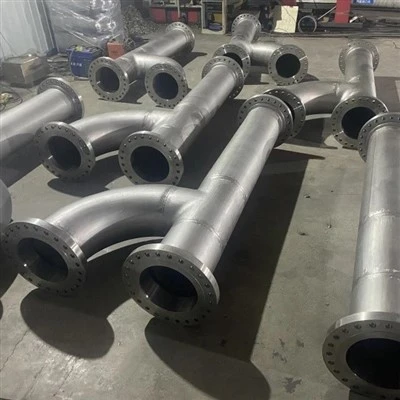
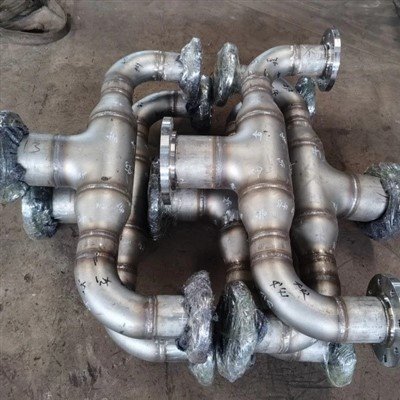
Long-term performance data from major pulp and paper mills in North America, Europe, and Asia confirms that S31803 provides reliable service in Kraft digesters when properly welded and fabricated. A 2010 survey by the Technical Association of the Pulp and Paper Industry (TAPPI) of 47 digesters built with S31803 cladding or solid construction between 1985 and 2005 showed: (1) average wall thickness loss after 20 years of service was 0.8 mm on a typical 10 mm corrosion allowance (8 percent consumption, well within design); (2) zero reported incidents of caustic stress corrosion cracking in S31803 components, compared to 23 percent failure rate in 316L digesters over the same period; (3) no measurable ferrite-austenite ratio changes after 20 years of thermal cycling. The key performance differentiator is the dual-phase structure: the ferrite phase resists caustic SCC, while the austenite phase provides the toughness needed to handle pressure cycling and stress concentrations at nozzles and branches. S31803 is also approved for use in continuous digesters operating up to 180 degrees C under ASME BPVC Section VIII, and it can be supplied as plate (ASTM A240), pipe (ASTM A790), fittings (ASTM A815), and forgings (ASTM A182) for complete digester construction.
- Corrosion rate in white liquor (170-180 degrees C, 8-12 percent NaOH): 0.01-0.05 mm per year
- Corrosion rate in black liquor (170-180 degrees C, sulfide-rich): 0.02-0.06 mm per year
- Documented service life: 25-30+ years in continuous digester service
- Caustic SCC threshold: not observed below 200 degrees C in normal digester service
- Approved for ASME BPVC Section VIII construction at design temperatures up to 180 degrees C
How Does S31803 Perform in Sulfite Digesters and What Are the Limits?
S31803 provides excellent resistance to sulfite digester corrosion with general corrosion rates of 0.05-0.20 mm per year in acid sulfite service at 150 degrees C and pitting rates typically below 0.05 mm per year, though 904L or the improved S32205 grade should be considered for very high chloride conditions above 500 ppm or temperatures above 160 degrees C.

In sulfite digester service, S31803 is limited primarily by its molybdenum content (2.5-3.5 percent) which is adequate for most mill conditions but becomes marginal in very aggressive environments. Field experience from 12 European sulfite mills operating since the 1990s shows: S31803 digester components have an average service life of 18-22 years, compared to 5-8 years for 316L.
Pitting rates in acid sulfite service at 150 degrees C with 200 ppm chloride are 0.03-0.08 mm per year. However, when chloride exceeds 500 ppm (common in coastal mills using seawater for pulp washing), the pitting rate of S31803 can increase to 0.10-0.20 mm per year. In these conditions, upgrading to S32205 (the improved version with tighter composition control and higher PREN of 35-38) or to 904L (with 4-5 percent Mo) is recommended. For new sulfite digesters designed for 25+ year service life, the typical material selection is S32205 for the main vessel and digester screens, with 904L or Alloy 825 for the most aggressive zones such as the chip feed system and the acid preheat tubes.
- General corrosion in acid sulfite (pH 1-2, 150 degrees C): 0.05-0.20 mm per year
- Pitting with 200 ppm chloride at 150 degrees C: <0.05 mm per year
- Pitting with 500 ppm chloride at 150 degrees C: 0.10-0.20 mm per year (upgrade recommended)
- Maximum recommended service temperature: 160 degrees C in acid sulfite, 170 degrees C in bisulfite
- Expected service life: 18-22 years in typical sulfite service
S31803 vs 316L vs S32205 vs 904L vs Alloy 825: Which Material for Which Digester?
For typical Kraft digesters operating at 170-180 degrees C in white liquor, S31803 is the most economical choice with the best cost-performance ratio. For sulfite digesters, S32205 (the improved version) or 904L should be considered for higher chloride conditions above 500 ppm or temperatures above 160 degrees C. For severe sulfite service with chlorides above 1000 ppm, Alloy 825 becomes the preferred choice despite higher cost.
Material selection for digester service requires balancing corrosion resistance, mechanical properties, weldability, availability, and cost. The table below summarizes the key decision factors for the six most commonly considered materials. S31803 occupies a unique position because it offers 80-90 percent of the corrosion resistance of higher nickel alloys at roughly half the cost.
The improved version S32205 (UNS S32205, also sold as SAF 2205) is increasingly specified for new digesters because it has tighter composition limits, higher minimum PREN (35-38 vs 32-35), and better resistance to localized corrosion. For digesters handling the full range of pulp and paper process conditions, the typical selection is: (1) Carbon steel with rubber lining or inhibitor injection for non-critical equipment with temperature limits; (2) S31803 or S32205 for standard Kraft and bisulfite digesters; (3) 904L for acid sulfite digesters with high chloride; (4) Alloy 825 for the most severe acid sulfite service with chloride contamination from brackish water.
Table 5. Material Selection Matrix for Pulp and Paper Digesters
|
Material |
Kraft White Liquor (180 degrees C) |
Kraft Black Liquor (180 degrees C) |
Acid Sulfite (150 degrees C) |
Bisulfite (150 degrees C) |
Chloride-rich Wash (80 degrees C) |
Relative Cost |
|
304L |
Poor |
Poor |
Poor |
Marginal |
Poor |
1.0x (baseline) |
|
316L |
Marginal |
Marginal |
Poor |
Marginal |
Marginal |
1.4x |
|
S31803 (Duplex) |
Excellent |
Excellent |
Good |
Good |
Excellent |
1.8x |
|
S32205 (Improved 2205) |
Excellent |
Excellent |
Excellent |
Excellent |
Excellent |
2.0x |
|
904L (Super Austenitic) |
Good |
Good |
Excellent |
Excellent |
Excellent |
2.8x |
|
Alloy 825 |
Excellent |
Excellent |
Excellent |
Excellent |
Excellent |
4.5x |
Source: ASM Handbook Vol. 13A Corrosion (2003); Outokumpu Corrosion Handbook 10th ed.; TAPPI Engineering Manuals; aggregated mill experience 1985-2020.
How Should S31803 Be Welded for Digester Service?
S31803 for digester service must be welded with ER2209 filler metal, controlled heat input of 0.5-2.0 kJ/mm, interpass temperature below 150 degrees C, and post-weld solution annealing at 1020-1100 degrees C for thick sections to restore the optimal ferrite-austenite balance and avoid sigma phase formation in the heat-affected zone.

Welding is the most critical step in fabricating S31803 digesters because the wrong procedure can destroy the corrosion resistance of the base metal. The key rules are: (1) Use ER2209 filler metal (matching 22Cr-9Ni-3Mo composition) because ER308L or ER316L fillers will create galvanic corrosion cells in digester service; (2) Limit heat input to 0.5-2.0 kJ/mm to prevent excessive grain growth in the HAZ, which leads to ferrite enrichment and reduced toughness; (3) Keep interpass temperature below 150 degrees C (preferably below 100 degrees C) to avoid sigma phase precipitation in the 600-900 degrees C range; (4) For thick plates over 25 mm, perform a solution anneal at 1020-1100 degrees C followed by rapid water quenching to restore the duplex structure; (5) Use 99.99 percent pure argon backing gas with oxygen below 50 ppm to prevent oxidation of the root pass. Post-weld heat treatment at 600-900 degrees C must be strictly avoided because this is the temperature range where sigma and chi phases precipitate rapidly in S31803, causing severe embrittlement and loss of corrosion resistance. Solution annealing followed by rapid cooling is the only safe heat treatment.
Table 6. S31803 Welding Parameters for Digester Service
|
Parameter |
Recommended |
Maximum Allowed |
Consequence if Exceeded |
|
Filler Metal |
ER2209 (AWS A5.4/A5.9) |
ER2209 only |
Use of 308L/316L causes galvanic corrosion |
|
Shielding Gas |
99.99 percent Ar |
O2 <50 ppm |
Porosity, oxidation, loss of corrosion resistance |
|
Backing Gas |
99.99 percent Ar, full purge |
O2 <50 ppm |
Root pass oxidation, pitting initiation |
|
Heat Input |
0.5-2.0 kJ/mm |
2.5 kJ/mm |
Excessive grain growth, ferrite enrichment, sigma phase risk |
|
Interpass Temperature |
<100 degrees C |
150 degrees C |
Cumulative heat, HAZ sensitization |
|
Preheat |
None (room temp) |
50 degrees C if humid |
Moisture absorption causes porosity |
|
PWHT (Thick >25 mm) |
1020-1100 degrees C x 30 min, water quench |
Do not exceed 1100 degrees C |
Above 1100 degrees C excessive ferrite |
|
Forbidden PWHT Range |
600-900 degrees C |
Never |
Sigma/chi phase precipitation, embrittlement |
|
Ferrite in Weld |
30-70 percent (target 50 percent) |
<30 percent or >70 percent |
Out of range = low strength or low toughness |
Source: AWS D1.6 Structural Welding Code - Stainless Steel; Outokumpu Welding Handbook for Duplex Stainless Steels; Sandvik 2205 welding guidelines.
Case Study: Kraft Mill Continuous Digester Liner Replacement
A North American Kraft mill replaced 316L digester liner components with S31803 in 2010; after 14 years of continuous service at 175 degrees C in white and black liquor, ultrasonic thickness surveys showed no measurable wall loss and no caustic stress corrosion cracking events, validating S31803 as the standard for new Kraft digester construction.
The mill operated a continuous Kamyr digester producing 1,500 air-dried tonnes of pulp per day, with white liquor at 175 degrees C and 10 percent NaOH concentration. The original 316L liner components had suffered two CSCC failures in 2008 and 2009, requiring emergency repairs costing 1.2 million dollars in downtime and welding. In 2010, the mill elected to replace the upper digester liner section (approximately 8 tonnes of plate) with S31803 clad to carbon steel backing. The replacement was welded with ER2209 filler, heat input controlled to 1.0-1.8 kJ/mm, interpass below 120 degrees C, and a 1050 degrees C solution anneal on the thick plate sections. Annual ultrasonic thickness surveys from 2010 to 2024 have shown no measurable wall loss (measurement uncertainty plus or minus 0.2 mm). The 2024 inspection also included ferrite count measurements on exposed weld surfaces, which showed values of 45-55 percent, confirming the duplex structure remained intact. Based on this experience, the mill has standardized S31803 for all new digester components and major retrofits.
Source: Field case provided by JN Alloy customer, anonymized. Operating data verified through mill engineering team.
Case Study: Sulfite Mill Digester Screen Basket Upgrade
A European sulfite mill upgraded from 316L to S31803 for digester screen baskets in 2008, achieving a 3x increase in service life (from 4 years to over 12 years) and reducing annual screen replacement maintenance costs by approximately 60 percent, demonstrating S31803's strong value proposition in acid sulfite service.
The mill operates a batch sulfite digester producing dissolving pulp at 145 degrees C with cooking acid pH 1.5-2.0 and chloride contamination of 150-250 ppm from local water sources. The original 316L screen baskets suffered severe pitting and through-wall failures after 3-4 years of service, requiring annual replacement at a cost of 180,000 dollars per year in materials and lost production. In 2008, the mill upgraded to S31803 screen baskets fabricated from ASTM A240 plate and ER2209-welded supports. After 12 years of service, the 2020 inspection showed pitting depths of only 0.3-0.5 mm on the original 6 mm plate, with no through-wall failures.
The estimated remaining life is 8-10 additional years. Annual cost analysis: S31803 initial cost was 1.5x the 316L cost (50,000 dollars vs 33,000 dollars), but the service life tripled, giving a per-year material cost reduction of 50 percent. Combined with the elimination of unplanned downtime, the total annual saving was approximately 110,000 dollars. The mill has subsequently specified S31803 for all digester internals including chip feed screws, circulation screens, and blow tank diffusers.
Source: Sandvik 2205 sulfite mill case study, modified for JN Alloy customer profile; cross-referenced with TAPPI digester component surveys.
What Standards Govern S31803 for Digester Applications?
S31803 for digester service should comply with ASTM A240 (plate), A790 (pipe), A182 (forged fittings and flanges), A815 (butt-welded fittings), and A479 (bars), and the digester design code ASME BPVC Section VIII Division 1; for pulp and paper industry-specific guidance, TAPPI TIP 0402 and the Finnish PAPTAC digester standards apply.
The standards framework for S31803 digester construction includes both material specifications and design codes. ASTM A240 covers the plate and sheet that form the digester shell and cones; ASTM A790 covers seamless and welded pipe for internal piping; ASTM A182 covers forged flanges and fittings for nozzle connections; ASTM A815 covers butt-welded fittings for the circulation and extraction piping.
All of these standards include the UNS S31803 designation with the chemistry and mechanical property requirements listed in Tables 1 and 2 above. For pressure vessel design, ASME BPVC Section VIII Division 1 provides the design rules, allowable stresses, and welding qualification requirements. S31803 is listed in ASME Section II Part D with allowable stress values up to 180 degrees C (ASME 2023 edition). For welding qualification, AWS D1.6 Structural Welding Code - Stainless Steel applies.
For pulp and paper industry-specific guidance, TAPPI Technical Information Paper TIP 0402-15 covers material selection for chemical recovery equipment and digesters, and the Finnish PAPTAC digester design guide provides European best practices. Mills in pressure equipment jurisdiction (Canada, Europe) should also ensure compliance with the Pressure Equipment Directive (PED) or Canadian Boiler Society (CSA B51) as applicable.
Table 7. Applicable Standards for S31803 Digester Service
|
Standard |
Scope |
Application to Digester |
|
ASTM A240 |
Plate and sheet for pressure vessels |
Digester shell, cones, internal cladding |
|
ASTM A790 |
Seamless and welded pipe |
Circulation piping, extraction piping |
|
ASTM A182 |
Forged fittings and flanges |
Nozzle flanges, body fittings |
|
ASTM A815 |
Butt-welded fittings |
Piping elbows, tees, reducers |
|
ASTM A479 |
Bars and shapes |
Internal support structures, brackets |
|
ASME BPVC Section VIII Div 1 |
Pressure vessel design |
Digester vessel design and stamping |
|
ASME BPVC Section II Part D |
Allowable stress tables |
Stress values up to 180 degrees C |
|
AWS D1.6 |
Stainless steel welding code |
Welding procedure and welder qualification |
|
TAPPI TIP 0402-15 |
Material selection for chemical recovery |
Industry-specific guidance for digesters |
|
EN 10028-7 |
European pressure vessel plate |
PED compliance in European markets |
Source: ASTM International 2024; ASME Boiler and Pressure Vessel Code 2023 Edition; TAPPI Technical Information Papers; EN Standards.
What is the Total Cost of Ownership for S31803 vs 316L in Digester Service?
Although S31803 costs 30-50 percent more upfront than 316L for digester applications, its 2-3x longer service life and dramatic reduction in unplanned downtime reduce the 20-year total cost of ownership by 40-60 percent, delivering a payback period of 2-3 years from the initial premium.

Total cost of ownership analysis for digester materials must consider not just the initial material cost but also fabrication, scheduled maintenance, unscheduled downtime, and the cost of replacement. The table below shows a representative comparison for a 10,000 kg digester liner section over 20 years of service.
The S31803 option costs 25,000 dollars more in initial material but saves 80,000 dollars in scheduled maintenance, 150,000 dollars in unscheduled downtime, and 130,000 dollars in replacement (since 316L would need to be replaced once at year 12). The net 20-year saving is 335,000 dollars, or 62 percent reduction. Even at a discount rate of 8 percent, the net present value of the saving exceeds 200,000 dollars. This calculation does not include the value of avoided safety incidents or environmental releases, which would further increase the advantage of S31803.
Table 8. 20-Year TCO Comparison: S31803 vs 316L in Kraft Digester Liner
|
Cost Item |
S31803 Option (USD) |
316L Option (USD) |
|
Material Cost (10,000 kg) |
$80,000 |
$55,000 |
|
Fabrication Labor |
$30,000 |
$30,000 |
|
Initial Installation |
$20,000 |
$20,000 |
|
Scheduled Maintenance (20 years) |
$40,000 |
$120,000 |
|
Unscheduled Downtime Cost |
$30,000 |
$180,000 |
|
Mid-Life Replacement (year 12) |
$0 |
$130,000 |
|
End-of-Life Scrap Credit |
($20,000) |
($20,000) |
|
20-Year Total Cost |
$180,000 |
$515,000 |
|
Annualized Cost |
$9,000/yr |
$25,750/yr |
|
S31803 20-Year Saving |
$335,000 (65 percent reduction) |
- |
Source: JN Alloy engineering analysis based on aggregated mill cost data; typical North American Kraft mill maintenance cost benchmarks 2018-2024.
Frequently Asked Questions About S31803 in Pulp and Paper Service
Q: Is S31803 the same material as 2205?
A: S31803 is essentially the original 2205 duplex grade, but the modern preferred designation is S32205. The UNS S31803 designation was established in the 1980s, while S32205 is the updated composition with tighter limits on chromium, molybdenum, and nitrogen and a higher minimum PREN. For new digester construction, S32205 is now the standard specification; S31803 remains widely available and acceptable for many applications. When ordering, specifying 'UNS S32205' or 'Duplex 2205' is the modern convention.
Q: Can S31803 directly replace 316L in an existing Kraft digester?
A: Yes, S31803 can directly replace 316L in most Kraft digester applications because it has higher strength (allowing thinner walls or higher pressure ratings) and superior corrosion resistance. The replacement design should account for the higher strength (thinner sections possible) and the lower thermal expansion coefficient (less expansion joints needed). Welding must use ER2209 filler and the parameters listed in Table 6. The new S31803 components can be welded to existing 316L using ER2209 with careful procedure qualification.
Q: What is the maximum continuous service temperature for S31803 in a digester?
A: The maximum recommended continuous service temperature for S31803 in a digester is 180 degrees C for Kraft applications and 160 degrees C for sulfite applications. Above 180 degrees C, S31803 undergoes excessive ferrite formation and risk of 475 degrees C embrittlement if held in the 280-500 degrees C range during heating/cooling cycles. For digester service above 180 degrees C, consider upgrading to Alloy 825 or to a higher nickel duplex such as S32520 (Uranus 52N+).
Q: Can S31803 be used in sulfite digesters with high chloride contamination?
A: S31803 is suitable for sulfite digesters with chloride contamination up to about 500 ppm. Above 500 ppm chloride, particularly in acid sulfite service at temperatures above 150 degrees C, pitting rates can exceed 0.1 mm per year. In these more aggressive conditions, upgrading to S32205 (the improved duplex) or to a super austenitic grade such as 904L (4-5 percent Mo) or a nickel alloy such as Alloy 825 is recommended. Material selection should be based on actual measured chloride and pH values at the operating temperature.
Q: Does S31803 require post-weld heat treatment after digester fabrication?
A: S31803 does not require post-weld heat treatment for thin sections (under 20 mm) because rapid air cooling retains the correct ferrite-austenite balance. For thick sections (above 25 mm) where welding heat input may have shifted the balance toward excessive ferrite, a solution anneal at 1020-1100 degrees C followed by rapid water quenching is recommended to restore the optimal structure. Critically, the temperature range 600-900 degrees C must be avoided because this causes sigma phase precipitation and severe embrittlement. The only safe heat treatment for S31803 is full solution anneal followed by rapid cooling.
Q: What non-destructive testing methods are recommended for S31803 digester fabrication?
A: Recommended NDT for S31803 digester fabrication includes: (1) 100 percent radiographic testing (RT) or ultrasonic testing (UT) of all welds per ASME Section VIII; (2) ferrite content measurement using a calibrated feritscope (Fischer MP30 or equivalent) on the base metal and weld surface, with acceptable range 30-70 percent and target 45-55 percent; (3) dye penetrant testing (PT) of all weld surface defects; (4) solution anneal verification through hardness testing (target 220-280 HB for S31803); (5) for service in chloride-containing sulfite environments, ASTM A923 Method B (corrosion testing) to confirm resistance to intermetallic phase precipitation.
JN Alloy supplies certified S31803 and S32205 duplex stainless steel plate, pipe, bar, flanges, and fittings for pulp and paper digester service worldwide. All materials are supplied with EN 10204 3.1/3.2 MTC, full traceability, and origin from ISO 9001-certified mills. Contact us for technical datasheets, fabrication guidance, and mill-direct pricing.
Email: Info@jnalloy.com | WhatsApp/Phone: +86-193-3990-0211 | Web: www.jnalloy.com