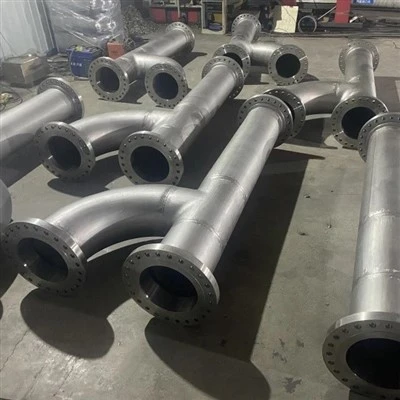
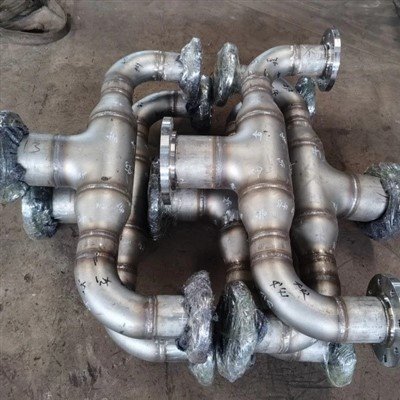
In austenitic stainless steels, grades 316H and 316L both belong to the 316 series-known for their enhanced corrosion resistance. The main difference is their carbon content, which dictates their mechanical properties, corrosion resistance, and applications.

This article provides a detailed comparison between 316H and 316L stainless steel, examining their chemical compositions, mechanical properties, corrosion behavior, and typical applications.
316H vs 316L: Chemical Composition Difference
316L (UNS S31603) is the low-carbon version of standard 316 stainless steel, with a maximum carbon content of 0.03%. Its Chinese standard designation is 022Cr17Ni12Mo2. The minimized carbon content is a alloy design choice to enhance weldability and resistance to sensitization.
316H (UNS S31609) represents the high-carbon variant, with carbon content ranging between 0.04% and 0.10%. It corresponds to the Chinese standard designation 07Cr17Ni12Mo2. The elevated carbon content is specifically engineered to enhance high-temperature performance.

Both grades maintain similar chromium (16-18%), nickel (10-14%), and molybdenum (2-3%) contents, which provide the fundamental corrosion resistance characteristics of the 316 series.
The molybdenum addition is particularly crucial for enhancing resistance to pitting and crevice corrosion in chloride-containing environments.
316H vs 316L: Mechanical Properties Difference
316L: Execelent Weldability and Corrosion Resistance
316L has excellent weldability, derived from its ultra-low carbon content. The minimized carbon significantly reduces the risk of chromium carbide precipitation during welding, which can lead to sensitization and consequent intergranular corrosion.
This makes 316L particularly suitable for fabricated equipment requiring extensive welding, especially in thicker sections where thermal cycles are more pronounced.
The mechanical properties of 316L include good toughness and ductility, though its strength at elevated temperatures is comparatively lower than 316H. It cannot be strengthened by heat treatment but demonstrates good work hardening characteristics.
Its recommended service temperature generally does not exceed 450°C, beyond which significant degradation may occur.
316H: Superior High-Temperature Performance
316H's higher carbon content provides enhanced high-temperature strength, particularly in terms of creep resistance. It's a critical property for components operating under stress at elevated temperatures.
This grade is specifically designed for applications at temperatures between 500°C and 650°C is essential.
While 316H shares good overall corrosion resistance with other 316 variants, its weldability is comparatively poorer due to the increased susceptibility to chromium carbide formation at grain boundaries during welding.
In some cases, post-weld heat treatment may be necessary to restore optimum corrosion resistance in the heat-affected zones.

316H vs 316L: Strength and Creep Resistance
316H is typically in environments exceeding 100℃. The high carbon content contributes directly to superior creep rupture strength and high-temperature tensile strength. Creep, the slow deformation of a material under continuous mechanical stress, is significantly retarded by the carbon atoms within the 316H crystalline structure.
This superior creep performance is why 316H is the mandatory choice for components subject to ASME Boiler and Pressure Vessel Codes and high-temperature piping codes, as its allowable stress values at elevated temperatures are substantially higher than those of 316L.
316H vs 316L: Room and Low-Temperature Strength
At room temperature, 316H exhibits marginally higher specified minimum yield and tensile strengths compared to 316L, a direct result of the carbon-induced solution strengthening.
For instance, while 316L may have a specified minimum yield strength of 205 MPa, 316H often specifies 240 MPa or higher.
Although 316L still retains excellent toughness at low temperatures, its lower strength limits its use in high mechanical loads are present, regardless of temperature.
316H vs 316L: Corrosion Resistance Comparison
The corrosion resistance of 316H and 316L differs significantly, primarily due to their carbon content variations:

Intergranular Corrosion:
316L exhibits superior resistance to intergranular corrosion, particularly after welding operations. Its low carbon content dramatically reduces the formation of chromium carbides (Cr₂₃C₆) at grain boundaries, thereby preventing the creation of chromium-depleted zones that are susceptible to corrosive attack.
316H, with its higher carbon content, is more susceptible to this phenomenon, especially in the heat-affected zones of welds.
Pitting and Crevice Corrosion:
Both grades demonstrate good resistance to pitting and crevice corrosion, attributable to their molybdenum content (typically 2-3%).
This makes them suitable for chloride-containing environments, including marine applications. The performance in this regard is relatively comparable between the two grades, though 316L may demonstrate slightly better stability in certain elevated temperature applications.
High-Temperature Oxidation:
316H outperforms 316L in high-temperature oxidation resistance due to its higher carbon content, which contributes to improved strength and oxidation resistance at elevated temperatures.
While 316L may degrade above 450°C, 316H maintains its integrity and protective oxide layer at significantly higher temperatures.
316H vs 316L: Applications and Industry Uses
The different performance characteristics of 316H and 316L dictate their suitability for specific applications:
316L Typical Applications:
Chemical processing equipment (tanks, piping, reactors).
Marine components and seawater handling systems.
Pharmaceutical and food processing equipment.
Medical devices and surgical instruments.
Welded fabrications where post-weld heat treatment is not feasible.
316H Typical Applications:
High-temperature heat exchangers and boiler components.
High-temperature steam piping and super heater tubes.
Pressure vessels operating at elevated temperatures.
Furnace parts and high-temperature processing equipment.
Industrial applications requiring combined high temperature strength and corrosion resistance.
316L vs 316H: Selection Guide
Choosing between 316H and 316L requires careful consideration of the service conditions:

Select 316L when:
The application involves extensive welding, particularly with thicker sections.
Service temperatures remain below 450°C.
Maximum resistance to inter granular corrosion is required.
The application involves chloride-rich or chemical processing environments.
Select 316H when:
Service temperatures range between 500°C and 650°C.
High-temperature strength and creep resistance are critical.
The application involves high-temperature pressure containment.
Elevated temperature oxidation resistance is required.
It's important to note that these two grades are not directly change.
Conclusion
316H and 316L stainless steels, while composition similar, are different service applications.
316L, with its ultra-low carbon content, offers superior weldability and resistance to intergranular corrosion, making it ideal for chemical processing, marine, and fabricated applications where welding is extensive and service temperatures are moderate.
Conversely, 316H, with its higher carbon content, provides enhanced high-temperature strength, creep resistance, and oxidation resistance, making it suitable for applications involving elevated temperatures such as heat exchangers, boilers, and high-temperature processing equipment.
The selection between these two grades should be based on a comprehensive evaluation of the specific service applications, including temperature, corrosive environment, fabrication requirements, and mechanical stress factors.