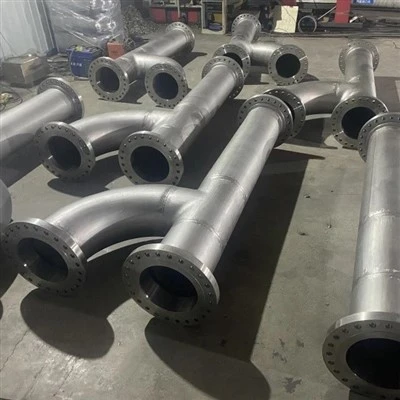
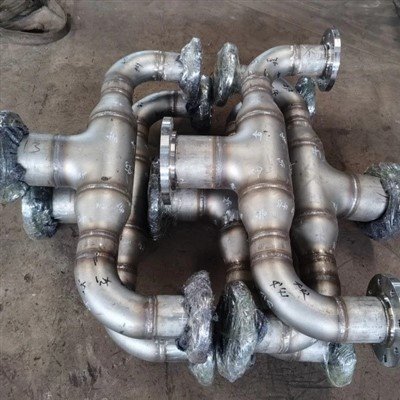
This review is a comprehensive overview of its development, highlighting its evolution, composition, properties, manufacturing advancements.

Development of Austenitic Stainless Steel Type 316LN
The origins of austenitic stainless steels trace back to the early 20th century, with significant milestones around 1913 when nickel additions were introduced to enhance chemical resistance.
Initially, iron-based materials like mild steel suffered from poor corrosion and wear resistance, prompting the creation of iron-chromium-nickel alloys that resist rusting in corrosive settings and scaling up to 1100°C. The demand for stainless steels surged due to their excellent corrosion resistance, recyclability, and versatility.
Type 316LN evolved from the 300-series austenitic steels, specifically as an enhancement to Type 316L. The "L" denotes low carbon content to mitigate sensitization and intergranular corrosion, while "N" indicates nitrogen alloying for improved strength and stability.
Development focused on nuclear applications in the mid-20th century, where materials needed to withstand irradiation, high temperatures, and cryogenic conditions.
By the 1980s, 316LN was refined for use in fusion reactors like ITER, incorporating microalloying with niobium and boron to suppress recrystallization and refine grain structure.
Recent advancements, including cryo-plastic deformation techniques, have further elevated its mechanical properties, as demonstrated in studies from 2026 onward.
Austenitic Stainless Steel Type 316LN: Nitrogen Function

The development of steel 316LN centers on the use of nitrogen, typically in the range of 0.10% to 0.20%.
Solid Solution Strengthening: Nitrogen atoms occupy interstitial sites in the austenitic crystal lattice, creating substantial lattice strain that impedes dislocation movement, thereby increasing strength at both ambient and elevated temperatures.
Austenite Stabilization: Nitrogen is a potent austenite stabilizer, comparable to nickel. This allows for a reduction in nickel content in some variants and ensures a fully austenitic microstructure, which is crucial for toughness and formability.
Enhanced Corrosion Resistance: Nitrogen improves the formation and stability of the passive chromium oxide film on the steel's surface. It particularly increases the pitting resistance equivalent number (PREN), a key metric for performance in aggressive environments like seawater or chemical process streams.
|
Property / Aspect |
316L |
316LN |
Primary Benefit of "N" Addition |
|
Typical Yield Strength (Annealed) |
~170-250 MPa |
~205-310 MPa |
~20-50% increase in strength |
|
Pitting/Corrosion Resistance |
Excellent |
Superior |
Enhanced passive film stability |
|
Intergranular Corrosion Risk |
Low (due to Low C) |
Very Low |
Nitrogen does not form harmful carbides |
|
Application Driver |
General corrosion resistance |
High strength + corrosion resistance |
Enables use in pressure vessels, nuclear systems |
Austenitic Stainless Steel Type 316LN: Properties and Advantages
Enhanced Strength
Type 316LN exhibits significantly higher yield and tensile strength compared to Type 316L, typically 25-35% higher at room temperature. This strength advantage persists across a wide temperature range, making the material suitable for pressure vessels, piping systems, and structural components in nuclear reactors and chemical plants.
Superior Weldability
One of the most significant achievements in Type 316LN development is its exceptional weldability. The combination of low carbon and controlled nitrogen produces welds that resist sensitization without requiring post-weld heat treatment in many applications. This characteristic dramatically reduces fabrication costs and enables the construction of complex welded assemblies with confidence in long-term corrosion resistance.
The weld metal strength in Type 316LN is also superior to Type 316L, often approaching or matching the base metal strength. This eliminates the common problem of undermatched weld zones that limit the load-carrying capacity of welded structures.

Corrosion Resistance
Type 316LN maintains the excellent general corrosion resistance characteristic of the 316 family while offering improved resistance to intergranular corrosion and stress corrosion cracking. The nitrogen addition enhances resistance to pitting and crevice corrosion, particularly in chloride-containing environments.
Studies have shown that the pitting resistance equivalent number (PREN) of Type 316LN exceeds that of Type 316L, translating to better performance in aggressive service conditions.
Cryogenic Performance
The austenitic structure and high nickel content of Type 316LN provide excellent toughness at cryogenic temperatures. Unlike ferritic and martensitic steels that become brittle at low temperatures, Type 316LN retains ductility and impact resistance even at temperatures approaching absolute zero. This property makes it ideal for liquefied natural gas (LNG) facilities, cryogenic storage vessels, and aerospace applications.
High-Temperature Strength
While austenitic stainless steels are not typically selected for high-temperature creep resistance, Type 316LN offers better elevated temperature strength than Type 316L due to nitrogen strengthening. This makes it suitable for applications in the 400-650°C range where both corrosion resistance and moderate strength are required.
Conclusion
The development of Austenitic Stainless Steel Type 316LN represents a classic case study in materials engineering evolution. From its origins as a solution to specific corrosion challenges, it has matured into a versatile, high-performance alloy that serves critical roles across numerous industries.
The strategic addition of nitrogen to low-carbon 316 chemistry created a material that exceeds the sum of its parts, delivering enhanced strength, superior corrosion resistance, and excellent fabricability.