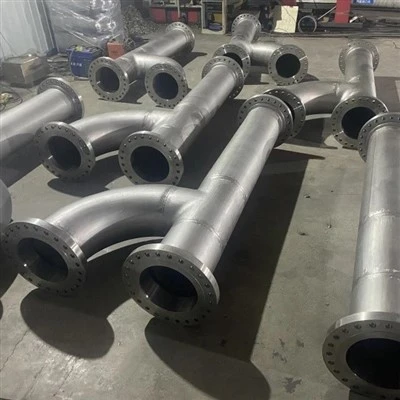
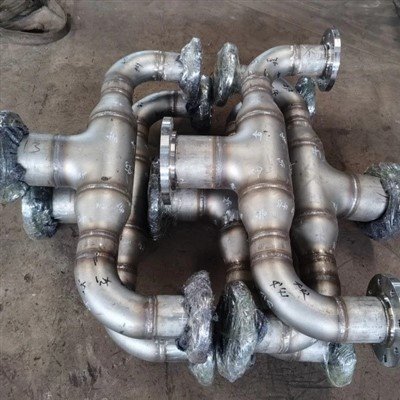
Density is the physical property that converts a part's geometry into real weight, and therefore drives shipping loads, structural sizing, and material cost. Stainless steel grades span roughly 7.70–8.24 g/cm³, while nickel alloys span roughly 7.95–9.22 g/cm³ - making nickel alloys on average 6–12% heavier than the common 300-series stainless steels. This guide compares the densities grade-by-grade, gives the exact weight formulas for bars, plates and tubes, and shows worked examples so engineers, buyers and project managers can quote weights and costs with confidence.

Why density matters in every project: a 1% error in density becomes a 1% error in every kilogram you ship, support, and pay for. Across a 50-ton order, that is half a ton of misquoted metal - enough to upset a freight limit, a crane rating, or a budget line. The figures below are typical nominal values at room temperature; for critical designs, always confirm against the mill test certificate (MTC) of the specific heat.
What Is Density and Why Does It Matter in Metal Projects?
Density is the mass of a material per unit of volume; it is the single physical property that turns a part's geometry into its actual weight, and therefore it directly governs shipping loads, structural design, and material cost.
In plain terms, density answers one question: how heavy is a fixed-size piece of this metal? It is expressed as mass divided by volume, commonly in grams per cubic centimeter (g/cm³), kilograms per cubic meter (kg/m³), or pounds per cubic inch (lb/in³). Because metal is sold and shipped by weight, density is the bridge between a drawing (volume) and a quote (kilograms or pounds).
Three reasons make density unavoidable in any real project:
Weight & logistics - density fixes the total mass of every part, which sets freight class, container limits, and crane/lifting ratings.
Structural loading - floors, supports, and foundations are sized from the weight they must carry; a denser alloy means heavier framing or thicker brackets.
Cost - because alloys are priced per kilogram, a denser material of the same volume costs more both to buy and to ship.
Unit note: 1 g/cm³ = 1000 kg/m³ = 0.0361 lb/in³. So 7.93 g/cm³ = 7930 kg/m³ ≈ 0.286 lb/in³. Always check which unit a datasheet uses before putting the number into a formula.
Accuracy note: nominal densities vary by about ±1% depending on exact chemistry, melting practice, and temperature. The values in this guide are suitable for estimating, costing, and logistics; for code-compliant design, use the value on the certified material test report.
What Is the Density of Common Stainless Steel Grades?
Stainless steel densities range from about 7.70 to 8.24 g/cm³ by grade; the most-used grades cluster between 7.80 and 8.00 g/cm³, with 304/304L at 7.93 g/cm³ and 316/316L at 7.98 g/cm³ as the two reference points.
Stainless steel is not one material - it is a family of iron-based alloys grouped by microstructure: austenitic (300 series), ferritic and martensitic (400 series), duplex, and precipitation-hardening. Each family has a different density because the alloying elements (nickel, molybdenum, chromium) have different atomic weights than iron. Nickel and molybdenum are heavier than iron, so grades rich in them (316, 904L) are denser; nickel-free ferritic grades (430) are lighter.

Table 1. Typical density of common stainless steel grades (room temperature, nominal).
|
Grade |
Family |
Density (g/cm³) |
Density (kg/m³) |
Density (lb/in³) |
|
304 / 304L |
Austenitic |
7.93 |
7,930 |
0.286 |
|
316 / 316L |
Austenitic |
7.98 |
7,980 |
0.288 |
|
316Ti |
Austenitic |
8.00 |
8,000 |
0.289 |
|
321 |
Austenitic |
7.93 |
7,930 |
0.286 |
|
904L |
Super-austenitic |
8.00 |
8,000 |
0.289 |
|
2205 (S32205) |
Duplex |
7.80 |
7,800 |
0.282 |
|
2507 (S32750) |
Super duplex |
7.80 |
7,800 |
0.284 |
|
430 |
Ferritic |
7.70 |
7,700 |
0.278 |
|
410 |
Martensitic |
7.75 |
7,750 |
0.280 |
|
17-4 PH |
Precipitation hardening |
7.80 |
7,800 |
0.281 |
Rule of thumb: if the exact grade is unknown and only a rough weight is needed, 7.9 g/cm³ (7930 kg/m³) is a safe planning figure for most stainless parts. Once the grade is fixed, substitute its nominal density from the table above.
What Is the Density of Common Nickel Alloys?
Nickel alloys are denser than most stainless steels, ranging from about 7.95 to 9.22 g/cm³. Widely used grades such as Inconel 625 (8.44 g/cm³), Monel 400 (8.80 g/cm³) and Hastelloy C-276 (8.89 g/cm³) are 6–12% heavier than 316L stainless.
Nickel alloys replace iron with nickel as the matrix element. Because nickel (8.90 g/cm³) is denser than iron (7.87 g/cm³), and because many nickel alloys also add heavy elements such as molybdenum (10.28 g/cm³) and tungsten (19.30 g/cm³), the whole family sits above the stainless-steel range. The molybdenum-rich Hastelloy B grades are the heaviest of all, reaching above 9.2 g/cm³.
Table 2. Typical density of common nickel alloys (room temperature, nominal).
|
Alloy |
UNS / Type |
Density (g/cm³) |
Density (kg/m³) |
Density (lb/in³) |
|
Nickel 200/201 |
N02200/02201 |
8.89 |
8,890 |
0.321 |
|
Monel 400 |
N04400 |
8.80 |
8,800 |
0.318 |
|
Monel K-500 |
N05500 |
8.44 |
8,440 |
0.305 |
|
Inconel 600 |
N06600 |
8.47 |
8,470 |
0.305 |
|
Inconel 625 |
N06625 |
8.44 |
8,440 |
0.305 |
|
Inconel 718 |
N07718 |
8.19 |
8,190 |
0.296 |
|
Incoloy 800/800H |
N08800/08810 |
7.94 |
7,940 |
0.287 |
|
Incoloy 825 |
N08825 |
8.05 |
8,050 |
0.291 |
|
Hastelloy C-276 |
N10276 |
8.89 |
8,890 |
0.321 |
|
Hastelloy C-22 |
N06022 |
8.61 |
8,610 |
0.311 |
|
Hastelloy B-2/B-3 |
N10665/N10675 |
9.22 |
9,220 |
0.332 |
Note: INCONEL®, MONEL®, INCOLOY® and HASTELLOY® are registered trade names (Special Metals and Haynes International respectively); the generic designations are the UNS numbers shown above. Where a small density range exists in the literature, the value shown is the commonly cited nominal from manufacturer datasheets.
Which Is Heavier: Stainless Steel or Nickel Alloys?
Nickel alloys are, on average, about 6–12% heavier than the common 300-series stainless steels. A same-volume component in Hastelloy C-276 weighs about 11% more than in 316L; an Incoloy 800 part weighs almost the same as 316L.
The cleanest way to see the gap is to put the reference grades side by side at the same volume. The table below compares the weight of a 1000 cm³ (1 liter) block of each material - a volume roughly the size of a large juice carton.
Table 3. Weight of a 1000 cm³ block by material (same volume).
|
Material |
Density (g/cm³) |
Weight of 1000 cm³ |
vs. 316L (7.98) |
|
304/304L |
7.93 |
7.93 kg |
-0.6% |
|
316/316L |
7.98 |
7.98 kg |
baseline |
|
Duplex 2205 |
7.80 |
7.80 kg |
-2.3% |
|
Incoloy 800 |
7.94 |
7.94 kg |
-0.5% |
|
Inconel 718 |
8.19 |
8.19 kg |
+2.6% |
|
Inconel 625 |
8.44 |
8.44 kg |
+5.8% |
|
Monel 400 |
8.80 |
8.80 kg |
+10.3% |
|
Hastelloy C-276 |
8.89 |
8.89 kg |
+11.4% |
|
Hastelloy B-3 |
9.22 |
9.22 kg |
+15.5% |
Takeaway: switching from 316L to a nickel alloy almost always adds weight for the same geometry. The exceptions are Incoloy 800 (essentially the same density as 316L) and Inconel 718 (only ~2.6% heavier). When weight is a hard constraint - aerospace, subsea buoyancy, rotating equipment - this 6–12% gap can force a redesign.
How Do You Calculate the Weight of a Metal Component?
Weight = Volume × Density. For the four standard product forms (round bar, square/flat bar, plate/sheet, and tube), the formulas below let you compute the weight per meter or per square meter directly, using only the dimensions and the grade density from the tables above.
The universal relationship is simple: measure the volume of the part, multiply by the material density, and you have the mass. The formulas below put that relationship into a ready-to-use form for each common shape. Use dimensions in millimeters and density in g/cm³ (which equals kg/dm³); the results come out in kilograms.

Table 4. Weight formulas for standard product forms (D, OD, ID, A, B, T in mm; ρ in g/cm³).
|
Product form |
Formula |
Result unit |
|
Round bar (per meter) |
W = (π/4) × D² × ρ × 0.001 |
kg/m |
|
Square / flat bar (per meter) |
W = A × B × ρ × 0.001 |
kg/m |
|
Hex bar (per meter) |
W = 0.866 × AF² × ρ × 0.001 |
kg/m |
|
Plate / sheet (per m²) |
W = T × ρ |
kg/m² |
|
Seamless / welded tube (per m) |
W = (π/4) × (OD² - ID²) × ρ × 0.001 |
kg/m |
Imperial shortcut: if you work in inches and lb/in³, the same formulas apply but you skip the × 0.001 factor - compute the volume in cubic inches and multiply directly by the density in lb/in³.
Why the 0.001 factor? dimensions in mm give a volume in mm³ per meter of length. Since 1 cm³ = 1000 mm³ and 1 g/cm³ = 1 kg/dm³, the factor 0.001 converts mm³ × g/cm³ into kilograms. It is the only constant you need to remember.
How Much Does a 304 Stainless Steel Plate Weigh?
Conclusion: A 1 m² × 3 mm 304 plate weighs 23.79 kg; a 4 ft × 8 ft × 1/4 in (6.35 mm) sheet weighs about 33.2 lb. Use the plate formula W = T × ρ.
Example A - Metric
Form: Plate: 1 m × 1 m × 3 mm thick.
ρ(304) = 7.93 g/cm³.
Weight per m² = T × ρ = 3 × 7.93 = 23.79 kg/m².
Total = 1 m² × 23.79 kg/m² = 23.79 kg.
Check: 1 m² × 3 mm = 0.003 m³; 0.003 × 7930 kg/m³ = 23.79 kg. ✓
Example B - Imperial
Sheet: 48 in × 96 in × 0.25 in.
Volume = 48 × 96 × 0.25 = 1152 in³.
ρ(304) = 0.286 lb/in³.
Weight = 1152 × 0.286 = 329.5 lb ≈ 33.0 lb/ft² of sheet area.
Practical note: mill plate is usually supplied with a negative thickness tolerance, so the as-weighed sheet is often 1–3% lighter than the nominal calc. Keep that margin when matching crane or truck limits.
How Much Does an Inconel 625 Round Bar Weigh?
A 50 mm diameter Inconel 625 round bar weighs about 16.56 kg per meter - roughly 6% heavier than a 316L bar of identical size (15.62 kg/m).
Worked calculation
Bar: Ø50 mm, 1 meter long.
ρ(Inconel 625) = 8.44 g/cm³.
W = (π/4) × D² × ρ × 0.001 = 0.7854 × 2500 × 8.44 × 0.001 = 16.56 kg/m.
Comparison at the same size
Table 5. Weight of a 1 m, Ø50 mm round bar by material.
|
Material |
Density (g/cm³) |
Weight (kg/m) |
vs. 316L |
|
Duplex 2205 |
7.80 |
15.32 |
-1.9% |
|
304/304L |
7.93 |
15.57 |
-0.3% |
|
316/316L |
7.98 |
15.67 |
baseline |
|
Inconel 718 |
8.19 |
16.08 |
+2.6% |
|
Inconel 625 |
8.44 |
16.56 |
+5.7% |
|
Monel 400 |
8.80 |
17.28 |
+10.2% |
|
Hastelloy C-276 |
8.89 |
17.45 |
+11.3% |
Cost impact: a 6 m bar of Ø50 mm Inconel 625 weighs ~99 kg versus ~94 kg for 316L. At typical metal prices, the nickel alloy can cost 5–10× more per kilogram than 316L - so the ~5 kg extra mass is dwarfed by the per-kg price gap. Density matters, but unit price matters more (see Section 8).
How Does Density Affect Project Cost and Material Selection?
Because alloys are priced by weight, a denser material raises both material cost and shipping cost for the same volume. In budget-limited or weight-limited projects, density is a first-order economic variable - not a footnote.
The cost of a metal order has two density-sensitive components: (1) the metal itself, sold by the kilogram, and (2) the freight, also billed by weight or by weight-based container load. A denser alloy makes both higher for the same part volume, so density amplifies price differences rather than smoothing them out.
Example - a 1 m³ pressure-vessel shell volume in different materials:
Table 6. Indicative material cost for 1 m³ of finished volume (illustrative, not a quote).
|
Material |
Mass (kg) |
Indicative $/kg |
Material cost |
|
316L |
7,980 |
$8 |
$63,840 |
|
Duplex 2205 |
7,800 |
$11 |
$85,800 |
|
Inconel 625 |
8,440 |
$28 |
$236,320 |
|
Hastelloy C-276 |
8,890 |
$45 |
$400,050 |
Reading the numbers: moving from 316L to Hastelloy C-276 raises the mass by ~11% but the material cost by more than 6× - the price-per-kg gap dominates. This is why engineers reserve nickel alloys for the sections of a plant that genuinely need their corrosion/heat performance, and use stainless for the rest.
Density also affects logistics: a 20 ft container is weight-capped long before it is volume-full when loading dense nickel alloy. Denser metal means more containers, more trucks, and more lifting equipment - real, avoidable cost if the design can use a lighter grade.
What Is the Strength-to-Weight Ratio of Each Material?
Duplex stainless steels and precipitation-hardening nickel alloys give the best strength-to-weight (specific strength) ratios; plain austenitic stainless steels are mid-pack, and some high-density nickel alloys trade weight for corrosion or heat resistance.

Density on its own can be misleading. The real engineering question is: how much strength do you get for each kilogram? This is specific strength - yield strength divided by density. A denser alloy can still be the lighter choice if it is strong enough to let you use a thinner section.
Table 7. Specific strength (yield strength ÷ density) for selected grades (annealed, indicative).
|
Material |
Yield (MPa) |
Density (g/cm³) |
Specific strength (MPa·cm³/g) |
|
304 |
205 |
7.93 |
25.9 |
|
316L |
205 |
7.98 |
25.7 |
|
Duplex 2205 |
450 |
7.80 |
57.7 |
|
Super duplex 2507 |
550 |
7.80 |
70.5 |
|
17-4 PH |
725 |
7.80 |
92.9 |
|
Inconel 625 |
415 |
8.44 |
49.2 |
|
Inconel 718 |
1035 |
8.19 |
126.4 |
|
Hastelloy C-276 |
283 |
8.89 |
31.8 |
Interpretation: duplex 2205 delivers more than twice the specific strength of 316L - so a structure designed around its yield can use thinner sections and end up lighter overall despite similar density. Inconel 718, the precipitation-hardened nickel alloy, is the standout: highest specific strength in the list, which is why it dominates aerospace rotating parts.
Caveat: specific strength only governs designs limited by yield stress. In corrosion- or creep-limited designs, the strength-to-weight argument gives way to corrosion resistance and high-temperature stability - the original reason nickel alloys exist.
Which Material Should You Choose for Lightweight Applications?
For weight-critical applications, duplex 2205/2507 stainless or precipitation-hardened Inconel 718 offer the best balance of low density and high strength. Choose 316L only when corrosion resistance - not weight - is the controlling requirement.
Selecting for low weight is not the same as selecting for low density. A lighter-density alloy that is also weak forces you to use a thicker section, which can end up heavier overall. The decision should be driven by specific strength, not raw density.
Decision guide by application type:
Mass-critical - when the structure is limited by mass (aerospace brackets, subsea buoyancy, racing), prefer Inconel 718 or 17-4 PH for peak specific strength, or duplex 2205 for a corrosion-resistant, lower-cost option.
Section-critical - when thinner sections matter (plate heat exchangers, tanks, architectural panels), duplex 2205/2507 let you drop gauge and save weight at the same corrosion performance.
Corrosion-critical - when chloride pitting or seawater exposure governs (marine, desalination, FGD), 316L is the baseline; upgrade to 904L, duplex 2507, or Inconel 625 as severity rises.
Temperature-critical - when service temperature exceeds ~600°C, nickel alloys (Inconel 600/625/718) become mandatory; no stainless grade survives long-term creep at those temperatures.
Cost gate: for each step up the alloy ladder (304 → 316L → duplex → 904L → Inconel → Hastelloy), expect roughly a 1.3×, then 1.5Ò, then 2Ò, then 3–5Ò, then 5–6Ò jump in price per kilogram. Confirm current pricing at quote time; metal markets move weekly.
How Should You Choose Between Stainless Steel and Nickel Alloys?
Choose stainless steel when budget and general corrosion resistance dominate the decision; choose nickel alloys when extreme corrosion, high temperature, or specialized service conditions justify the higher weight and cost - and always confirm the specific grade density before final weight calculations.
Density is one input among several. The right material choice balances density against corrosion resistance, mechanical strength, service temperature, fabricability, and total lifecycle cost. The summary matrix below condenses the decision for quick reference.
Table 8. Selection matrix - when to choose each family.
|
If your priority is... |
First choice |
Why |
|
Lowest cost, general corrosion |
304/316L |
Lowest $/kg, widely stocked |
|
High strength + low weight |
Duplex 2205 / 2507 |
Highest specific strength in stainless |
|
Seawater & chloride pitting |
904L or Inconel 625 |
Mo-rich, high PREN |
|
Strong acids (HCl, H2SO4) |
Hastelloy C-276 / B-3 |
Best acid resistance available |
|
High temperature (>600°C) |
Inconel 600/625/718 |
Creep & oxidation resistance |
|
Aerospace, rotating parts |
Inconel 718 |
Peak specific strength |
|
Marine shafts, pumps |
Monel 400 |
Seawater + galling resistance |
Final rule: start from the service environment, shortlist two or three grades, then let density and specific strength break the tie. Quoting weight is the last check - not the first filter. With the densities, formulas, and worked examples in this guide, you can convert any drawing into a reliable kilogram figure and a defensible cost in minutes.
Need a verified weight or cost for a specific grade and size? Share the drawing, material, and quantity - our engineering team will return a certified weight, density, and quotation against the relevant mill certificate.
Disclaimer: Density values are typical nominal figures at room temperature and are provided for estimation, costing, and logistics. Actual values vary by heat, chemistry, and process; for code-compliant design, refer to the certified material test report (MTC). Trademarks belong to their respective owners.