Introduction
Chloride Stress Corrosion Cracking (CSCC) is one of the most insidious and economically damaging forms of material degradation in the oil & gas, chemical processing, desalination, and marine industries. Unlike general corrosion, which announces itself through measurable metal loss, CSCC can propagate through a component at stress levels well below yield - without any visible warning sign - until sudden, catastrophic failure occurs.
The term "silent killer" is not rhetorical. A 2022 estimate by AMPP (formerly NACE International) put CSCC-related failures in austenitic stainless steel systems at over USD 2.3 billion annually across the global process industries - not counting unplanned shutdowns, environmental remediation, safety incidents, and reputational damage. Perhaps most alarming: CSCC cracks have been found in components that passed all pre-service inspection and hydrostatic testing, because the cracking is a time-dependent mechanism that initiates only after sustained exposure to the right combination of stress, temperature, and chloride concentration.
Austenitic stainless steels - particularly Types 304, 304L, 316, and 316L - are the workhorses of modern industrial infrastructure. Chosen precisely for their corrosion resistance and fabricability, these same alloys become vulnerable to CSCC under the wrong service conditions. This blog post examines CSCC comprehensively: the metallurgy that makes these alloys susceptible, the specific environmental triggers, the industry standards that govern qualification, and the practical prevention strategies that engineers can deploy right now.
KEY FACTS: CSCC requires three simultaneous conditions - tensile stress + elevated temperature (typically >50 degC) + chloride ions. Remove any one of the three and cracking cannot occur. No austenitic stainless steel grade is completely immune at typical industrial temperatures above 50 degC.
What is Chloride Stress Corrosion Cracking?
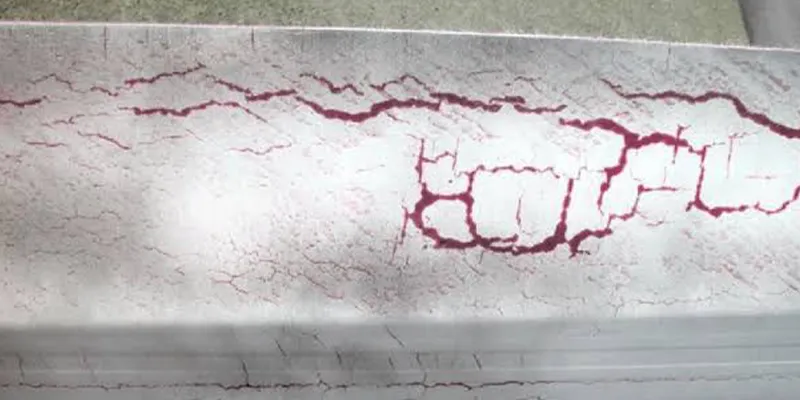
CSCC is a form of environmentally assisted cracking (EAC) defined by three simultaneous conditions: tensile stress (applied or residual), an elevated temperature (typically 50 degC to 200 degC), and sufficient chloride ions. The cracks propagate through the grains of the metal - making it a transgranular cracking mechanism - and display a characteristic branching pattern under microscopic examination, visually resembling a river delta or a tree stripped of its leaves.
The Three Conditions Required for CSCC
Tensile Stress: Applied loads or residual stresses from welding, cold work, or assembly. Threshold stress for CSCC is typically 20-50% of yield strength.
Elevated Temperature: Most CSCC in austenitic stainless steels occurs between 50 degC and 200 degC. Below 50 degC, cracking rate is negligible in most environments.
Chloride Ions: Even trace concentrations (as low as 20-50 ppm at elevated temperature) can initiate cracking in susceptible grades. Seawater (approximately 19,000 ppm Cl-) is extremely aggressive.
CSCC vs. Related Corrosion Mechanisms
Correct diagnosis is essential because CSCC, pitting, and intergranular cracking have different root causes and require different remediation strategies.
Table 1: Distinguishing CSCC from related corrosion mechanisms
|
Mechanism |
Primary Cause |
Visual Appearance |
Affected Zone |
|
CSCC (Transgranular) |
Cl- + stress + temperature |
Branching cracks |
Through grains |
|
IGSCC (Intergranular) |
Sensitization (Cr depletion) + H2S |
Cracks follow grain boundaries |
Along grain boundaries |
|
Pitting Corrosion |
Cl- breakdown of passive film |
Small localized holes |
Surface localized |
|
Crevice Corrosion |
Stagnant electrolyte, differential aeration |
Dark pits under deposits |
Gasket / flange surfaces |
|
Fatigue Corrosion |
Cyclic stress + corrosive environment |
Striations on fracture surface |
Through grains, directional |
Metallurgical Factors: Why Austenitic Stainless Steels Are Susceptible
The susceptibility of austenitic stainless steels to CSCC is rooted in their face-centered cubic (FCC) crystal structure, their reliance on a passive chromium-oxide film for corrosion resistance, and the specific interaction between their microstructure and external chloride environments.

Nickel Content: The Decisive Factor
Nickel is the single most important alloying element in determining CSCC susceptibility. The nickel equivalent directly controls the stacking fault energy (SFE) of the austenite phase, which governs whether plastic deformation is concentrated (planar slip) or distributed (cross-slip). At low SFE levels - characteristic of low-nickel austenitic grades - dislocations move on a single set of crystallographic planes, creating persistent slip bands that emerge at the surface, rupture the passive film, and create crack initiation sites.
As nickel content increases, SFE rises, cross-slip becomes favorable, and plastic deformation distributes more uniformly - reducing the localized film rupture that initiates CSCC. Research consensus identifies approximately 30% nickel as the threshold for broad immunity under most service conditions. However, practical limitations apply: this immunity assumes uniaxial stress and a clean test environment. Real-world components with stress concentrations, welds, and complex geometries may still crack even with higher-nickel alloys.
Table 2: Nickel content and CSCC susceptibility of key grades (data from ASTM A240, ASTM B168, NACE MR0175 / ISO 15156-3)
|
Grade |
UNS |
Ni Content (%) |
PREN (approx.) |
CSCC Susceptibility |
|
Type 304 |
S30400 |
8.0-10.5 |
18-22 |
HIGH - most susceptible standard grade |
|
Type 304L |
S30403 |
8.0-12.0 |
18-22 |
HIGH - not immune despite low carbon |
|
Type 316 |
S31600 |
10.0-14.0 |
24-30 |
MODERATE-HIGH - 2% Mo improves pitting resistance |
|
Type 316L |
S31603 |
10.0-14.0 |
24-30 |
MODERATE-HIGH - lowest-risk standard austenitic grade |
|
Type 904L |
N08904 |
23.0-28.0 |
36-42 |
LOW-MODERATE - significant improvement over 316L |
|
Superaustenitic 254 SMO |
S31200 |
22.0-24.0 |
48+ |
LOW - very high Mo; still not completely immune |
|
Nickel Alloy 625 |
N06625 |
>=58.0 (bal.) |
- |
VERY LOW - only under extreme conditions |
|
Nickel Alloy 825 |
N08825 |
38.0-46.0 |
- |
VERY LOW - NACE-qualified sour service standard |
|
Ferritic 430 (ref.) |
S43000 |
<1.0 |
- |
HIGH resistance - not immune above 100 degC |
|
Duplex 2205 (ref.) |
S32205 |
3.0-5.0 |
~35 |
LOW-MODERATE - best stainless steel alternative |
KEY INSIGHT: No austenitic stainless steel grade is completely immune to CSCC at temperatures above approximately 50 degC in aggressive chloride environments. Material selection must be combined with temperature control, stress reduction, and environmental management as part of a complete CSCC prevention strategy.
Effect of Cold Work and Surface Condition
Cold work substantially increases CSCC susceptibility by raising yield strength, introducing tensile residual stresses, and creating localized strain concentrations at the work-hardened surface. Cold-formed components - bends, flanged pipe ends, expanded tube sheets - are common CSCC initiation sites. Electropolishing creates a compressive surface stress layer that improves CSCC resistance, while mechanical grinding leaves tensile residual stresses that worsen it. Surface passivation (nitric acid treatment) improves resistance by thickening the chromium-oxide passive film.
Effect of Welding
Welding creates three CSCC-promoting conditions simultaneously: tensile residual stresses in the heat-affected zone (HAZ), sensitization of the grain boundaries (if cooling rate is insufficient to prevent chromium carbide precipitation), and localized microstructural changes. The HAZ immediately adjacent to the weld fusion line is the most susceptible region. Weld reinforcement, rough weld toe geometry, and skip-welded attachments act as stress concentrators that promote crack initiation. Proper weld procedure qualification (WPQR), controlled heat input, and post-weld heat treatment (PWHT) where permissible are key mitigation measures.
Environmental Triggers: The Conditions That Activate Cracking
CSCC does not occur in isolation - it is driven by the specific combination of temperature, chloride concentration, dissolved oxygen, and pH present in the service environment. Understanding these interactions is the foundation of CSCC risk assessment and prevention.

Temperature: The Most Controllable Variable
Temperature is the single most important environmental variable in CSCC, and the only one routinely controllable in most process systems. CSCC is essentially nonexistent below approximately 50 degC in typical atmospheric-pressure chloride environments, though very slow crack propagation has been observed at temperatures as low as 30-40 degC under accelerated laboratory conditions.
Table 3: Critical CSCC temperature thresholds by environment (based on ASTM G36 and AMPP published data)
|
Environment / Application |
Cl- Concentration |
Critical Temperature (degC) |
|
Indoor atmospheric (air-conditioned) |
Trace (<10 ppm) |
No risk below ~80 degC |
|
Potable water / softened water |
10-50 ppm |
Risk above ~60 degC |
|
Cooling tower water (recirculating) |
50-500 ppm |
Risk above ~50 degC |
|
Seawater (once-through cooling) |
~19,000 ppm |
Risk above ~40 degC |
|
Brine / geothermal fluids |
50,000-200,000 ppm |
Risk above ~30 degC |
|
Boiler feedwater (deaerated) |
Trace |
Risk above ~150 degC if Cl- present |
|
Steam condensate |
Low |
Risk above ~120 degC with Cl- present |
Chloride Concentration Thresholds
The chloride concentration required to initiate CSCC decreases as temperature increases. A useful engineering rule: if chloride concentration exceeds 20-50 ppm at temperatures above 60 degC, CSCC risk exists for susceptible grades (304/316). Concentrations above 100 ppm at elevated temperature represent significant risk. Seawater and concentrated brine represent extreme-risk environments where CSCC is essentially guaranteed unless temperature is controlled below threshold or material is upgraded.
Dissolved Oxygen and pH Effects
Dissolved oxygen (DO) acts as the cathodic reactant driving the anodic dissolution reaction at the crack tip. Open systems with DO of 6-8 mg/L are more aggressive than deaerated systems (DO < 0.05 mg/L). In high-temperature systems (>100 degC), water radiolysis can sustain the reaction even in deaerated environments, so DO control alone is not sufficient.
Alkaline conditions (pH 7.5-10) suppress CSCC by stabilizing the passive film and raising the pitting potential. This is why phosphate or hydroxide dosing in boilers reduces CSCC risk. Nitrate (NO3-) and sulfate (SO42-) are inhibitors that compete with Cl- at crack tips; a nitrate-to-chloride ratio above 0.4 significantly reduces CSCC susceptibility. Fluoride, bromide, and iodide are more aggressive than chloride per unit concentration - fluoride is particularly dangerous in chemical cleaning operations.
Table 4: Key environmental parameters and their effect on CSCC initiation and propagation
|
Parameter |
Typical Range |
Effect on CSCC |
|
Temperature |
30-250 degC |
Primary driver; risk increases sharply above 50 degC |
|
Chloride (Cl-) |
10-200,000 ppm |
Directly proportional to risk; thresholds decrease with T |
|
Dissolved O2 |
<0.05-8 mg/L |
Accelerates crack propagation; not required at >100 degC |
|
pH |
3.0-10.0 |
<4 accelerates; 7.5-10 suppresses cracking |
|
NO3- / SO42- |
Variable |
Inhibitory; NO3-/Cl- ratio >0.4 reduces susceptibility |
|
F- / Br- / I- |
Variable |
More aggressive than Cl- per unit concentration |
|
Flow velocity |
>1.5 m/s |
High velocity removes inhibitor films; promotes erosion-CSCC |
Applicable Standards and Specifications
CSCC prevention and material qualification for chloride environments is governed by an established framework of international standards.

Table 8: Key international standards for CSCC prevention, testing, and material qualification
|
Standard |
Title / Scope |
Application |
|
NACE MR0175 / ISO 15156-3 |
Materials for use in H2S-containing environments. Part 3: cracking-resistant CRAs |
Mandatory for sour service (H2S partial pressure >0.05 psia). Defines hardness limits, heat treatment, and environmental limits for all nickel alloy grades. |
|
ASTM G36 |
Evaluating stress-corrosion-cracking resistance in boiling MgCl2 solution |
Accelerated laboratory testing for CSCC ranking. Reference method for comparative alloy screening. |
|
ASTM G123 |
Evaluating CSCC of stainless alloys with boiling 25% NaCl solution |
Specific test for stainless steel CSCC ranking using boiling NaCl. Widely used in alloy qualification programs. |
|
ASTM G30 |
Making and using U-bend stress-corrosion test specimens |
U-bend specimen preparation for CSCC testing. Produces high and reproducible residual stress for accelerated testing. |
|
ASME B31.3 |
Process Piping - design, materials, fabrication, examination, and testing |
Governs design of austenitic stainless steel process piping. Requires NDE, PWHT where applicable, and PMI for alloy systems. |
|
API 571 |
Damage mechanisms affecting fixed equipment in the refining and petrochemical industries |
Comprehensive review of CSCC and all major damage mechanisms; required reading for refinery inspection engineers. |
|
API 579-1 / ASME FFS-1 |
Fitness-For-Service assessment |
FFS assessment to determine if a cracked component can remain in service or must be replaced. Essential for CSCC repair decisions. |
|
AMSP SP0508 |
Detection, repair, and mitigation of CSCC in austenitic stainless steel piping systems |
Comprehensive guidance for inspection and repair of CSCC in operating plants; includes FFS assessment methods per API 579. |
|
ASTM A240 / A240M |
Chromium and chromium-nickel stainless steel plate, sheet, and strip for pressure vessels |
Chemical composition, mechanical property, and corrosion testing requirements for austenitic stainless steel plate and sheet. |
|
DNV-OS-F101 |
Submarine pipeline systems |
Required by most North Sea operators for subsea pipeline material selection, testing, and qualification. |
Frequently Asked Questions
Q1: Can Type 316L stainless steel be used safely in seawater?
Answer: It depends critically on temperature. Below approximately 40 degC, Type 316L can provide acceptable service life in clean seawater for non-critical applications. Above 40 degC, Type 316L is at significant risk of both pitting corrosion and CSCC, and a higher-grade material (Super Duplex, Alloy 625, or Titanium) should be specified. For topsides seawater cooling systems, even Super Duplex may be insufficient above 50 degC, and Nickel Alloy 625 or Titanium Grade 2 is recommended. JN Alloy supplies both standard austenitic grades and high-performance nickel alloys for all seawater service conditions.
Q2: Is duplex stainless steel immune to CSCC?
Answer: No - duplex stainless steels (including UNS S32205 and S32750) are significantly more resistant to CSCC than standard austenitic grades due to their biphasic microstructure and higher chromium and molybdenum content, but they are not completely immune. CSCC in duplex stainless has been documented in high-temperature concentrated chloride environments, particularly in the presence of significant tensile residual stress. Super Duplex grades (PREN >40) have the best resistance within the duplex family, but immunity should not be assumed in aggressive service.
Q3: What is the difference between CSCC and IGSCC?
Answer: CSCC (Chloride Stress Corrosion Cracking) is a transgranular mechanism - cracks propagate through the grains of the metal. IGSCC (Intergranular Stress Corrosion Cracking) propagates along the grain boundaries. In austenitic stainless steels, IGSCC is typically caused by sensitization (chromium depletion at grain boundaries from carbide precipitation), while CSCC is caused by chloride-assisted passive film breakdown at the metal surface. Both mechanisms require tensile stress and elevated temperature, but the metallurgical root cause is different, and the prevention and repair strategies differ accordingly.
Q4: Does a hydrostatic pressure test guarantee freedom from CSCC?
Answer: No. A hydrostatic test verifies pressure integrity - it does not detect crack-initiation-susceptible microstructures, residual weld stresses, or sensitization in HAZs. CSCC initiates and propagates under sustained tensile stress in the service environment over time. Components that pass hydrostatic testing before commissioning have failed in service within months. The only way to verify CSCC-free condition is through targeted NDE (PT, ET, or UT) combined with a thorough review of service conditions and material history.
Q5: Can CSCC be repaired without replacing the component?
Answer: It depends on crack depth and component remaining life. Repair options include: (1) grinding out the crack to sound metal followed by PWHT and re-examination; (2) installation of a full-encirclement weld repair sleeve (per ASME PCC-2); (3) composite wrap repair for non-pressurized applications. Fitness-for-service (FFS) assessment per API 579-1/ASME FFS-1 is required to determine if a repair is acceptable or if replacement is mandatory. JN Alloy provides both replacement materials and technical support for CSCC repair assessments.
Q6: What is the role of molybdenum in CSCC resistance?
Answer: Molybdenum (Mo) improves CSCC resistance in austenitic stainless steels primarily by improving pitting corrosion resistance (raising the pitting potential in chloride solutions) and stabilizing the passive film against chloride attack. The PREN formula (PREN = %Cr + 3.3 x %Mo + 16 x %N) quantifies this contribution. Type 316 (2% Mo) has better CSCC resistance than Type 304 (no Mo). High-performance alloys (Hastelloy C-276: 15-17% Mo; Alloy 625: 8-10% Mo) have substantially superior resistance due to their very high Mo content. However, Mo content alone does not determine CSCC resistance - nickel content and overall microstructure are equally important.
Q7: Is CSCC risk higher in welded or seamless components?
Answer: Welded components are generally at higher CSCC risk because welding introduces: (1) tensile residual stresses in the HAZ, (2) sensitization in the HAZ if cooling rate is insufficient, (3) segregation of alloying elements in the weld metal, and (4) geometric stress concentrations at weld toes. For critical CSCC-risk applications, seamless pipe is preferred over welded pipe. Where welding is unavoidable, PWHT after welding is the most effective mitigation measure. Weld overlay with a CSCC-resistant alloy (e.g., Alloy 625 weld overlay on carbon steel) is a cost-effective alternative to solid nickel alloy construction for some applications.
Q8: How does JN Alloy help customers prevent CSCC failures?
Answer: JN Alloy is a specialized stockist and distributor of stainless steel and nickel alloy piping, fittings, flanges, and valves. For CSCC prevention, JN Alloy provides: (1) expert material selection guidance based on service conditions, (2) full traceability and certified mill test reports (CMTR) for every heat of material supplied, (3) PMI verification on all alloy components, (4) technical data sheets and corrosion resistance comparisons for all products, (5) both standard austenitic grades (304/304L/316/316L) and high-performance nickel alloys (Inconel 625, Hastelloy C-276, Alloy 825, Alloy 20, and more) from ISO-certified mills. Contact JN Alloy at Market@jnalloy.com or +86-193-3990-0211 for technical consultation.