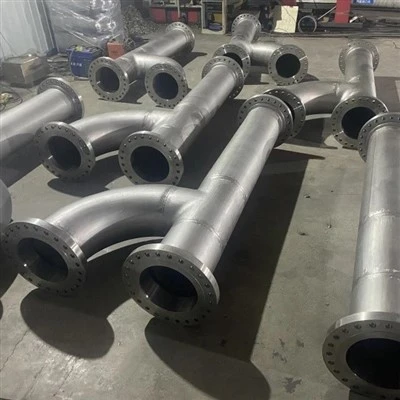
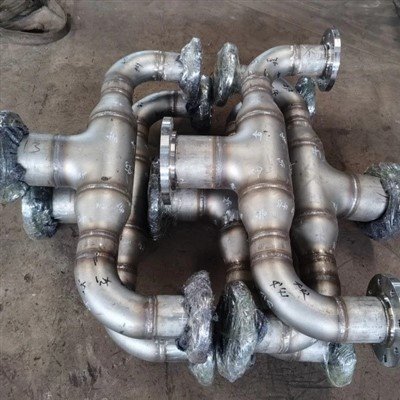
Every piping system - whether it carries 300-bar sour gas, 3-bar cooling water, or 98% sulfuric acid - depends on fittings to change direction, branch, reduce, or close the line. The three fundamental joining methods are butt weld (BW), socket weld (SW), and threaded (THD), governed by two core ASME standards: B16.9 for butt weld fittings (NPS 1/2–48) and B16.11 for socket weld and threaded fittings (NPS 1/8–4).

Choosing between them is not a matter of preference - it is a decision with direct consequences for pressure integrity, leak risk, corrosion resistance, inspection access, installation cost, and long-term maintenance burden. Yet it is a decision that many procurement specifications delegate to a one-line note: "Fittings per ASME B16.9 or B16.11." This guide explains what that note actually means, in language that design engineers, pipe fitters, procurement managers, and QA/QC inspectors can all use.
Three Fitting Types at a Glance
Butt weld fittings provide the strongest, most inspectable, and most corrosion-resistant joint - but require skilled welders and 100% NDE in many services. Socket weld fittings are faster to install but introduce an internal crevice and cannot be radiographed. Threaded fittings are the quickest and cheapest but are restricted to small-bore, low-pressure, non-hazardous service by most piping codes.
|
Feature |
Butt Weld (BW) |
Socket Weld (SW) |
Threaded (THD) |
|
Joint type |
Full-penetration |
Fillet weld at socket |
Tapered pipe thread |
|
Size range |
NPS 1/2 – 48 |
NPS 1/8 – 4 |
NPS 1/8 – 4 |
|
Pressure class |
Matches pipe |
Class 3000, 6000, 9000 |
Class 2000, 3000, 6000 |
|
Leak path |
None - full-penetration |
Crevice at pipe-to- |
Thread root clearance |
|
Radiography (RT) |
Yes - full volumetric |
No - fillet geometry |
No - no weld to |
|
Cyclic service |
Excellent - smooth |
Limited - socket fillet |
Poor - thread root |
|
Corrosion resistance |
Best - smooth bore, |
Internal crevice traps |
Threads trap media |
|
Installation speed |
Slowest - requires |
Faster - no bevel, |
Fastest - no welding; |
|
Welder skill level |
High - requires |
Moderate - fillet |
None - no welding |
|
Typical cost |
$$$ - highest |
$$ - lower than |
$ - lowest |
|
Industry use |
Oil & gas, chemical, |
Utility piping, fire |
Plumbing, compressed |
ASME Standards: B16.9 vs B16.11
ASME B16.9 governs butt weld fittings with pressure ratings keyed to the matching pipe wall thickness (not an independent rating). ASME B16.11 governs socket weld and threaded fittings with independent pressure-temperature ratings (Class 2000/3000/6000 for threaded, 3000/6000/9000 for socket weld). The easiest mistake in fittings procurement is ordering a Class 3000 socket weld fitting for a Sch 80 pipe system without verifying that Sch 80 at the design temperature actually has a pressure rating within Class 3000 - the two rating systems are not interchangeable.
ASME B16.9 - Butt Weld Fittings
- Covers factory-made wrought butt welding fittings: elbows, tees, reducers, caps, lap-joint stub ends, crosses - NPS 1/2 to 48
- Fitting wall thickness must equal or exceed the matching pipe wall thickness. No separate pressure class - the fitting inherits the pipe's pressure rating per the applicable piping code (ASME B31.1, B31.3, B31.4, B31.8)
- End preparation: beveled ends per ASME B16.25 (37.5° ± 2.5° bevel, 1.6 mm ± 0.8 mm root face) unless specified otherwise
- Material: manufactured from pipe, plate, forging, or bar - the material must conform to a listed ASTM specification (A234, A403, A420, B366, etc.)
- Marking: manufacturer name/trademark, material grade, schedule/wall, size, standard "B16.9"
- Tolerances: center-to-end dimensions, angularity, and out-of-roundness all governed by B16.9 tables; critical for fit-up in prefabricated spools
ASME B16.11 - Socket Weld & Threaded Fittings
- Covers forged socket-welding and threaded fittings: elbows, tees, crosses, couplings, caps, unions, plugs, bushings - NPS 1/8 to 4
- Pressure classes (socket weld): Class 3000, 6000, 9000. The class number roughly corresponds to the maximum allowable cold working pressure in psi for carbon steel (e.g., Class 3000 ≈ 3,000 psi at 100°F for A105 CS). Ratings decrease with temperature and with alloy material - consult B16.11 Tables I-1 and I-2.
- Pressure classes (threaded): Class 2000, 3000, 6000 - one class lower than SW for the same size due to thread root stress concentration
- Socket depth: defined in B16.11 Table I-5. The 1.6 mm (1/16") gap between pipe end and socket bottom is MANDATORY - do not bottom out the pipe. This gap accommodates thermal expansion during welding and prevents the pipe from pushing against the socket bottom, which would crack the fillet weld on cooling.
- Material: forging per listed ASTM specifications (A105, A182, A350, B564, etc.)
- Marking: manufacturer, material grade, pressure class, size, standard "B16.11"
Pressure Rating
A Sch 40S stainless steel pipe at 200°C (400°F) has a completely different allowable pressure than a Class 3000 socket weld fitting at the same temperature - even though convention says "Sch 40S ≈ Class 3000." Always check both the pipe pressure rating per ASME B31.3 and the fitting pressure rating per B16.11 Table I-1/I-2 at the design temperature for your specific material grade. The lower of the two governs.
|
Pipe Size |
Pipe Pressure Rating* |
SW Fitting Rating |
THD Fitting Rating |
Governing |
|
NPS 1/2 Sch 40S |
3,700 psi (25.5 MPa) |
2,500 psi (17.2 MPa) |
2,000 psi (13.8 MPa) |
Threaded fitting |
|
NPS 1 Sch 40S |
2,800 psi (19.3 MPa) |
2,200 psi (15.2 MPa) |
1,800 psi (12.4 MPa) |
Threaded fitting |
|
NPS 2 Sch 40S |
1,800 psi (12.4 MPa) |
1,800 psi (12.4 MPa) |
1,500 psi (10.3 MPa) |
Threaded fitting |
|
NPS 1/2 Sch 80S |
4,800 psi (33.1 MPa) |
2,500 psi (17.2 MPa) |
2,000 psi (13.8 MPa) |
Threaded fitting |
|
NPS 2 Sch 80S |
2,600 psi (17.9 MPa) |
1,800 psi (12.4 MPa) |
1,500 psi (10.3 MPa) |
Threaded fitting |
|
NPS 2 Sch 160 |
4,500 psi (31.0 MPa) |
1,800 psi (12.4 MPa) |
1,500 psi (10.3 MPa) |
Threaded fitting |
* Pipe pressure ratings calculated per ASME B31.3 para. 304.1.2 using allowable stress for A312 TP316L at 200°C (S = 117 MPa / 17.0 ksi). Actual values depend on corrosion allowance and manufacturer's wall thickness tolerance. The clear message: for NPS 2 and below, B16.11 socket weld or threaded fittings often limit the system's MAWP before the pipe does - especially for stainless steel where the fitting rating de-rates more steeply with temperature than carbon steel.
The Socket Weld Crevice - Hidden Threat in Stainless Steel Systems
The 1.6 mm (1/16") gap mandated by ASME B16.11 between the pipe end and the socket bottom creates an unavoidable internal crevice in every socket weld joint. In stainless steel and nickel alloy piping carrying chloride-containing, acidic, or biologically active fluids, this crevice becomes a corrosion initiation site that no amount of skilled welding can eliminate. It is the single largest technical reason engineers specify butt weld over socket weld - despite the higher fabrication cost.

The mechanism: stagnant fluid trapped in the crevice becomes depleted in oxygen relative to the bulk flow. The resulting oxygen concentration cell drives the crevice interior anodic, accelerating metal dissolution. In chloride-containing streams, the chloride ions migrate into the crevice to maintain charge neutrality, hydrolyze to HCl, and drop the crevice pH to 1–2 - a classic autocatalytic crevice corrosion cell. 316L socket weld joints in seawater cooling lines have been documented to perforate at the socket crevice within 12–18 months of service, while the butt weld joints in the same system showed zero attack.
Socket weld crevice risk by material (worst to best):
- 316L - Highest risk. PREN 24–26; crevice corrosion at > 20°C in seawater equivalent
- Duplex 2205 - Moderate risk. PREN 34–36; better than 316L but documented crevice failures
- 904L / 254SMO - Lower risk. PREN 36–45; adequate for most industrial cooling water but not immune under deposits
- Inconel 625 - Low risk. PREN ≥ 45; virtually immune in ambient seawater but crevice corrosion possible above 85°C in acidified chloride
- Hastelloy C22 - Extremely low risk. PREN 65–70; CCT ≥ 60°C in ASTM G48 Method C
- Hastelloy C276 - Very low risk. Similar to C22; CCT ≥ 55°C
NDE & Inspection: The Radiography Showstopper
If your piping code requires any amount of radiographic examination (RT), socket weld and threaded joints are excluded from the RT scope - and for many critical services, this exclusion is the reason butt weld fittings are specified exclusively. Socket weld joints can only be examined by surface methods (MT/PT) and visual inspection, which provide no information about weld internal soundness. Threaded joints have no weld to inspect.
|
NDE Method |
Butt Weld (BW) |
Socket Weld (SW) |
Threaded (THD) |
|
Radiography (RT) |
✅ Full volumetric; |
❌ Not applicable; |
❌ No weld to inspect |
|
Ultrasonic (UT) |
✅ Manual or automated |
❌ Generally not |
❌ N/A |
|
Magnetic Particle |
✅ Surface + near- |
✅ Surface-breaking |
❌ No weld to inspect |
|
Liquid Penetrant |
✅ Surface-breaking |
✅ Surface-breaking |
❌ No weld to inspect |
|
Visual (VT) |
✅ Weld profile, |
✅ Fillet leg size, |
✅ Thread engagement |
|
Hydrostatic Test |
✅ System pressure test |
✅ System pressure test |
✅ System pressure test |
ASME B31.3 RT Requirements - When BW Becomes Mandatory:
Category M Fluid Service (lethal/toxic): 100% RT of circumferential butt welds required (B31.3 para. 341.4.2). Socket welds are generally prohibited in Category M service.
High-Pressure Fluid Service (B31.3 Chapter IX, > ASME Class 2500 equivalent): 100% RT or UT of all butt welds; socket welds limited and require special qualification.
Normal Fluid Service - Random RT: B31.3 para. 341.4.1 specifies minimum 5% random RT for circumferential butt welds. Socket welds: MT/PT + VT only.
Cyclic service (> 7,000 cycles): B31.3 para. 304.7.2 effectively mandates BW for fatigue life - socket weld fillet toes are fatigue crack initiation sites.
Severe Cyclic Conditions (B31.3 para. 300.2 definition): Socket welds generally prohibited unless the fillet profile is ground smooth and PT-inspected.
Threaded Fittings - When to Use, When to Run
Conclusion: Threaded fittings have exactly one defensible application in modern industrial piping: small-bore (≤ NPS 2), non-hazardous, low-pressure (≤ Class 300), ambient-temperature utility services where the cost of a welder and NDE is unjustifiable - compressed air, cooling water, instrument air tubing, and drainage. For every other service, the codes, the insurers, and the lesson of accumulated plant experience say: do not thread.

Why Threaded Fittings Fail
Thread root stress concentration: The V-shaped NPT thread root creates a stress concentration factor (Kt) of 3–5, depending on thread geometry and material. Under cyclic pressure or thermal load, fatigue cracks initiate at the thread root and propagate through-wall.
Thread galling in stainless steel: Austenitic stainless steels (304, 316) are notorious for galling - cold welding between mating thread surfaces under tightening torque. A galled fitting cannot be disassembled and often seizes halfway through assembly, requiring the entire pipe nipple to be cut out and replaced. Nickel alloys are even worse: Alloy 20, Monel 400, and Inconel 625 gall severely unless anti-seize compounds (never graphite on stainless!) are meticulously applied.
Crevice corrosion at thread roots: The spiral crevice from the NPT thread profile is impossible to seal completely - PTFE tape and paste reduce but do not eliminate the gap. In chloride service, thread root pitting is the dominant failure mode.
Sealant degradation with temperature: PTFE tape is rated to 260°C (500°F) but loses sealing effectiveness at cycling temperatures due to creep relaxation. Paste sealants have varying chemical compatibility - the sealant that works for water may dissolve instantly in the process solvent.
Vibration loosening: Threaded joints in rotating equipment connections (pumps, compressors) loosen under vibration unless lock-wired or tack-welded after assembly - at which point you have effectively paid for both threaded AND welded fitting costs.
Cost Comparison - Initial vs Lifecycle
Conclusion: Threaded fittings have the lowest initial installed cost. Butt weld fittings have the lowest 20-year total cost of ownership in any service where leaks, corrosion, or downtime have a financial consequence. The cost crossover point moves earlier (in favor of butt weld) as pipe size, pressure, temperature, or hazard classification increases.
|
Cost Element |
Butt Weld (BW) |
Socket Weld (SW) |
Threaded (THD) |
|
Fitting material cost |
$12–18 |
$15–22 |
$10–15 |
|
Pipe end preparation |
Beveling: $3–5/joint |
Cut square: $1–2/joint |
Thread cutting: |
|
Welding labor + consumables |
$18–30 |
$8–15 |
$0 |
|
NDE (per joint) |
$15–25 (5% RT |
$5–10 (100% PT) |
$0 |
|
Sealant / tape |
$0 |
$0 |
$1–2/joint |
|
Installation time |
25–40 minutes |
10–20 minutes |
8–15 minutes |
|
Total installed cost |
$48–78 |
$29–49 |
$23–40 |
|
10-year leak repair |
Near zero |
1–3× gasket/ |
3–8× thread |
|
20-year TCO estimate |
$50–90 |
$60–120 |
$80–200 |
Note: TCO is scenario-dependent. The chart assumes industrial chemical/water service with periodic shutdowns. In clean, ambient, low-pressure water service, threaded fittings can be the most economical on a lifecycle basis. In any service with consequences for leakage (H₂S, HF, acid, high-pressure steam, flammable fluids), BW dominates after the first avoided incident.
Stainless Steel & Nickel Alloy Specifics
Conclusion: When the fitting material is stainless steel or nickel alloy (not carbon steel), the case for butt weld becomes stronger - and the case for threaded weaker - because of three alloy-specific problems: (1) galling during thread assembly, (2) sensitization risk in socket weld HAZ without post-weld pickling, and (3) higher de-rating of B16.11 fitting pressure ratings at elevated temperatures for austenitic alloys compared to carbon steel.
Material-Specific Welding Requirements for Socket Welds
|
Alloy |
Socket Weld |
Mitigation |
Recommendation |
|
304L / 316L |
HAZ sensitization |
Control interpass ≤ 150°C; |
BW preferred above |
|
Duplex 2205 / 2507 |
HAZ ferrite/austenite |
Heat input 0.5–2.5 kJ/mm; |
SW acceptable only |
|
Inconel 625 |
Work hardening; |
Low heat input |
BW for all sizes |
|
Hastelloy C276 / C22 |
HAZ corrosion |
GTAW only; Ar purge; |
BW strongly preferred; |
|
Alloy 20 |
Hot cracking in |
ERNiCrMo-3 filler |
SW acceptable ≤ NPS 2 |
|
Monel 400 |
Weld metal porosity; |
ERCuNi filler; |
BW preferred due to |
Frequently Asked Questions
Butt weld (ASME B16.9): full-penetration groove weld to pipe ends - strongest, fully radiographable, crevice-free. Socket weld (ASME B16.11): pipe inserts into socket, fillet-welded at hub - faster, cheaper, but has internal crevice and cannot be RT'd. Threaded (ASME B16.11): screws onto NPT pipe threads - fastest, no welding, but lowest pressure rating, highest leak risk, and restricted by most piping codes for hazardous service.
When must I use butt weld fittings instead of socket weld?
Use butt weld when any of these apply: (1) pipe size > NPS 2, (2) pressure above Class 3000 equivalent, (3) code requires radiographic examination, (4) service is lethal/toxic/cyclic, (5) temperature > 425°C (800°F), (6) crevice-free interior is essential (corrosion, CIP/SIP, product purity), or (7) the piping specification explicitly prohibits socket welds - as many EPC specs for chemical, offshore, and high-pressure services do.
Are threaded fittings allowed in high-pressure gas service?
Generally, no. ASME B31.3 prohibits threaded joints in Category M (lethal/toxic) fluid service, and most EPC/owner specifications prohibit threading above Class 300 for flammable gas or H₂S service unless the threads are seal-welded after assembly. Even with a seal weld, threaded fittings are limited to NPS 2 and smaller. For high-pressure gas, butt weld is the standard; socket weld is acceptable only in specific non-cyclic, non-lethal applications ≤ NPS 2.
What is the crevice problem with socket weld fittings?
Every socket weld joint has a mandatory 1.6 mm gap between the pipe end and socket bottom (required by ASME B16.11 for thermal expansion during welding). This gap creates a trapped crevice where stagnant process fluid can concentrate corrosive species, initiate pitting, crevice corrosion, or microbiologically influenced corrosion (MIC). In stainless steel and nickel alloy piping, this crevice is the most common reason engineers specify butt weld despite higher fabrication cost. The crevice is inherent to the socket weld design - it cannot be eliminated by better welding technique.
Can socket weld fittings be radiographed?
No. The fillet weld geometry of a socket weld joint does not permit meaningful radiographic interpretation. ASME B31.3 specifies RT acceptance criteria for butt welds (Table 341.3.2) but does not provide RT criteria for socket weld fillets. Socket weld inspection is limited to liquid penetrant (PT), magnetic particle (MT, for carbon steel), and visual examination. If your code requires any RT, your fittings must be butt weld.
How do I determine the pressure rating of a butt weld fitting?
A butt weld fitting does not have an independent pressure rating - it inherits the rating of the matching pipe. Calculate the pipe MAWP per ASME B31.3 para. 304.1.2 using the pipe material allowable stress at design temperature, the specified minimum wall thickness (accounting for 12.5% mill tolerance), and the corrosion allowance. The fitting, if its wall thickness equals or exceeds the pipe, is good for the same pressure. For socket weld and threaded fittings, consult ASME B16.11 Tables I-1 (SW) and I-2 (THD) for the specific material grade and design temperature - the lower of the pipe rating and the fitting rating governs the system MAWP.
Which fitting type costs the least?
Threaded fittings have the lowest per-joint installed cost ($23–40 for NPS 2 316L) because there is no welding or NDE. Socket weld is intermediate ($29–49). Butt weld is highest ($48–78). However, lifecycle cost tells a different story: for any industrial service with leak consequences, butt weld's zero-leak reliability typically makes it the cheapest on a 20-year TCO basis. Threaded fittings, while cheapest to install, often become the most expensive after the first two unscheduled shutdowns for thread leak repair.
Can I weld a threaded fitting to convert it to a butt-style joint?
No - and this is a dangerous practice. Threaded fittings have a thinner body wall at the thread root (by design, to accommodate the thread profile). Welding the threaded end to create a "butt joint" does not produce a code-compliant butt weld because the fitting was not designed or tested as a butt weld fitting. If you need a butt weld joint, buy a butt weld fitting (B16.9). Seal-welding threaded fittings (a fillet seal weld at the nut/pipe interface after assembly) is permitted by many codes to prevent thread leaks but does not change the fitting's pressure class or make it equivalent to a socket weld fitting.
What fitting types does JN Alloy supply?
JN Alloy supplies all three fitting types in stainless steel and nickel alloys: (1) butt weld fittings per ASME B16.9 / ASTM A403 / B366 - elbows, tees, reducers, caps, stub ends, crosses in NPS 1/2–24; (2) socket weld fittings per ASME B16.11 - elbows, tees, couplings, caps, unions in NPS 1/8–4, Class 3000/6000; (3) threaded fittings per ASME B16.11 - same range, Class 3000/6000. All with EN 10204 3.1 MTR as standard; 3.2 with third-party witness available. Contact Market@jnalloy.com for a quotation.