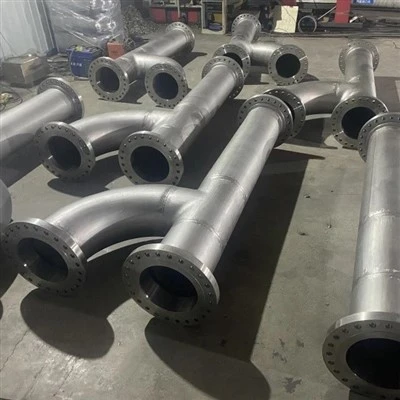
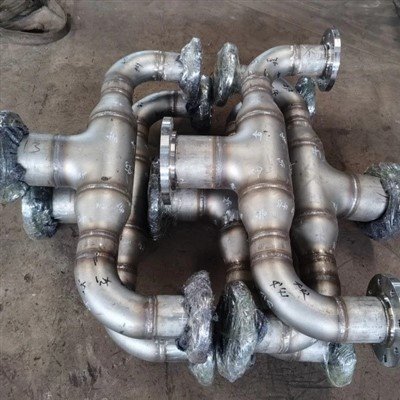
AISI 304 stainless steel, specifically its low-carbon variant 304L, remains the cornerstone austenitic stainless steel for a vast array of industrial piping systems. Its widespread adoption stems from an exceptional balance of mechanical properties, corrosion resistance, formability, and weldability, making it suitable for diverse applications ranging from food and beverage processing to chemical handling and architectural services. A rigorous understanding of its mechanical characteristics is paramount for engineers and designers tasked with ensuring structural integrity, pressure containment, and long-term reliability under operational loads.
This analysis delves into the core mechanical properties of AISI 304/304L, drawing upon standardized test data and highlighting their implications for piping system design and performance.

AISI 304 Tensile Properties
The tensile properties of AISI 304, typically measured according to ASTM standards, define its response to axial loading. In the annealed condition – the standard state for most piping products – AISI 304 exhibits moderate strength combined with exceptional ductility.
- Tensile Strength: The maximum stress the material can withstand while being stretched or pulled before necking and fracture occurs. For annealed AISI 304, the minimum specified UTS per ASTM A312 (Seamless Pipe) and ASTM A240 (Plate/Sheet) is typically 515 MPa (75,000 psi). Actual values often range between 550-650 MPa (80,000-94,000 psi), influenced by factors like specific heat treatment and minor compositional variations.
- Yield Strength: Arguably the most critical design parameter for pressure containment, the **AISI 304 yield strength** represents the stress at which the material begins to undergo permanent (plastic) deformation. For annealed material, the specified 0.2% offset yield strength minimum is 205 MPa (30,000 psi) according to ASTM A312 and A240. Actual yield strengths commonly fall within the 215-310 MPa (31,000-45,000 psi) range. It is crucial to note that austenitic stainless steels like 304 exhibit a relatively low yield strength to tensile strength ratio (YS/UTS ≈ 0.4-0.5) compared to carbon steels, necessitating careful consideration in pressure vessel and piping design codes (e.g., ASME B31.3) which often use yield strength as a basis for allowable stress calculations. The low carbon content of 304L generally results in marginally lower yield and tensile strengths than standard 304, but this difference is usually insignificant for design purposes in annealed conditions.
- Elongation: A key measure of ductility, elongation quantifies the material's ability to deform plastically before fracture. Expressed as the percentage increase in gauge length after fracture, AISI 304 demonstrates excellent ductility. Minimum specified elongation values are typically **35% or 40%** (depending on the specific product standard and wall thickness), though actual values often exceed 50-60% in a standard 2-inch gauge length. This high ductility is vital for several reasons: it allows for significant cold forming operations (bending, flanging), absorbs energy in impact events, provides a safety margin by allowing visible deformation before catastrophic failure, and accommodates stress concentrations and thermal expansion stresses more readily than brittle materials.
304 Stainless Steel Hardness
Hardness, while not a fundamental design property like yield strength, provides an indication of the material's resistance to localized plastic deformation. For annealed AISI 304, typical hardness values fall within the following ranges:
- Rockwell B (HRB): 70 - 90
- Brinell (HB): 150 - 200
- Vickers (HV): 160 - 210
AISI 304 exhibits moderate hardness in its annealed state. It is significantly harder than carbon steels but softer than hardened tool steels or martensitic stainless grades. While not primarily selected for wear resistance, its adequate hardness combined with corrosion resistance makes it suitable for many general service applications. Importantly, AISI 304 work-hardens significantly during cold working like bending, machining, rolling. This cold working can substantially increase surface hardness, improving abrasion resistance locally but also increasing susceptibility to stress corrosion cracking in certain environments if residual stresses are not relieved.
304 Steel Toughness and Impact Resistance
A defining characteristic of austenitic stainless steels like AISI 304 is their exceptional toughness, particularly at low temperatures. Toughness represents the material's ability to absorb energy and plastically deform before fracture, especially under dynamic or impact loading.
- Charpy V-Notch (CVN) Impact Energy: AISI 304 typically exhibits very high impact energy absorption even at cryogenic temperatures down to -196°C (-321°F). Values well above 100 J (74 ft-lb) at room temperature are common, and it often exceeds 50 J (37 ft-lb) at liquid nitrogen temperatures. This excellent toughness is a direct result of its stable face-centered cubic (FCC) austenitic crystal structure, which does not undergo a ductile-to-brittle transition like ferritic or martensitic steels. This property is critical for piping systems handling liquefied gases, operating in cold climates, or subject to potential impact loads.
304 Fatigue Strength
Piping systems frequently experience cyclic stresses from vibrations, pressure fluctuations, or thermal cycling. Fatigue strength defines the material's resistance to failure under repeated stress cycles below its static yield strength. The fatigue strength of AISI 304 is generally good for a metallic material but is highly dependent on surface finish, the presence of stress concentrations (notches, welds), and the operating environment.
For smooth, polished specimens tested in air at room temperature, AISI 304 exhibits an endurance limit (stress amplitude below which failure theoretically does not occur) typically estimated at approximately *35-40% of its ultimate tensile strength, often cited around 200-240 MPa at 10^7 cycles. However, in real-world piping applications, the presence of welds, surface imperfections, and corrosive environments significantly reduce the practical fatigue strength. Proper design to minimize stress concentrations, high-quality fabrication and welding practices, and smooth internal surfaces are essential for maximizing fatigue life in AISI 304 piping systems.
304 Stainless Steel Creep Resistance
Creep is the slow, time-dependent plastic deformation that occurs under sustained stress at elevated temperatures. While AISI 304 is not classified as a high-temperature alloy, it possesses adequate creep resistance for many moderate-temperature applications.
- Temperature Range: AISI 304 can be used in continuous service in oxidizing atmospheres up to approximately 870°C and in intermittent service up to 925°C. However, for sustained load-bearing applications, the upper temperature limit is significantly lower due to creep considerations and loss of strength. For long-term service, the maximum recommended temperature under significant stress is generally considered to be around **540°C (1000°F). Above this temperature, carbide precipitation also becomes a major concern for corrosion resistance unless stabilized grades 321 and 347 are used. Its strength decreases progressively as temperature increases. Design for elevated temperature service requires consulting specific creep rupture strength and creep strain data for AISI 304 rather than relying solely on room temperature properties.
AISI 304 Physical Properties
Physical properties influence system behavior related to weight, thermal management, and dimensional stability.
- Density: Approximately 7.9 g/cm³ (0.286 lb/in³)
- Coefficient of Thermal Expansion (CTE): AISI 304 has a relatively high CTE, averaging around 17.3 µm/m·°C (9.6 µin/in·°F) between 0-100°C. This is approximately 50% higher than that of carbon steel. This significant expansion must be carefully managed in piping system design through the inclusion of expansion loops, bends, or bellows to prevent excessive thermal stresses and potential distortion or failure of supports and connected equipment.
- Thermal Conductivity: The AISI 304 stainless steel thermal conductivity** is relatively low compared to carbon steel and copper alloys. At room temperature, it is approximately 16.2 W/m·K. This low thermal conductivity impacts heat transfer efficiency in heat exchanger applications and significantly influences welding and heat treatment processes. During welding, the low conductivity concentrates heat in a narrow zone around the weld, increasing the risk of distortion and sensitization in the heat-affected zone (HAZ) unless appropriate heat input control and cooling rates are employed. Preheating is rarely required, but interpass temperature control is critical.
Conclusion
Synthesizing Properties for Design Success** The mechanical properties of AISI 304 stainless steel – characterized by moderate yield and tensile strength, exceptionally high ductility and toughness, good fatigue resistance within design constraints, adequate creep resistance for moderate temperatures, and a predictable set of physical properties – form the foundation of its immense utility in piping systems. Its low AISI 304 yield strength necessitates careful design using appropriate codes to ensure pressure integrity under static loads. Its high ductility and excellent low-temperature toughness provide inherent safety margins and facilitate fabrication. However, designers must remain cognizant of its high coefficient of thermal expansion, necessitating effective stress management strategies, and its low AISI 304 stainless steel thermal conductivity, impacting both heat transfer performance and welding procedures. Understanding these properties in their entirety, rather than in isolation, is essential for the competent design, fabrication, installation, and reliable long-term operation of AISI 304 stainless steel piping systems across diverse industrial sectors. The selection of 304L for welded components in corrosive service further ensures optimal performance by mitigating sensitization risks.