Understanding hex bolts is not just about nuts and washers; it's about ensuring the integrity and longevity of countless assemblies.


What is a Hex Bolt?
Hex bolt, formally known as a hexagon head bolt or hex cap screw, is a threaded fastener characterized by its six-sided head and an externally threaded shaft that typically, but not always, extends partially along its length.
Unlike screws designed to tap their own threads into softer materials, hex bolts are intended to mate with a pre-formed internal thread, most commonly a hex nut or a tapped hole. The hexagonal head provides six flat surfaces, allowing for efficient application of high torque using common tools like wrenches or sockets.
Hex bolts are manufactured to precise dimensional standards and material specifications. Key features include the head bearing surface, the shank length, the threaded portion, and the point. They are fundamental for creating strong, demountable joints.
How Does a Hex Bolt Work?
The hex bolt functions on the principle of converting applied torque into clamping force, thereby creating a secure joint between two or more components.
The process begins by inserting the bolt through aligned clearance holes in the parts being joined. A nut is threaded onto the bolt's end, or the bolt is threaded into a tapped hole in one of the parts.
As a wrench applies torque to the hex head, the bolt's threads engage with the nut's or tapped hole's threads. This rotational force pulls the bolt shank, causing it to stretch elastically. This elastic elongation generates a powerful tensile preload along the axis of the bolt. This preload squeezes the joint members tightly together.
The resulting friction between the clamped surfaces is the primary mechanism resisting shear loads and preventing loosening under vibration. The unthreaded shank section bears shear loads directly and provides a precise bearing surface.
Proper installation requires achieving a specified preload, often controlled by torque, torque-angle, or direct tension measurement, to ensure the joint functions reliably without under-tightening or over-tightening.
Hex Bolt Applications
Hex bolts are the workhorses of mechanical assembly, finding critical use in virtually every industry due to their strength, reliability, and ease of installation/removal.
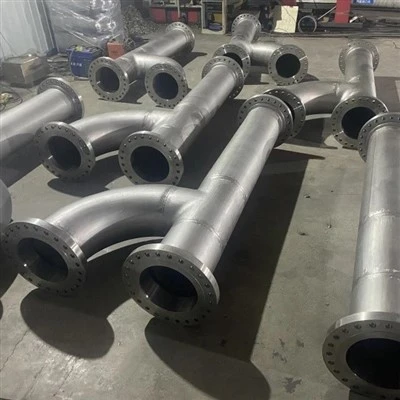
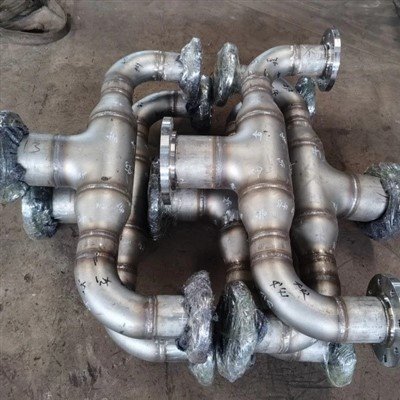
In construction and structural engineering, high-strength structural hex bolts anchor steel beams, bridges, and building frames, handling immense tensile and shear loads. Stainless steel piping systems rely heavily on hex bolts and nuts to assemble flanges, valve bodies, pump casings, and support structures, demanding corrosion resistance to fluids, atmospheres, and cleaning agents.
The automotive and aerospace sectors utilize high-grade and specialty alloy hex bolts for engines, transmissions, chassis, and airframe components, where precision, weight, and fatigue resistance are paramount.
Machinery and equipment manufacturing uses hex bolts extensively to assemble frames, gearboxes, housings, and moving parts. Marine and offshore applications require highly corrosion-resistant bolts.
Renewable energy, rail transport, consumer goods, and even furniture assembly all depend on appropriately specified hex bolts. Their versatility makes them indispensable for creating robust, serviceable joints.
Hex Bolt Types
Understanding hex bolt types is crucial for correct selection. Key classifications include:
Material & Grade:
- Carbon Steel: Common, economical, varying strength (Grade 8 strongest). Often zinc-plated.
- Stainless Steel: Essential for corrosion resistance. 304 for general use; 316 superior for saltwater/chemicals.
- Alloy Steel: High-strength structural bolts, heat-treated.
- Other Alloys (Monel, Inconel, Titanium): For extreme temps/corrosion.
Thread Type:
- Coarse Thread: Faster assembly, better in low-strength materials/vibration.
- Fine Thread: Stronger in tension, better vibration resistance, finer adjustment.
Head Style:
- Hex Head: Most common.
- Heavy Hex Head: Larger head for higher torque/wrenching. Common for structural bolts.
- Flanged Hex Head: Integrated washer-like flange distributes load.
- Trim Head: Reduced head height where clearance is limited.
Shank Type:
- Partially Threaded: Unthreaded shank bears shear, improves fatigue life. Most common.
- Fully Threaded: Threads run full length under head. Used where grip length isn't critical or for tapped holes.
How to Buy Hex Bolt
Purchasing hex bolts requires careful consideration beyond just size. Follow this professional approach:
Define the Application: Loads, environment, required strength, disassembly frequency, regulatory standards, and aesthetics.
Specify Material & Grade: Choose based on corrosion needs and strength:
- General indoor/light corrosion: Zinc-plated carbon steel.
- Food, chemical, architectural, moderate corrosion: A2-70/A4-70 Stainless.
- High strength/corrosion: A2-80/A4-80 Stainless or Alloy Steel.
- Severe marine/chemical: A4-80.
Determine Size & Thread: Precisely specify Diameter, Thread Pitch (or TPI), and Length. Specify if Partially or Fully Threaded. Confirm head style (Standard Hex, Heavy Hex, Flanged).
Quantity & Packaging: Consider bulk vs. small pack. Ensure packaging protects against damage/corrosion.
Source Reputably:
- Certification: Demand Mill Test Reports or Certificates of Conformity verifying material grade, dimensions, and mechanical properties.
- Traceability: Ensure batch traceability.
- Counterfeit Risk: Source from authorized distributors or reputable manufacturers. Cheap bolts often fail specifications.
- Compliance: Verify bolts meet required standards.
- Consider Nuts and Washers: Always specify matching nuts and appropriate washers for a complete fastener assembly.
Supplier Relationship: Partner with a knowledgeable supplier who understands stainless steel piping and industrial needs. They provide technical support, ensure correct specification, manage inventory, and guarantee quality. Don't just buy bolts; invest in joint integrity.
Conclusion
The hex bolt, with its simple six-sided head and threaded shaft, is a masterpiece of engineering simplicity and effectiveness. From defining its core characteristics and understanding the physics of clamping force to exploring its vast industrial applications and navigating the complexities of types, sizes, and procurement, this fundamental fastener underpins the safety and functionality of our built world.
By mastering the details covered here, you ensure the reliability, longevity, and safety of every joint you assemble.