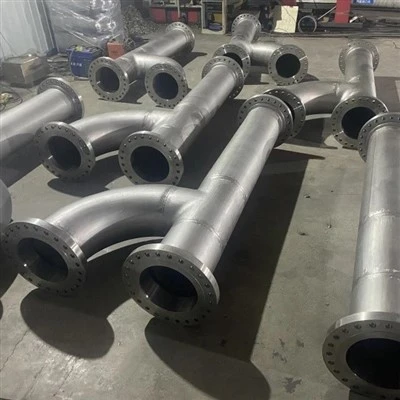
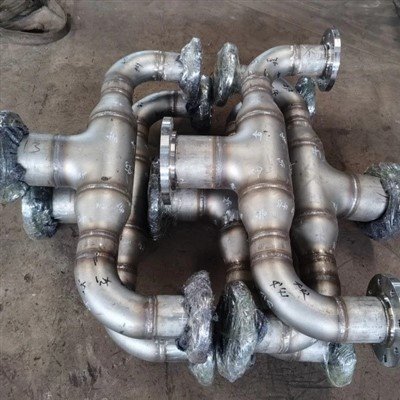
316L is the corrosion-resistant workhorse of the chemical processing industry, but it is not the ceiling of what austenitic stainless steel can achieve. 904L, a super-austenitic grade with substantially higher nickel, molybdenum, and a distinctive copper addition, exists specifically for the acid environments where 316L reaches its limits - sulfuric acid service, aggressive chloride exposure, and flue gas desulfurization equipment among them. This guide compares 904L and 316L directly across composition, acid resistance, pitting and stress corrosion cracking behavior, mechanical properties, and cost, so engineers can determine exactly when the premium of 904L is justified.

What Are the Key Compositional Differences Between 904L and 316L?
904L contains substantially more nickel and molybdenum than 316L and adds a deliberate copper addition that 316L does not have, and this combination - not simply "more alloy" in general - is precisely engineered to extend performance into acid environments where 316L is inadequate.
Both grades are low-carbon austenitic stainless steels, but 904L is classified as a super-austenitic grade because its alloy content goes well beyond standard 300-series compositions. Nickel content roughly doubles from 316L to 904L, molybdenum increases by roughly 50–100%, and 904L includes a copper addition that 316L does not carry at all. Each of these differences targets a specific corrosion mechanism: nickel improves resistance to reducing acids and stress corrosion cracking, molybdenum improves resistance to chloride-induced pitting and crevice corrosion, and copper specifically improves resistance to sulfuric and phosphoric acid - discussed in detail in the next two sections.
A side-by-side compositional comparison:
|
Element (wt%) |
316L |
904L |
Why It Matters |
|
Chromium (Cr) |
16.0–18.0 |
19.0–23.0 |
Base passive-layer former; higher Cr broadens general corrosion resistance |
|
Nickel (Ni) |
10.0–14.0 |
23.0–28.0 |
Stabilizes austenite and significantly improves resistance to reducing acids and stress corrosion cracking at higher levels |
|
Molybdenum (Mo) |
2.0–3.0 |
4.0–5.0 |
Primary driver of resistance to chloride pitting and crevice corrosion |
|
Copper (Cu) |
Not intentionally added |
1.0–2.0 |
Distinctive 904L addition that substantially improves resistance to sulfuric and phosphoric acid |
|
Carbon (C), max |
0.03 |
0.02 |
Both are low-carbon "L" grades minimizing sensitization risk during welding |
|
Nitrogen (N) |
≤ 0.10 (typical) |
≤ 0.10 (typical) |
Minor contributor to pitting resistance in both grades via the PREN formula |
Table 1. Representative nominal composition ranges for 316L and 904L per common stainless steel specifications. Values are illustrative and rounded; confirm exact limits against the current edition of ASTM A240/A480 or the applicable specification before use in procurement or design documentation.
Why Does 904L Offer Superior Resistance to Sulfuric Acid Compared to 316L?
904L resists sulfuric acid substantially better than 316L primarily because of its copper addition, which shifts the alloy's corrosion behavior in reducing acid environments in a way that molybdenum and nickel alone do not achieve, making 904L one of the standard material choices for sulfuric acid handling equipment across a wide concentration and temperature range.

Sulfuric acid is a reducing acid across much of its practical concentration range, and standard austenitic grades like 316L, which rely primarily on chromium and molybdenum for their corrosion resistance, can suffer accelerated general corrosion in this specific type of environment. Copper additions have long been recognized in stainless and nickel-alloy metallurgy as beneficial specifically in reducing acid service, and 904L's deliberate copper content is the key compositional feature that extends its usable range into sulfuric acid concentrations and temperatures where 316L corrodes too quickly for reliable service. This is not a general "higher alloy is better" effect - it is a targeted metallurgical response to a specific acid chemistry, which is why 904L is frequently the first grade engineers reach for when sulfuric acid handling is the governing design condition.
How Do 904L and 316L Compare in Resistance to Chloride Pitting and Crevice Corrosion?
904L offers meaningfully better resistance to chloride pitting and crevice corrosion than 316L, quantified through the Pitting Resistance Equivalent Number (PREN), because its higher molybdenum and nitrogen content directly raise the PREN value - a widely used, code-referenced screening metric for localized corrosion resistance in chloride environments.
PREN is calculated from an alloy's chromium, molybdenum, and nitrogen content:
PREN = %Cr + 3.3 × %Mo + 16 × %N
Applying this formula with representative compositions, 316L typically yields a PREN in the range of roughly 24–26, while 904L typically yields a PREN in the range of roughly 34–36 - a substantial margin that translates directly into greater resistance to the localized pitting and crevice attack that chloride-bearing environments, including seawater and many industrial process streams, can cause in lower-PREN grades.
PREN is a widely used screening tool precisely because it condenses several compositional factors into a single comparable number, but it is a general indicator rather than a guarantee - actual pitting resistance in service also depends on surface finish, fabrication quality, and the specific temperature and chloride concentration involved, so PREN comparisons should inform material selection rather than substitute entirely for environment-specific corrosion data or testing.
How Do the Two Grades Compare in Resistance to Stress Corrosion Cracking?
904L's substantially higher nickel content gives it meaningfully better resistance to chloride-induced stress corrosion cracking than 316L, which is a significant advantage in hot, chloride-containing environments where standard austenitic grades are known to be vulnerable to this failure mode.
Chloride-induced stress corrosion cracking is a well-documented failure mode in standard austenitic stainless steels operating under tensile stress in hot chloride environments - a combination common in many process heat exchangers, evaporators, and hot process piping. Nickel content has a strong, well-established relationship to this resistance: as nickel content rises, susceptibility to chloride stress corrosion cracking generally decreases, which is part of why higher-nickel austenitic and duplex/super-austenitic grades are frequently specified in place of standard 300-series stainless steel for exactly this failure mode.
904L's nickel content, at roughly double that of 316L, places it in a meaningfully more resistant category, making it a common specification choice for hot chloride-bearing process equipment where stress corrosion cracking risk - not general corrosion alone - is the governing design concern.
What Role Does Copper Play in 904L's Corrosion Resistance?
Copper is the single most distinctive compositional feature separating 904L from standard austenitic grades like 316L, and its role is specific rather than general - it primarily improves performance in reducing acid environments such as sulfuric and phosphoric acid rather than uniformly improving every corrosion mechanism the alloy might face.

It is worth being precise about what copper does and does not do in 904L's alloy system, since this distinction shapes correct material selection. Copper's benefit is concentrated in reducing acid environments - sulfuric and phosphoric acid in particular - rather than delivering a broad, uniform improvement across every corrosion mechanism. Chloride pitting resistance in 904L comes primarily from molybdenum and nitrogen content (captured in the PREN calculation above), and stress corrosion cracking resistance comes primarily from nickel content, not copper.
Recognizing this specificity helps explain why 904L is described as a targeted acid-resistant grade rather than simply "a higher grade of 316L" - its alloy design reflects a deliberate response to a particular set of process environments common in sulfuric acid production, phosphoric acid manufacturing, and flue gas desulfurization equipment.
How Do 904L and 316L Compare in Mechanical Properties and Fabricability?
904L and 316L have broadly similar room-temperature mechanical properties and general fabrication characteristics as austenitic stainless steels, though 904L's higher alloy content generally requires more attention to welding heat input and filler metal selection to preserve its corrosion performance across the weld and heat-affected zone.
Both grades share the same austenitic crystal structure and general mechanical behavior pattern - good ductility, good low-temperature toughness, and non-magnetic behavior in the annealed condition - so the mechanical property comparison between them is far less dramatic than the corrosion resistance comparison.
Fabrication is also broadly similar in terms of forming and machining behavior, though as with most higher-alloy stainless grades, 904L typically benefits from careful control of welding parameters and the use of a matching or compatible filler metal to ensure the weld metal and heat-affected zone retain the base metal's corrosion performance, since welding is often where corrosion resistance is most at risk of being locally compromised in any high-alloy stainless fabrication.
How Do 904L and 316L Compare in Cost and Typical Applications?
904L costs substantially more than 316L per kilogram, driven directly by its much higher nickel, molybdenum, and copper content, and it is a lower-volume specialty product with less broad availability, so it is applied selectively to the specific equipment and process zones where its acid and chloride resistance is genuinely required rather than across an entire process system.
A comparison of typical suitability across common chemical processing environments:
|
Application / Environment |
316L Suitability |
904L Suitability |
|
Dilute sulfuric acid, low temperature |
Generally adequate |
Excellent - often exceeds requirement |
|
Concentrated or hot sulfuric acid |
Limited - accelerated corrosion likely |
Well suited - copper addition specifically targets this environment |
|
Phosphoric acid processing |
Adequate in milder conditions only |
Well suited across a broader concentration and temperature range |
|
Seawater / high-chloride cooling water |
Moderate risk of pitting and crevice corrosion |
Significantly lower risk due to higher PREN |
|
Flue gas desulfurization (FGD) equipment |
Often insufficient in the most aggressive zones |
Widely specified as an industry-standard material for FGD absorber components |
|
General food, beverage, and pharmaceutical processing |
Well suited - standard workhorse grade |
Typically unnecessary premium unless specific acid exposure is present |
Table 2. Representative suitability comparison, 316L vs. 904L, across common chemical processing environments.
In practice, many process systems use 316L for the majority of piping and equipment while reserving 904L specifically for the components exposed to the harshest local conditions - an absorber vessel in a flue gas desulfurization system, a specific reactor or heat exchanger handling concentrated sulfuric acid, or a component exposed to the highest chloride concentration in a cooling water circuit. This selective specification approach keeps overall project material cost proportionate to actual local severity, echoing the same pattern seen in other high-alloy material selection decisions across the industry.
When Should You Choose 904L Over 316L for Chemical Processing Equipment?
904L should be specified when process conditions include sulfuric or phosphoric acid exposure beyond 316L's practical range, high-chloride environments where pitting or crevice corrosion risk is significant, or hot chloride conditions where stress corrosion cracking is a credible failure mode - and 316L should remain the default elsewhere, since 904L's premium is not justified without one of these specific drivers present.

A practical decision checklist:
Choose 904L when: the process involves sulfuric or phosphoric acid at concentrations or temperatures known to exceed 316L's service envelope, when chloride concentration and temperature combine to create meaningful pitting or crevice corrosion risk, or when hot chloride exposure creates a credible stress corrosion cracking concern in a stressed or restrained component.
Default to 316L when: the process environment is within 316L's well-established service envelope - general food, beverage, pharmaceutical, and moderate chemical processing applications - where 904L's additional alloy content would add cost without a corresponding performance requirement.
Consider selective specification rather than an all-or-nothing choice across an entire system, applying 904L only at the specific vessels, piping runs, or components exposed to the governing aggressive condition.
Validate against environment-specific corrosion data or testing for borderline cases, since PREN and general grade comparisons are a useful screening tool but not a substitute for corrosion data specific to the actual process chemistry, concentration, and temperature.
Frequently Asked Questions
Is 904L considered a duplex stainless steel?
No. 904L is a fully austenitic "super-austenitic" grade, not a duplex (austenitic-ferritic) stainless steel; it achieves its enhanced corrosion resistance through elevated nickel, molybdenum, and copper content within a single-phase austenitic structure, distinct from the two-phase microstructure that defines duplex grades.
Can 904L and 316L be welded together in the same system?
Yes, transition welds between 904L and 316L are feasible with an appropriate filler metal, and this is a common practical approach in systems that selectively specify 904L only at the most aggressive locations, though the overall corrosion performance at and near the joint will reflect the more limited resistance of the 316L side.
Does 904L eliminate the need for corrosion allowance in acid service?
No. Even highly corrosion-resistant grades like 904L are typically specified with an appropriate corrosion allowance and are evaluated against environment-specific corrosion rate data for the actual process chemistry, since no single grade comparison substitutes for validated performance data in a specific, well-characterized process environment.
Is 904L magnetic like some other stainless grades?
904L, like 316L, is generally non-magnetic (or only very weakly magnetic) in the annealed austenitic condition, though cold working can introduce some magnetic response in both grades, consistent with typical austenitic stainless steel behavior.
Are there lower-cost alternatives to 904L worth considering for chloride resistance specifically?
Where the governing concern is primarily chloride pitting and crevice corrosion rather than sulfuric or phosphoric acid resistance specifically, duplex stainless grades can sometimes offer a comparable or higher PREN at a lower relative cost than 904L, so the specific governing corrosion mechanism - not chloride resistance alone - should guide the choice between 904L and duplex alternatives.