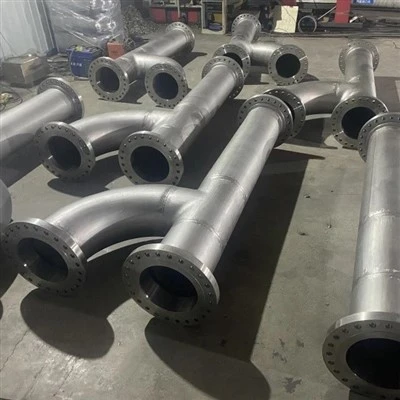
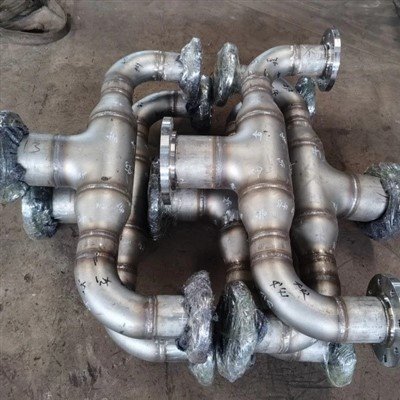
Steel 904L, also known as UNS N08904 and 1.4539, austenitic stainless steel, is a premier solution for the most aggressive corrosive environments. As a supplier specializing in premium stainless steel pipe fittings, we are often asked about the unique value proposition of 904L.

This blog introduces the composition, properties, types, applications, and advantages of 904L pipe fittings, providing a clear comparison with 316L grade.
904L Stainless Steel Chemical Composition
According to standard specifications like ASTM A403, the typical composition is as follows:
|
Grade |
N≤ |
Cr |
Mo |
Cu |
P≤ |
C≤ |
Mn≤ |
S≤ |
Si≤ |
Ni |
|
904L |
0.1 |
19.0-23.0 |
4.0-5.0 |
1.0-2.0 |
0.045 |
0.02 |
2.0 |
0.035 |
1.0 |
23.0-28.0 |
This low-carbon formulation minimizes carbide precipitation during welding, enhancing intergranular corrosion resistance. The addition of copper improves resistance to reducing acids, while molybdenum bolsters pitting resistance in chloride-rich environments.
904L Pipe Fitting Properties

Corrosion Resistance: This alloy demonstrates outstanding resistance to pitting, crevice corrosion, and stress corrosion cracking in aggressive media, including sulfuric acid, phosphoric acid, and chloride solutions.
Its performance surpasses standard austenitic grades in environments with high chloride concentrations, such as seawater or brackish water, due to the synergistic effects of molybdenum and copper.
Weldability: 904L offers excellent weldability using standard techniques like TIG (GTAW) or MIG (GMAW), without the need for post-weld heat treatment in most cases. The low carbon content prevents sensitization, reducing the risk of intergranular attack.
However, filler metals such as ERNiCrMo-3 are recommended to match the base metal's corrosion resistance.
High-Temperature Resistance: With a maximum continuous service temperature of around 1093°C (2000°F), 904L provides good oxidation resistance and structural stability under thermal cycling. It outperforms many austenitic steels in carburizing and sulfidizing atmospheres, though it is not optimized for extreme high-temperature creep like nickel-based superalloys.
Mechanical properties at elevated temperatures include a tensile strength of over 515 MPa at room temperature, dropping gradually but remaining viable up to 800°C.
Machinability and Formability: While 904L is more challenging to machine than lower-alloyed steels due to its work-hardening tendency, it achieves good formability through cold working.
Machinability ratings are typically 45-50% of free-machining steels, requiring rigid setups and carbide tools. Heat treatment, such as solution annealing at 1050-1150°C followed by rapid quenching, optimizes ductility and toughness.
904L Pipe Fitting Types
Butt Welding Pipe Fittings

Elbow: Used to change the direction of piping, common angles are 45°, 90°, and 180°. Based on the ratio of the bending radius to the pipe diameter, they are further classified into long-radius and short-radius elbows.
Tee: Used for splitting or combining fluid flow. Equal tees have three outlets of the same diameter; reducing tees have one outlet with a different diameter than the other two.
Reducer: Used to connect pipes of different diameters. Concentric reducers maintain centerline alignment and are suitable for vertical pipes; eccentric reducers have one side straight and are often used in horizontal pipes to maintain consistent pipe bottom or top height.
Pipe Cap: Welded to the end of a pipe to permanently seal the pipeline.
Pipe Flange: Used in conjunction with loose flanges to facilitate alignment and disassembly of the piping system, available in long and short types.
Pipe Bend/Elbow: Refers to a bend with a larger bending radius, which changes the flow direction more gradually than a standard elbow, reducing pressure loss and erosion.
Cross: Has four outlets, used in situations where fluid needs to be split into three directions or for complex confluence.
Socket Weld and Threaded Pipe Fittings

These types of fittings are typically used in small-diameter, high-pressure applications or where periodic disassembly is required.
Socket Weld Fittings: The pipe is inserted into the socket of the fitting and then fillet welded. This provides high connection strength and is suitable for high-pressure systems.
Threaded Fittings: Connected to the pipe via threads, these are the easiest to install and remove, but the seal is generally not as good as welding. They are often used in low-pressure, non-critical auxiliary pipelines.
Other Forms: Other specialized forms include union fittings for connections, reducing couplings with internal and external threads, and plugs for sealing.
904L Steel Pipe Fitting Applications
Chemical & Petrochemical Processing: Reactors, heat exchangers, and piping handling sulfuric, phosphoric, and mixed acids.
Pollution Control & FGD Systems:Ducting, scrubbers, and chimney liners handling wet sulfuric gases.
Seawater & Marine Systems: Cooling water systems, ballast water piping, and offshore oil & gas components.
Pharmaceutical & Food Processing: Equipment requiring high purity and resistance to aggressive cleaning agents.
904L vs. 316L: Comparison

|
Feature |
904L (UNS N08904) |
316L (UNS S31603) |
|
Alloy Composition |
High-Alloy: ~20% Cr, 25% Ni, 4.5% Mo, 1.5% Cu |
Standard Austenitic: ~16% Cr, 10% Ni, 2.1% Mo |
|
Corrosion Resistance |
Excellent. Superior resistance to chlorides, sulfuric, phosphoric, and organic acids. |
Good. Adequate for many industrial and marine atmospheres, but prone to pitting in concentrated chlorides. |
|
PREN Value |
~36-39 (High resistance to pitting/crevice) |
~25-27 (Moderate resistance) |
|
Cost |
Significantly Higher due to high Ni, Mo, and Cu content. |
More Economical, widely available. |
|
Primary Rationale |
Technical Necessity. Used where 316L will fail, justifying cost via reliability and longevity. |
Cost-Effectiveness. The standard workhorse for a vast range of mildly corrosive applications. |
For help determining if 904L is the right solution for your application, or to request a quote for our range of ASME B16.9 904L fittings, please contact our technical sales team.