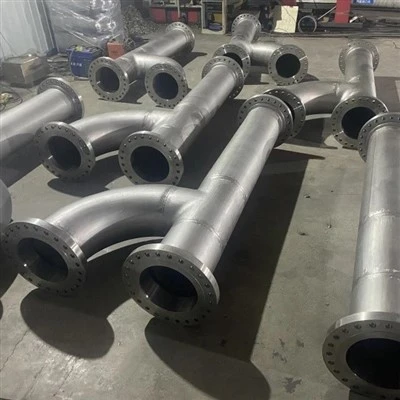
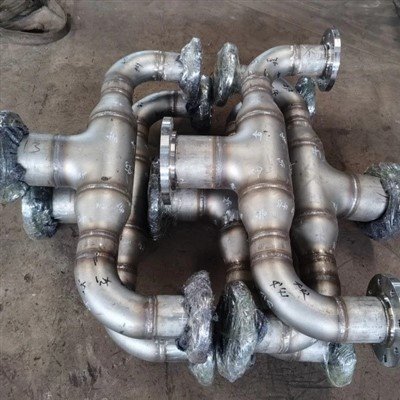
In the intricate world of piping systems, components that efficiently and reliably change the direction of flow are fundamental. Among these, the 90-degree elbow stands as one of the most ubiquitous and critical fittings. This guide provides a rigorous yet accessible overview of the 90 degree elbow, covering its definition, characteristics, types, uses, and key specifications, essential knowledge for engineers, designers, maintenance personnel, and procurement specialists.

What is a 90-Degree Elbow?
A 90 degree elbow, often simply called a 90° elbow, is a standardized pipe fitting designed to connect two pipes or a pipe to a piece of equipment at a precise right angle (90 degrees). Its primary function is to change the direction of fluid flow within a piping system efficiently and with minimal disruption.
- Construction: It features a curved body forming a quarter-circle between its two connection ends. These ends are prepared for specific joining methods.
- Function: By introducing this bend, the elbow allows the piping layout to navigate around obstacles, follow building contours, connect equipment at different orientations, or simply fit within the available space constraints.
- Critical Role: While seemingly simple, the 90° elbow is vital for system integrity. It must withstand the same internal pressure, temperature, and potential corrosive effects as the adjoining pipe while managing the dynamic forces (flow-induced vibration, water hammer, thermal expansion stresses) concentrated at the bend. Selecting the correct type and specification is crucial for safe and efficient operation.
Characteristics of 90 Degree Elbows
90 degree elbows possess distinct characteristics that define their performance and application suitability:
Angle: The defining feature is the fixed 90-degree change in direction.
Radius of Bend: This is the distance from the center of curvature to the centerline of the elbow. It significantly impacts flow dynamics and pressure drop.
- Long Radius (LR): Radius = 1.5 x Nominal Pipe Size (NPS). (e.g., 6" NPS LR elbow has a 9" radius). Offers smoother flow, lower pressure drop, less turbulence, and reduced erosion potential. Most common.
- Short Radius (SR): Radius = 1.0 x NPS. (e.g., 6" NPS SR elbow has a 6" radius). More compact, used where space is extremely limited. Causes higher pressure drop, turbulence, and erosion potential.
Material: Constructed from diverse materials to match system requirements:
- Metals: Carbon Steel (ASTM A234 WPB), Stainless Steel (ASTM A403 WP304/316), Alloy Steels (WP5, WP9, WP11), Duplex/Super Duplex, Nickel Alloys (Inconel, Monel, Hastelloy), Copper, Aluminum.
- Selection Criteria: Corrosion resistance, temperature rating, pressure rating, cost, fluid compatibility.
Pressure Rating: Must match or exceed the system's design pressure. Determined by material, wall thickness, manufacturing standard, and design. Expressed in classes or specific pressure values.
End Connections: Dictate how the elbow integrates into the system:
- Buttweld (BW): Ends beveled for groove welding directly to pipe. Highest integrity, smooth bore, preferred for high-pressure/temp/critical service.
- Threaded (THD): Male (NPT, BSPT) or Female (NPTF, BSPP) threads. Used for smaller sizes, lower pressure, easier assembly/disassembly (though prone to leakage if not sealed properly).
- Socket Weld (SW): Pipe inserts into a socket in the fitting, fillet welded externally. Good for small-bore, high-pressure piping but has a slight bore restriction and crevice.
- Flanged: Ends have integral flanges bolted to mating pipe flanges. Allows for disassembly but is bulkier and heavier.
Smooth Bore: Well-manufactured elbows, especially buttweld types, maintain a smooth internal surface at the bend to minimize flow resistance and turbulence.
Types of 90 Degree Elbows
Beyond material and connection type, 90° elbows are categorized primarily by their bend radius and whether they change pipe size:
|
Feature |
Long Radius (LR) Elbow |
Short Radius (SR) Elbow |
Reducing Elbow |
|
Radius |
1.5 x Pipe Diameter |
1.0 x Pipe Diameter |
LR or SR |
|
Flow Dynamics |
Smoother flow, lower pressure drop |
Sharper turn, higher pressure drop |
Abrupt change at connection points |
|
Space Required |
More space needed for installation |
Compact, ideal for tight spaces |
Varies based on radius |
|
Erosion Potential |
Lower due to gradual bend |
Higher due to sharper bend |
Higher at the reduction point |
|
Primary Use |
High-pressure systems, critical flow paths |
Space-constrained installations |
Connecting pipes of different diameters |
|
Cost |
Generally higher |
Generally lower |
Higher than standard elbows |
- Long Radius (LR) 90° Elbow: The industry standard. Provides the most gradual change in direction, minimizing flow resistance, pressure drop, turbulence, and erosion. Used wherever space permits, especially in high-pressure, high-flow, or erosive/corrosive services. (Standard per ASME B16.9).
- Short Radius (SR) 90° Elbow: Used when space constraints make LR elbows impractical. The sharper bend increases pressure drop, turbulence, and potential for erosion/corrosion at the bend. Common in low-pressure utility lines or tight locations. (Standard per ASME B16.9 for sizes NPS 1/2" to 24", and ASME B16.28 for all sizes).
- Reducing 90° Elbow: Features different diameters on the two ends (e.g., 4" x 2"). Used to change both direction and pipe size within a single fitting. Can be either Long Radius or Short Radius. The abrupt change at the connection points can create turbulence. (Standard per ASME B16.9).
- Mitered Elbow: Fabricated by welding together multiple cut pipe sections ("miters") at angles to form a bend. Not a standard seamless/wrought fitting. Used for large diameters where standard elbows are cost-prohibitive or unavailable. Creates significant turbulence and is generally avoided for erosive or high-pressure services unless carefully designed.
Common Uses of 90 Degree Elbows
The 90° elbow is indispensable across virtually all industries involving fluid transport:
Process Piping: Routing pipelines around equipment, tanks, and structural elements; connecting pumps, vessels, and exchangers; directing flow in distillation columns and reactors. LR elbows dominate critical high-P/T services.
Power Generation: Steam lines, feedwater lines, condenser circuits, fuel oil lines, cooling water systems. High-integrity buttweld LR elbows are crucial.
HVAC: Routing chilled water, hot water, condenser water, and refrigerant piping in commercial and industrial buildings. Threaded, socket weld, or buttweld elbows are common depending on size and pressure.
Plumbing: Changing direction in water mains, branch lines, drain pipes, and sprinkler systems. Threaded, solvent-weld (plastic), or flanged elbows are typical.
Pulp & Paper: Handling process chemicals, steam, stock slurry, and wastewater. Corrosion-resistant materials are often required.
Shipbuilding & Offshore: Ballast systems, bilge lines, fuel oil lines, seawater cooling, process piping on FPSOs. Requires robust materials resistant to marine corrosion.
Water & Wastewater Treatment: Intake and discharge lines, chemical feed lines, sludge handling pipes, filter underdrains.
Mining & Mineral Processing: Slurry transport lines, process water, reagent dosing, tailings lines. Abrasion-resistant materials or linings are often needed.
Specifications of 90° Elbows
Selecting the correct 90° elbow requires careful attention to specifications defined by industry standards:
Dimensional Standards: Govern size, center-to-end dimensions, wall thickness, and bend radius.
- ASME B16.9: Factory-Made Wrought Buttwelding Fittings (Covers LR & SR elbows, reducing elbows, tees, caps, etc., NPS 1/2" to 48").
- ASME B16.28: Wrought Steel Buttwelding Short Radius Elbows and Returns (Specifically for SR elbows and 180° returns).
- ASME B16.11: Forged Steel Fittings, Socket-Welding and Threaded (Covers smaller, threaded/socket weld elbows).
EN 10253 (Europe), JIS B2311/2312/2313 (Japan), GOST (Russia/CIS): Regional/international equivalents.
Material Specifications: Define chemical composition and mechanical properties.
- ASTM A234: Carbon & Alloy Steel Piping Fittings (e.g., WPB, WPC, WP1, WP5, WP9, WP11).
- ASTM A403: Wrought Austenitic Stainless Steel Piping Fittings (e.g., WP304, WP304L, WP316, WP316L, WP321, WP347).
- ASTM A420: Piping Fittings of Wrought Carbon Steel and Alloy Steel for Low-Temperature Service.
- ASTM B366: Factory-Made Wrought Nickel and Nickel Alloy Fittings.
- ASTM D2466 / D2467: Socket-Weld/Threaded PVC/CPVC fittings.
Pressure-Temperature Ratings: Defined by the material specification and dimensional standard. Specify the maximum allowable pressure at a given temperature. Crucial for safe design.
Schedule / Wall Thickness: Must match the adjoining pipe schedule for buttweld fittings to ensure compatible strength and bore. Standards like ASME B16.9 define the minimum wall thickness for each size and pressure class.
End Preparation: For buttweld elbows, ASME B16.25 defines the bevel angle and root face dimensions required for proper welding.
Marking: Standards require fittings to be marked with manufacturer's name/trademark, material grade, size, schedule/weight, pressure rating, and heat number for traceability.
Conclusion
The 90-degree elbow is far more than a simple pipe bend; it is an engineered component critical for the functionality, safety, and efficiency of piping systems worldwide. Understanding the differences between Long Radius and Short Radius elbows, the implications of material selection, the various end connection types, and the importance of adhering to rigorous dimensional and material specifications (like ASME B16.9 and ASTM A234) is fundamental. Whether navigating complex process units in a refinery, routing HVAC lines in a skyscraper, or installing a water line, selecting the appropriate 90° elbow ensures the system operates reliably, minimizes energy loss due to pressure drop, and withstands the demands of the service environment. This beginner's guide provides the foundational knowledge necessary to make informed decisions regarding this essential piping component.