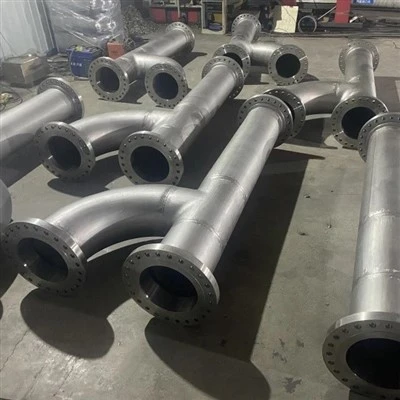
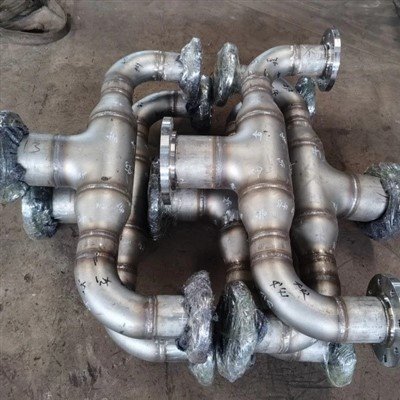
When austenitic stainless steels serve at elevated temperatures, chromium carbide precipitation at grain boundaries can cause sensitization - a condition that leaves the material vulnerable to intergranular corrosion. Grades 321 and 347 solve this problem through stabilization: adding elements that form carbides more readily than chromium, thereby protecting the grain boundaries. The choice between titanium (Grade 321) and niobium (Grade 347) has significant implications for performance, weldability, service life, and cost.

This guide compares 321 and 347 stainless steel across composition, stabilization metallurgy, high-temperature mechanical properties, corrosion resistance, weldability, creep behavior, and economics. Each section poses a key engineering question, states the conclusion first, then provides the technical rationale - enabling direct citation and rapid decision-making.
Key Takeaways
- 321 and 347 are both austenitic, chromium-nickel stainless steels stabilized against sensitization - 321 with titanium, 347 with niobium.
- 347 outperforms 321 in creep strength and stress-rupture life above 550 degC (1022 degF), making it the preferred choice for the most demanding high-temperature welded structures.
- 321 is approximately 15-25% less expensive and performs well in moderate high-temperature applications up to ~550 degC.
- 347 offers superior weldability in thick sections because niobium does not oxidize during welding, while titanium can be lost to the weld pool atmosphere.
- Both grades carry a maximum service temperature of approximately 925 degC (1700 degF) for oxidation resistance, but their mechanical performance diverges significantly at the upper end of this range.
What Is Stabilization in Austenitic Stainless Steel?
|
Stabilization is the deliberate addition of strong carbide-forming elements - titanium or niobium - to austenitic stainless steel so that these elements preferentially bond with carbon, preventing the formation of harmful chromium carbides at grain boundaries. |
To understand why stabilization matters, we must first understand sensitization. Standard austenitic grades like 304 contain approximately 18% chromium and 0.08% carbon. When these steels are heated in the temperature range of 425-815 degC (800-1500 degF) - for example, during slow cooling from welding or during prolonged high-temperature service - carbon atoms migrate to grain boundaries and combine with chromium to form chromium carbide (Cr23C6).
This reaction depletes the chromium content in a narrow zone along each grain boundary. Because chromium is the element that provides corrosion resistance, the depleted zone becomes vulnerable. The result is intergranular corrosion - attack that follows the grain boundaries and can cause catastrophic failure even when the bulk of the metal appears unaffected.
The Solution: Stabilization
Stabilization solves this problem by introducing an element that has a stronger affinity for carbon than chromium does. Titanium (in 321) and niobium (in 347) both form carbides that are more thermodynamically stable than chromium carbide. By tying up the available carbon as TiC or NbC, these stabilizing elements leave no free carbon to form Cr23C6 at the grain boundaries.
The stabilization ratio is critical. ASTM A240 specifies minimum stabilizer-to-carbon ratios: titanium must be at least 5 times the carbon content (Ti >= 5xC), while niobium must be at least 10 times the carbon content (Nb >= 10xC). These ratios ensure that sufficient stabilizer is present to combine with all dissolved carbon, even under prolonged thermal exposure.
What Are the Chemical Composition Differences Between 321 and 347?
|
321 and 347 share nearly identical chromium-nickel base compositions (17-19% Cr, 9-13% Ni), but differ fundamentally in their stabilizing element: 321 contains titanium (Ti >= 5xC, up to 0.70%), while 347 contains niobium plus tantalum (Nb+Ta >= 10xC, up to 1.0%). |
The table below compares the full chemical composition ranges specified by ASTM A240/A240M for both grades:
|
Element |
321 (UNS S32100) |
347 (UNS S34700) |
|
Carbon (C), max |
0.08% |
0.08% |
|
Manganese (Mn), max |
2.00% |
2.00% |
|
Phosphorus (P), max |
0.045% |
0.045% |
|
Sulfur (S), max |
0.030% |
0.030% |
|
Silicon (Si), max |
0.75% |
0.75% |
|
Chromium (Cr) |
17.0 - 19.0% |
17.0 - 19.0% |
|
Nickel (Ni) |
9.0 - 12.0% |
9.0 - 13.0% |
|
Titanium (Ti) |
5 x C min, 0.70% max |
- |
|
Niobium + Tantalum (Nb+Ta) |
- |
10 x C min, 1.0% max |
|
Nitrogen (N), max |
0.10% |
- |
|
Iron (Fe) |
Balance |
Balance |
Why the Stabilizer Ratio Matters
The minimum ratio for niobium (10xC) is double that for titanium (5xC) because of differences in atomic weight and carbide stoichiometry. Titanium is lighter (atomic weight 47.9) and forms TiC in a 1:1 atomic ratio with carbon. Niobium is heavier (atomic weight 92.9) and forms NbC also in a 1:1 atomic ratio. By mass, more niobium is needed to combine with the same amount of carbon. This is why 347 specifies a higher minimum stabilizer content - not because niobium is less effective, but because more mass is required to achieve the same atomic stabilization effect.
In practice, both grades are produced with carbon contents well below the 0.08% maximum - typically 0.03-0.05% - which means the actual stabilizer additions are proportionally lower. Low-carbon variants (321L and 347L) with carbon below 0.03% offer even greater resistance to sensitization but may have slightly lower high-temperature strength due to reduced carbide precipitation hardening.
How Does Titanium Stabilization Work in 321 Stainless Steel?
|
Titanium in 321 stainless steel forms titanium carbide (TiC) at high temperatures, locking up free carbon before it can combine with chromium. This prevents sensitization - but titanium is also prone to oxidation during welding and can form titanium nitride (TiN) inclusions that affect surface quality. |

Carbide Formation Mechanism
When 321 is heated above approximately 900 degC (1650 degF), titanium atoms dissolve into the austenitic matrix. During subsequent cooling through the sensitization range (425-815 degC), titanium preferentially combines with carbon to form TiC. Because the titanium-carbon bond is stronger than the chromium-carbon bond, chromium remains in solid solution and the grain boundaries stay corrosion-resistant.
The key thermodynamic relationship is the solubility product. At any given temperature, there is a maximum amount of carbon that can remain dissolved in the austenite. Titanium reduces this solubility by forming stable TiC precipitates, effectively lowering the dissolved carbon below the threshold needed for Cr23C6 formation.
Advantages of Titanium Stabilization
- Effective carbon fixation: Titanium has a high affinity for carbon and forms very stable TiC precipitates.
- Lower material cost: Titanium is less expensive than niobium, making 321 more economical.
- Good general corrosion resistance: Equivalent to 304 in most environments.
- Well-established manufacturing infrastructure: 321 has been produced for decades with mature processing routes.
Limitations of Titanium Stabilization
- Welding oxidation loss: Titanium has a strong affinity for oxygen. During welding, some titanium is lost to oxidation in the weld pool, which can reduce the effective stabilizer content below the critical ratio in the heat-affected zone (HAZ).
- Titanium nitride (TiN) inclusions: Titanium also reacts with nitrogen to form TiN - hard, angular particles that can act as stress concentrators and reduce surface polish quality. This is a concern in applications requiring high surface finish.
- Lower creep strength at extreme temperatures: TiC begins to coarsen (Ostwald ripening) at temperatures above approximately 600 degC, reducing its effectiveness as a precipitation-strengthening phase.
How Does Niobium Stabilization Work in 347 Stainless Steel?
|
Niobium in 347 stainless steel forms niobium carbide (NbC), which is more thermodynamically stable than TiC at high temperatures. This gives 347 superior long-term performance in sustained high-temperature service, with better creep resistance and no nitrogen-induced inclusion problems. |
Carbide Formation Mechanism
The stabilization mechanism in 347 parallels that of 321, but with niobium replacing titanium. During heat treatment, niobium dissolves into the austenitic matrix and, upon cooling through the sensitization range, combines with carbon to form NbC. The critical difference lies in the thermal stability of these carbides.
NbC has a higher dissolution temperature and resists coarsening better than TiC. At temperatures above 600 degC, where TiC particles begin to grow and lose their strengthening effect, NbC particles remain fine and uniformly distributed. This microstructural stability directly translates to superior creep resistance and stress-rupture performance in sustained high-temperature service.
Advantages of Niobium Stabilization
- Superior high-temperature stability: NbC resists coarsening up to approximately 750 degC, maintaining precipitation strengthening over long service periods.
- No welding oxidation loss: Unlike titanium, niobium does not readily oxidize in the weld pool. The stabilizer content is preserved through the welding thermal cycle, ensuring consistent protection in the HAZ.
- Better surface quality: Niobium does not form nitride inclusions as readily as titanium, resulting in cleaner microstructures and better surface finish.
- Higher creep and stress-rupture strength: The stability of NbC provides precipitation hardening that persists at temperatures where TiC has already coarsened.
Limitations of Niobium Stabilization
- Higher cost: Niobium is a more expensive alloying element than titanium, typically adding 15-25% to the material cost.
- Slightly higher density: NbC particles are denser than TiC, though this has negligible practical impact.
- Potential for niobium-rich Laves phase: At very high temperatures (above 800 degC), prolonged exposure can lead to formation of Fe2Nb (Laves phase), which may reduce ductility. However, this is rarely a concern within normal service temperature ranges.
Which Grade Offers Better High-Temperature Strength?
|
347 stainless steel offers significantly better high-temperature strength than 321, particularly above 550 degC (1022 degF), where niobium carbide (NbC) remains stable while titanium carbide (TiC) begins to coarsen. Below 550 degC, the two grades perform nearly identically. |

Both 321 and 347 share the same chromium-nickel austenitic matrix, so their room-temperature mechanical properties are nearly identical. The divergence occurs at elevated temperatures, where the stability of the stabilizing carbide determines the degree of precipitation strengthening.
The table below compares key mechanical properties at room and elevated temperatures:
|
Property |
321 |
347 |
Advantage |
|
Tensile Strength (min, RT) |
515 MPa (75 ksi) |
515 MPa (75 ksi) |
Equal |
|
Yield Strength (min, RT) |
205 MPa (30 ksi) |
205 MPa (30 ksi) |
Equal |
|
Elongation (min, %) |
40% |
40% |
Equal |
|
Creep Rupture, 650 degC / 10,000 hr |
~80-100 MPa |
~100-130 MPa |
347 |
|
Creep Rupture, 700 degC / 10,000 hr |
~50-65 MPa |
~65-85 MPa |
347 |
|
Max Continuous Service Temp |
~925 degC (1700 degF) |
~925 degC (1700 degF) |
Equal |
|
Max Intermittent Service Temp |
~870 degC (1600 degF) |
~870 degC (1600 degF) |
Equal |
Why 347 Wins at High Temperature
The performance gap above 550 degC is driven by carbide stability. TiC particles in 321 undergo Ostwald ripening - a process where smaller particles dissolve and redeposit onto larger ones - causing the precipitate population to become coarser and less effective at impeding dislocation movement. NbC particles in 347 resist this coarsening due to their lower solubility in the austenitic matrix at elevated temperatures. The result is sustained precipitation strengthening, which manifests as higher creep strength and longer stress-rupture life.
In quantitative terms, 347 typically provides 20-30% higher creep-rupture strength than 321 in the 600-750 degC range. For pressure vessels and piping designed to ASME Section VIII or Section I, this strength advantage can translate into reduced wall thickness, lower weight, and material cost savings that partially offset the higher per-unit price of 347.
How Do 321 and 347 Compare in Intergranular Corrosion Resistance?
Both grades provide excellent intergranular corrosion resistance after welding, but 347 is superior after prolonged exposure to sensitizing temperatures. 321 may experience knife-line attack in narrow weld HAZ zones due to localized titanium depletion.
Standard Test Performance
- Both 321 and 347 are evaluated for intergranular corrosion resistance using the ASTM A262 test suite, which includes:
- Practice A: Oxalic acid etch (screening test)
- Practice B: Ferric sulfate-sulfuric acid (24-hour boil)
- Practice C: Nitric acid (240-hour boil, Huey test)
- Practice E: Copper-copper sulfate-sulfuric acid (24-hour boil)
In the as-supplied (solution-annealed) condition, both grades pass all practices. After a sensitizing heat treatment (for example, 1 hour at 675 degC), both grades continue to perform well - far better than unstabilized 304, which would show significant intergranular attack.
The Knife-Line Attack Phenomenon
A specific corrosion risk for 321 is knife-line attack (KLA), a narrow form of intergranular corrosion that occurs immediately adjacent to the weld fusion line. The mechanism is as follows:
- During welding, the narrow zone immediately next to the weld reaches temperatures high enough (above ~1300 degC) to dissolve TiC precipitates back into solution.
- Rapid cooling through this zone does not allow TiC to re-precipitate, leaving dissolved carbon and titanium in supersaturated solid solution.
If the component is subsequently reheated into the sensitization range (425-815 degC), the dissolved carbon can combine with chromium before titanium has time to diffuse and form TiC.
The result is a very narrow, knife-like band of sensitization along the weld fusion line.
347 is significantly less susceptible to knife-line attack because NbC has a higher dissolution temperature than TiC. The thermal excursion during welding is less likely to fully dissolve NbC, so some stabilizing carbides remain intact and continue to protect the grain boundary. Additionally, niobium's lower oxidation loss during welding means the stabilizer is not depleted from the weld zone.
What Are the Differences in Weldability Between 321 and 347?
|
347 offers better weldability than 321, particularly in thick sections and multi-pass welds, because niobium does not oxidize during welding and NbC carbides are more resistant to dissolution. 321 requires more careful welding procedure control to prevent titanium loss and knife-line attack. |

321 Welding Considerations
Grade 321 is weldable by all standard austenitic welding processes - GTAW (TIG), GMAW (MIG), SMAW (stick), and SAW. However, several precautions are necessary:
- Titanium oxidation control: The weld pool must be protected from oxygen by adequate inert gas shielding. Excessive oxidation consumes titanium, reducing the effective stabilizer ratio below the critical minimum.
- Filler metal selection: AWS ER347 filler is recommended for welding 321 (not ER321). The niobium-stabilized filler provides better carbide stability in the weld metal and compensates for any titanium loss in the HAZ.
- Heat input control: Excessive heat input widens the HAZ and increases the risk of sensitization. Low-to-moderate heat input with interpass temperature control is preferred.
- Post-weld solution annealing: For severely sensitizing service conditions, solution annealing at 1050-1100 degC followed by rapid cooling can restore full stabilization by re-dissolving and re-precipitating carbides.
347 Welding Considerations
Grade 347 is also weldable by all standard processes and is generally considered easier to weld than 321 for the following reasons:
- No stabilizer oxidation loss: Niobium does not readily oxidize in the weld pool, so the stabilizer ratio is maintained through the welding thermal cycle.
- Better HAZ protection: NbC does not fully dissolve during welding, providing continuous carbide stabilization in the heat-affected zone.
- Standard filler metal: AWS ER347 filler is used, matching the base metal composition.
- Lower knife-line attack risk: The higher dissolution temperature of NbC reduces the width and severity of any sensitized zone.
Common Welding Parameters
|
Parameter |
321 |
347 |
|
Recommended Filler |
ER347 (not ER321) |
ER347 |
|
Preheat |
Not required |
Not required |
|
Interpass Temperature |
Max 150 degC |
Max 150 degC |
|
Post-Weld Heat Treatment |
Solution anneal for severe service |
Usually not required |
|
Shielding Gas (GTAW) |
Ar + 2-5% H2 (extra protection) |
Pure Ar or Ar+He |
|
Knife-Line Attack Risk |
Moderate |
Low |
How Do Creep and Stress Rupture Properties Compare?
|
347 stainless steel exhibits approximately 20-30% higher creep-rupture strength than 321 in the 600-750 degC (1112-1382 degF) range, due to the superior thermal stability of NbC precipitates that resist coarsening under sustained stress and temperature. |
Understanding Creep in Stabilized Steels
Creep is the slow, time-dependent plastic deformation that occurs when a metal is subjected to sustained stress at elevated temperature - typically above 40% of its absolute melting point. For austenitic stainless steels, creep becomes significant above approximately 500 degC. The ability of carbide precipitates to pin dislocations and grain boundaries directly determines creep resistance.
In 321, TiC precipitates effectively strengthen the matrix at moderate temperatures. However, as temperature and exposure time increase, TiC undergoes coarsening - particles grow larger and fewer, reducing their ability to impede dislocation movement. This leads to accelerated creep strain and shorter rupture life.
In 347, NbC precipitates are more resistant to coarsening because niobium has lower diffusivity in austenite than titanium. The finer, more stable precipitate distribution maintains strengthening over longer periods, resulting in superior creep performance.
Comparative Creep-Rupture Data
The following table presents representative stress-rupture values for both grades at 10,000-hour design life. Actual values vary with product form, heat treatment, and specific melt composition:
|
Temperature |
Duration |
321 Rupture Stress |
347 Rupture Stress |
|
600 degC (1112 degF) |
10,000 hr |
~120-140 MPa |
~150-180 MPa |
|
650 degC (1202 degF) |
10,000 hr |
~80-100 MPa |
~100-130 MPa |
|
700 degC (1292 degF) |
10,000 hr |
~50-65 MPa |
~65-85 MPa |
|
750 degC (1382 degF) |
10,000 hr |
~30-40 MPa |
~40-55 MPa |
Note: Values are indicative for solution-annealed plate. Design values should be obtained from ASME Section II-D or the relevant code for pressure-bearing applications.
Which Grade Is More Cost-Effective?
|
321 stainless steel is typically 15-25% less expensive than 347 due to the lower cost of titanium versus niobium. However, for high-temperature applications above 600 degC, 347's superior strength may allow thinner sections that offset the higher per-kilogram cost. |

Raw Material Cost Drivers
The primary cost difference between 321 and 347 stems from the price of the stabilizing element:
Titanium: Relatively abundant and widely produced, titanium is added to 321 at approximately 0.15-0.50% by weight. Global titanium sponge production exceeds 200,000 metric tons annually, keeping prices stable.
Niobium: Primarily sourced from Brazil (approximately 90% of global supply), niobium is rarer and more expensive. It is added to 347 at approximately 0.30-0.80% by weight. The concentrated supply chain makes niobium prices more volatile.
Total Cost of Ownership Analysis
A simple per-kilogram price comparison can be misleading. For high-temperature pressure equipment, the relevant metric is cost per unit of performance:
|
Cost Factor |
321 |
347 |
Advantage |
|
Relative Material Price |
Baseline (100%) |
115-125% |
321 |
|
Required Wall Thickness (>600 degC) |
Baseline |
~10-15% thinner |
347 |
|
Welding Complexity Cost |
Higher (Ti protection) |
Lower |
347 |
|
Service Life (>600 degC) |
Shorter (carbide coarsening) |
Longer |
347 |
|
Best Value (Below 550 degC) |
Best value |
Over-specified |
321 |
|
Best Value (Above 600 degC) |
Inadequate life |
Best value |
347 |
Bottom line: For applications below 550 degC where creep is not a primary design driver, 321 delivers equivalent performance at lower cost. For sustained service above 600 degC, the total cost of ownership often favors 347 when lifecycle, fabrication, and wall-thickness reduction are factored in.
What Are the Typical Applications for Each Grade?
|
321 is preferred for moderate high-temperature applications such as aircraft exhausts, heat exchangers, and furnace parts below 600 degC. 347 is chosen for the most demanding service: high-temperature pressure vessels, refinery piping, and welded structures operating above 600 degC. |
321 Stainless Steel Applications
- Aircraft exhaust systems and jet engine components (moderate temperature zones)
- Automotive exhaust headers and catalytic converter shells
- Heat exchanger tubing in refinery and petrochemical service
- Furnace parts, burners, and combustion chambers
- Expansion joints and bellows
- Welded storage tanks for corrosive chemicals at moderate temperatures
- Food processing equipment requiring corrosion resistance after welding
347 Stainless Steel Applications
- High-temperature pressure vessels and reactors (ASME Section VIII)
- Refinery and petrochemical piping above 600 degC
- Steam superheater tubes and boiler components
- Nuclear power plant components requiring long-term thermal stability
- Catalytic cracking units in oil refineries
- Welded structures in severe high-temperature cyclic service
- Engine manifolds and turbocharger components
- High-temperature fasteners and springs
Application Selection Logic
The following decision framework helps engineers select the appropriate grade:
- Service temperature below 550 degC AND moderate stress AND cost-sensitive: Choose 321.
- Service temperature 550-600 degC AND welded construction AND cyclic loading: Consider 347 for welded zones.
- Service temperature above 600 degC OR long design life (>100,000 hours) OR thick welded sections: Choose 347.
- Knife-line attack risk is unacceptable OR weld post-heat treatment is not possible: Choose 347.
How Should Engineers Choose Between 321 and 347?
|
Choose 347 for service temperatures above 600 degC, critical welded structures, or long-life pressure equipment. Choose 321 for moderate-temperature applications (below 550 degC) where cost optimization is a priority and the stabilizer's limitations do not affect performance. |

|
Design Factor |
Choose 321 When... |
Choose 347 When... |
|
Service Temperature |
Below 550 degC |
Above 600 degC |
|
Weld Thickness |
Thin sections (< 6 mm) |
Thick sections (> 6 mm) |
|
Design Life |
< 100,000 hours |
> 100,000 hours |
|
Stress Level |
Moderate |
High (creep-governed) |
|
Cyclic Thermal Loading |
Minimal |
Significant |
|
Post-Weld Heat Treatment |
Feasible |
Not feasible |
|
Surface Finish Requirement |
Standard |
High (no TiN inclusions) |
|
Cost Sensitivity |
High priority |
Secondary to performance |
|
Corrosion Environment |
Mild intergranular risk |
Severe or long-term exposure |
Engineering Best Practices
- Specify UNS numbers: Use UNS S32100 for 321 and UNS S34700 for 347 on drawings and purchase orders to avoid ambiguity.
- Reference ASTM A240/A240M: This is the standard specification for chromium and chromium-nickel stainless steel plate, sheet, and strip for pressure vessels and general applications.
- Request mill test reports: Verify actual carbon and stabilizer content to confirm the stabilization ratio is met.
- Consider dual-certification: Some heats can be certified as both 321 and 347 if both stabilizers are present, though this is uncommon.
- Evaluate ASME Code allowable stresses: For pressure equipment, compare allowable stresses at design temperature per ASME Section II-D - the higher allowable stress of 347 at elevated temperature may justify the cost premium.
321 vs 347: Quick Comparison Summary
|
321 and 347 are metallurgical siblings with the same chromium-nickel foundation but different stabilizers. 321 offers cost-effective performance for moderate temperatures; 347 delivers superior high-temperature strength, weldability, and corrosion resistance for demanding service. |
|
Comparison Dimension |
321 (Titanium-Stabilized) |
347 (Niobium-Stabilized) |
|
UNS Designation |
S32100 |
S34700 |
|
Stabilizing Element |
Titanium (Ti >= 5xC) |
Niobium (Nb >= 10xC) |
|
Carbide Formed |
TiC |
NbC |
|
Max Service Temperature |
~925 degC (1700 degF) |
~925 degC (1700 degF) |
|
Creep Strength (>600 degC) |
Moderate |
Superior (20-30% higher) |
|
Weldability |
Good (with precautions) |
Excellent |
|
Knife-Line Attack Risk |
Moderate |
Low |
|
Surface Quality |
TiN inclusions possible |
Clean surface |
|
Relative Cost |
Baseline (lower) |
+15-25% |
|
Recommended Filler Metal |
ER347 |
ER347 |
|
Best For |
Moderate temp, cost-sensitive |
High temp, critical service |
Frequently Asked Questions
No. While both are stabilized austenitic stainless steels with similar base compositions, their performance diverges significantly at elevated temperatures. Substituting 321 for 347 in high-temperature service (above 600 degC) risks reduced creep life and potential weld-zone corrosion. Substituting 347 for 321 is technically safe but unnecessarily expensive for moderate-temperature applications.
Is 347 always better than 321?
No. For applications below 550 degC with moderate stress, 321 provides equivalent performance at 15-25% lower cost. Over-specifying 347 in these conditions wastes material budget without delivering meaningful performance benefits. The correct choice depends on service temperature, stress level, design life, and fabrication requirements.
Why is ER347 filler recommended for welding 321?
ER347 filler is recommended for welding 321 because niobium does not oxidize during welding, ensuring reliable carbide stabilization in the weld metal. Using ER321 filler would risk titanium loss to oxidation, potentially leaving the weld metal under-stabilized and vulnerable to intergranular corrosion. This cross-grade filler specification is standard practice in the industry.
Are 321 and 347 magnetic?
Both 321 and 347 are austenitic stainless steels and are essentially non-magnetic in the annealed condition. Cold working can induce slight magnetism due to deformation-induced martensite formation, but this is minor compared to ferritic or martensitic grades. Welds may show slight magnetism in the fusion zone due to retained delta ferrite.
What standards govern 321 and 347 stainless steel?
Both grades are covered by ASTM A240/A240M (plate, sheet, strip), ASTM A312/A312M (seamless and welded pipe), ASTM A213/A213M (seamless tube), ASTM A276/A276M (bars and shapes), and ASTM A479/A479M (bars for pressure vessels). ASME has adopted equivalent specifications (SA-240, SA-312, etc.) for pressure equipment construction. European equivalents are covered under EN 10088.
Can 321 or 347 replace 304 in all applications?
Yes, mechanically and corrosion-wise, 321 and 347 can replace 304 in most applications - they have similar or superior properties. However, 304 is significantly less expensive and is adequate for applications that do not involve welding or high-temperature sensitization risk. Using 321 or 347 where 304 suffices adds unnecessary cost. The substitution makes sense primarily when sensitization after welding or high-temperature service is a concern.
Conclusion
The choice between 321 and 347 stainless steel ultimately comes down to service temperature, design life, and fabrication requirements. Both grades effectively prevent sensitization through carbide stabilization, but they differ in how their stabilizing carbides behave under prolonged thermal exposure.
Grade 321, stabilized with titanium, offers a cost-effective solution for moderate high-temperature applications up to approximately 550 degC. Its limitations - titanium oxidation during welding, TiN inclusions, and carbide coarsening at extreme temperatures - are manageable with proper engineering controls.
Grade 347, stabilized with niobium, provides superior performance for the most demanding high-temperature service. Its advantages - higher creep strength, better weldability, lower knife-line attack risk, and cleaner microstructure - justify the 15-25% cost premium for applications above 600 degC, for long-life pressure equipment, or for critical welded structures where reliability is paramount.
Engineers should evaluate each application against the decision matrix in this guide, considering not just material cost but total lifecycle performance. In many cases, the higher upfront cost of 347 is recovered through longer service life, reduced maintenance, and the ability to use thinner sections - making it the lower total cost of ownership choice for true high-temperature service.