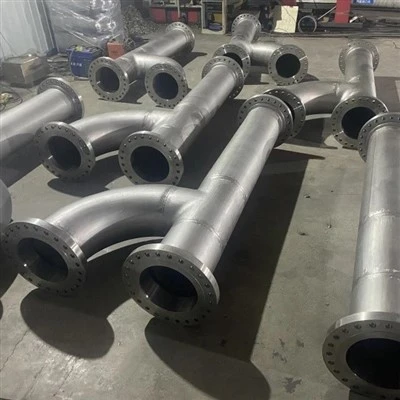
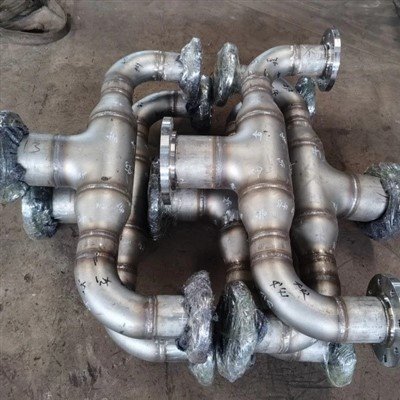
316Ti steel is superior for applications operating continuously in the 425–815°C sensitization range, where titanium prevents chromium carbide formation. For ambient-temperature or welded applications, 316L (≤0.03% C) is often a better choice due to lower cost and comparable corrosion resistance.

Both 316 and 316Ti belong to the austenitic stainless steel family, sharing the same base composition of 16–18% chromium, 10–14% nickel, and 2–3% molybdenum. The critical difference lies in titanium stabilization: 316Ti contains 5×C min to 0.70% titanium, which forms titanium carbides (TiC) preferentially over chromium carbides (Cr₂₃C₆), preventing sensitization and intergranular corrosion in high-temperature service.
Understanding 316 and 316Ti Stainless Steel
Type 316 stainless steel (UNS S31600) is a molybdenum-bearing austenitic grade renowned for superior corrosion resistance compared to Type 304. The addition of 2–3% molybdenum dramatically improves resistance to pitting and crevice corrosion in chloride environments, making it the standard choice for marine, chemical processing, and pharmaceutical applications.

What is 316Ti Stainless Steel?
316Ti (UNS S31635, EN 1.4571) is a titanium-stabilized variant of standard 316. The titanium addition (typically 5×C minimum to 0.70%) preferentially reacts with carbon to form stable titanium carbides (TiC) instead of harmful chromium carbides (Cr₂₃C₆). This stabilization prevents chromium depletion at grain boundaries during prolonged exposure to elevated temperatures.
The Sensitization Problem
When standard 316 stainless steel is exposed to temperatures between 425°C and 815°C (800°F to 1500°F) for extended periods, carbon migrates to grain boundaries and precipitates as chromium carbide (Cr₂₃C₆). This process, called sensitization, depletes chromium from the surrounding matrix, leaving the grain boundary region vulnerable to intergranular corrosion when exposed to corrosive media.
- Sensitization Temperature Range: 425°C to 815°C (800°F to 1500°F)
- Critical Time Threshold: Extended exposure (>1 hour) at sensitization temperatures
- Result: Chromium depletion at grain boundaries → Intergranular corrosion susceptibility
Chemical Composition: How Does Titanium Change the Alloy?
316Ti contains 5×C minimum to 0.70% titanium, which preferentially forms TiC instead of Cr₂₃C₆, preventing chromium depletion at grain boundaries. Both grades share identical chromium (16–18%), nickel (10–14%), and molybdenum (2–3%) content.
|
Element |
316 (S31600) |
316Ti (S31635) |
Function |
|
Carbon (C) |
≤0.08% |
≤0.08% |
Strength; lower = better weldability |
|
Chromium (Cr) |
16.0–18.0% |
16.0–18.0% |
Corrosion resistance, passive film |
|
Nickel (Ni) |
10.0–14.0% |
10.0–14.0% |
Austenite stability, formability |
|
Molybdenum (Mo) |
2.0–3.0% |
2.0–3.0% |
Pitting/crevice corrosion resistance |
|
Titanium (Ti) |
- |
5×C min to 0.70% |
Carbide stabilization |
|
Manganese (Mn) |
≤2.0% |
≤2.0% |
Hot workability |
|
Silicon (Si) |
≤0.75% |
≤0.75% |
Oxidation resistance |
|
Phosphorus (P) |
≤0.045% |
≤0.045% |
Residual element |
|
Sulfur (S) |
≤0.030% |
≤0.030% |
Machinability (lower is better) |
Titanium Stabilization Mechanism
- Preferential Carbide Formation: Titanium has higher affinity for carbon than chromium, forming TiC at temperatures above 900°C during heat treatment.
- Chromium Preservation: By tying up carbon as TiC, chromium remains in solid solution, maintaining corrosion resistance throughout the material.
- Stabilization Heat Treatment: 316Ti typically receives a stabilization anneal at 900–950°C (1650–1750°F) to ensure complete titanium carbide formation.
Mechanical Properties: Is 316Ti Stronger?
316Ti offers slightly higher elevated-temperature strength (>600°C) due to titanium carbonitride precipitation, but at ambient temperature, 316 and 316Ti exhibit nearly identical mechanical properties. 316Ti may have slightly lower impact toughness at room temperature.
|
Property |
316 (Annealed) |
316Ti (Annealed) |
Difference |
|
Ultimate Tensile Strength |
515–620 MPa |
520–640 MPa |
Similar |
|
Yield Strength (0.2%) |
205–290 MPa |
210–300 MPa |
Similar |
|
Elongation at Break |
40–50% |
35–45% |
Slightly lower (316Ti) |
|
Hardness (Brinell) |
149–217 HB |
150–220 HB |
Similar |
|
Elastic Modulus |
193 GPa |
193 GPa |
Identical |
|
Density |
8.00 g/cm³ |
8.00 g/cm³ |
Identical |
High-Temperature Strength (>600°C)
Above 600°C, 316Ti demonstrates marginally superior creep resistance and stress-rupture properties due to fine titanium carbonitride precipitates that impede dislocation movement. This advantage is significant for long-term elevated-temperature service:
|
Temperature |
316 Yield Strength |
316Ti Yield Strength |
316Ti Advantage |
|
Room Temp (20°C) |
205–290 MPa |
210–300 MPa |
~2–3% |
|
400°C |
140–180 MPa |
150–190 MPa |
~5% |
|
600°C |
110–140 MPa |
125–155 MPa |
~10% |
|
700°C |
80–100 MPa |
95–120 MPa |
~15% |
|
800°C |
50–70 MPa |
65–85 MPa |
~20% |
- At Room Temperature: 316Ti may exhibit slightly lower impact toughness due to titanium carbonitride particles acting as stress concentrators.
- At Cryogenic Temperatures: Both grades maintain excellent toughness down to -196°C, suitable for cryogenic applications.
- Design Implication: For dynamic loading at ambient temperature, standard 316 may be preferred if impact toughness is critical.
Corrosion Resistance: Does Titanium Improve It?
In the sensitization temperature range (425–815°C), 316Ti provides superior intergranular corrosion resistance. However, 316Ti may have slightly inferior pitting resistance at ambient temperature due to titanium carbonitride particles acting as pit initiation sites.

Intergranular Corrosion Resistance
|
Condition |
316 |
316Ti |
Winner |
|
As-annealed |
Excellent |
Excellent |
Equal |
|
After welding (no PWHT) |
Good (sensitization risk) |
Excellent |
316Ti |
|
Extended service 425–815°C |
Poor (sensitized) |
Excellent |
316Ti |
|
Stabilization anneal performed |
N/A |
Excellent |
316Ti |
Pitting and Crevice Corrosion
The Pitting Resistance Equivalent Number (PREN) indicates localized corrosion resistance:
PREN = %Cr + 3.3 × %Mo + 16 × %N
316 PREN: 17 + 3.3 × 2.5 = ~25 (good pitting resistance)
316Ti PREN: Similar (~25), but titanium carbonitride particles may reduce practical pitting resistance.
Titanium Carbonitride Effect: Ti(C,N) particles in 316Ti can act as pit initiation sites in aggressive chloride environments.
Surface Finish Sensitivity: 316Ti requires higher-quality polishing to achieve equivalent surface finish; Ti(C,N) particles may create "comet tail" defects during polishing.
Practical Implication: For seawater or high-chloride applications at ambient temperature, 316 or 316L may offer slightly better pitting resistance.
Stress Corrosion Cracking (SCC)
Both grades: Excellent SCC resistance in chloride environments at temperatures below 60°C.
Above 60°C: Austenitic stainless steels become susceptible to SCC; consider duplex or high-nickel alloys.
316Ti Limitation: Some evidence suggests slightly reduced SCC resistance compared to 316L in certain chloride environments.
Weldability and Fabrication
Both grades are readily weldable, but 316Ti requires niobium-stabilized filler (ER316Nb) for optimal high-temperature service. 316Ti presents machining challenges due to titanium carbonitride particles causing accelerated tool wear.
|
Parameter |
316 |
316Ti |
|
Weldability |
Excellent |
Excellent |
|
Recommended Filler |
ER316L / ER316LSi |
ER316Nb (or ER316L) |
|
Post-Weld Heat Treatment |
Not typically required |
Not required |
|
Sensitization Risk (HAZ) |
Moderate (thick sections) |
Low |
|
Machinability |
Good |
Fair (TiC particle wear) |
|
Polishing Quality |
Excellent |
Fair (comet tail defects) |
|
Formability |
Excellent |
Good |
Welding Recommendations
Filler Selection: Use ER316Nb filler for 316Ti when high-temperature strength is critical; ER316L filler is acceptable for ambient-temperature corrosion resistance.
Heat Input: Maintain low to moderate heat input to minimize sensitization risk in 316.
Interpass Temperature: Keep below 175°C (350°F) to prevent carbide precipitation.
Shielding Gas: Use argon with 2–3% CO₂ or helium additions for optimal arc stability.
Machining Challenges with 316Ti
Tool Wear: Titanium carbonitride (TiC/TiN) particles are extremely hard (>2000 HV), causing accelerated cutting tool wear.
Surface Finish: Ti(C,N) particles can pull out during machining, creating surface defects.
Recommendation: Use carbide or ceramic tooling with lower cutting speeds compared to 316.
Conclusion
The choice between 316 and 316Ti stainless steel fundamentally depends on operating temperature and service duration in the sensitization range. Neither grade is universally superior-each serves distinct application domains:
316Ti is the engineered solution for sustained high-temperature operation where titanium stabilization prevents chromium carbide precipitation and maintains corrosion resistance. Heat exchangers, exhaust systems, furnace components, and pressure vessels operating at 425–815°C benefit from 316Ti's microstructural stability.
316/316L remains the optimal choice for ambient-temperature and moderate-temperature applications where pitting resistance, surface finish, machinability, and cost are paramount. Marine equipment, food processing, pharmaceutical, and architectural applications favor 316L's lower carbon content and absence of titanium carbonitride particles.
For material selection engineers, the decision criterion is straightforward: if your application operates above 425°C for extended periods, specify 316Ti. For everything else, 316 or 316L provides equal or better performance at lower cost.