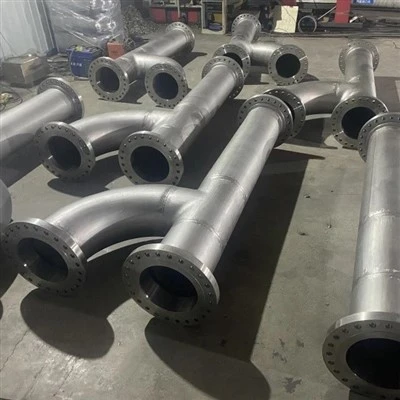
254SMO delivers outstanding chloride and pitting resistance in the base metal, but a poorly controlled weld can quietly undo that advantage exactly where a fabricated component needs it most - at the joint. Because 254SMO is a 6% molybdenum super-austenitic grade, its welding procedure is meaningfully more demanding than standard 316L practice: filler metal selection, heat input, interpass temperature, and post-weld cleaning all directly affect whether the finished weld actually matches the base metal's corrosion performance. This guide walks through each of these requirements and explains the specific metallurgical reasons behind them.

Why Does 254SMO Require a More Controlled Welding Procedure Than Standard Stainless Steel?
254SMO's high molybdenum and nitrogen content - the same elements responsible for its excellent pitting resistance - make it more prone to microsegregation and intermetallic phase formation during welding than standard 316L, which is why its welding procedure requires tighter control over filler metal, heat input, and interpass temperature.
In standard 316L, moderate heat input and typical welding practice generally produce a weld that performs acceptably close to the base metal's corrosion resistance. In 254SMO, the same alloying elements that deliver its high PREN and excellent chloride resistance - particularly molybdenum and nitrogen - also make the weld metal more susceptible to two specific problems during solidification and cooling: interdendritic segregation, where molybdenum is not distributed evenly through the weld metal as it solidifies, and intermetallic phase precipitation (such as sigma or chi phase), which can form if the weld and heat-affected zone spend too much time in a specific elevated temperature range during welding.
Both problems create locally molybdenum-depleted or otherwise compositionally compromised regions that are far more prone to pitting or crevice corrosion than the surrounding, properly solidified weld metal - which is the core reason 254SMO welding procedures are built specifically to minimize both effects rather than simply following standard austenitic stainless steel welding practice.
Which Filler Metals Are Recommended for Welding 254SMO?
Nickel-based, over-alloyed filler metals such as ERNiCrMo-3 (Alloy 625 type) are the most commonly recommended choice for 254SMO, because their higher nickel content resists the interdendritic molybdenum segregation that can occur with matching austenitic fillers, generally delivering more consistent corrosion resistance across the weld metal.

A comparison of the common filler metal options and their trade-offs:
|
Filler Type |
Example Classification |
Corrosion Performance in Weld Metal |
Typical Use Case |
|
Nickel-based, over-alloyed filler |
ERNiCrMo-3 (Alloy 625 type) |
Generally superior - avoids the molybdenum microsegregation that occurs during weld metal solidification in matching austenitic filler |
The most common recommendation for critical, chloride-service, or fully corrosion-matched welds |
|
Matching austenitic filler |
Super-austenitic matching wire (e.g., 6% Mo matching consumable) |
Adequate in less severe service, but more prone to interdendritic molybdenum segregation than nickel-based filler |
Less critical joints or applications where full base-metal-equivalent corrosion resistance in the weld is not required |
|
Standard 316L filler |
ER316L |
Generally inadequate - corrosion resistance well below base metal, creating a weak point in chloride or acid service |
Not recommended for 254SMO service-critical welds |
Table 1. Comparison of common filler metal options for welding 254SMO. Specific filler selection should always be confirmed against a qualified welding procedure specification (WPS) and the applicable code, as requirements vary by application, code, and end-user specification.
The reasoning behind favoring nickel-based filler is directly tied to solidification metallurgy: nickel-based alloys like Alloy 625 solidify with a more favorable, more homogeneous distribution of molybdenum than a matching super-austenitic filler does, reducing the risk of molybdenum-depleted interdendritic regions that would otherwise be more vulnerable to localized corrosion.
Matching filler remains an option and is used in some applications, but it generally carries a greater risk of this segregation effect, which is why many welding procedure specifications and end-user standards default to a nickel-based filler for 254SMO, particularly for services where the weld must deliver corrosion resistance genuinely equivalent to the base metal.
Why Is Heat Input Control Critical When Welding 254SMO?
Heat input directly controls how long the weld and heat-affected zone remain in the temperature range where intermetallic phases can form and where alloy segregation is most pronounced, so keeping heat input within a qualified, controlled range - generally lower than typical 316L practice - is one of the single most important variables in a successful 254SMO weld.

Higher heat input means slower cooling and a longer residence time in the elevated temperature range where sigma and chi intermetallic phases can precipitate in 6% molybdenum super-austenitic alloys; these phases are not only brittle, reducing toughness, but are also associated with local chromium and molybdenum depletion in the surrounding matrix, directly undermining the corrosion resistance the alloy was specified for in the first place. Higher heat input also generally increases the degree of dilution and can worsen interdendritic segregation in the weld pool.
This is why 254SMO welding procedures typically specify heat input limits considerably more conservative than what would be acceptable for standard 316L, and why qualified welders and engineers treat heat input as a primary process variable to monitor and control throughout a 254SMO weld, not an incidental byproduct of the chosen amperage and travel speed.
What Interpass Temperature Limits Apply to 254SMO Welding?
Interpass temperature for 254SMO is commonly limited to approximately 100–150°C (212–300°F) maximum in widely cited industry practice, a meaningfully tighter control than many standard austenitic grades require, because allowing the weld and surrounding base metal to accumulate excessive heat across multiple passes increases cumulative exposure to the intermetallic-phase-forming temperature range.
In a multi-pass weld, interpass temperature - the temperature of the previously deposited weld and adjacent base metal immediately before the next pass begins - has a cumulative effect: if each pass begins from a high starting temperature, the total time the joint spends in the elevated temperature range associated with intermetallic phase formation increases significantly over the course of a multi-pass weld, even if each individual pass's heat input is nominally within limits.
Enforcing a maximum interpass temperature, typically verified with a calibrated contact or infrared thermometer at specified intervals during welding, is therefore a direct and practical control measure for managing this cumulative effect, and it is consistently identified as one of the key parameters in documented 254SMO welding procedure specifications.
Is Preheating Required Before Welding 254SMO?
Preheating is generally not required and is not typically recommended for 254SMO, because as a fully austenitic stainless steel it is not susceptible to the hydrogen-induced cold cracking that makes preheat necessary in many carbon and alloy steels, and unnecessary preheat would only add to the total heat input the joint experiences.

Preheat serves a specific metallurgical purpose in hardenable steels: slowing the cooling rate to reduce the risk of a hard, crack-susceptible martensitic microstructure forming in the heat-affected zone, particularly in the presence of hydrogen. 254SMO's austenitic structure does not undergo this kind of hardening transformation, so this specific justification for preheat simply does not apply.
Because 254SMO welding procedures are instead focused on minimizing total heat exposure to control intermetallic phase formation, adding preheat would work directly against that goal by raising the starting temperature for each pass - which is why standard practice omits preheat for this grade rather than including it as a routine precaution the way it might be for many carbon steel welding procedures.
What Shielding Gas and Purging Requirements Apply to 254SMO Welding?
254SMO welding typically uses high-purity argon shielding gas, sometimes with a small nitrogen addition to help maintain the weld metal's nitrogen content, combined with a mandatory inert gas backing purge on the root pass to prevent oxidation and heat tint on the underside of the weld.

Shielding gas protects the molten weld pool from atmospheric oxygen and nitrogen pickup during welding, and for 254SMO specifically, a small deliberate nitrogen addition to the shielding gas is sometimes used to help offset nitrogen loss from the weld pool during welding, since nitrogen is one of the elements contributing to the alloy's pitting resistance (as reflected in the PREN formula).
Root-pass backing gas purge - typically argon or an argon/nitrogen blend flowed through the back side of the joint during welding - is essential because the root pass is otherwise exposed to open air on its underside, and without purging, that surface will oxidize and form heat tint, a visibly discolored, chromium-depleted surface layer with meaningfully reduced corrosion resistance compared with the surrounding properly shielded weld metal. This is not a minor cosmetic issue in 254SMO applications - the whole purpose of specifying this grade is usually to achieve corrosion performance the process cannot afford to compromise at the root of every weld.
What Post-Weld Cleaning and Treatment Does 254SMO Require?
254SMO welds require thorough mechanical cleaning and chemical pickling/passivation to remove weld heat tint, spatter, and any surface contamination, and while full post-weld solution annealing is not always mandatory when heat input and interpass temperature were properly controlled, it may be specified for the most corrosion-critical applications to guarantee uniform performance across the joint.
A summary of the key parameters discussed throughout this guide:
|
Parameter |
Commonly Cited Practice for 254SMO |
Why It Matters |
|
Preheat |
Generally not required or recommended |
254SMO is austenitic and not hydrogen-crack susceptible; unnecessary preheat only adds heat input |
|
Heat input |
Commonly held to a moderate, controlled range specific to the qualified WPS, generally lower than typical 316L practice |
Excessive heat input increases the risk of intermetallic phase formation and greater dilution-driven segregation |
|
Interpass temperature |
Commonly limited to approximately 100–150°C (212–300°F) maximum |
Controls cumulative heat exposure across multi-pass welds, reducing intermetallic phase precipitation risk |
|
Shielding/purge gas |
High-purity argon, sometimes with a small nitrogen addition; argon (or argon/nitrogen) backing gas purge for root passes |
Protects the weld pool from oxidation and helps maintain nitrogen content that supports corrosion resistance |
|
Post-weld cleaning |
Mechanical cleaning plus pickling/passivation to remove heat tint and restore the passive layer |
Heat tint and surface contamination locally degrade corrosion resistance if not removed |
|
Post-weld heat treatment (solution anneal) |
Not always required if heat input and interpass temperature are properly controlled; may be specified for critical applications |
Full solution annealing dissolves any intermetallic phases and restores uniform corrosion resistance across the joint |
Table 2. Summary of commonly cited 254SMO welding procedure parameters. These reflect widely referenced industry practice; actual limits must be established and verified through a qualified welding procedure specification (WPS) per the applicable code (such as ASME Section IX) and the material producer's technical guidance, not assumed from general reference values alone.
Post-weld cleaning matters because even a well-controlled weld produces some heat tint and surface oxidation, and this surface layer - chromium-depleted relative to the base passive layer - will corrode preferentially if left in place, regardless of how well the underlying weld metallurgy was controlled. Mechanical cleaning (grinding or brushing with tools dedicated exclusively to stainless steel, never shared with carbon steel work, to avoid iron contamination) followed by acid pickling and passivation is the standard sequence used to remove this compromised surface layer and restore a fully passive, corrosion-resistant surface across the entire weld and heat-affected zone.
Full solution annealing after welding is a more involved step, generally reserved for the most demanding applications or when heat input could not be tightly controlled during fabrication, since it requires furnace access and rapid post-anneal cooling capable of accommodating the fabricated component.
How Should Welding Procedures Be Qualified for 254SMO?
254SMO welding procedures should be formally qualified per the applicable welding code - commonly ASME Section IX or an equivalent recognized standard - with mechanical testing and, for corrosion-critical applications, supplementary intergranular or pitting corrosion testing on the qualified weld, rather than relying on general reference guidance as a substitute for project-specific qualification.

A practical qualification checklist:
1. Develop and qualify a written welding procedure specification (WPS) documenting the specific filler metal, heat input range, interpass temperature limit, and shielding/purge gas to be used, per the applicable code.
2. Qualify welders specifically on 254SMO or an equivalent 6% Mo super-austenitic grade, since qualification on standard 316L does not necessarily transfer the discipline required for this more demanding material.
3. Include corrosion testing in the qualification package for critical applications, such as intergranular corrosion testing (e.g., ASTM A262) or pitting/crevice corrosion testing on a representative welded coupon, not just standard mechanical tests.
4. Monitor heat input and interpass temperature during actual production welding, not just during procedure qualification, since real-world production conditions can drift from the qualified parameters without active monitoring.
5. Specify and verify post-weld cleaning requirements explicitly in the fabrication specification, including the cleaning method, pickling/passivation process, and acceptance criteria for the finished surface.
Frequently Asked Questions
Can 254SMO be welded with the shielded metal arc welding (SMAW/stick) process?
Yes, SMAW is a viable process for 254SMO using an appropriate covered electrode (matching or nickel-based), though GTAW (TIG) is generally preferred for root passes and critical joints due to its superior control over heat input and weld pool cleanliness, with SMAW or GMAW sometimes used for fill passes on thicker sections.
Does welding reduce 254SMO's PREN value in the weld metal?
The nominal PREN calculation applies to bulk composition, but the effective, practical corrosion resistance of a weld also depends on how uniformly that composition is distributed after solidification; a well-controlled weld with appropriate filler metal can achieve corrosion performance close to the calculated PREN, while a poorly controlled weld can perform meaningfully worse than the calculation alone would suggest, due to segregation and intermetallic phase effects.
Is a post-weld corrosion test required for every 254SMO weld?
Not necessarily for every production weld, but corrosion testing (such as on a procedure qualification coupon) is a common and often specified requirement for critical applications, since it provides direct evidence that the qualified procedure produces the intended corrosion performance rather than relying solely on visual and mechanical acceptance criteria.
Can standard 316L welding tools and equipment be used for 254SMO?
General-purpose GTAW/GMAW equipment can be used, but tools that contact the material surface - wire brushes, grinding discs, clamps - should be dedicated exclusively to high-alloy stainless work and never shared with carbon steel, since even minor iron contamination can create localized rust staining and corrosion initiation sites on the finished surface.
What happens if interpass temperature limits are exceeded during a production weld?
Exceeding qualified interpass temperature limits means the weld was made outside the parameters the procedure was qualified under, which can increase the risk of intermetallic phase formation and reduced corrosion resistance; depending on the applicable code and specification, this may require the affected weld to be evaluated, retested, or in some cases rejected and repaired, so temperature monitoring during production is not merely a documentation formality.