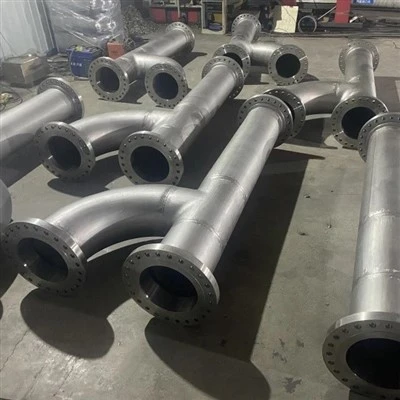
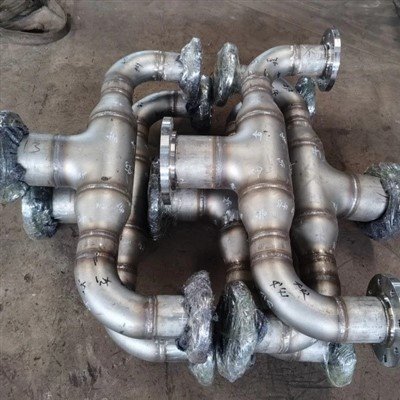
17-4PH stainless steel (UNS S17400, also known as AISI Type 630 or EN 1.4542) is a precipitation-hardening martensitic stainless steel. The name "17-4PH" comes from its composition: approximately 17% chromium and 4% nickel, with the "PH" standing for precipitation hardening.

This article provides a complete guide to the properties of 17-4PH stainless steel sheets, covering everything from chemical makeup to mechanical behavior, physical characteristics, heat treatment, and applications.
Chemical Composition
The table below shows the standard limits according to ASTM A693 and AMS 5604 specifications.
|
Element |
Weight % |
Role in the Alloy |
|
Chromium (Cr) |
15.0 – 17.5 |
Provides corrosion resistance and oxidation protection |
|
Nickel (Ni) |
3.0 – 5.0 |
Stabilizes the martensitic structure, improves toughness |
|
Copper (Cu) |
3.0 – 5.0 |
The key strengthening element-forms fine particles during aging |
|
Niobium (Nb) + Tantalum (Ta) |
0.15 – 0.45 |
Forms carbides that control grain growth and improve strength |
|
Carbon (C) |
≤ 0.07 |
Contributes to hardness, but kept low to maintain weldability |
|
Manganese (Mn) |
≤ 1.00 |
Assists in deoxidation during steelmaking |
|
Silicon (Si) |
≤ 1.00 |
Improves oxidation resistance at high temperatures |
|
Phosphorus (P) |
≤ 0.04 |
Impurity, kept to a minimum |
|
Sulfur (S) |
≤ 0.03 |
Impurity, kept to a minimum |
|
Iron (Fe) |
Balance (remaining %) |
The base metal that holds everything together |
Data source: ASTM A693 / AMS 5604 specifications.
Physical Properties
|
Property |
Value |
Notes |
|
Density |
7.75 – 8.03 g/cm³ |
Slightly heavier than carbon steel (7.85 g/cm³) |
|
Melting Point |
~1440°C (2624°F) |
Typical for martensitic stainless steels |
|
Elastic Modulus (Young's Modulus) |
196 – 200 GPa |
Measures stiffness-how much the steel resists bending |
|
Poisson's Ratio |
0.27 – 0.30 |
Describes how the material contracts sideways when stretched |
|
Thermal Conductivity |
15.3 – 17.9 W/m·K |
Moderate heat transfer ability |
|
Electrical Resistivity |
0.77 – 0.80 µΩ·m |
Fairly conductive for a stainless steel |
|
Specific Heat Capacity |
~460 J/kg·K |
The amount of heat needed to raise the temperature of the steel |
Data source: Multiple supplier specifications
Magnetic properties: 17-4PH stainless steel is magnetic in all conditions. In the solution-annealed condition, it may be only weakly magnetic, but after aging, it becomes strongly magnetic due to its martensitic crystal structure.
Maximum service temperature: 17-4PH retains its excellent mechanical properties up to approximately 316°C. Above this temperature, the material begins to lose strength, and prolonged exposure can cause over-aging, which reduces hardness.
Mechanical Properties
Mechanical properties describe how the material responds to forces-tension (pulling), compression (pushing), bending, and impact.

The Heat Treatment Conditions
17-4PH is typically supplied in Condition A (solution annealed), which is soft and workable. The customer then performs an aging treatment to achieve the desired strength level. Each aging condition has a standard designation: H900, H925, H1025, H1075, H1100, or H1150. The number refers to the aging temperature in degrees Fahrenheit.
|
Aging Condition |
Aging Temperature |
What It Delivers |
|
H900 |
482°C (900°F) |
Maximum strength and hardness |
|
H925 |
496°C (925°F) |
Very high strength with slightly improved toughness |
|
H1025 |
552°C (1025°F) |
Balanced strength and toughness |
|
H1075 |
580°C (1075°F) |
Moderate strength, better toughness |
|
H1100 |
593°C (1100°F) |
Lower strength, higher ductility |
|
H1150 |
621°C (1150°F) |
Maximum toughness and ductility |
Data source: Heat treatment specifications.
Mechanical Properties by Condition (Sheet and Plate, AMS 5604)
The table below shows the mechanical properties for 17-4PH sheet and plate (thickness less than approximately 4.75 mm or 0.1874 inches) according to AMS 5604 specifications.
|
Condition |
Ultimate Tensile Strength (ksi / MPa) |
0.2% Yield Strength (ksi / MPa) |
Elongation (%) |
Hardness (HRC) |
|
Cond A (Annealed) |
- |
- |
- |
38 max |
|
H900 |
190 / 1310 |
170 / 1170 |
5 |
40 – 47 |
|
H925 |
170 / 1170 |
155 / 1070 |
5 |
38 – 45 |
|
H1025 |
155 / 1070 |
145 / 1000 |
5 |
35 – 42 |
|
H1075 |
145 / 1000 |
125 / 860 |
5 |
33 – 39 |
|
H1100 |
140 / 965 |
115 / 795 |
5 |
32 – 38 |
|
H1150 |
135 / 930 |
105 / 725 |
8 |
28 – 37 |
Data source: AMS 5604 sheet/plate specification
Tensile strength is the maximum pulling force the material can withstand before breaking. At H900, 17-4PH sheet can handle 190,000 pounds per square inch (1,310 MPa)-roughly three times stronger than standard 304 stainless steel.
Yield strength is the force at which the material begins to permanently deform. In the H900 condition, the 17-4PH sheet has a yield strength of 170 ksi (1,170 MPa).
Elongation measures how much the material can stretch before breaking. At H1150, elongation reaches 8%, offering greater ductility than the 5% seen in H900. For thicker bars and forgings (AMS 5643), elongation values are higher-up to 16% at H1150.
Comparison to Other Stainless Steels
|
Property |
17-4PH (H900) |
304 Stainless Steel |
316L Stainless Steel |
|
Tensile Strength (MPa) |
~1310 |
~585 |
~485 |
|
Yield Strength (MPa) |
~1170 |
~205 |
~170 |
|
Elongation (%) |
5 – 10 |
~40 |
~50 |
|
Hardness (HRC) |
40 – 47 |
~80 HRB (≈15 HRC) |
~79 HRB (≈14 HRC) |
|
Magnetism |
Magnetic |
Non-magnetic |
Non-magnetic |
Data source: Industry comparison
Corrosion Resistance
17-4PH stainless steel offers good corrosion resistance that is comparable to Type 304 stainless steel in most environments.
The alloy's 17% chromium content forms a thin, invisible oxide layer on the surface that protects the metal underneath from rust and chemical attack.

Where 17-4PH performs well:
Atmospheric exposure (rain, humidity, industrial air)
Dilute acids and salts at moderate temperatures
Fresh water and mild chemical solutions
Food processing environments
Limitations:
17-4PH is less resistant to chlorides (such as seawater and de-icing salts) than 316 stainless steel, which contains molybdenum. In high-chloride environments, pitting and crevice corrosion can occur.
For severe corrosive conditions-like hot concentrated acids or seawater service-a higher-grade material such as 316L, duplex 2205, or super austenitic 254 SMO may be more appropriate.
Note: Corrosion resistance is best in the solution-annealed or lower-temperature aged conditions (H1150). Over-aging or improper heat treatment can reduce corrosion performance.
Heat Treatment
Heat treatment is the key to unlocking the full potential of 17-4PH. The process has two main steps:
Step 1: Solution Treatment (Annealing)
Heat the material to 1025 – 1050°C (1877 – 1922°F).
Hold for approximately 0.5 to 1 hour.
Rapidly cool (quench) in air or oil to room temperature.
Result: Condition A - soft, workable material with a hardness of 38 HRC maximum.
Step 2: Aging (Precipitation Hardening)
Heat the solution-treated material to a specific aging temperature (between 482°C and 621°C / 900°F and 1150°F).
Hold for 1 to 4 hours, depending on the desired properties.
Cool in air to room temperature
The chosen aged condition (H900 through H1150) with tailored mechanical properties.
Fabrication and Workability

Forming: In Condition A, 17-4PH has reasonable formability, but forming operations should be limited to mild bending. For complex shapes, solution annealing before cold working improves formability. Hot forming is also possible.
Machining: 17-4PH has a machinability rating of approximately 45% compared to free-machining steel (rated at 100%). In the aged condition, the material is harder and more difficult to machine. For best results, machine in Condition A, then age to final hardness.
Welding: 17-4PH can be welded using standard processes such as TIG, MIG, and SMAW. However, the heat of welding can soften the material locally.
Post-weld heat treatment is recommended to restore strength in the weld zone. Use matching filler metals (such as 17-4PH or 630 grade) for the best results.
Grinding and finishing: Due to its high hardness in aged conditions, grinding requires appropriate wheel selection and coolant to prevent overheating and surface damage.
Standards and Specifications
17-4PH stainless steel sheets and plates are manufactured according to several industry standards. When purchasing, always request a Mill Test Certificate (MTC) confirming compliance with the specification.
|
Specification |
Description |
Applicable Forms |
|
ASTM A693 / A693M |
Standard specification for precipitation-hardening stainless steel plate, sheet, and strip |
Sheet, plate, coil |
|
AMS 5604 |
Aerospace Material Specification for 17-4PH sheet, coil, and plate |
Sheet, coil, plate |
|
AMS 5643 |
Aerospace Material Specification for 17-4PH bar and forgings |
Bar, forgings |
|
ASTM A564 |
Standard specification for hot-rolled and cold-finished 17-4PH bars |
Bar shapes |
|
UNS S17400 |
Unified Numbering System designation |
All forms |
|
EN 1.4542 |
European standard designation |
All forms |
|
JIS SUS630 |
Japanese Industrial Standard |
All forms |
|
DIN X5CrNiCuNb16-4 |
German standard designation |
All forms |
Data source: Multiple specifications
Common available forms:
Sheet: Cold-rolled, thickness from 0.3 mm to 6 mm
Plate: Hot-rolled, thickness from 6 mm to 100 mm or more
Coil: Precision slit coils or mill edge, width up to 1500 mm
Common Applications
Aerospace: Turbine blades, compressor components, landing gear parts, and structural brackets where high strength and moderate weight are critical.
Chemical and Petrochemical Processing: Pump shafts, valve stems, and pressure vessel components that must withstand corrosive media and high mechanical loads.
Food Processing: Equipment parts that require both corrosion resistance and the ability to withstand repeated cleaning and sanitizing cycles.
Oil and Gas: Downhole tools, wellhead components, and subsea equipment where high strength and sour gas resistance are required. The grade maintains its properties up to 316°C (600°F), making it suitable for many oilfield applications.
Marine Engineering: Propeller shafts, pump components, and fasteners-though for continuous seawater exposure, consider higher-molybdenum grades.
Power Generation: Turbine and generator components that operate at moderate temperatures and require high reliability.
General Metalworking: Gears, shafts, fasteners, bushings, and wear plates where high hardness and strength are needed.
Ready to specify 17-4PH stainless steel sheet for your next job? Contact our technical sales team today at +86 19339900211 or Info@jnalloy.com.
Send your required thickness, size, and heat-treatment condition, and we will return a firm quotation with exact weight calculations and technical data within 24 hours.
Choose 17-4PH sheet from a manufacturer you can trust.