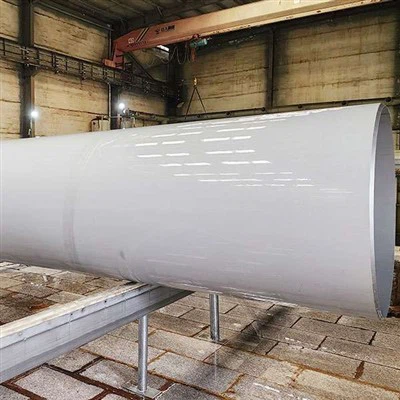
UNS S31008, also known as Stainless Steel 310S, is a popular austenitic stainless steel due to its excellent high - temperature corrosion resistance and oxidation resistance. As a reliable supplier of UNS S31008, I understand the importance of using the right machining parameters for this material to ensure optimal performance in various applications. In this blog, I will discuss the key machining parameters that should be considered when working with UNS S31008.
Cutting Speed
The cutting speed is one of the most critical machining parameters. It refers to the speed at which the cutting tool passes over the surface of the workpiece. For UNS S31008, the cutting speed is affected by several factors, such as the type of cutting tool, the depth of cut, and the feed rate.
When using carbide cutting tools, a cutting speed in the range of 50 - 100 meters per minute (m/min) is generally recommended for roughing operations. This relatively lower speed helps to prevent excessive tool wear, as UNS S31008 has a tendency to work - harden during machining. For finishing operations, a slightly higher cutting speed of around 100 - 150 m/min can be used to achieve better surface finish.
If high - speed steel (HSS) cutting tools are employed, the cutting speed should be significantly lower. Roughing with HSS tools may require a cutting speed of 15 - 30 m/min, while finishing could be done at 30 - 50 m/min.
Feed Rate
The feed rate determines how far the cutting tool advances into the workpiece per revolution or per tooth of the cutter. For UNS S31008, a proper feed rate is crucial to balance between productivity and tool life.
During roughing, a feed rate of 0.2 - 0.5 millimeters per revolution (mm/r) for turning operations or 0.1 - 0.3 mm/tooth for milling operations is commonly used. This relatively high feed rate helps to remove a large amount of material quickly. However, care must be taken not to overload the cutting tool, as UNS S31008's work - hardening characteristics can cause increased cutting forces.
For finishing operations, a lower feed rate is required to obtain a smooth surface finish. A feed rate of 0.05 - 0.2 mm/r for turning or 0.02 - 0.1 mm/tooth for milling is typically recommended.
Depth of Cut
The depth of cut refers to the thickness of the layer of material removed in a single pass of the cutting tool. In roughing operations of UNS S31008, a depth of cut of 2 - 5 millimeters can be used. This allows for efficient material removal. But it is important to note that a larger depth of cut may increase the cutting forces and the risk of tool breakage, especially if the cutting tool is not properly supported.
For finishing operations, a much smaller depth of cut, usually in the range of 0.1 - 0.5 millimeters, is employed. This helps to achieve the desired dimensional accuracy and surface finish.
Coolant and Lubrication
Coolant and lubrication play a vital role in machining UNS S31008. The work - hardening property of this stainless steel can generate a significant amount of heat during machining, which can lead to increased tool wear and poor surface finish.
A water - soluble coolant is often recommended for machining UNS S31008. It helps to dissipate heat from the cutting zone, reduces friction between the cutting tool and the workpiece, and flushes away the chips. The coolant also helps to prevent built - up edge formation on the cutting tool, which can degrade the surface finish of the workpiece.
In addition to coolant, lubrication can further improve the machining process. Lubricants reduce the friction between the tool and the workpiece, which in turn reduces the cutting forces and the heat generated. This can extend the tool life and improve the surface quality of the machined part.
Tool Geometry
The geometry of the cutting tool is another important factor to consider when machining UNS S31008. A sharp cutting edge is essential to reduce the cutting forces and prevent work - hardening. A high - rake angle on the cutting tool can also help to reduce the cutting forces and improve chip flow.
For turning operations, a tool with a positive rake angle in the range of 10° - 20° is often used. For milling operations, end mills with a proper helix angle and a large number of flutes can improve chip evacuation and reduce the cutting forces.
Comparison with Other Stainless Steels
UNS S31008 has its own unique characteristics, and comparing it with other stainless steels can provide a better understanding of its machining requirements. For example, Stainless Steel 347 / UNS S34700 / 1.4550 is also an austenitic stainless steel. While both UNS S31008 and UNS S34700 have good corrosion resistance, the machining parameters for UNS S34700 may differ slightly. UNS S34700 has a lower carbon content in the stabilized form, which may affect its work - hardening behavior and thus the cutting speed and feed rate.
Stainless Steel 347H / UNS S34709 / 1.4961 is a high - carbon version of Stainless Steel 347. It has better high - temperature strength compared to UNS S31008. When machining UNS S347H, the cutting forces may be higher due to its higher strength, and thus the cutting speed and feed rate may need to be adjusted accordingly.
Stainless Steel 254SMO / F44 / UNS S31254 / 1.4547 is a super austenitic stainless steel with excellent pitting and crevice corrosion resistance. It is more difficult to machine compared to UNS S31008 because of its higher alloy content. Lower cutting speeds and feed rates are usually required when machining UNS S31254.
Considerations for Different Machining Processes
Turning
In turning operations of UNS S31008, the choice of the cutting tool's nose radius is also important. A larger nose radius can decrease the surface roughness, but it may also increase the cutting forces. So, for roughing, a smaller nose radius (e.g., 0.4 - 0.8 mm) can be used to reduce the cutting forces, while for finishing, a larger nose radius (e.g., 0.8 - 1.2 mm) can improve the surface finish.
The use of proper chip breakers on the cutting tool is also crucial. Chip breakers help to control the shape and size of the chips, preventing long, continuous chips from entanglement and improving the machining process.


Milling
When milling UNS S31008, the selection of the right milling cutter is essential. Face mills, end mills, and ball - nose mills are commonly used. The number of flutes on the mill affects the chip - loading capacity and the surface finish. For rough milling, a mill with a smaller number of flutes can handle larger chip loads, while for finishing, a mill with more flutes can provide a better surface finish.
The milling strategy also needs to be carefully considered. Climb milling, where the cutting force is directed towards the machine table, is often preferred for UNS S31008 because it can reduce the work - hardening effect and improve the surface quality.
Conclusion
Machining UNS S31008 requires careful consideration of multiple parameters, including cutting speed, feed rate, depth of cut, coolant and lubrication, and tool geometry. By using the appropriate machining parameters, manufacturers can achieve high - quality machined parts with good dimensional accuracy and surface finish, while also extending the tool life and improving productivity.
As a trusted UNS S31008 supplier, I am committed to providing high - quality materials and technical support to our customers. If you are interested in purchasing UNS S31008 or need more in - depth advice on machining this material, please feel free to contact us for further discussions and procurement negotiations.
References
- ASM Handbook Volume 16: Machining. ASM International.
- Tooling and Machining Data Handbook. Kennametal Inc.
- Stainless Steel Handbook. Outokumpu.