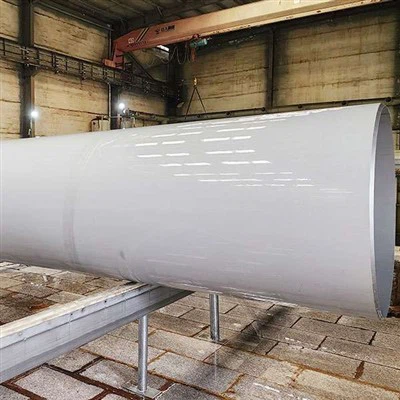
Iron is a key alloying element in Monel, a group of nickel - copper alloys known for their excellent corrosion resistance, high strength, and good ductility. As a Monel supplier, I've witnessed firsthand how iron plays a crucial role in enhancing the properties of these alloys, making them suitable for a wide range of applications.
The Basics of Monel Alloys
Monel alloys are primarily composed of nickel (typically 63% or more) and copper, with small amounts of other elements such as iron, manganese, carbon, and silicon. Two of the most commonly used Monel alloys are Monel 400 / UNS N04400 / 2.4360 and Monel K500 / UNS N05500 / 2.4375. Monel 400 is a solid - solution alloy with good corrosion resistance in various media, including seawater, hydrofluoric acid, and alkaline solutions. Monel K500, on the other hand, is a precipitation - hardenable alloy that offers higher strength and hardness compared to Monel 400.
Iron's Role in Monel Alloys
Strengthening the Alloy
One of the primary roles of iron in Monel is to strengthen the alloy. Iron atoms dissolve in the nickel - copper matrix, creating a solid solution. This solid - solution strengthening mechanism works by impeding the movement of dislocations within the crystal lattice of the alloy. Dislocations are defects in the crystal structure that allow metals to deform plastically. When iron atoms are present, they create local stress fields around them, which make it more difficult for dislocations to move. As a result, the alloy becomes stronger and more resistant to deformation.
In Monel 400, the addition of iron (usually in the range of 2 - 3%) contributes to its overall strength. This strength is essential for applications where the alloy is subjected to mechanical stresses, such as in marine engineering, where Monel 400 is used for shipbuilding components like propeller shafts and pump impellers. These components need to withstand the forces exerted by the water and the operation of the machinery.
In Monel K500, the role of iron in strengthening is even more significant. The precipitation - hardening process in Monel K500 involves the formation of fine - scale precipitates within the alloy matrix. Iron is involved in the precipitation reaction, and it helps to control the size, distribution, and composition of these precipitates. The presence of iron ensures that the precipitates are uniformly distributed throughout the alloy, which leads to a significant increase in strength and hardness. This makes Monel K500 suitable for applications requiring high - strength materials, such as in the aerospace industry for components like fasteners and springs.
Improving Corrosion Resistance
Iron also plays a role in enhancing the corrosion resistance of Monel alloys. In some corrosive environments, iron can form a passive oxide layer on the surface of the alloy. This oxide layer acts as a barrier, preventing further corrosion of the underlying metal. For example, in seawater, the iron in Monel alloys can react with oxygen and other components in the water to form a protective iron oxide film. This film helps to reduce the rate of corrosion and extends the service life of the alloy.
Moreover, iron can influence the electrochemical properties of Monel alloys. It can change the potential of the alloy in a corrosive environment, making it more resistant to certain types of corrosion, such as pitting corrosion. Pitting corrosion is a localized form of corrosion that can cause severe damage to metal components. By altering the electrochemical behavior of the alloy, iron helps to prevent the initiation and propagation of pits on the surface of the Monel alloy.
Controlling Microstructure
The presence of iron affects the microstructure of Monel alloys. During the solidification process of the alloy, iron can influence the grain size and morphology. A fine - grained microstructure is generally desirable in metals because it improves mechanical properties such as strength, toughness, and ductility. Iron can act as a grain - refining agent, promoting the formation of smaller grains during solidification.
In addition, iron can also affect the phase transformation behavior of Monel alloys. For instance, in Monel K500, the precipitation - hardening heat treatment is designed to transform the alloy from a single - phase solid solution to a two - phase structure with fine precipitates. Iron plays a role in this phase transformation process by influencing the solubility of other elements and the kinetics of the precipitation reaction. A well - controlled microstructure is crucial for achieving the desired properties of the alloy, and iron helps to ensure that the microstructure is optimized.
Applications of Monel Alloys Due to Iron's Influence
The unique properties of Monel alloys, which are influenced by the presence of iron, make them suitable for a wide range of applications.
Marine Applications
In the marine industry, Monel alloys are widely used due to their excellent corrosion resistance in seawater. The strength provided by iron in Monel alloys is crucial for marine components that need to withstand the harsh conditions of the ocean. For example, Monel 400 is used in seawater piping systems, heat exchangers, and condensers. The iron - enhanced strength ensures that these components can handle the pressure and flow of seawater without deforming, while the corrosion - resistant properties prevent the pipes and heat exchangers from being damaged by the corrosive seawater.
Chemical Processing
In the chemical processing industry, Monel alloys are used in equipment that comes into contact with various corrosive chemicals. The ability of iron to improve corrosion resistance and strengthen the alloy makes Monel suitable for applications such as reaction vessels, pumps, and valves. For instance, in the production of hydrofluoric acid, Monel 400 can be used because it resists the corrosive action of the acid, and the iron - induced strength allows the equipment to withstand the mechanical stresses during the chemical process.


Aerospace Applications
In the aerospace industry, Monel K500 is used for components that require high strength and corrosion resistance. The role of iron in strengthening the alloy through precipitation hardening makes it ideal for applications like aircraft fasteners and springs. These components need to be lightweight yet strong enough to withstand the high - stress conditions during flight. The corrosion resistance of Monel K500 also ensures that the components do not degrade over time due to exposure to the harsh aerospace environment.
Conclusion
As a Monel supplier, I understand the importance of iron in these alloys. Iron's role in strengthening the alloy, improving corrosion resistance, and controlling the microstructure is essential for the performance of Monel alloys in various applications. Whether it's in the marine, chemical processing, or aerospace industries, the unique properties of Monel alloys, enhanced by iron, make them a reliable choice for demanding applications.
If you are in need of high - quality Monel alloys for your specific applications, I encourage you to reach out to us for a procurement discussion. We can provide you with detailed information about our Monel products, including their composition, properties, and suitability for your projects. Our team of experts is ready to assist you in selecting the right Monel alloy and ensuring that you get the best value for your investment.
References
- ASM Handbook Volume 2: Properties and Selection: Nonferrous Alloys and Special - Purpose Materials. ASM International.
- Metals Handbook: Desk Edition, 3rd Edition. ASM International.
- Corrosion Resistance of Stainless Steels and Nickel - Base Alloys. NACE International.