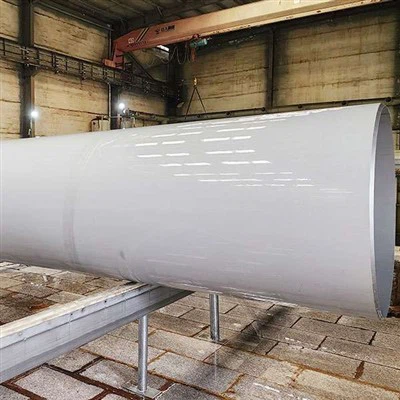
As a supplier of UNS S31254, I often encounter inquiries from customers regarding the material's performance, especially its resistance to pitting corrosion. Pitting corrosion is a form of localized corrosion that can lead to the formation of small holes or pits in the metal surface, which can compromise the integrity of the material over time. In this blog post, I will delve into the factors that contribute to the pitting corrosion resistance of UNS S31254 and discuss why it is a popular choice for applications where this type of corrosion is a concern.
Understanding Pitting Corrosion
Before we discuss the resistance of UNS S31254 to pitting corrosion, it is important to understand what pitting corrosion is and how it occurs. Pitting corrosion typically starts at a small defect or impurity on the metal surface, such as a scratch, inclusion, or a site where the protective oxide layer has been damaged. In the presence of an aggressive environment, such as a chloride-containing solution, the metal at these sites can dissolve, forming small pits. Once a pit is formed, it can act as a cathode, accelerating the corrosion process and causing the pit to grow deeper and wider.


The rate of pitting corrosion depends on several factors, including the composition of the metal, the concentration of the aggressive ions in the environment, the temperature, and the presence of other species that can either promote or inhibit corrosion. For example, chloride ions are known to be particularly aggressive towards stainless steels, as they can break down the protective oxide layer and initiate pitting corrosion.
Composition of UNS S31254
UNS S31254 is a super austenitic stainless steel that is specifically designed to provide excellent resistance to pitting and crevice corrosion in aggressive environments. Its chemical composition plays a crucial role in its corrosion resistance properties. The main alloying elements in UNS S31254 include:
- Chromium (Cr): Chromium is the primary alloying element in stainless steels, as it forms a protective oxide layer on the surface of the metal, which helps to prevent corrosion. In UNS S31254, the chromium content is typically around 19.5 - 20.5%, which provides a high level of corrosion resistance.
- Nickel (Ni): Nickel is added to stainless steels to improve their toughness, ductility, and corrosion resistance. In UNS S31254, the nickel content is around 17 - 18%, which helps to stabilize the austenitic structure and enhance the resistance to pitting and crevice corrosion.
- Molybdenum (Mo): Molybdenum is a powerful alloying element that enhances the resistance of stainless steels to pitting and crevice corrosion, especially in chloride-containing environments. In UNS S31254, the molybdenum content is around 6 - 6.5%, which significantly improves its corrosion resistance.
- Nitrogen (N): Nitrogen is added to stainless steels to improve their strength, toughness, and corrosion resistance. In UNS S31254, the nitrogen content is around 0.18 - 0.25%, which helps to increase the pitting resistance equivalent number (PREN), a measure of the material's resistance to pitting corrosion.
Pitting Resistance Equivalent Number (PREN)
The pitting resistance equivalent number (PREN) is a widely used parameter to compare the pitting corrosion resistance of different stainless steels. It is calculated based on the chemical composition of the material using the following formula:
PREN = %Cr + 3.3 x %Mo + 16 x %N
A higher PREN value indicates a better resistance to pitting corrosion. For UNS S31254, the PREN value is typically around 42 - 46, which is significantly higher than that of standard austenitic stainless steels such as Stainless Steel 316H / UNS 31609 / 1.4919 (PREN ~ 24 - 26) and Stainless Steel 347H / UNS S34709 / 1.4961 (PREN ~ 22 - 24). This high PREN value makes UNS S31254 highly resistant to pitting corrosion in a wide range of aggressive environments.
Testing the Pitting Corrosion Resistance of UNS S31254
To evaluate the pitting corrosion resistance of UNS S31254, various testing methods can be used. One of the most common methods is the ASTM G48 test, which involves immersing the test specimens in a ferric chloride solution at a specific temperature for a certain period of time. After the test, the specimens are examined for the presence of pits, and the pitting potential or the critical pitting temperature (CPT) can be determined.
In general, UNS S31254 has been shown to have excellent pitting corrosion resistance in a variety of aggressive environments, including seawater, brackish water, and chloride-containing industrial solutions. Its high PREN value and the presence of alloying elements such as molybdenum and nitrogen contribute to its superior performance compared to other stainless steels.
Applications of UNS S31254
Due to its excellent resistance to pitting corrosion, UNS S31254 is widely used in a variety of applications where corrosion resistance is critical. Some of the common applications include:
- Marine applications: UNS S31254 is used in marine environments, such as offshore platforms, desalination plants, and shipbuilding, where it is exposed to seawater and other corrosive agents.
- Chemical processing industry: It is used in chemical processing plants for handling aggressive chemicals, such as acids, alkalis, and chloride-containing solutions.
- Oil and gas industry: UNS S31254 is used in the oil and gas industry for applications such as pipelines, valves, and pumps, where it is exposed to corrosive fluids and gases.
- Food and beverage industry: It is used in the food and beverage industry for equipment such as tanks, pipes, and heat exchangers, where hygiene and corrosion resistance are important.
Conclusion
In conclusion, UNS S31254 is a high-performance super austenitic stainless steel that offers excellent resistance to pitting corrosion. Its unique chemical composition, high PREN value, and the presence of alloying elements such as chromium, nickel, molybdenum, and nitrogen contribute to its superior corrosion resistance properties. Whether you are in the marine, chemical processing, oil and gas, or food and beverage industry, UNS S31254 can provide a reliable solution for applications where pitting corrosion is a concern.
If you are interested in learning more about UNS S31254 or are considering using it in your next project, I encourage you to contact me for more information and to discuss your specific requirements. I would be happy to assist you in selecting the right material and providing you with the necessary technical support.
References
- ASTM G48 - Standard Test Methods for Pitting and Crevice Corrosion Resistance of Stainless Steels and Related Alloys by Use of Ferric Chloride Solution.
- Stainless Steel Handbook, ASM International.