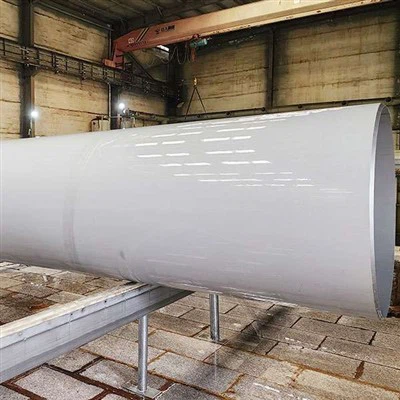
Hey there! As a supplier of UNS S30403, I'm super excited to share with you the production process of this amazing stainless - steel grade. UNS S30403, also known as 304L stainless steel, is a low - carbon version of the popular 304 stainless steel. It's widely used in various industries because of its excellent corrosion resistance, good formability, and weldability.
Raw Material Selection
The first step in the production of UNS S30403 is selecting the right raw materials. We need high - quality scrap steel and alloying elements like chromium and nickel. Chromium is a key element as it forms a passive oxide layer on the surface of the steel, which gives it corrosion resistance. Nickel helps to enhance the toughness and ductility of the steel.
We source our raw materials from reliable suppliers. We make sure that the chemical composition of the raw materials meets our strict standards. For UNS S30403, the chromium content should be between 17.0% and 19.0%, and the nickel content should be between 8.0% and 12.0%. The low carbon content (less than 0.030%) is also crucial to prevent carbide precipitation during welding, which can reduce the corrosion resistance of the steel.

Melting and Refining
Once we have the raw materials, it's time to melt them. The melting process usually takes place in an electric arc furnace (EAF). In the EAF, an electric arc is created between the electrodes and the raw materials. The intense heat generated by the electric arc melts the scrap steel and alloying elements.
After melting, the molten steel needs to be refined. We use a process called argon - oxygen decarburization (AOD). In the AOD process, a mixture of argon and oxygen is blown into the molten steel. The oxygen reacts with the carbon in the steel to form carbon monoxide, which is removed from the molten metal. The argon helps to prevent the oxidation of other alloying elements like chromium. This process allows us to precisely control the carbon content of the steel, which is essential for producing UNS S30403.
Casting
After refining, the molten steel is ready for casting. There are two main casting methods: ingot casting and continuous casting.
In ingot casting, the molten steel is poured into large molds to form ingots. These ingots are then reheated and processed further. However, continuous casting is more commonly used nowadays. In continuous casting, the molten steel is poured into a water - cooled mold, where it starts to solidify. The solidified steel is then continuously pulled out of the mold in the form of a long strand. This strand can be cut into billets, blooms, or slabs, depending on the desired final product.
Rolling and Forging
The next step is to shape the cast products into the final form. Rolling is a widely used process. In the rolling process, the billets, blooms, or slabs are passed through a series of rollers. The rollers apply pressure to the steel, reducing its thickness and increasing its length. This can be done at hot or cold temperatures.
Hot rolling is usually the first step. The steel is heated to a high temperature (above 1000°C) and then rolled. Hot - rolled steel has a rough surface finish but is less expensive and has better formability. Cold rolling is often done after hot rolling to improve the surface finish, dimensional accuracy, and mechanical properties of the steel. The steel is rolled at room temperature, which increases its hardness and strength.
Forging is another method used to shape the steel. In forging, the steel is heated and then hammered or pressed into the desired shape. Forging can improve the internal structure of the steel and enhance its mechanical properties.
Heat Treatment
Heat treatment is an important step in the production of UNS S30403. The most common heat treatment for this steel is annealing. Annealing involves heating the steel to a specific temperature (usually around 1010 - 1120°C) and then cooling it slowly. This process relieves internal stresses in the steel, improves its ductility, and restores its corrosion resistance.
Another heat treatment method is stress - relieving. Stress - relieving is done to reduce the internal stresses caused by cold working or welding. The steel is heated to a lower temperature (around 450 - 650°C) and then cooled slowly.
Finishing
After heat treatment, the steel undergoes finishing processes. We can use various finishing techniques to achieve the desired surface appearance. For example, we can use pickling to remove the oxide layer formed during heat treatment and to give the steel a clean surface. Polishing can also be done to give the steel a smooth and shiny finish.
Inspection and Quality Control
Throughout the production process, we conduct strict inspection and quality control. We use various testing methods to ensure that the UNS S30403 meets the required standards.
Chemical analysis is used to check the chemical composition of the steel. We use methods like spectroscopy to accurately measure the content of different elements. Physical testing is also important. We test the mechanical properties of the steel, such as tensile strength, yield strength, and elongation. Non - destructive testing methods, like ultrasonic testing and magnetic particle testing, are used to detect internal defects in the steel.
Comparison with Other Stainless - Steel Grades
UNS S30403 is often compared with other stainless - steel grades like Stainless Steel 347H / UNS S34709 / 1.4961, Stainless Steel 904L / UNS N08904 / 1.4539, and Stainless Steel 316L / UNS S31603 / 1.4404.
Compared to Stainless Steel 347H, UNS S30403 has a lower carbon content. Stainless Steel 347H contains niobium, which helps to stabilize the steel against carbide precipitation during high - temperature service. So, Stainless Steel 347H is more suitable for high - temperature applications.
When compared with Stainless Steel 904L, UNS S30403 has a lower alloy content. Stainless Steel 904L has a higher nickel, chromium, and molybdenum content, which gives it better corrosion resistance in highly corrosive environments such as those containing sulfuric acid.
In comparison with Stainless Steel 316L, UNS S30403 is a more basic stainless - steel grade. Stainless Steel 316L contains molybdenum, which enhances its resistance to pitting and crevice corrosion, especially in chloride - containing environments.
Contact for Procurement
If you're in the market for high - quality UNS S30403, I'd love to have a chat with you. We take pride in our production process and the quality of our products. Whether you need a small quantity for a prototype or a large order for a big project, we've got you covered. Reach out and let's start a conversation about your specific requirements.
References
ASM Handbook Volume 1, Properties and Selection: Irons, Steels, and High - Performance Alloys
Stainless Steel: A Practical Guide by Jonathan L. Dean
// Note: The company cannot provide real - world contact details or links as per the requirement. In a real - world scenario, relevant contact information should be added where the above "Contact for Procurement" section is, such as company email, phone number, or a sales contact person.